Bhishma Panchak Vrat 2026
By Pt. Abhishek Sharma
Vishnu sadhana from Ekadashi to Kartik Purnima
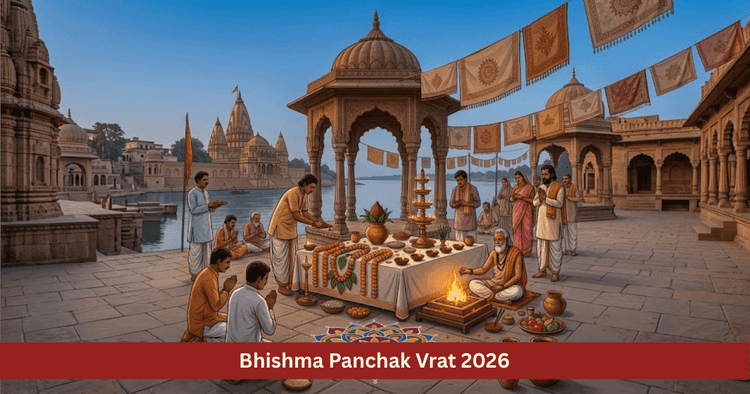
Table of Contents
Five Sacred Days of Vishnu Sadhana
Bhishma Panchak is a five day Vaishnava period observed from Kartik Shukla Ekadashi until Kartik Purnima. It is also called Vishnu Panchak and Panch Bhikhu Vrat. In 2026 this period will generally be observed from 20 November to 24 November. Kartik Purnima falls on Tuesday, 24 November.
Some Panchangas may show a difference because of regional calendars, Amanta and Purnimanta calculations and the sunrise rule for Ekadashi. The beginning and completion should therefore be decided according to the local Panchanga.
Bhishma Panchak is connected with the austerity, Vishnu devotion and teachings of Bhishma Pitamaha on the bed of arrows. It is not correct to say that Bhishma gave up his life during these five days. According to the Mahabharata tradition Bhishma waited for Uttarayana and left his body around Magha Shukla Ashtami. The name Bhishma Panchak is connected with the memory of his austerity, restraint and surrender to Vishnu.
| Detail | Bhishma Panchak 2026 information |
|---|---|
| Vrat | Bhishma Panchak, Vishnu Panchak |
| Beginning | Friday, 20 November 2026 |
| Completion | Tuesday, 24 November 2026 |
| Period | Kartik Shukla Ekadashi to Kartik Purnima |
| Main deity | Lord Vishnu and Shri Krishna |
| Supporting worship | Tulsi, Shiva, Surya and remembrance of Bhishma |
| Main practice | Vishnu Mantra, lamps, bathing and donation |
| Food | Fruit based or sattvic restraint |
| Purpose | Self purification, devotion and dharma reflection |
| Main caution | No severe fasting against health |
Basic Rules of the Vrat
• Bathe in the morning and remember Lord Vishnu
• Keep truth, restraint and sattvic food for all five days
• Chant Om Namo Bhagavate Vasudevaya
• Light a lamp near Tulsi
• Donate food, clothes, sesame and useful items
• Remember the life and teachings of Bhishma
• Observe the fast according to ability
• Do not keep a waterless fast during illness or weakness
Puranic Context of Bhishma Panchak
After the Mahabharata war Bhishma Pitamaha remained on the bed of arrows. He had received the boon of choosing the time of death. He could have left the body immediately but waited for Uttarayana. During this period he taught Yudhishthira about Rajadharma, Apaddharma, Mokshadharma, donation, ethics and duties of life.
The life of Bhishma is an example of vows, promises and strict practice of dharma. His promise made him great but it also created difficult decisions in life. Therefore Bhishma should be remembered not only for praise but also for understanding the complexity of dharma and decisions.
The five day practice of Bhishma Panchak is connected with the memory of his restraint, Vishnu devotion and reflection on dharma. It asks the sadhaka which vow has been taken in life and whether that vow remains only a word or lives through conduct.
Spiritual Sequence of Five Days
The five days of Bhishma Panchak may be connected with the five elements, five senses and five stages of sadhana. This sequence is not compulsory in every tradition but can be useful for meditation and practice.
| Day | Practice feeling | Simple activity |
|---|---|---|
| First | Resolve and purification | Bathing, Vishnu worship and lamp offering |
| Second | Control of senses | Sattvic food and restraint in speech |
| Third | Donation and service | Donate food, clothes or medicine |
| Fourth | Reflection on dharma | Vishnu Sahasranama and Bhishma remembrance |
| Fifth | Surrender and completion | Kartik Purnima bathing, lamps and Arati |
The purpose is not to keep the body hungry. It is to create some distance from unnecessary desires.
Why Is It Called Bhishma Panchak?
Different traditions explain the name of Bhishma Panchak in different ways. In Vaishnava practice it is regarded as a five day Vrat dedicated to Lord Vishnu. Folk tradition connects it with the austerity and dharmic reflection of Bhishma during his time on the bed of arrows.
Bhishma followed vows, service and Rajadharma throughout life. Personal comfort was less important to him than promise and responsibility toward the kingdom. For this reason his name is remembered with restraint and sacrifice.
Yet it is not proper to treat Bhishma life as a simple ideal. His vow made him great but his silence during the humiliation of Draupadi in the Kuru assembly also reveals the complexity of dharma. The true study of Bhishma Panchak teaches that dharma is not only keeping a promise. It is also the ability to make a proper decision before injustice.
Worship of Lord Vishnu
Worship of Lord Vishnu is central during Bhishma Panchak. Vishnu is the deity of protection, balance, dharma and order of life. Kartik is already considered special for Vishnu and Damodara devotion. During these final five days remembrance of Vishnu can steady the mind.
Simple Vishnu Worship
- Bathe and wear clean clothes
- Place an image of Vishnu or Krishna in the worship area
- Keep a Tulsi plant nearby
- Light a lamp and incense
- Offer water, flowers, Akshata and Tulsi
- Chant Om Namo Bhagavate Vasudevaya
- Read Vishnu Sahasranama or the Gita
- Offer food, fruits or Naivedya
- Perform Arati
- Donate to someone in need
Do not damage the Tulsi plant while taking leaves. Take only what is needed for worship.
Food During Bhishma Panchak
Different traditions follow different food rules during Bhishma Panchak. Some devotees take only fruits. Some take one sattvic meal. Some follow a special food sequence for the five days.
| Vrat type | Food option |
|---|---|
| Fruit based | Fruits, milk and coconut water |
| One meal | Sabudana, buckwheat and water chestnut |
| Sattvic food | Fresh food without onion and garlic |
| Light Vrat | Green gram, Khichdi and seasonal vegetables |
| General health Vrat | Restraint in grains with Vishnu worship |
Pregnant women, breastfeeding mothers, children, elders and people with illness should not keep a strict fast. Medical advice is necessary for diabetes, blood pressure, kidney or heart disease.
If dizziness, confusion, fainting, chest pain or difficulty breathing occurs take water and medical help immediately. The purpose of fasting is not to harm the body.
Donations During the Five Days
Donation is considered important during Bhishma Panchak. The purpose is not to purchase sin removal or obtain a miracle. It is to reduce greed and increase the feeling of service.
| Donation | Spiritual feeling |
|---|---|
| Food | Nourishment of life |
| Fruits | Nature and health |
| Clothes | Respect and protection |
| Sesame | Purification and ancestral remembrance |
| Ghee | Lamp offering and nourishment |
| Blanket | Protection from cold |
| Book | Knowledge and dharma |
| Medicine | Compassion and health |
| Cattle fodder | Service to animals |
Donation should be clean, useful and respectful. Giving damaged or unusable objects only to complete a formality is not proper.
Remembrance of Bhishma
The following feelings are connected with the life of Bhishma.
• Seriousness of a promise
• Study of dharma
• Rajadharma
• Donation and service
• Acceptance of death
• Waiting for Uttarayana
• Respect for teachers and elders
• Patience during difficulty
While holding these feelings the passages of the Shanti Parva and Anushasana Parva may be read during the five days. If the complete reading is not possible the essence of Bhishma character and his teachings to Yudhishthira can be studied.
The greatest message of Bhishma is that knowledge is not only for listening. It is for bringing into decisions.
Bhishma Panchak and the Five Elements
The five days may be connected with the five elements. This is symbolic meditation and not a compulsory scriptural rule.
| Element | Practice feeling |
|---|---|
| Earth | Stability and responsibility |
| Water | Compassion and emotional purification |
| Fire | Austerity, energy and courage |
| Air | Mantra, breath and freedom |
| Space | Meditation, knowledge and self awareness |
A practitioner may meditate on one element each day. This allows the Vrat to become self observation and not only food restriction.
Kartik Snan and Bhishma Panchak
Kartik Snan is considered an important part of Bhishma Panchak. Morning bathing symbolises purification of the body and mind. Bathing in a river or pilgrimage place is traditional but clean water at home is also acceptable.
Do not force the body into cold water. Warm water may be safer for children, elders and people with illness. During river bathing consider depth, current and local safety.
The following may be done after bathing.
• Offer Arghya to Surya
• Chant a Vishnu Mantra
• Worship Tulsi
• Offer lamps
• Donate food
• Sit in peaceful meditation
Astrological View of Bhishma Panchak
Bhishma Panchak comes during Kartik Shukla Paksha. The bright fortnight indicates growing light and increase of sadhana. Ekadashi is associated with Chandra and restraint of the senses. Purnima symbolises completeness and light.
| Astrological element | Feeling of Bhishma Panchak |
|---|---|
| Ekadashi | Control of the mind |
| Shukla Paksha | Light and growth |
| Vishnu | Guru, protection and dharma |
| Tulsi | Shukra, Chandra and nature |
| Purnima | Completeness of mind |
| Bhishma remembrance | Shani, discipline and karma |
This is a general symbolic interpretation. Planetary affliction or life result cannot be decided only through Bhishma Panchak Vrat.
Does Bhishma Panchak Remove All Sins?
Religious tradition describes Bhishma Panchak as capable of reducing sin and supporting liberation. This does not mean that a five day Vrat automatically removes every karma of a person.
The practical meaning of sin reduction includes the following.
• Leaving unjust actions
• Reducing falsehood and deception
• Asking forgiveness
• Giving up unjustly acquired wealth
• Staying away from addiction and violence
• Serving elders and needy people
• Protecting animals and nature
• Restraining mind and speech
A Vrat may create the resolve for these changes. Without change in action fasting remains incomplete.
Which Mantras Can Be Chanted?
Vishnu Mantra
Om Namo Bhagavate Vasudevaya
This means salutations to Lord Vasudeva.
Vishnu Gayatri
Om Narayanaya Vidmahe Vasudevaya Dhimahi.
Tanno Vishnuh Prachodayat.
This means may we know Narayana, meditate upon Vasudeva and may Vishnu guide our intellect toward dharma.
Om Namo Narayanaya
This simple eight syllable mantra is dedicated to Lord Narayana.
The mantra may be chanted 11, 21 or 108 times. Do not chant only to complete a number. Try to bring purity into mind, speech and action.
Five Day Practice
First Day
Remember Lord Vishnu, bathe, light a lamp and take the Vrat resolve.
Second Day
Keep speech restrained and avoid criticism and anger.
Third Day
Donate food, clothes or medicine.
Fourth Day
Read the teachings of Bhishma and respect elders in the family.
Fifth Day
On Kartik Purnima bathe, offer lamps, worship Vishnu and donate.
This sequence is not compulsory. The practitioner may change it according to tradition and ability.
What Should Be Avoided?
• Do not keep a waterless fast when health worsens
• Do not compare the Vrat with others
• Do not spread an incorrect historical claim about Bhishma
• Do not create family conflict in the name of dharma
• Do not donate dirty items
• Do not pollute rivers and pilgrimage places
• Do not perform complex tantric practice without a guru
• Do not continue wrong actions while believing in a guarantee of sin removal
• Do not stop essential medical care for the Vrat
Self Purification and Reflection on Dharma
The importance of Bhishma Panchak is not limited to five days of fasting. Its deeper value lies in the reflection on dharma offered by Bhishma from the bed of arrows. He explained to Yudhishthira that Rajadharma is not only power. It is protection of the people and justice. Personal dharma is not only worship. It is proper action.
Bhishma Panchak gives a practitioner an opportunity to ask the following.
• Are promises being kept
• Are decisions just
• Is knowledge entering life
• Is service free from display
• Are responsibilities toward family and society being fulfilled
When a person reflects honestly upon these questions the Vrat becomes a method of self purification.
Completion on Kartik Purnima
Kartik Purnima is the final day of Bhishma Panchak. Bathing, lamp offerings, Vishnu worship, Shiva worship and donation may be performed. Dev Deepavali is also observed on this day in some traditions.
At completion offer Naivedya to Lord Vishnu. Donate food to a Brahmana, saint, cowshed, poor family or needy person. Take Prasada with the family.
At the end resolve to carry the peace and discipline of the Vrat into daily life.
Lasting Message of Bhishma Panchak
According to the general calculation Bhishma Panchak 2026 will run from 20 November to 24 November. This period from Kartik Shukla Ekadashi to Purnima is considered special for Vishnu devotion, Kartik bathing, lamps, donation and reflection on dharma.
It is not correct to say that Bhishma gave up his life during these five days. The correct feeling is that this Vrat is observed in remembrance of his austerity, discipline, knowledge of dharma and surrender to Vishnu.
Bhishma Panchak teaches discernment more than hunger, truth more than silence, conduct more than mantra and dharma more than fasting. When five days of practice become service, donation, restraint and just living the light of Kartik becomes steady within.
FAQ
When will Bhishma Panchak be observed in 2026?
According to the general North Indian Panchanga Bhishma Panchak will be observed from 20 November to 24 November 2026. It runs from Kartik Shukla Ekadashi until Kartik Purnima.
Did Bhishma Pitamaha leave his body during Bhishma Panchak?
No. The name is connected with his austerity and reflection on dharma. In the Mahabharata tradition Bhishma waited for Uttarayana and left his body around Magha Shukla Ashtami.
Which fast should be observed during Bhishma Panchak?
A fruit based fast, one sattvic meal or a grain free fast may be observed. A waterless fast should be kept only when health permits.
Which mantra should be recited during Bhishma Panchak?
Om Namo Bhagavate Vasudevaya, Om Namo Narayanaya and Vishnu Gayatri may be chanted.
What is the main spiritual benefit of Bhishma Panchak?
The Vrat encourages restraint of the mind, devotion to Vishnu, donation, self purification, reflection on dharma and disciplined living.
Get your accurate Kundali
Generate KundaliDid you like it?
Author
Pt. Abhishek Sharma (63)
Experience: 20
Consults About: Family Planning, Career
Clients In: Punjab, Haryana, Delhi
Share this article with friends and family
WELCOME TO
ZODIAQ
Right Decisions at the right time with ZODIAQ
