Mystery of Chhappan Bhog Annakut
By Pt. Abhishek Sharma
Food respect, nutrition and community health message
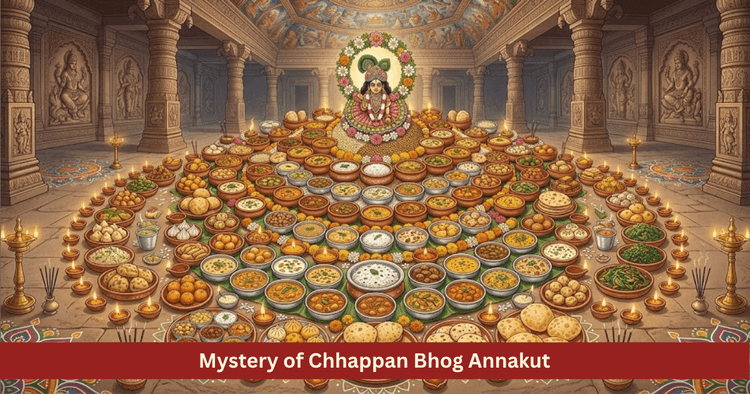
Table of Contents
When Food Becomes a Mountain of Gratitude
The tradition of offering 56 dishes to Lord Krishna on Govardhan Puja is famous as Chhappan Bhog and Annakut. Annakut literally means a mountain of food. Observed on Kartik Shukla Pratipada the festival comes after Diwali and expresses gratitude toward Govardhan Hill, cattle, grain, water, land and community life.
In 2026 Govardhan Puja may be observed on 9 or 10 November in different Panchangas. The difference comes from the beginning of Kartik Shukla Pratipada and the sunrise based calculation. Annakut should be prepared on the day considered valid for Pratipada in the local Panchanga.
The popular explanation of Chhappan Bhog is connected with seven days and eight periods of food. According to the story tradition Shri Krishna held Govardhan Hill for seven days and the people of Braj prepared 56 offerings to compensate for eight daily meals over seven days. Seven multiplied by eight gives 56. This is a beautiful devotional explanation but 56 dishes should not be treated as compulsory for every home.
The scientific meaning of Annakut does not mean that 56 dishes automatically provide every nutrient to every person. Real nutrition depends on ingredients, quantity, cleanliness and individual need. The social health message of Annakut is to prepare nourishing food, eat together and distribute remaining Prasada to people in need.
| Detail | Annakut 2026 information |
|---|---|
| Festival | Govardhan Puja and Annakut |
| Date | 9 or 10 November 2026 according to local Panchanga |
| Paksha | Kartik Shukla Paksha |
| Centre of worship | Shri Krishna and Govardhan |
| Main offerings | Grains, pulses, vegetables, fruits, sweets and drinks |
| Famous number | 56 according to tradition |
| Gau Seva | Fodder, water, treatment and protection |
| Food distribution | Family, temple and needy community |
| Main message | Respect for food, nature protection and community health |
| Caution | Avoid food waste and environmental pollution |
Basic Rules of Annakut
• Prepare fresh and clean vegetarian food
• Prepare only the quantity needed
• Do not treat 56 as a compulsory number
• Distribute Prasada properly after worship
• Give remaining food safely to people in need
• Keep suitable fodder separately for animals
• Avoid excess oil, salt and sweets
• Maintain cleanliness in worship and food
Relationship Between Govardhan Puja and Annakut
In the Govardhan story Shri Krishna taught the people of Braj to honour Govardhan, forest, water, land and cattle instead of worshipping only Indra. Life in Braj depended on the hill, grass, rainfall, fields and animals. Krishna explained that nature which directly nourished life deserved gratitude.
Indra felt insulted. He sent heavy rain and storms. Shri Krishna lifted Govardhan Hill and gave shelter to the people and animals of Braj. The entire community remained safe beneath the hill for seven days.
After the rain stopped the people of Braj prepared many foods to express gratitude toward Shri Krishna. The tradition of Annakut and Chhappan Bhog is connected with this feeling.
Religious Meaning of the Number 56
The number 56 is connected with the explanation of seven multiplied by eight. Braj tradition describes Krishna holding the hill for seven days and eight periods of food each day. The number symbolises devotion, gratitude and complete service.
Some temples prepare an elaborate list of Chhappan Bhog. It may include sweets, savouries, vegetables, pulses, rice, bread, fruits, pickles, chutneys, drinks and dairy preparations.
| Food category | Possible items |
|---|---|
| Grains | Rice, wheat, millet |
| Pulses | Green gram, gram, pigeon pea |
| Vegetables | Seasonal and leafy vegetables |
| Breads | Puri, roti, paratha |
| Sweets | Kheer, halwa, laddoo, peda |
| Fruits | Banana, apple, guava, Amla |
| Drinks | Milk buttermilk, Sharbat |
| Taste additions | Pickle, chutney, sugar candy |
| Nourishing foods | Yogurt, paneer, nuts |
The list changes by region and temple. If 56 dishes cannot be prepared at home five, eleven or another suitable number of varied foods may be offered.
Real Nutrition Message of Annakut
It is an exaggeration to call Annakut a complete nutrition plate only because it contains many foods. If most dishes are fried, very sweet or salty they may burden health.
Annakut still carries an important nutrition message. It may include variety from grains, pulses, vegetables, fruits and dairy foods. When prepared in balance the family experiences different food groups.
Balanced Annakut Plate
• One grain
• One or two pulses
• Seasonal vegetables
• Green leafy vegetable
• Yogurt or buttermilk
• One fruit
• Limited sweet
• Enough water
• Less oil and limited salt
This plate is not automatically suitable for every patient. People with diabetes, blood pressure, excess weight or digestive problems require control over sweets and quantity.
Tradition of Preventing Food Waste
The most important social message of Annakut is respect for food. Grain is a combined gift of farmer, soil, water, Sun, animals and labour. Throwing it away after using it only for decoration goes against the feeling of worship.
The following rules may reduce waste.
- Estimate the real number of guests
- Offer food in small vessels
- Arrange clean distribution of Prasada
- Cool remaining food quickly and store it safely
- Send food to people in need
- Give animals only suitable and safe food
- Do not feed spoiled food to animals
- Keep biodegradable waste separate
Respect for food should become a year round value and not remain limited to the festival.
Ancient Message of Community Health
Food is prepared and distributed collectively during Annakut. Family, temple, neighbours, farmers, cooks and volunteers become connected. Social relationships strengthen and needy people receive food.
For community health the following points should be observed.
• Clean hands and kitchen
• Use clean water
• Keep food covered
• Separate raw and cooked food
• Do not distribute spoiled or stale food
• Mention ingredients that may cause allergy
• Keep hot food at a safe temperature
• Arrange the crowd during distribution
Religious service becomes health service only when cleanliness and safety are followed.
Simple Annakut Method at Home
Annakut may be performed at a temple or home. A small Govardhan may be made from cow dung, clay or flour. If cow dung is not available a symbolic hill made from clay or flour is sufficient.
Worship Order
- Clean the home and kitchen
- Make a symbol of Govardhan
- Place a symbol of Shri Krishna and a cow near it
- Prepare fresh food
- Arrange offerings in separate vessels
- Light a lamp and incense
- Offer water, Akshata, flowers and Tulsi
- Offer Annakut to Lord Krishna
- Chant a Govardhan or Krishna Mantra
- Perform Arati
- Distribute Prasada
- Serve people in need and cattle
Krishna Mantra
Om Namo Bhagavate Vasudevaya
This means salutations to Lord Vasudeva.
Govardhanadharam Vande Gopalam Goparakshakam
This means salutations to Gopala who held Govardhan and protects cattle.
Annakut and Service to Cattle
Cattle are important in Govardhan Puja because the life of Braj depended on cows, milk, grass, agriculture and rural economy. Worship of a cow does not mean only applying Sindoor and a garland.
True Gau Seva
• Clean fodder
• Enough water
• Shade and safe shelter
• Treatment during illness
• Protection from plastic
• Relief from excessive load
• Responsible support to a cowshed
• Proper help to cattle keepers
Do not trouble cows with colours, chemicals or uncomfortable decoration. Comfort of the animal is above ritual display.
Annakut and the Environment
Annakut is a celebration of worship of the hill and nature. Environmental protection should therefore become part of worship. The cycle of grain continues when soil, water, forest and animals remain protected.
Environmental Resolves
• Use local grains
• Plant one tree
• Stop wastage of water
• Reduce plastic decoration
• Do not waste food
• Make compost from biodegradable waste
• Do not put worship material in water
• Keep water for animals and birds
Respect for Govardhan grows beyond lighting a lamp before a hill image and appears through protection of land and water.
Chhappan Bhog and Food Restraint
Variety of food increases the joy of Annakut but overeating is not necessary. Take Prasada in a small quantity. Keep food light for children, elders and patients.
| Person | Food caution |
|---|---|
| Person with diabetes | Limit sweets and sweet drinks |
| Person with blood pressure | Limit salt and fried food |
| Elder | Soft and easy to digest food |
| Child | Low spice and clean food |
| Pregnant woman | Personal medical diet |
| General person | Balance quantity and variety |
Avoid both excessive food and waste in the name of Annakut.
Psychological Meaning
The family cooks together during Annakut. Cooperation, creativity and celebration increase. Offering food to the Divine creates gratitude. Distributing Prasada replaces collection with sharing.
The story of Krishna lifting Govardhan teaches community cooperation during crisis. Annakut becomes the food form of that cooperation. Each person contributes a little and the whole community receives Prasada.
Astrological View
Govardhan Puja is observed on Kartik Shukla Pratipada. The bright fortnight indicates growth, light and a new cycle. Chandra, Guru, Shukra and the Earth principle may be symbolically connected with Annakut.
| Planet or principle | Feeling of Annakut |
|---|---|
| Chandra | Food, essence and family |
| Guru | Krishna, dharma and knowledge |
| Shukra | Nourishment, taste and prosperity |
| Earth | Field, hill and stability |
| Surya | Energy and crop |
| Water | Rain and life |
Annakut should not be treated as a definite treatment for personal planetary affliction. It is a practice of nature, food and community dharma.
What to Do and What Not to Do
Do
• Fresh and clean food
• Proper distribution of Annakut
• Service to cattle
• Respect for farmers and cooks
• Protection of water and land
• Teach children the value of food
• Feed people in need
Do not
• Spend excessively only to create 56 dishes
• Waste food
• Give spoiled food to animals
• Colour animals
• Throw waste into rivers or ponds
• Overeat sweets
• Turn Prasada into display
The Food Mountain and Life Balance
The tradition of Chhappan Bhog represents devotion, gratitude and community food. The story of seven days and eight periods gives feeling to the number 56. Yet more important than the number is respect for food and distribution of Prasada to people in need.
Annakut does not guarantee carbohydrates, protein and minerals through 56 dishes. Variety may support nutrition but nutrition depends on ingredients, quantity, cleanliness and individual needs. Balanced food, clean cooking and equal distribution connect the tradition with modern health.
The deepest message of Govardhan Puja is that food does not arrive only on a plate. Behind it are hill, water, soil, farmer, animal, Sun and community labour. When this understanding awakens Chhappan Bhog becomes more than food offered to Krishna. It becomes thanksgiving to the Earth.
FAQ
Why is Chhappan Bhog offered during Govardhan Puja?
According to tradition Krishna held Govardhan Hill for seven days and the people of Braj prepared 56 offerings to represent eight meals for each day. It symbolises devotion and gratitude.
Is it necessary to prepare 56 dishes at home?
No. The number 56 is traditional. Five, eleven or another suitable number of varied sattvic dishes may be offered according to ability.
Does Chhappan Bhog guarantee all nutrients?
No. Variety may support nutrition but nourishment depends on ingredients, quantity, cleanliness and health needs of each person.
What should be done with Annakut food after worship?
Distribute it as Prasada among family, community and needy people. Store remaining food safely and do not give spoiled food to anyone.
How can Gau Seva be performed on Govardhan Puja?
Give clean fodder, water, shelter and treatment and protect cattle from plastic. Decorating animals and taking photographs alone is not true Gau Seva.
Get your accurate Kundali
Generate KundaliDid you like it?
Author
Pt. Abhishek Sharma (63)
Experience: 20
Consults About: Family Planning, Career
Clients In: Punjab, Haryana, Delhi
Share this article with friends and family
WELCOME TO
ZODIAQ
Right Decisions at the right time with ZODIAQ
