Devutthana Ekadashi 2026
By Aparna Patni
Chaturmas ending, Vishnu awakening and Tulsi Vivah
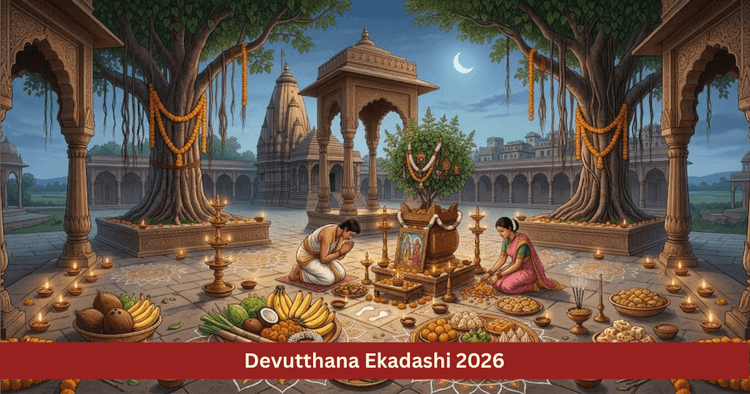
Table of Contents
When Lord Vishnu Awakens from Yoga Nidra
Devutthana Ekadashi is also called Prabodhini Ekadashi, Devotthana Ekadashi and Dev Uthani Gyaras. It is observed on the Ekadashi Tithi of the Kartik Shukla Paksha. In 2026 the Smarta tradition observes Devutthana Ekadashi on Friday, 20 November. Some Vaishnava and Gauna traditions may observe the fast on Saturday, 21 November because of the sunrise rule for the Tithi.
According to available Panchanga calculations the Ekadashi Tithi may begin at about 7:16 in the morning on 20 November and end at about 6:32 in the morning on 21 November. The fast is broken during Dwadashi. Parana timings may change according to the local Panchanga. Many families will perform Tulsi Vivah on Saturday, 21 November while some families perform the marriage on the evening of 20 November.
Devutthana Ekadashi is connected with the end of Chaturmas, the awakening of Lord Vishnu and the beginning of auspicious activities. The tradition of beginning weddings, house warmings, Upanayana and other sacred functions resumes after this day. The individual Muhurat for a wedding or house warming must still be considered separately.
| Detail | Devutthana Ekadashi 2026 information |
|---|---|
| Festival | Devutthana, Prabodhini and Devotthana Ekadashi |
| Main date | Friday, 20 November 2026 |
| Vaishnava tradition | Saturday, 21 November in some regions |
| Paksha | Kartik Shukla Paksha |
| Tithi | Ekadashi |
| Ekadashi begins | About 7:16 in the morning on 20 November |
| Ekadashi ends | About 6:32 in the morning on 21 November |
| Fast completion | During Dwadashi according to local Panchanga |
| Tulsi Vivah | 20 or 21 November according to family tradition |
| Main worship | Lord Vishnu, Tulsi and Shaligrama |
| Special symbol | Sugarcane mandap and lamp offering |
| Core feeling | Awakening, dharma, marital welfare and new beginnings |
Basic Rules of the Day
• Bathe in the morning and take the Vishnu Vrat resolve
• Avoid rice, wheat, pulses and grains during Ekadashi according to tradition
• Take fruits, milk, Sabudana and rock salt according to health
• Worship Lord Vishnu, Tulsi and Shaligrama
• Decorate a sugarcane mandap in the evening
• Perform Tulsi Vivah according to family tradition
• Break the fast at the proper time during Dwadashi
• Do not make the fast harsh against health
Chaturmas and Lord Vishnu Yoga Nidra
Chaturmas is regarded as the religious period from Ashadha Shukla Ekadashi until Kartik Shukla Ekadashi. It is also described as the period from Devshayani Ekadashi to Devutthana Ekadashi. Tradition holds that during this period Lord Vishnu remains in Yoga Nidra in the ocean of milk.
The tradition of postponing weddings and major auspicious functions during Chaturmas is connected with the rest of Lord Vishnu and seasonal change. Travel was difficult during the rainy season. Agriculture, health and social life also moved according to a different rhythm. Therefore large functions such as weddings were postponed in earlier society.
Devutthana Ekadashi symbolises the return of movement and celebration through the awakening of Lord Vishnu.
| Chaturmas stage | Spiritual feeling |
|---|---|
| Devshayani Ekadashi | Rest and inwardness |
| Rainy season | Restraint, vows and sadhana |
| Kartik month | Lamps, devotion and purification |
| Devutthana Ekadashi | Awakening and auspicious beginning |
| Tulsi Vivah | Sacred relationship and household dharma |
Tradition of Awakening Lord Vishnu
A method of awakening Lord Vishnu is performed on the morning of Devutthana Ekadashi. Some families awaken the Lord through a conch, bell, mantra and devotional song. A lamp is lit near Tulsi and the name of Vishnu is remembered.
Simple Awakening Method
- Bathe and wear clean clothes
- Clean the worship area
- Place Lord Vishnu or Shaligrama on a clean seat
- Light a lamp near the Tulsi plant
- Perform the awakening through a conch, bell or gentle song
- Chant Om Namo Bhagavate Vasudevaya
- Offer water, flowers and Tulsi to the Lord
- Ask forgiveness for mistakes during Chaturmas
- Take a resolve for auspicious activities
- Donate according to ability
Awakening the Lord does not mean that the Divine was literally asleep. It symbolises awakening of consciousness in the practitioner. After four months of discipline a person activates dharmic action again.
Spiritual Message of Devutthana Ekadashi
Devutthana Ekadashi is a festival of inner awakening before it becomes an outer celebration. During Chaturmas a person practised restraint, fasting, japa and self observation. Now the person returns to responsibility with awareness.
The main feelings of awakening are as follows.
• Awakening from laziness
• Awakening from ignorance
• Moving beyond old sorrow
• Beginning dharmic actions
• Responsibility toward family and society
• Purity in marriage and household life
• Proper use of wealth and power
If a person remains in falsehood, violence, deceit and laziness after worship the feeling of Devutthana remains incomplete. The evidence of awakening must appear in conduct.
Relationship with Tulsi Vivah
Tulsi Vivah is performed after Devutthana Ekadashi in many regions. Tulsi is regarded as a form of Lakshmi or Vrinda. Shaligrama represents Lord Vishnu. Their marriage symbolises the balance between nature and protection, devotion and dharma and feminine and masculine principles.
Some families perform Tulsi Vivah on the evening of Ekadashi. Many perform it on Dwadashi or another auspicious evening afterwards. In 2026 the tradition of performing Tulsi Vivah on 21 November is found in several Panchangas.
Tulsi Vivah is not only for unmarried people. Married couples may perform the worship for marital peace, love and family prosperity.
Why Is a Sugarcane Mandap Decorated?
Sugarcane represents sweetness, growth, agriculture and prosperity. Making a sugarcane mandap for Tulsi Vivah carries respect for nature and agricultural life.
A small mandap may be made with four or more sugarcane stalks above the Tulsi plant. A red or yellow Chunari, flowers and lamps may decorate it. Do not tie the sugarcane tightly around the plant. The branches should not be damaged.
| Mandap material | Symbol |
|---|---|
| Sugarcane | Growth, sweetness and agriculture |
| Red Chunari | Good fortune and Shakti |
| Yellow flowers | Guru and auspiciousness |
| Lamp | Awakening and light |
| Tulsi plant | Nature and devotion |
| Shaligrama | Vishnu and protection |
Devutthana Ekadashi Vrat Vidhi
Ekadashi fasting should be observed according to ability, family tradition and health. Some people keep a waterless fast. Some take fruits. Others avoid grains and take a sattvic meal.
Simple Fasting Sequence
- Take light food on Dashami night
- Bathe and take the resolve in the morning
- Meditate on Lord Vishnu
- Avoid rice, wheat, pulses and regular grains
- Take fruits, milk, fox nuts, Sabudana or rock salt
- Recite Vishnu Sahasranama or a Vishnu Mantra
- Offer a lamp to Tulsi
- Avoid falsehood, anger and criticism
- Perform Tulsi Vivah or Vishnu awakening in the evening
- Break the fast during Dwadashi
Pregnant women, breastfeeding mothers, elders, people with illness and those taking regular medicine should not keep a waterless fast. A fast is not a competition to cause suffering to the body.
Vishnu Mantra and Ekadashi Reading
Vishnu Mantra
Om Namo Bhagavate Vasudevaya
This means salutations to Lord Vasudeva.
Vishnu Gayatri
Om Narayanaya Vidmahe Vasudevaya Dhimahi.
Tanno Vishnuh Prachodayat.
This means we know Narayana, we meditate upon Vasudeva and may Vishnu guide our intellect toward dharma.
Tulsi Mantra
Om Tulsiyai Namah
This means salutations to Mother Tulsi.
Vishnu Sahasranama, reading of the Gita, Bhagavata stories and Hari Nama Sankirtana may also be performed. The purpose is not only collection of merit. It is to connect the mind with dharma and compassion.
Simple Method of Tulsi Vivah
Tulsi Vivah may be performed on the evening of Devutthana Ekadashi or Dwadashi.
Puja Materials
• Healthy Tulsi plant
• Shaligrama or Vishnu idol
• Sugarcane mandap
• Red or yellow Chunari
• Roli, turmeric and Akshata
• Flowers and garlands
• Lamp and incense
• Fruits, sweets and Panchamrita
• Kalasha
• Mauli
• Water and flowers for Kanyadan
Marriage Sequence
- Clean the Tulsi platform
- Make a sugarcane mandap
- Decorate Tulsi with Chunari and flowers
- Dress Shaligrama in yellow or white cloth
- Install both on separate platforms
- Worship Ganesha
- Apply Tilak to Tulsi and Shaligrama
- Offer garlands
- Tie a symbolic bond with Mauli
- Let an elder take the Kanyadan resolve
- Offer water, Akshata and flowers
- Perform Mangal Arati
- Perform seven symbolic circumambulations if tradition follows it
- Offer Bhoga
- Distribute Prasada and donation
Kanyadan does not make Tulsi the property of a person. It symbolises respect for nature, purity and household dharma.
Marriage Muhurat After Devutthana Ekadashi
The wedding season traditionally begins after Devutthana Ekadashi. This does not mean that every person can marry on the day after Ekadashi. Tithi, weekday, Nakshatra, Lagna, Shukra, Guru, seventh house and both birth charts need consideration for a wedding.
While selecting a wedding Muhurat consider the following.
• Condition of Shukra and Guru
• Birth charts of bride and groom
• Seventh house and seventh lord
• Auspiciousness of Chandra
• Tithi and Nakshatra
• Local time of the wedding place
• Family tradition
The religious permission for weddings opens after Chaturmas. The individual auspicious time of a wedding is calculated separately.
Remedies for Marriage Obstacles
An unmarried person may worship Lord Vishnu and Tulsi on Devutthana Ekadashi. The remedy should not be treated as a fixed promise of result.
Sattvic Remedies
• Serve a Tulsi plant
• Donate yellow lentils on Thursday
• Chant a Vishnu Mantra
• Pray for a suitable partner
• Maintain clear communication with the family
• Avoid unnecessary haste in marriage
• Organise education and career
• Understand responsibilities of married life
• Support the education of a needy family daughter
If a marriage obstacle appears in the birth chart seek guidance from a qualified astrologer. Avoid fear, curses and pressure for expensive rituals.
Importance of Donation
Donation has special importance during Kartik. On Devutthana Ekadashi food, clothes, yellow items, lamps and useful objects may be donated.
| Donation | Feeling |
|---|---|
| Food | Life and nourishment |
| Yellow lentils | Guru and knowledge |
| Clothes | Respect and protection |
| Lamp | Light and awakening |
| Tulsi plant | Nature and devotion |
| Book | Learning and discernment |
| Medicine | Health and compassion |
| Money | Support for the needy |
The dignity of the receiver should be preserved. Do not turn donation into public display.
Astrological Importance
Devutthana Ekadashi falls in the Kartik Shukla Paksha. The bright fortnight indicates growing light, hope and development. Ekadashi is connected with Chandra and restraint of the mind. Lord Vishnu represents protection, Guru Tattva and dharma. Tulsi may be symbolically connected with Shukra, Chandra, nature and gentleness.
| Principle | Astrological feeling |
|---|---|
| Vishnu | Guru, protection and dharma |
| Tulsi | Shukra, Chandra and nature |
| Ekadashi | Restraint of mind |
| Shukla Paksha | Growth and light |
| Awakening | Surya and consciousness |
| Marriage | Seventh house and Shukra |
This is a general symbolic interpretation. Personal results depend on the birth chart, planetary periods, transits and life circumstances.
What Should Be Avoided?
• Do not keep a waterless fast when health is poor
• Do not damage the Tulsi plant while decorating it
• Do not hurry into marriage Muhurat selection
• Do not begin a major auspicious activity without Panchanga or chart review
• Do not blame an unmarried person
• Do not spread fear in the name of tantra or planetary affliction
• Do not become angry with family during the fast
• Do not waste Prasada and food
From Awakening to Life Movement
The awakening of Lord Vishnu during Devutthana Ekadashi is a symbol of awakening dharma and responsibility within a person. A person who practised restraint, fasting and self observation during Chaturmas now returns to active life.
The sugarcane mandap gives the message of agriculture and sweetness. Tulsi Vivah shows the union of nature and protection. Vishnu worship brings maryada into life. Ekadashi fasting teaches restraint. Wedding Muhurat joins relationships with dharma and responsibility.
When Devutthana Ekadashi becomes more than a date for beginning weddings and becomes an opportunity to awaken life, its spiritual importance becomes visible.
An Auspicious Beginning in the Awakening of Hari
According to the Smarta tradition Devutthana Ekadashi 2026 may be observed on 20 November and some Vaishnava traditions may observe it on 21 November. Many families will perform Tulsi Vivah on 21 November. Confirmation through the local Panchanga is necessary.
The awakening of Lord Vishnu reminds a person that responsibility returns after every period of rest. Light follows every period of darkness. After every period of restraint comes a time for noble action.
For the person who takes a resolve for Tulsi service, Vishnu Mantra, sattvic fasting, donation and dharmic living this is not only a tithi. It becomes a sacred doorway of awakening, relationship, service and auspicious new beginnings.
FAQ
When is Devutthana Ekadashi in 2026?
According to the Smarta tradition Devutthana Ekadashi is on Friday, 20 November 2026. Some Vaishnava traditions may observe the fast on 21 November because of the sunrise rule.
Which auspicious activities begin after Devutthana Ekadashi?
The tradition of beginning weddings, house warmings, Upanayana and other auspicious activities resumes after Chaturmas. The individual Muhurat should be checked separately.
Why is a sugarcane mandap made on Devutthana Ekadashi?
Sugarcane represents growth, sweetness, agriculture and prosperity. In Tulsi Vivah the sugarcane mandap symbolises the auspicious union of nature and household life.
How should the Devutthana Ekadashi fast be observed?
Take the resolve after bathing, avoid grains according to tradition, take fruits or suitable sattvic food, chant Vishnu Mantras and break the fast at the proper Dwadashi time.
Is Tulsi Vivah compulsory on Devutthana Ekadashi?
Tulsi Vivah is performed by many families on the evening of Ekadashi or on Dwadashi. It is not compulsory and should follow family tradition and the local Panchanga.
Get your accurate Kundali
Generate KundaliDid you like it?
Author

Aparna Patni (63)
Experience: 20
Consults About: Family Planning, Career
Clients In: Punjab, Haryana, Delhi
Share this article with friends and family
WELCOME TO
ZODIAQ
Right Decisions at the right time with ZODIAQ
