Dhanteras 2026 Puja and Shopping
By Pt. Suvrat Sharma
Dhanvantari, Kubera, Lakshmi worship and shopping guide
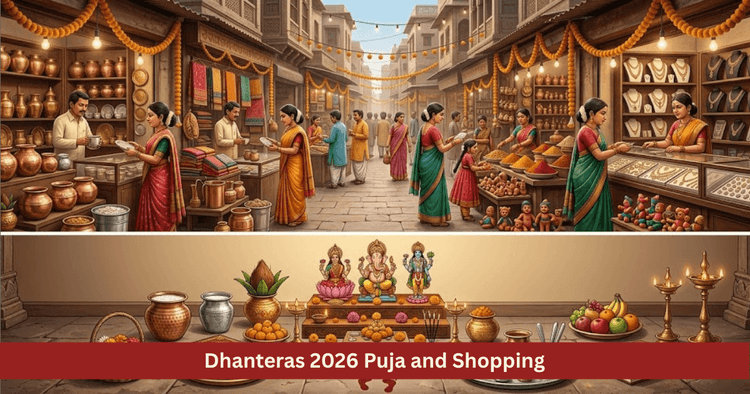
Table of Contents
A Festival of Health, Prosperity and Auspicious Beginnings
Dhanteras is also known as Dhantrayodashi and Dhanvantari Trayodashi. It is observed on the Trayodashi Tithi of the Kartik Krishna Paksha and is regarded as the beginning of the five day festival of Deepavali. In 2026 Dhanteras will be observed on Friday, 6 November. The tithi and Muhurat may differ slightly according to local Panchanga and regional tradition.
According to the available New Delhi Panchanga calculation the Trayodashi Tithi will begin at about 10:30 in the morning on 6 November and end at about 10:47 in the morning on 7 November. Pradosh Kaal and Vrishabha Kaal are given special importance for Dhanteras worship. The main worship period is generally considered to be about 6:17 in the evening to 8:15 in the evening.
Gold, silver, copper, brass, kitchen vessels, useful equipment, accounting material and household necessities may be purchased on Dhanteras. The purpose of shopping should not be only the collection of wealth. It should balance health, usefulness and prosperity.
| Detail | Dhanteras 2026 information |
|---|---|
| Festival | Dhanteras, Dhantrayodashi and Dhanvantari Trayodashi |
| Date | Friday, 6 November 2026 |
| Paksha | Kartik Krishna Paksha |
| Tithi begins | About 10:30 in the morning on 6 November |
| Tithi ends | About 10:47 in the morning on 7 November |
| Pradosh Kaal | Period after local sunset |
| Puja Muhurat | About 6:17 in the evening to 8:15 in the evening |
| Main worship | Dhanvantari, Lakshmi and Kubera |
| Yama Deep | At dusk outside the main entrance facing south |
| Shopping | Metals ornaments, vessels and useful items |
| Rahu Kaal | Avoid local Friday Rahu Kaal when following this tradition |
| Core feeling | Health, proper use, financial discipline and light |
Basic Rules of Dhanteras
• Clean the home and worship area during the day
• Decide the need and budget before shopping
• Worship Lakshmi, Kubera and Dhanvantari in the evening
• Keep the Yama Deep outside the main entrance facing south
• Check the local Panchanga if avoiding Rahu Kaal for new purchases
• Do not buy only for display by taking unnecessary debt
• Do not treat health and cleanliness as less important than wealth
• Donate food, clothes or health material after worship
Puranic Basis of Dhanteras
In the story of the churning of the ocean Lord Dhanvantari emerged carrying the pot of Amrita. He is regarded as the deity of Ayurveda, medicine and health. He held the pot of nectar and therefore Dhanteras should be understood not only as a festival of wealth but also as a festival of health and protection of life.
The manifestation of Goddess Lakshmi is also connected with the churning of the ocean. Lakshmi presides over prosperity, beauty, food order and auspiciousness. Kubera is regarded as the deity connected with preservation, storage and management of wealth.
The worship of Dhanteras contains the combined feeling of these three powers.
| Deity | Main feeling |
|---|---|
| Lord Dhanvantari | Life, medicine and health |
| Goddess Lakshmi | Wealth, food, good fortune and prosperity |
| Lord Kubera | Preservation organisation and treasury |
| Yama | Respect for life and protection from untimely death |
| Ganesha | Intelligence, beginnings and removal of obstacles |
If there is wealth without health prosperity remains incomplete. If there is income without management wealth does not remain stable. If there is wealth without wisdom it may become a cause of stress. Dhanteras teaches balance among all these aspects.
Lord Dhanvantari and Ayurveda
Lord Dhanvantari is regarded as the first divine teacher of Ayurveda. While worshipping Him on Dhanteras a person should resolve to become responsible toward health. Lighting a lamp alone does not end concern for health. Proper food, cleanliness, regular checkups, exercise, sleep and timely treatment are also part of Dhanvantari worship.
The following feelings may be held during Dhanvantari worship.
• Prayer for protection from disease
• Respect for the body
• Proper use of medicine
• Respect for doctors and health workers
• Restraint in food
• Giving up intoxicants and unhealthy habits
• Responsibility toward the health of the family
Dhanvantari Mantra
Om Namo Bhagavate Vasudevaya Dhanvantaraye Amritakalashahastaya Sarvamayavinashanaya Trailokyanathaya Shri Mahavishnave Namah.
The feeling of this mantra is salutations to Lord Dhanvantari who holds the pot of nectar, destroys disease and protects all worlds. It should be recited with clear pronunciation and devotion.
Importance of Kubera Worship
Kubera is regarded as the deity of wealth and the ruler of the north direction. His worship teaches more than attracting wealth. It teaches that money should be protected organised and used through dharma.
During Kubera worship the safe, account area, business documents, place of money storage and household financial arrangements may be cleaned. Traders may remember Ganesha, Lakshmi and Kubera near their account area.
Simple Steps for Kubera Worship
-
Clean the safe or account area
-
Place an image of Kubera on a red or yellow cloth
-
Remember Ganesha
-
Light a lamp and incense
-
Offer Akshata, Kumkum, flowers and Naivedya
-
Resolve to use wealth properly
-
Review business income and expenses
-
Offer food or financial help to someone in need
-
Chant the Kubera Mantra
-
Treat wealth as a means of service and not only collection
Kubera Mantra
Om Yakshaya Kuberaya Vaishravanaya Dhanadhanyapadaye Dhanasamriddhim Me Dehi Dapaya Swaha.
The feeling of this mantra is a prayer to Kubera for wealth, grain and prosperity. The resolve should be for balanced and dharmic prosperity and not greed.
What Is Auspicious to Buy on Dhanteras?
The tradition of buying metal is especially famous on Dhanteras. Gold and silver represent prosperity. Copper and brass are connected with health, fire and household life. A new kitchen vessel may represent food and the nourishment of the home.
The item should be useful and within financial capacity.
| Item | Traditional feeling | Practical use |
|---|---|---|
| Gold | Stable wealth and prosperity | Investment or ornament |
| Silver | Lunar peace and coolness | Ornament or vessel |
| Copper | Sun, health and energy | Vessel and worship material |
| Brass | Fire, household and tradition | Kitchen or worship vessel |
| Steel | Utility and stability | Kitchen vessels |
| Accounting material | Business order | Books and documents |
| Tools | Action and production | Business use |
| Medicine | Dhanvantari principle | Health care |
| Lamp | Light and auspiciousness | Worship and home light |
Buying a new item on Dhanteras is considered auspicious but unnecessary shopping is not required. Respectful use of an existing household item is also a form of prosperity.
Auspicious Shopping Muhurat
Pradosh Kaal and a stable ascendant are considered favourable for shopping on Dhanteras. Available calculations for New Delhi in 2026 describe the evening Vrishabha period as suitable for Lakshmi worship and purchase of lasting items.
Muhurat changes by city. Decide the purchase according to the local Panchanga and shop hours. For gold, silver, vehicles, land or a large asset personal birth chart and financial advice should also be considered.
Points to Consider Before Shopping
• Check the real need for the item
• Review budget and ability to pay
• Keep bills and certificates safe
• Check purity of gold and silver
• Understand the interest rate on debt
• Review safety and warranty of vehicles or machines
• Do not stop health or legal work only for a Muhurat
• Check local Rahu Kaal and Panchanga
Rule for Avoiding Rahu Kaal
Rahu Kaal is regarded as an inauspicious period in the daily Panchanga. On Friday it generally occurs in the morning but its duration changes according to local sunrise and sunset. The local Rahu Kaal may be checked for shopping or worship on Dhanteras.
Avoiding Rahu Kaal is a Muhurat tradition. When a medical appointment, journey, job, payment or necessary action falls during Rahu Kaal it may not always be possible to stop it. It is not proper to postpone essential work only because of fear.
When a family avoids Rahu Kaal for a new purchase the Pradosh Kaal or local auspicious Choghadiya may be used. The final decision should be taken from the local Panchanga.
In Which Direction Should Yama Deep Be Lit?
Dhanteras includes the tradition of Yama Deepdaan. At dusk one lamp is lit outside the main entrance of the home. This lamp is generally placed facing south because the south direction is associated with Yama.
Yama Deep carries the feeling of protection from untimely death, respect for the limits of life and remembrance of ancestors. It should not be lit to create fear. It is a symbol of gratitude and care toward life.
Simple Method of Yama Deep
-
Take an earthen lamp
-
Add mustard oil or oil according to tradition
-
Place the wick
-
Light the lamp at dusk
-
Place it outside the main entrance facing south
-
Pray to Yama for protection and long life of the family
-
Keep flammable material away from the lamp
Some families use a four wick lamp. Other families use one wick. The number and size may differ according to regional tradition.
Lakshmi Worship and Direction of the Home
On Dhanteras Goddess Lakshmi is welcomed through cleanliness, light and good conduct. Many families light lamps at the main entrance, in the worship area and in a clean part of the north or east of the home.
The south direction is used for Yama Deep. The main Lakshmi lamp should be kept in the worship area or another clean and safe part of the home. Fire safety should receive priority along with direction.
| Lamp | Direction or place | Feeling |
|---|---|---|
| Yama Deep | Outside main entrance facing south | Protection from untimely death |
| Lakshmi lamp | Worship area | Wealth and auspiciousness |
| Tulsi lamp | Near Tulsi | Vishnu devotion and nature |
| Courtyard lamp | Safe and clean place | Light in the home |
| Business lamp | Shop or account area | Business and order |
Keep lamps away from curtains, paper, cloth and children. Change the location when wind is strong.
Dhanteras Puja Vidhi
Dhanteras worship is performed during Pradosh Kaal in the evening. The home and worship area should be cleaned during the day.
Simple Worship Order
-
Clean the home, shop and worship area
-
Draw Rangoli or auspicious symbols near the entrance
-
Spread a clean cloth on the worship platform
-
Install Dhanvantari, Lakshmi, Kubera and Ganesha
-
Offer water, Akshata, Kumkum and flowers
-
Light lamps and incense
-
Chant the Dhanvantari Mantra
-
Chant Lakshmi and Kubera Mantras
-
Place newly purchased items in worship
-
Offer account books or business documents
-
Perform Arati
-
Light the Yama Deep
-
Donate food, clothes or health material
Placing a new item in worship is considered auspicious. If no new item is purchased an existing useful household item may also be placed respectfully in worship.
Dhanteras and Health Prosperity
The deepest message of Dhanteras is that health comes before wealth. Worship of Lord Dhanvantari gives an opportunity to review lifestyle.
The following health resolves may be taken on Dhanteras.
• Regular health checkups
• Balanced food
• Distance from intoxicants
• Adequate sleep
• Light daily exercise
• Correct use of medicine
• Clean water and food at home
• Care for elders in the family
• Seek help during mental stress
If a person buys an expensive ornament on Dhanteras while neglecting health the spiritual balance of the festival remains incomplete.
Importance of Donation on Dhanteras
Donation on Dhanteras is considered a way to keep the Lakshmi principle moving. Wealth does not become secure only through accumulation. When some of it is used for service greed reduces and the social meaning of wealth develops.
The following items may be donated.
• Grains
• Warm clothes
• Medicine
• Hospital or health support
• Educational material
• Lamps and oil
• Ration for a needy family
• Fair payment to a worker
Preserve the dignity of the receiver. Taking photographs for display or making someone poverty public is not appropriate.
Dhanteras for Traders
Traders worship account books, safes, shops and business tools on Dhanteras. This is not only worship of money. It is an opportunity for financial discipline.
Traders may review the following.
• Old pending payments
• Tax and legal duties
• Worker wages
• Business debt
• Quality of goods
• Customer service
• Balance of expenses and profit
• Plan for the coming year
The real meaning of Kubera worship is proper use and protection of wealth. If deceit, unjust profit or exploitation of workers continue in business lasting prosperity cannot come through worship alone.
What Should Be Avoided on Dhanteras?
Some people spend unnecessarily because of fear or display on Dhanteras. The following should be avoided.
• Do not spend beyond budget only because of Muhurat
• Do not purchase fake or uncertified ornaments
• Do not take debt for display shopping
• Do not become excessively fearful of Rahu Kaal
• Do not perform Lakshmi worship after creating conflict at home
• Do not keep lamps in unsafe places
• Do not spread waste and plastic after worship
• Do not postpone health related needs
• Do not use wealth only for personal display
Astrological View of Dhanteras
The principles of Shukra, Guru, Budha, Chandra and Surya may be symbolically connected with Dhanteras. Shukra is connected with wealth, beauty and material comfort. Guru represents expansion, dharma and protection. Budha relates to business, accounts and calculation. Chandra indicates household happiness and mental peace. Surya is connected with health and inner strength.
| Planet | Indication in Dhanteras |
|---|---|
| Shukra | Wealth, beauty and prosperity |
| Guru | Expansion, dharma and protection |
| Budha | Business, accounts and intelligence |
| Chandra | Household happiness and mind |
| Surya | Health and inner strength |
| Kubera principle | Preservation and management of wealth |
While selecting a Muhurat tithi, weekday, Nakshatra, Yoga, Karana, ascendant and local time are considered. Personal birth chart and actual financial condition are also important for an individual purchase.
The True Wealth of Dhanteras
A vessel, lamp ornament or tool purchased on Dhanteras is a symbol of outer prosperity. True wealth also lies in health, trust, family, knowledge, labour and balanced financial management.
Lord Dhanvantari teaches protection of the body. Goddess Lakshmi teaches cleanliness, proper use and beauty. Kubera teaches management of wealth. Yama Deep reminds a person of the limited nature of life and the need for care.
Dhanteras worship becomes complete when a person does not only purchase an object but also takes a resolve for a noble way of life. A lamp is lit in the home and discernment awakens along with it. Wealth enters the safe and donation and responsibility enter along with it. This is the true light of Dhanteras.
FAQ
When will Dhanteras be observed in 2026?
Dhanteras will be observed on Friday, 6 November 2026. It falls on the Trayodashi Tithi of the Kartik Krishna Paksha.
What is the Dhanteras Puja Muhurat in 2026?
For New Delhi the main Puja Muhurat is generally considered to be about 6:17 in the evening to 8:15 in the evening. Local Panchanga timings may differ.
What is auspicious to buy on Dhanteras?
Gold, silver, copper, brass, kitchen vessels, lamps, useful equipment, accounting material and medicine may be purchased.
In which direction should the Yama Deep be lit on Dhanteras?
The Yama Deep is generally lit outside the main entrance facing south. It is regarded as a symbol of protection from untimely death and gratitude toward life.
How can Rahu Kaal be avoided on Dhanteras?
Check the local Friday Rahu Kaal through a Panchanga. Pradosh Kaal and a local auspicious time may be used for new purchases and worship.
Get your accurate Kundali
Generate KundaliDid you like it?
Author
Pt. Suvrat Sharma (63)
Experience: 20
Consults About: Family Planning, Career
Clients In: Punjab, Haryana, Delhi
Share this article with friends and family
WELCOME TO
ZODIAQ
Right Decisions at the right time with ZODIAQ
