Diwali 2026 Lakshmi Puja
By Pt. Amitabh Sharma
Pradosh Kaal, fixed lagna, Shri Sukta and Kanakadhara
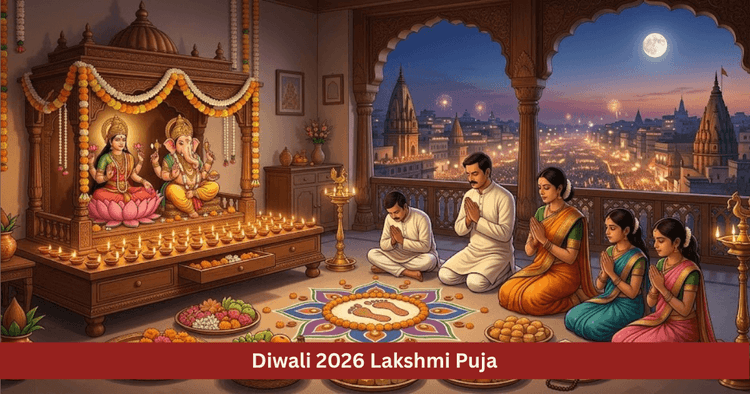
Table of Contents
The Great Festival of Light on Amavasya Night
Diwali is the great festival of light, prosperity and auspicious beginnings observed on the night of Kartik Amavasya. In 2026 Diwali will be celebrated on Sunday, 8 November. On this day Lakshmi Ganesha worship, lamp offerings, cleaning of the home, family gathering and recitation of Shri Sukta and Kanakadhara Stotram are especially performed.
According to the available New Delhi Panchanga calculation the Amavasya Tithi will begin at about 10:47 in the morning on 7 November and end at about 11:27 in the morning on 8 November. Lakshmi Puja is performed on the day when Amavasya is present during Pradosh Kaal. In 2026 Pradosh Kaal will remain from about 5:31 in the evening to 8:09 in the evening.
The best time for Lakshmi Puja is considered during a fixed lagna. Vrishabha Lagna is a fixed lagna and is regarded as especially auspicious for making Lakshmi stay in the home. In New Delhi Vrishabha Lagna will remain from about 5:56 in the evening to 7:52 in the evening. This period is regarded as the main Muhurat for Lakshmi Ganesha worship.
| Detail | Diwali 2026 information |
|---|---|
| Festival | Diwali, Deepavali, Lakshmi Puja |
| Date | Sunday, 8 November 2026 |
| Paksha | Kartik Krishna Paksha |
| Tithi | Amavasya |
| Amavasya begins | About 10:47 in the morning on 7 November |
| Amavasya ends | About 11:27 in the morning on 8 November |
| Pradosh Kaal | About 5:31 in the evening to 8:09 in the evening |
| Lakshmi Puja Muhurat | About 5:56 in the evening to 7:52 in the evening |
| Fixed lagna | Vrishabha Lagna |
| Mahanishita Kaal | About 11:39 at night to 12:31 after midnight |
| Main worship | Lakshmi, Ganesha, Kubera and Saraswati |
| Special recitation | Shri Sukta and Kanakadhara Stotram |
| Core feeling | Light, prosperity, cleanliness and stable Lakshmi |
Basic Rules of Diwali
• Clean the home, courtyard and worship area fully during the day
• Place lamps, Rangoli and auspicious signs at the main door
• Perform Lakshmi Ganesha worship in Pradosh Kaal during fixed lagna
• Worship Ganesha before Lakshmi
• Recite Shri Sukta or Kanakadhara Stotram with devotion
• Keep the safe, account books and wealth area clean
• Care for fire safety and the safety of children
• Donate food, clothes or health support after worship
Spiritual Meaning of Diwali
Diwali is not only a festival of lighting lamps. Spreading light on the dense night of Amavasya is regarded as a symbol of the victory of knowledge over ignorance. Where a lamp burns outside there should also be a resolve within to reduce greed, anger, jealousy and laziness.
Many stories are connected with Diwali. In North India the return of Lord Rama to Ayodhya is remembered. In the Vaishnava tradition the grace of Goddess Lakshmi and Lord Vishnu is central. In the Jain tradition the Nirvana of Lord Mahavira is remembered. In the Sikh tradition Bandi Chhor Divas holds importance. All these streams lead toward light, freedom and auspiciousness.
The most practical message of Diwali is that prosperity comes with cleanliness, discipline, honest action and gratitude.
Why Is Pradosh Kaal Important?
Pradosh Kaal is regarded as a sacred period after sunset. On Diwali Pradosh Kaal is chosen for Lakshmi Puja because the Amavasya Tithi remains active in that evening period and the mind becomes calmer for worship after the activity of the day.
Fixed lagna is important because traditional belief holds that worship done in a movable lagna may leave Lakshmi unstable. Vrishabha Lagna is connected with the earth element and stability. For this reason it is considered best for Sthira Lakshmi, meaning stable prosperity.
| Period | Time feeling | Use |
|---|---|---|
| Pradosh Kaal | After sunset | Main Lakshmi worship |
| Vrishabha Lagna | Fixed lagna | Muhurat for stabilizing Lakshmi |
| Mahanishita | Near midnight | Special sadhana and Kali worship traditions |
| General lamp offering | Evening to night | Light at home and doorway |
Mahanishita Kaal is considered special in some Shakta and sadhana traditions. For a general householder Pradosh Kaal and Vrishabha Lagna are sufficient and safe Muhurats. Complex tantric practices should not be performed without guidance from a guru.
Lakshmi Ganesha Puja Materials
Arrange materials before worship.
| Material | Use |
|---|---|
| Idol or image of Ganesha and Lakshmi | Installation |
| Image of Kubera | Feeling of wealth protection |
| Kalasha | Completeness and auspicious beginning |
| Red or yellow cloth | Seat |
| Roli, Akshata, turmeric | Tilak and offering |
| Flowers, especially lotus or rose | Offering to the Devi |
| Lamp and ghee or oil | Light |
| Incense | Fragrance |
| Sweets, fruits, betel | Naivedya |
| Coins, safe or account book | Lakshmi Kubera feeling |
| Book of Shri Sukta or Stotram | Recitation |
| Water and Panchamrita | Abhisheka |
If materials are limited worship is still possible with clean water, a lamp, flowers and devotion. Feeling and cleanliness are more important than expensive materials.
Lakshmi Ganesha Puja Vidhi
In Diwali worship Ganesha is remembered first because He is the remover of obstacles and the lord of auspicious beginnings. After that Lakshmi, Kubera and according to family tradition Saraswati are worshipped.
Simple Worship Order
- Bathe and wear clean clothes
- Spread a platform and cloth in the worship area
- Install Ganesha, Lakshmi and Kubera
- Establish the Kalasha
- Offer water, Akshata, flowers and Modaka to Ganesha
- Offer water, Akshata, Kumkum, flowers and Naivedya to Lakshmi
- Place the safe, coins or account book in worship
- Recite Shri Sukta or Kanakadhara Stotram
- Chant Lakshmi and Ganesha mantras
- Perform Arati
- Offer a prayer for forgiveness
- Distribute Prasada
- Light lamps at the door and courtyard
- Give food or clothes to someone in need
It is considered auspicious for the family to sit together during worship. Children may also be taught simple mantras and lamp offering.
Ganesha and Lakshmi Mantras
Ganesha Mantra
Om Gam Ganapataye Namah
This means salutations to Ganapati. It is a mantra for removal of obstacles and auspicious beginning.
Lakshmi Mantra
Om Shreem Mahalakshmyai Namah
This means salutations to Mahalakshmi. The seed sound Shreem indicates prosperity and auspiciousness.
Combined Prayer
Om Shreem Hreem Shreem Kamale Kamalalaye Prasida Prasida.
Shreem Hreem Shreem Mahalakshmyai Namah.
The feeling of this prayer is to request grace and favour from Mahalakshmi who dwells in the lotus.
The count of japa may be 11, 21 or 108. Clear pronunciation and concentration of mind are more important than number.
Rules for Reciting Shri Sukta
Shri Sukta is regarded as a sacred hymn of Goddess Lakshmi connected with the Rigveda. In it Lakshmi is remembered as the presiding deity of prosperity, fame, food, cattle, progeny and auspiciousness. Recitation of Shri Sukta is considered especially auspicious on Diwali.
Simple Method of Shri Sukta Recitation
- Keep the worship area clean
- After bathing sit facing east or north
- Light a lamp
- Meditate on Lakshmi
- Recite Shri Sukta with clear pronunciation
- Offer flowers or Akshata after each mantra if desired
- Offer a prayer for forgiveness at the end
- Take Prasada
If the complete Shri Sukta is not memorised read slowly from an authentic book. Instead of leaving the recitation out of fear of wrong pronunciation a simple Lakshmi mantra may also be chanted.
The feeling of Shri Sukta is not only to ask for money. It also contains prayer for fame, good conduct, family stability and auspiciousness in life. A person who desires wealth through injustice moves away from the essential feeling of Shri Sukta.
Importance of Kanakadhara Stotram
Kanakadhara Stotram is a hymn to Goddess Lakshmi in the tradition associated with Adi Shankaracharya. Kanakadhara means a stream of gold. According to the story Shankaracharya praised Lakshmi after being moved by the selfless devotion of a poor woman and a flow of grace followed.
The feeling of reciting Kanakadhara Stotram on Diwali is that wealth should come with compassion, donation and goodwill. Recitation done only with the desire for accumulation remains incomplete.
Rules for Kanakadhara Recitation
• Recite with clean clothes and a calm mind
• Sit before the image of Lakshmi or a lamp
• Remember Ganesha before the recitation
• Try to complete the Stotram in one sitting
• If time is less recite a few verses daily with regularity
• Help someone in need after the recitation
• Resolve to avoid misuse of wealth
Fixed Lagna and Stable Lakshmi
In astrology lagnas are movable, fixed and dual. Installation and worship performed in a fixed lagna are considered to give lasting results. Vrishabha, Simha, Vrishchika and Kumbha are fixed signs. On the Diwali evening Vrishabha Lagna is often available and is therefore chosen for Lakshmi Puja.
Stable Lakshmi does not mean only bank balance. It means the following.
• Stability of income
• Discipline in spending
• Cooperation in the family
• Protection of health
• Honest business
• Control of debt
• Feeling of donation and service
If worship is done in a fixed lagna and life remains disordered the benefit of the outer Muhurat remains limited. Muhurat opens the door. Walking still has to be done by the sadhaka.
Home and Direction Arrangement on Diwali
Lakshmi is believed to dwell in a clean, well lit and peaceful home. The main door should be open, clean and decorated. Clean broken lamps, waste and dark corners.
| Place | What to do |
|---|---|
| Main door | Rangoli, toran and lamps |
| Worship area | Installation of Ganesha and Lakshmi |
| Safe | Cleaning with turmeric and Akshata |
| Kitchen | Cleanliness with Annapurna feeling |
| Courtyard | Rows of lamps |
| Tulsi | Lamp and water |
| Bedroom | Do not keep excessive disorder |
Lighting lamps in the clean north or east part of the home is considered auspicious in many families. Yet fire safety is above every direction.
Five Day Deepavali Sequence
Diwali is not only a one day festival. It is the centre of a five day sequence.
| Day | Festival | Feeling |
|---|---|---|
| First | Dhanteras | Beginning of health and wealth |
| Second | Narak Chaturdashi | Purification and Yama Deep |
| Third | Diwali | Lakshmi Ganesha worship |
| Fourth | Govardhan Puja | Respect for nature and grain |
| Fifth | Bhai Dooj | Family affection |
In 2026 Dhanteras is considered on 6 November, the evening feeling of Narak Chaturdashi on 7 November and main Diwali on 8 November. Confirm with the local Panchanga.
Psychological View of Diwali
The night of Amavasya is counted among the darkest nights of the year. Lighting lamps on that night tells the mind that however difficult the situation may be a small light is still worth beginning. Family togetherness, cleaning of the home, sweets and prayer together increase hope and social connection.
For traders it is a time of new account books and new resolves. For householders it is a time of gratitude and family love. For seekers it is a time to see the darkness of the inner self and choose light.
What to Do and What Not to Do
Do
• Clean the home
• Worship during fixed lagna
• Perform joint worship of Ganesha and Lakshmi
• Recite Shri Sukta or Kanakadhara
• Offer lamps
• Take sattvic food
• Donate
• Speak gently with family
Do not
• Leave the home dirty and disordered
• Shop only for display
• Quarrel during worship
• Use unsafe crackers
• Use intoxicants
• Insult a needy person
• Limit Lakshmi only to money
• Pollute the environment
Astrological Indications
On Diwali the Moon is with the Sun in Amavasya. This combination indicates the meeting of mind and soul, the ending of old burdens and a new resolve. Shukra is connected with prosperity and beauty, Guru with dharma and expansion and Budha with business and calculation.
| Planet | Diwali feeling |
|---|---|
| Surya | Inner strength and light |
| Chandra | Mind and household happiness |
| Shukra | Lakshmi, beauty, comfort |
| Guru | Dharma, donation, stability |
| Budha | Business, accounts, intelligence |
| Shani | Discipline and karma |
Personal wealth yoga cannot be decided only from the Diwali Muhurat. The birth chart and karma require integrated consideration.
From Lamp to Prosperity
On Diwali 2026 Pradosh Kaal and Vrishabha fixed lagna on 8 November are regarded as especially favourable for Lakshmi Ganesha worship. Shri Sukta and Kanakadhara Stotram can become vocal mediums of Devi grace. Yet true prosperity becomes stable when the home is clean, income is just, spending is restrained, health is protected and the heart holds the feeling of donation.
The night of Amavasya reminds people that darkness is not permanent. Even one lamp can change direction. When that lamp burns with discernment, devotion and family love Lakshmi dwells not only in the safe but in every arrangement of life.
FAQ
When is Diwali in 2026?
Diwali will be celebrated on Sunday, 8 November 2026. Lakshmi Puja will be performed on the same day during Pradosh Kaal.
What is the Lakshmi Puja Muhurat for Diwali 2026?
In New Delhi the best Lakshmi Puja time is considered from about 5:56 in the evening to 7:52 in the evening. This is the Vrishabha fixed lagna within Pradosh Kaal.
Why is Lakshmi Puja done in a fixed lagna?
Traditional belief holds that Lakshmi remains stable when worshipped in a fixed lagna. Vrishabha Lagna indicates stability and lasting prosperity.
How should Shri Sukta be recited on Diwali?
After bathing light a lamp in a clean place, meditate on Lakshmi and recite Shri Sukta with clear pronunciation. End with a prayer for forgiveness and take Prasada.
Why is Kanakadhara Stotram recited on Diwali?
Kanakadhara Stotram is a hymn to Goddess Lakshmi. It is recited as a prayer for prosperity coming with compassion and goodwill.
Get your accurate Kundali
Generate KundaliDid you like it?
Author
Pt. Amitabh Sharma (56 Years)
Experience: 20
Consults About: Family Planning, Career
Clients In: Punjab, Haryana, Delhi
Share this article with friends and family
WELCOME TO
ZODIAQ
Right Decisions at the right time with ZODIAQ
