Diwali Nishith Kaal Sadhana
By Pt. Amitabh Sharma
Lakshmi Mahakali worship, night sadhana and safety rules
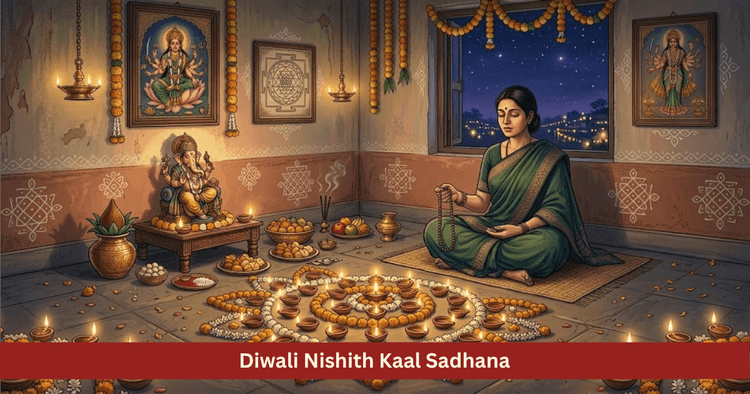
Table of Contents
Invoking Shakti at the Amavasya Midnight
On the Amavasya night of Diwali Pradosh Kaal and Vrishabha fixed lagna are generally considered primary for Lakshmi Puja. The Nishith Kaal that follows is regarded in some Shakta, tantric and special sadhana traditions as a suitable period for Mahakali, Bhairavi, Kubera and other divine practices.
Diwali in 2026 will be observed on Sunday, 8 November. According to available New Delhi calculations Pradosh Kaal will remain approximately from 6:01 in the evening to 8:40 at night and Vrishabha fixed lagna from about 6:27 in the evening to 8:27 at night. Nishith Kaal will remain approximately from 11:39 at night until 12:31 after midnight on 9 November. Timings change according to city, sunrise, sunset and Panchanga method.
For a general householder Lakshmi Ganesha Puja during Pradosh Kaal and fixed lagna is sufficient. Complex Kali or tantric sadhana during Nishith Kaal should be performed only with guidance from a qualified guru. Reading a few mantras at midnight does not guarantee destruction of enemies or unlimited wealth.
| Detail | Diwali 2026 information |
|---|---|
| Festival | Diwali and Lakshmi Puja |
| Date | Sunday, 8 November 2026 |
| Paksha | Kartik Krishna Paksha |
| Tithi | Amavasya |
| Pradosh Kaal | About 6:01 in the evening to 8:40 at night |
| Vrishabha fixed lagna | About 6:27 in the evening to 8:27 at night |
| Nishith Kaal | About 11:39 at night to 12:31 after midnight on 9 November |
| Household worship | Lakshmi, Ganesha and Kubera |
| Shakta practice | Mahakali or Devi worship according to guru guidance |
| Main mantras | Om Shreem Mahalakshmyai Namah and Om Kreem Kalikayai Namah |
| Core caution | No complex tantric practice without a guru |
Basic Rules of Nishith Sadhana
• Clean the worship area in advance
• Complete household Lakshmi Ganesha worship during Pradosh Kaal
• Chant only simple and familiar mantras at Nishith
• Do not perform tantric rituals without guru guidance
• Stay away from alcohol, violence and fear based practices
• Do not leave lamps and fire unattended
• Do not practise Nishith Sadhana during mental instability or fear
• Keep the aim as purification, protection and discernment
What Is Nishith Kaal?
Nishith Kaal is the period around midnight when the transition between the energies of day and night is considered special. Different Panchangas calculate its duration according to sunset and sunrise.
Shakta traditions connect this period with Mahakali, Bhairavi and night forms of the Devi. From a tantric view outer activity becomes quiet and the practitioner receives an opportunity to turn inward.
Nishith Kaal alone does not make a practice successful. Mantra initiation, preparation, conduct, pronunciation and intention remain important. Remaining awake late at night is not tantric sadhana.
Combined Feeling of Lakshmi and Mahakali
Goddess Lakshmi presides over prosperity, food, beauty order and household happiness. Mahakali is the power of time, transformation and destruction of fear and ego. Their combined feeling teaches that wealth becomes beneficial only when fear and ego remain under control.
Lakshmi worship brings stability to the home. Kali worship may inspire a person to face hidden weakness, greed and falsehood. Wealth without discernment can become destructive. Power without compassion can make practice harsh.
| Devi feeling | Life message |
|---|---|
| Lakshmi | Wealth, grain and order |
| Mahakali | End of fear, ego and ignorance |
| Saraswati | Knowledge and speech |
| Durga | Protection and courage |
| Kubera | Preservation and management of wealth |
| Ganesha | Intelligence and removal of obstacles |
Simple Nishith Sadhana for Householders
Householders do not require a complex tantric method. Lakshmi Ganesha worship during Pradosh Kaal and peaceful Mantra japa during Nishith may be enough.
Simple Method
- Complete cleaning of the home during the day
- Perform Lakshmi Ganesha worship during Pradosh Kaal
- Keep the safe, account books and wealth area clean
- Light lamps and incens
- Chant a Lakshmi Mantra
- Sit on a calm seat during Nishith
- Steady the breath for a few minutes
- Chant Om Shreem Mahalakshmyai Namah
- Pray for peace, health and wisdom in the family
- End the practice and check that lamps remain safe
If staying awake at night is harmful to health perform the complete worship during Pradosh Kaal. The Divine should not be worshipped by harming the body.
Lakshmi Mantra
Om Shreem Mahalakshmyai Namah
This means salutations to Mahalakshmi. The mantra is chanted with the feeling of prosperity, auspiciousness and peace in the home.
Combined Lakshmi Prayer
Om Shreem Hreem Shreem Kamale Kamalalaye Prasida Prasida.
Shreem Hreem Shreem Mahalakshmyai Namah.
The feeling is a request for grace and favour from Goddess Lakshmi who dwells in the lotus.
The count may be 11, 21 or 108. Pay attention to pronunciation and concentration.
Mahakali Mantra and Caution
Various seed mantras and tantric mantras are available for Mahakali practice. A general householder should chant a simple Devi Name or a Mantra received from a guru.
Om Kreem Kalikayai Namah
This means salutations to Mother Kalika. Kreem is regarded as a seed feeling of Kali Shakti.
Seed mantras are better practised with guru guidance. Long rituals, special Nyasa, cremation ground practice, sacrifice, fear based practice or actions intended to harm someone are entirely improper without initiation and guidance.
The real meaning of Mahakali worship is not destroying other people. It is recognising inner fear and ego.
Correct Meaning of Enemy Destruction
Nishith Sadhana during Diwali is sometimes linked with destruction of enemies. Its sattvic meaning is not to harm another person. It means the following.
• Victory of courage over fear
• Victory of contentment over greed
• Victory of discernment over anger
• Victory of knowledge over confusion
• Victory of discipline over laziness
• Victory of truth over falsehood
If a practitioner performs Kali practice to harm a person the practitioner moves away from the compassionate and dharmic form of the Devi.
Kubera and Wealth Practice at Nishith
Some traditions perform Kubera practice at midnight. Kubera is regarded as the deity of storage and preservation of wealth. For a householder the simple meaning of Kubera worship is proper management of money.
Kubera Worship Steps
- Clean the safe or account area
- Place an image of Kubera
- Remember Ganesha and Lakshmi
- Light a lamp and incense
- Offer fruits, flowers and Akshata
- Review business income and expenses
- Chant Om Yakshaya Kuberaya Namah
- Take a resolve for financial discipline
The Kubera Mantra does not guarantee wealth. Without debt control, budgeting, saving and honest income every wealth practice remains incomplete.
Materials for Diwali Nishith Puja
| Material | Use |
|---|---|
| Lakshmi and Ganesha idol | Household worship |
| Mahakali image | Shakta practice |
| Kubera image | Wealth protection |
| Lamp and ghee | Light and sattvic quality |
| Sesame oil | Shani and ancestral feeling |
| Red flowers | Shakti and Lakshmi |
| Dark flowers | Some Kali traditions |
| Akshata and Kumkum | Resolve |
| Fruits and Naivedya | Offering |
| Rudraksha or lotus seed Mala | Japa |
Materials for Kali practice may differ according to tradition. A general householder does not need to collect intense or secret materials.
Difference Between Lakshmi Puja and Nishith Sadhana
| Worship | Time | For whom |
|---|---|---|
| Lakshmi Ganesha Puja | Pradosh Kaal | All householders |
| Vrishabha fixed lagna worship | Evening fixed period | Stability of Lakshmi |
| Kubera worship | Pradosh or according to tradition | Traders and householders |
| Mahakali worship | Nishith Kaal | Practitioners with guru tradition |
| Simple Mantra japa | According to convenience | All devotees |
It is not necessary for every householder to leave Pradosh Puja and worship only during Nishith. The main Lakshmi Puja is traditionally performed during Pradosh Amavasya.
Lamp and Fire Safety
Nishith Kaal is quiet and people may sleep. Burning lamps should therefore not be left unattended. Keep curtains, paper, cloth and children away.
Fire Safety Rules
• Use a stable earthen or brass lamp
• Keep the amount of oil limited
• Place the lamp on a metal or earthen plate
• Keep it away from wires and crackers
• Explain safety to children
• Maintain distance from pets
• Extinguish the lamp before sleep
Neglect of safety cannot be considered auspicious in spiritual practice.
Mental Preparation
Midnight practice can increase fear and imagination. A practitioner troubled by anxiety, insomnia, mental instability or fear should not perform complex night practice. Prayer before a lamp, Lakshmi Mantra and peaceful meditation are enough.
Keep the following resolve before practice.
• Do not harm anyone
• Do not misuse wealth
• Work for family and social welfare
• Work on anger and greed
• Do not turn sadhana into display
The resolve decides the direction of practice.
Importance of a Guru in Tantric Rules
Guru is important in Tantra, Mantra and Shakti practice because knowledge of pronunciation, direction, Nyasa, conduct, timing and mental preparation is necessary. Incorrect practice can increase fear, confusion and mental stress.
A safe household path includes the following.
• Lakshmi Ganesha worship
• Mahakali Name remembrance
• Vishnu Mantra
• Deepdaan
• Food donation
• Tulsi worship
• Prayer for family peace
Do not imitate unknown secret rituals, sacrifice, negative practices or enemy harm without guru guidance.
Psychological Light of Kartik Amavasya
Amavasya brings outer darkness. During Nishith a practitioner may connect that darkness with inner fear. The name of Mahakali reminds the person not to run from darkness but to understand it. The Lakshmi lamp says that order, peace and beauty can return to life.
This is a useful psychological symbol. Do not lose sleep, health or discernment in the search for unusual experiences.
What to Do and What Not to Do
Do
• Clean the home during the day
• Perform Lakshmi Ganesha worship during Pradosh
• Chant simple mantras during Nishith
• Keep the safe and account area organised
• Donate food and clothes
• Remember Mahakali without violence
• Keep lamps safe
Do not
• Perform tantric practices without a guru
• Take a resolve to harm someone
• Pay for expensive rituals because of fear
• Leave fire unattended
• Mix alcohol and violence with worship
• Treat Nishith Sadhana as a guarantee of wealth
Discernment That Awakens in Darkness
The Nishith night of Diwali is regarded as deep for sadhana but its depth does not arise only from midnight. Lakshmi worship during Pradosh teaches order and prosperity to the householder. Mahakali practice teaches work on ego and fear. Kubera worship teaches management of wealth.
When the practitioner understands Kali along with Lakshmi it becomes clear that prosperity requires not only collection but also the ending of negative habits. The lamp burns outside and discernment awakens within. This is the real secret of Diwali Nishith Sadhana.
FAQ
When is Nishith Kaal during Diwali 2026?
According to available New Delhi calculations Nishith Kaal will be approximately 11:39 at night to 12:31 after midnight on 9 November. Local timings may differ.
Should householders perform Mahakali worship during Nishith Kaal?
Householders may perform Lakshmi Ganesha worship during Pradosh and simple Mantra japa during Nishith. Complex Mahakali or tantric practice should not be performed without a guru.
Which Lakshmi Mantra should be recited at Nishith Kaal?
Om Shreem Mahalakshmyai Namah may be chanted with cleanliness, devotion and a resolve to use wealth properly.
Does Mahakali practice destroy enemies?
In the sattvic meaning enemy destruction means victory over fear, anger, greed, confusion and ego. Practice intended to harm a person is improper.
Does Nishith Sadhana bring unlimited wealth?
There is no fixed guarantee. Sadhana may discipline the mind but honest income, budgeting, saving and correct decisions remain necessary for wealth.
Get your accurate Kundali
Generate KundaliDid you like it?
Author
Pt. Amitabh Sharma (56 Years)
Experience: 20
Consults About: Family Planning, Career
Clients In: Punjab, Haryana, Delhi
Share this article with friends and family
WELCOME TO
ZODIAQ
Right Decisions at the right time with ZODIAQ
