Sacred Mystery of Kartik Deepdaan
By Pt. Nilesh Sharma
Evening lamps at Tulsi Peepal river doorway and oils
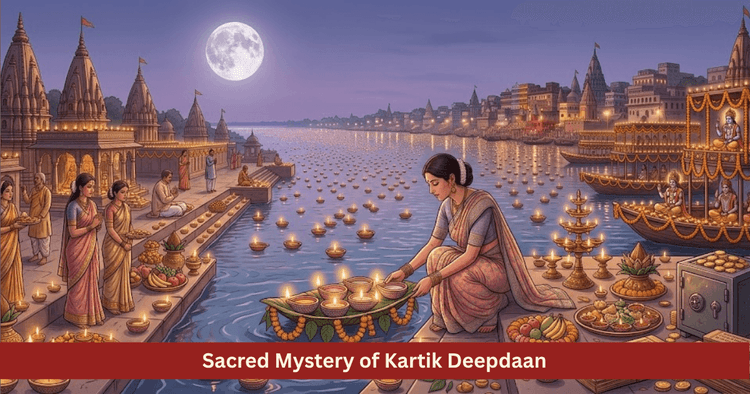
Table of Contents
When the Evening Flame Teaches Darkness
Kartik month is called the month of lamps. It is the period after Ashwin when bathing, donation, Tulsi service, Vishnu remembrance and evening Deepdaan are considered especially meritorious. In 2026 Kartik Purnima is observed on Tuesday, 24 November. Throughout the month there is a tradition of lighting lamps at Tulsi, Peepal, Amla, river ghats, temples and the main doorway at dusk.
Deepdaan is regarded as a practice that supports ancestral peace, relief from planetary obstacles and reduction of unknown fear. This belief rests on spiritual tradition and folk astrology. There is no certain proof that one lamp automatically ends a birth chart affliction. The lamp is a symbol of knowledge, discipline, gratitude and good conduct. The practice becomes complete when donation, truth and clean living accompany it.
| Detail | General rule of Kartik Deepdaan |
|---|---|
| Month | Kartik |
| Main period | Evening and Pradosh |
| Special days | Ekadashi, Amavasya, Purnima |
| Main places | Tulsi, Peepal, Amla, river, temple, main doorway |
| Best fuel | Cow ghee or sesame oil |
| Other oil | Mustard oil for special deities and the south |
| Wick | Clean cotton wick |
| Vessel | Earthen, copper or brass lamp |
| Core feeling | Light, ancestral remembrance, Vishnu devotion, planetary peace |
| Caution | Fire safety and respect for nature |
Basic Rules
• Light the lamp around sunset after bathing or sipping water for purity
• Keep the lamp on a clean and stable place
• Prefer ghee or sesame oil near Tulsi
• Light a lamp near Peepal and in the south with ancestral remembrance
• Do not put plastic or chemicals into the river
• Keep lamps away from children and cloth
• Keep regularity and feeling above display
Why Is Deepdaan Special in Kartik?
Kartik is regarded as dear to Lord Vishnu, Tulsi and lamp practice. Nights grow longer. The sky becomes comparatively clear. Evening darkness deepens slowly. Lighting a lamp at this hour becomes a symbol of knowledge over ignorance and remembrance over fear.
Religious language says that even a small meritorious act in Kartik gives great fruit. Its practical meaning is that a small regular act changes character. Lighting an evening lamp daily trains a person in time, cleanliness, gratitude and family gathering.
Pitru Dosha, planetary obstacles and unknown fear are three different levels. Ancestral remembrance is joined with gratitude and service. Planetary obstacles are joined with the birth chart, planetary periods and karma. Unknown fear is joined with restlessness of the mind. Deepdaan may have a symbolic and psychological effect on all three but it does not replace medical care, safety and practical improvement.
Lamp Near Tulsi
Tulsi is regarded as beloved of Vishnu and a form of Lakshmi. Lighting a lamp near Tulsi morning and evening is considered the foremost household practice of Kartik. Many families keep one lamp of ghee or sesame oil at the Tulsi platform.
The feeling of the Tulsi lamp is auspiciousness, health and Vishnu remembrance in the home. Some traditions advise avoiding mustard oil near Tulsi during Kartik. If the family tradition mentions ghee or sesame oil that practice should be followed.
Tulsi Lamp Method
- Keep the area around Tulsi clean
- Take a small earthen lamp
- Add ghee or sesame oil
- Place a cotton wick
- Light the lamp at dusk
- Chant Om Namo Bhagavate Vasudevaya
- Offer water and flowers to Tulsi
- Protect the plant from excess heat and oil
Many families avoid plucking Tulsi leaves on Sunday and Ekadashi. Lighting a lamp is a different act. Follow the family rule about leaves.
Lamp Under Peepal
Peepal is associated with Vishnu, Shani and ancestral remembrance. Lighting a lamp under Peepal during Kartik is a famous folk remedy for ancestral peace and Shani related obstacles. A lamp of sesame or mustard oil is lit near Peepal. Some practitioners remember black sesame and ask forgiveness.
Pouring oil on the roots or damaging the trunk is not worship. Keep the lamp at a safe distance so that fire does not spread. Do not leave plastic or waste.
| Place | Main feeling | Suggested oil |
|---|---|---|
| Tulsi | Vishnu Lakshmi and household peace | Ghee or sesame oil |
| Peepal | Ancestral remembrance and Shani peace | Sesame or mustard oil |
| Amla | Kartik merit and health | Ghee |
| River ghat | Ancestral satisfaction and Vishnu grace | Ghee or sesame oil |
| Temple | Deity worship | Ghee |
| Main doorway | Lakshmi protection and barrier to negativity | Ghee or sesame oil |
| South direction | Yama and ancestors | Sesame or mustard oil |
Lamp Near the Amla Tree
The Amla tree has special importance in Kartik. Amla worship and Amla Navami are observed in several regions. Amla is associated with Lakshmi, health and merit. Lighting a ghee lamp near it is regarded as increasing Kartik merit.
If there is no Amla tree at home an Amla fruit may be worshipped and a lamp lit. Do not harm a tree to collect worship material.
Deepdaan at a River Ghat
Lamp offering at a river or lake is associated with satisfaction of ancestors and the grace of Vishnu and Lakshmi. Folk interpretation of the Garuda Purana connects a lamp near flowing water with ancestral rites. The feeling is gratitude and remembrance.
If a lamp is floated use an earthen or leaf lamp. Plastic bowls, thermocol and chemicals pollute water. Lighting a lamp safely on the ghat steps may also be regarded as sufficient merit.
Steps for River Deepdaan
• Bathe or sip water for purity
• Resolve that the lamp is for ancestors, deities and public welfare
• Fill a clean lamp with ghee or sesame oil
• Remember Ganga or the local river
• Light the lamp and keep it on a safe bank
• Do not put waste into the water
• Donate food or clothes
Temple Lamp and Main Doorway Lamp
Offering a lamp in a temple is a simple form of deity worship. An evening lamp may also be lit in the home shrine. An evening lamp at the main doorway is regarded as a welcome to Lakshmi and a barrier to negative entry.
Keep the doorway lamp on a stable inner platform so that wind does not topple it. Keep distance from curtains, paper and children. The Lakshmi feeling comes from cleanliness and peaceful conduct and not only from a doorway lamp.
Which Oil in Which Direction?
Folk astrology links direction, oil and planets in a symbolic way. This table is not a guarantee of affliction removal.
| Direction or place | Oil | Related planet or principle | Feeling |
|---|---|---|---|
| East | Ghee | Surya | Inner strength, health, new light |
| South | Sesame oil | Shani, Yama, ancestors | Ancestral peace, discipline |
| Southwest | Mustard oil | Shani, Rahu folk feeling | Protection from obstacles and unknown fear |
| North | Ghee | Kubera, Guru | Wealth order, knowledge |
| West | Sesame or ghee | Varuna, water principle | Emotional purification |
| Northeast | Ghee | Ishwara and Shiva Vishnu | Spiritual peace |
| Peepal | Sesame or mustard | Shani, Vishnu | Relief of karmic obstacles |
| Tulsi | Ghee | Vishnu, Shukra | Household happiness and devotion |
Sesame oil is linked with Shani and ancestral rites. Mustard oil is linked with Hanuman, Kala Bhairava and removal of obstacles. Ghee is linked with sattvic quality, Surya and Vishnu. Coconut oil is mentioned in some traditions for Chandra peace.
It is not necessary to burn a different oil in every direction of one home. Family tradition and fire safety come first.
Pitru Dosha and Deepdaan
Pitru Dosha can be a complex combination in a birth chart. It is not proper to treat it as ended by a lamp alone. During Kartik a sesame oil lamp in the south or near Peepal is regarded as a sattvic ancestral remembrance.
Along with it service to parents, respect for Shraddha tithi, food donation and truthful conduct are necessary. Spreading fear in the name of ancestral displeasure is not dharma.
Planetary Obstacles and Unknown Fear
A planetary obstacle may mean affliction of a planet in the birth chart. The lamp remembers the principle of that planet. Folk remedies mention ghee and the east for Surya, sesame oil and Saturday for Shani and mustard oil with cleanliness for Rahu related fear.
Unknown fear often grows from darkness, loneliness, sleeplessness and uncertainty. The evening lamp gathers the family in one place. Attention on the flame steadies the mind. Regularity may reduce fear. Seeking help from a health professional during severe anxiety is also in harmony with dharma.
General Method of Lighting the Lamp
- Wash hands and feet and wear clean clothes
- Wash and dry the lamp
- Add ghee or suitable oil
- Keep the wick straight
- Take an evening resolve
- Light the lamp
- Chant a mantra
- Sit silently for a few moments
- Do not leave the lamp unattended in an unsafe place
- Dispose of ash respectfully after the lamp goes out
Simple Mantras
Om Namo Bhagavate Vasudevaya
This means salutations to Lord Vasudeva.
Deepajyotih Parabrahma Deepajyotir Janardanah.
This means the lamp light is the Supreme Brahman and the light of Janardana.
What to Do and What Not to Do
Do
• Regular evening lamps
• Cleanliness of Tulsi and the doorway
• Grateful remembrance of ancestors
• Food donation
• Safe earthen lamps
• Teach children the meaning of light
Do not
• Plastic lamps in the river
• Pouring oil on tree roots
• Cloth near a burning lamp
• Expensive rituals created by fear of planetary affliction
• Competition to light more lamps than others
• Neglect of health and fire safety
Psychological Light of the Lamp
A small flame in darkness gives the mind a centre. Long Kartik evenings can increase worry. The lamp teaches the family to meet at dusk. Ancestral remembrance awakens gratitude. Temple and river connect a person with community.
Invisible benefits often appear within. Less fear, a stable routine, a cleaner home and gentler speech are the true fruits of Deepdaan. A full safe or the end of illness is not certain from a lamp alone.
From Flame to Living
Evening Deepdaan at Tulsi, Peepal, Amla, river, temple and doorway during Kartik is a path of Vishnu devotion, ancestral gratitude and symbolic planetary peace. Ghee indicates Surya and sattvic quality. Sesame oil indicates Shani and ancestors. Mustard oil indicates removal of obstacles. Directions arrange these feelings.
When truth, donation, service and caution join the lamp darkness reduces not only outside but also within. The greatness of Kartik does not live in the number of lamps. It lives in a regular flame and pure conduct.
FAQ
Where should Deepdaan be performed in Kartik month?
Evening Deepdaan at Tulsi, Peepal, Amla, a river ghat, a temple and the main doorway of the home is considered auspicious.
Which oil is best for Kartik Deepdaan?
Cow ghee is regarded as the most sattvic. Sesame oil is used for ancestral and Shani remembrance. Mustard oil is mentioned for some deities and the south direction.
In which direction should a lamp be lit for Pitru Dosha peace?
Folk tradition mentions a sesame or mustard oil lamp in the south, near Peepal or on the southern part of the roof for ancestral remembrance.
Does Deepdaan remove planetary obstacles?
Deepdaan is a symbolic and sattvic remedy. Birth chart analysis, donation, conduct and practical improvement should also be considered for planetary obstacles.
How can river Deepdaan be done safely?
Use an earthen or leaf lamp, light it on a safe bank, do not put plastic or chemicals into the water and keep children away from the river.
Get your accurate Kundali
Generate KundaliDid you like it?
Author
Pt. Nilesh Sharma (63)
Experience: 20
Consults About: Family Planning, Career
Clients In: Punjab, Haryana, Delhi
Share this article with friends and family
WELCOME TO
ZODIAQ
Right Decisions at the right time with ZODIAQ
