Kartik and Hemanta Ritucharya
By Aparna Patni
Diet, Agni and health protection during seasonal change
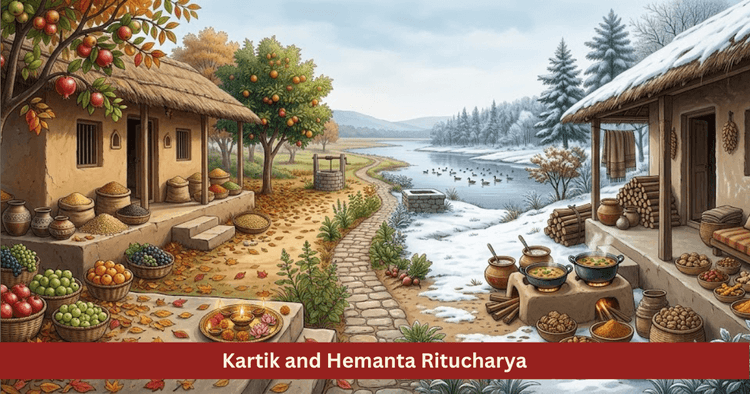
Table of Contents
When Sharad Coolness Becomes Hemanta Strength
Kartik month is a sensitive period of seasonal change. The clear warmth of Sharad gradually decreases and the influence of Hemanta Ritu begins to increase. In many regions the mornings and nights become noticeably colder during the later part of Kartik. This fall in temperature encourages the body to preserve its inner warmth.
Ayurveda regards Hemanta Ritu as a period when Jatharagni becomes stronger. Because of external cold the body retains heat within. This may increase appetite in some people and may improve the ability to digest nourishing food. Yet this does not mean that every person should begin taking large amounts of ghee, sweets or heavy food. Diet must depend on constitution, age, activity, health and local climate.
During Kartik the body may be prepared for the coming cold through spiritual practice, morning bathing, lamp offerings and sattvic living along with a balanced Hemanta routine. Warm water, fresh food, limited ghee, adequate rest, light exercise and protection from cold air are the main health principles of this period.
Primary Order of Kartik and Hemanta Transition
Hemanta does not begin on the same day in every region. Experience of cold changes according to altitude, geography, distance from the sea and local temperature. Ritucharya should therefore be adopted gradually according to local weather.
| Time or condition | Health rule |
|---|---|
| Beginning of Kartik | Continue the lighter Sharad routine |
| Later Kartik | Increase warm food and warm water |
| Morning | Protect the body from cold air |
| Day | Take limited and safe sunlight |
| Food | Take fresh, nourishing and easy to digest food |
| Exercise | Regular activity according to bodily capacity |
| Bathing | Use comfortably warm water |
| Night | Wear adequate warm clothing and sleep on time |
| Special caution | Avoid sudden heavy food or severe fasting |
Basic Rules
• Keep food warm, fresh and balanced
• Use ghee and oil in limited quantity according to the body
• Reduce cold drinks and iced food
• Protect the head, ears and chest from cold morning air
• Bathe with comfortably warm water
• Exercise lightly and regularly
• Do not suppress hunger for long periods
• Seek medical advice for illness or chronic conditions
Why Does Agni Increase in Hemanta?
From the Ayurvedic view external cold causes body heat to become concentrated within. This may strengthen Jatharagni. When digestion is strong the body may digest nourishing and somewhat heavy food more efficiently.
This principle changes from person to person. Those who perform regular physical work, are accustomed to cold and have good digestion may benefit from nourishing food. A person with low activity, weak digestion, diabetes, acidity or excess weight may experience discomfort from large amounts of ghee, sweets and heavy food.
The correct meaning of stronger Agni is to create balance between appetite and digestive capacity. Even when hunger increases attention to quality and quantity remains necessary.
| Condition of Agni | Suitable approach |
|---|---|
| Good appetite and digestion | Nourishing food may be increased moderately |
| Low appetite | Take light and warm food |
| Acidity | Reduce very fried, spicy and sour food |
| Gas or heaviness | Adjust pulses and grains according to the body |
| Diabetes | Limit sweets and jaggery |
| Low activity | Balance ghee and heavy food |
What Should Be Eaten During Kartik?
During Hemanta food may be warm, fresh, nourishing and sufficiently wholesome. Ayurvedic tradition mentions sweet, sour and salty tastes during this season. From the modern nutrition view sufficient energy, protein, healthy fats, fibre, vitamins and minerals are also necessary.
Useful Food Items
• Wheat and rice
• Millet, sorghum and other local grains
• Green gram and other easy to digest pulses
• Vegetables and root vegetables
• Sesame, flaxseed, peanuts and limited nuts
• Milk when suitable for the body
• A small amount of ghee
• Jaggery in limited quantity
• Dates and raisins in limited quantity
• Ginger, cumin, carom seeds and turmeric
• Warm soups and freshly cooked food
Local and seasonal food is generally a better choice. Excessive processed, packaged, fried or sweet food is not a suitable way to use the stronger Agni of Hemanta. It may adversely affect weight, blood sugar and digestion.
How Much Ghee Is Suitable?
Ghee is regarded as nourishing and unctuous during Kartik and Hemanta. It can provide taste, energy and satiety. Yet ghee is not equally suitable in the same quantity for every person.
The amount of ghee should depend on age, activity, digestion, weight, blood lipids and medical condition. Excessive ghee may cause heaviness, weight gain and increased lipid concerns in some people.
| Condition of the person | Caution regarding ghee |
|---|---|
| High physical activity | May be useful in limited quantity |
| General health | Take a small amount with food |
| Low activity | Keep the quantity low |
| Excess weight | Seek expert guidance |
| Lipid concerns | Medical advice is necessary |
| Weak digestion | Avoid excessive ghee |
The most suitable use of ghee is a limited amount with fresh food. Eating heavy ghee based dishes continuously only because of the season cannot be considered a health rule.
Importance of Warm Water
During Hemanta warm water may feel comfortable for some people. Compared with cold drinks it may suit the body better and may reduce heaviness after meals. Very hot water is not appropriate. It may injure the mouth, throat and food pipe.
Use warm water in the following way.
• Use clean and drinkable water
• Keep the water mildly warm
• Do not drink extremely hot water
• Drink according to thirst
• Do not take excessive water with meals
• Prevent dehydration after intense heat, diarrhoea or exercise
• Seek medical advice in kidney, heart or other disease
A drink with ginger, fennel or cumin may suit some people. Every herb does not suit every person. Long term use of an herbal drink should not continue without expert guidance.
How Can Cold Morning Air Be Avoided?
Morning air may carry intense cold in many regions during Kartik. Sudden exposure to cold air may lead to throat irritation, blocked nose, cough or breathing discomfort in sensitive people. This does not happen to everyone but caution is useful.
Morning Safety Measures
• Do not enter an open courtyard immediately after waking
• Cover the ears, head and neck
• Do not perform intense exercise in very cold air
• Allow the body to adjust gradually before going outside
• Do not sit in cold air with wet hair
• Give special protection to children and elders
• Reduce outdoor activity when fog or pollution is high
• Maintain medical guidance for asthma or allergy
People who bathe before sunrise or perform morning worship may adjust the timing according to temperature and health. Religious practice does not require placing the body in danger.
Morning Bathing and Sun Exposure
There is a tradition of morning bathing and offering Arghya to Surya during Kartik month. Spiritually it is a way to begin the day with purity, discipline and gratitude. From the health view mild morning sunlight may also provide warmth.
Sun exposure does not mean standing in strong sunlight for a long time. Gentle morning sunlight may be enough. Time will differ according to skin, age, location and weather.
| Practice | Balanced method |
|---|---|
| Morning bath | Use comfortably warm water according to capacity |
| Arghya to Surya | Perform outdoors at a safe time |
| Sun exposure | Take gentle morning light |
| Clothing | Wear warm and comfortable clothing |
| Worship | Perform calmly after bathing |
| Rest | Rest adequately when tired |
People with heart disease, blood pressure, skin problems or other health concerns should decide the routine with medical guidance.
Exercise and Abhyanga in Hemanta
Ayurveda gives importance to exercise and Abhyanga during Hemanta. Staying active in cold weather may reduce stiffness and maintain energy. Sesame oil or another suitable oil may provide comfort to the skin and muscles.
Oil massage is not equally suitable for every person. People with very oily skin, allergy, infection, open wounds or certain medical conditions require expert advice.
Suitable Activities
• Brisk walking
• Simple Yoga Asana
• Light Surya Namaskara
• Strength practice according to capacity
• Pranayama
• Light massage
• Bathing with warm water
Do not exercise excessively on an empty stomach. People with heart disease, joint problems or a long inactive lifestyle should begin slowly.
Which Items Should Be Limited During Kartik?
Since Agni may become stronger during Hemanta some people begin eating more. Yet greater appetite and greater quantity of food are not the same. Without balance heaviness, constipation, acidity, weight gain and disturbed sleep may develop.
| Item or habit | Caution |
|---|---|
| Very cold drinks | Reduce |
| Iced items | Limit |
| Excessive fried food | Take less |
| Too many sweets | Limit for blood sugar and weight |
| Stale food | Avoid |
| Very late meals | Reduce for digestion |
| Excessive fasting | Follow only according to health |
| Very spicy food | Reduce when acidity occurs |
| Excessive alcohol | Better to avoid for health and restraint |
A person fasting during Kartik should focus more on food quality than only on reducing food. Excessive fried food, sweets and sugary drinks during a fast can burden the body.
Importance of Ritu Sandhi in Ayurveda
The period of movement from Sharad to Hemanta may be understood as Ritu Sandhi. During this period the previous seasonal routine should not be abandoned suddenly and a heavy winter diet should not be adopted immediately. Change should be gradual.
Simple Ritu Sandhi Sequence
-
Give priority to light and warm food first
-
Reduce cold drinks gradually
-
Increase ghee and nourishing food slowly
-
Change morning and night clothing according to weather
-
Increase exercise after observing bodily response
-
Avoid prolonged fasting
-
Keep sleep timing regular
-
Choose food according to digestion
Giving the body time to adapt is an important health rule during seasonal transition.
Sleep and Mental Health
Cold nights may support sleep but staying awake very late and sleeping excessively late in the morning can disturb the routine. Lamps, worship and festivals during Kartik may increase the habit of staying awake late. Continuous lack of sleep can affect resilience, mood and digestion.
The following practices may support mental balance.
• Offer a peaceful prayer before sleep
• Sit silently before a lamp for a few minutes
• Avoid heavy food at night
• Reduce excessive screens or stimulating content before sleep
• Take suitable sunlight and light activity during the day
• Maintain peaceful communication with family
• Seek expert support when anxiety or insomnia continues
The purpose of spiritual discipline is to calm the mind and not to take away sleep.
Precautions for Children and Elders
Cold mornings during Kartik can be more challenging for children and elders. Their bodies may be more sensitive to changes in temperature. They should not be forced to bathe in cold water, observe long fasts or go into cold morning air very early.
| Group | Special caution |
|---|---|
| Young children | Warm clothing, nourishing food and sufficient sleep |
| Elders | Warmth for joints, regular medicine and light exercise |
| Pregnant women | Balanced food and medical guidance |
| People with illness | Regular medicine and diet |
| Outdoor workers | Warm clothing, water and rest |
| Students | Balance of sleep, nutrition and study |
Religious tradition should be followed according to the capacity of the family. Neglect of health does not make a fast successful.
Balancing Resilience During Kartik
Resilience is not created by one food or drink alone. Adequate sleep, nourishing food, hygiene, physical activity, vaccination when required and timely treatment are all important.
The following habits may be considered during Kartik.
• Fresh and properly cooked food
• Safe water
• Seasonal fruits and vegetables
• Adequate protein
• Limited healthy fats
• Clean hands
• Air movement inside the home
• Distance from smoking and intoxicants
• Timely medical care when symptoms appear
Herbal decoctions or home remedies may feel supportive but they are not substitutes for medical treatment. Difficulty in breathing, continuing fever, chest pain or severe weakness requires immediate medical care.
Astrological View of Kartik and the Body
In astrology Surya is associated with bodily energy, Chandra with fluids and mind, Mangala with heat and Shani with cold, labour and structure. As Kartik moves toward Hemanta the effect of the Sun changes and the coolness of night increases.
| Planet | Health indication |
|---|---|
| Surya | Energy, digestion and inner strength |
| Chandra | Mind, fluids and sleep |
| Mangala | Heat, blood and activity |
| Shukra | Nourishment, skin and comfort |
| Shani | Cold, stiffness and patience |
| Guru | Nourishment, expansion and balance |
This is a symbolic astrological interpretation. Disease cannot be diagnosed only through planetary positions. Medical tests and expert guidance are necessary for health concerns.
A Balanced Kartik Meal
For a general person fresh, warm and balanced food may be suitable during Kartik. A meal may include grains, pulses, vegetables, a small amount of healthy fat and seasonal fruit.
| Meal time | General option |
|---|---|
| Morning | Warm porridge, green gram preparation or fruit |
| Afternoon | Roti or rice, pulse, vegetables and yogurt |
| Evening | Soup, fox nuts or a light snack |
| Night | Khichdi, green gram or light vegetables |
| Drink | Warm water or a mildly warm drink |
This is general guidance. People with diabetes, blood pressure, kidney disease, excess weight or digestive disease should take personal advice from a diet expert or doctor.
Natural Ways to Keep the Body Warm
Keeping the body warm during Kartik requires more than heavy food. Clothing, activity, sleep and a safe environment are equally important.
• Protect the head, ears and feet from cold air
• Wear cotton and wool clothing according to the weather
• Do not remain in wet clothes at night
• Do not allow excessive moisture in the home
• Take gentle sunlight
• Eat warm food on time
• Exercise according to bodily capacity
• Do not move suddenly from a very warm room into a cold environment
Avoiding sudden temperature change is especially useful for children, elders and people with respiratory disease.
Spiritual Meaning of Kartik Ritucharya
Warm food, lamp offerings, Tulsi worship and morning bathing during Kartik are not only religious acts. They remind a person of the relationship between body, mind and nature. Warm food nourishes the body. The lamp gives light to the mind. Tulsi connects the person with nature. Morning bathing brings discipline to daily life.
In Ayurveda Agni does not mean only the heat of the stomach. It also symbolizes the transforming power of life. The ability to transform food into energy, experience into wisdom and discipline into health belongs to the wider meaning of Agni.
The message of Kartik is to keep Agni balanced. Too little food may weaken the body. Too much food may burden Agni. Correct quantity, timing and quality of food form the foundation of health.
Balanced Entry into Hemanta
Kartik acts as a bridge between Sharad and Hemanta. The correct way to cross this bridge is gradual adaptation and not sudden change. A person who protects the body from cold air, takes warm and easy to digest food, uses limited ghee, sleeps adequately and understands actual health needs can enter Hemanta more comfortably.
Ayurvedic Ritucharya teaches the body to move with nature. This lesson becomes clear during Kartik. Dharma gives discipline to life. Ayurveda gives a way to understand the body. Modern health science supports safety and identification of disease. When all three are followed with balance seasonal change becomes an opportunity for building health and not a reason for fear.
From a Cool Morning to Healthy Living
The arrival of Hemanta during Kartik tells the body that the need for warmth, nourishment and stability is increasing. Ghee and warm water may be useful in suitable quantity. Nourishing food may help but overeating does not. Morning worship may be sacred but placing the body in severe cold is not necessary.
True Ritucharya listens to the body, respects tradition and keeps discernment present. When food is fresh, water is safe, sleep is adequate, the mind is peaceful and the routine suits the weather Kartik becomes a graceful preparation for the strength of Hemanta.
FAQ
What should be eaten during Kartik for Hemanta Ritu?
Warm, fresh and nourishing food may be taken during Kartik. Wheat, rice, green gram, seasonal vegetables, limited ghee, sesame and warm soups may be suitable options.
Does digestion become stronger during Hemanta Ritu?
According to Ayurveda cold weather may strengthen Jatharagni in some people. The effect still depends on constitution, activity, age and health.
How much ghee should be consumed during Kartik?
The amount of ghee should depend on health, digestion, activity and weight. A healthy person may take a small amount with food but people with excess weight or lipid concerns need medical advice.
How can cold morning air be avoided?
Cover the head, ears and chest, do not go outdoors with wet hair, avoid difficult exercise in very cold air and give special protection to children and elders.
Is it necessary to drink warm water during Kartik?
Warm water may feel comfortable for some people but extremely hot water is not necessary. Water should be clean and taken according to thirst and health.
Get your accurate Kundali
Generate KundaliDid you like it?
Author

Aparna Patni (63)
Experience: 20
Consults About: Family Planning, Career
Clients In: Punjab, Haryana, Delhi
Share this article with friends and family
WELCOME TO
ZODIAQ
Right Decisions at the right time with ZODIAQ
