Spiritual Mystery of Kartik Month
By Pt. Suvrat Sharma
Sacred season of Vishnu devotion, lamps, Tulsi and moksha
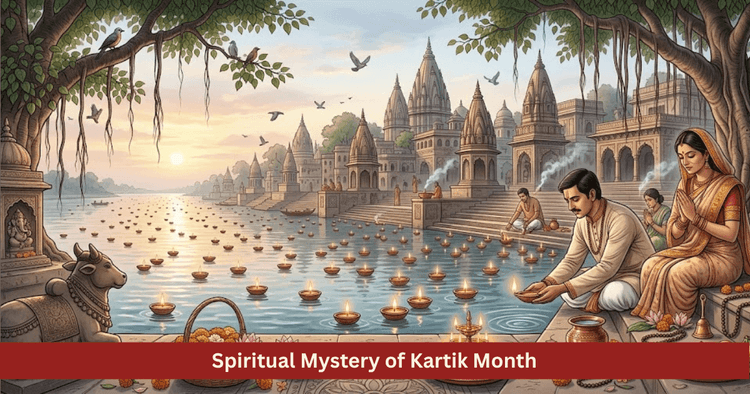
Table of Contents
A Season of Lamps, Damodara and Purification
Kartik is regarded as the eighth lunar month of the Hindu calendar. It comes after Ashwin and before Margashirsha. It generally falls around October, November or December but its exact Gregorian dates change each year according to the lunar calendar and regional tradition.
In the Sanatana tradition Kartik is considered especially dear to Lord Vishnu, Lord Krishna, Lord Shiva, Goddess Tulsi and the practice of lighting lamps. The Padma Purana, Skanda Purana and other religious traditions describe the glory of Kartik in detail. For this reason it is called by many communities one of the most sacred months or the month most beloved to Lord Vishnu.
A subtle point should be understood here. Different scriptures and sampradayas praise different months in different ways. In the Bhagavad Gita Lord Krishna identifies Himself with Margashirsha among months. Vaishnava and Puranic traditions give Kartik special importance for devotion, vows, lamp offerings and self purification. Therefore calling Kartik the best means that it is especially supportive of worship and spiritual discipline. It does not remove the importance of other months.
Annual Sequence of Kartik Month
Many important festivals occur during Kartik. Dates and methods may differ according to region. The central spiritual sequence remains similar.
| Festival or period | Main feeling | Main practice |
|---|---|---|
| Kartik Krishna Paksha | Restraint and inner preparation | Lamp offerings, bathing and sattvic food |
| Karva Chauth | Marital welfare | Fast and Moon viewing |
| Dhanteras | Health and prosperity | Dhanvantari, Lakshmi and lamp worship |
| Naraka Chaturdashi | Reduction of negativity | Abhyanga bathing and lamps |
| Kartik Amavasya | Light and Lakshmi worship | Diwali worship |
| Govardhan Puja | Respect for nature and grain | Annakuta and remembrance of Govardhan |
| Bhai Dooj | Affection between siblings | Tilak and welfare prayer |
| Devutthana Ekadashi | Awakening of Vishnu | Fast, Tulsi worship and donation |
| Tulsi Vivah | Sacred union of Vishnu and Tulsi | Marriage ritual and lamp offerings |
| Kartik Purnima | Dev Deepavali and liberation feeling | Bathing, lamps and Shiva Vishnu worship |
Vows, bathing, donations and lamp offerings during Kartik should be decided according to the local Panchanga, health and family tradition.
Why Is Kartik Considered So Sacred?
The importance of Kartik does not arise only from the number of festivals. It is a period when seasonal change, light, restraint and devotion come together. The rainy season has withdrawn. The sky becomes clearer. Nights become calm and longer. The flame of a lamp, river water, the Tulsi plant and temple bells create a special spiritual atmosphere.
During Kartik a person can simplify the daily routine. Morning bathing, lamp offerings, remembrance of the Divine, sattvic food and donation become regular practices. This regularity steadies the mind.
Religious tradition holds that even a small meritorious act during this month gives special fruit. Its psychological meaning is that when a person performs small noble actions regularly the character begins to change in a lasting way.
Lord Vishnu and Kartik Month
Kartik is considered especially important for worship of Lord Vishnu and Lord Krishna. In the Vaishnava tradition this month is also called Damodara month. In the story of the child form of Krishna as Damodara Mother Yashoda ties Him with a rope. The feeling of this story is that the Infinite Divine can also be bound by love and devotion.
Offering a lamp during Damodara worship is considered special. The devotee lights a lamp to express love, surrender and gratitude toward the Lord. This lamp can be lit at home and not only in a temple.
The following practices may be performed with worship of Lord Vishnu.
• Recitation of Vishnu Sahasranama
• Chanting Om Namo Bhagavate Vasudevaya
• Listening to Bhagavata stories or Krishna Lila
• Offering water and a lamp to Tulsi
• Observing the Ekadashi fast
• Donating food and clothes
Damodara Month and Loving Devotion
The story of Damodara reveals the power of love more than the power of force. Mother Yashoda wanted to bind Lord Krishna but the rope was always a little short. Finally when love and effort became complete the Lord allowed Himself to be bound.
The spiritual meaning is that the Divine can be experienced not only through reasoning but also through love. Discipline is necessary in sadhana but if love is absent discipline can become rigid ritual.
While offering lamps during Kartik the following feelings may be held.
• Inner darkness should reduce
• Ego should transform into love
• Harshness in the family should decrease
• Remembrance of the Lord should become steady
• Service should be free from desire for fame
Lord Shiva and Kartik Month
Kartik is not important only for Vaishnava tradition. It is also significant in Shaiva tradition. Kartik Purnima is called Tripurari Purnima. The tradition states that Lord Shiva destroyed Tripurasura and freed the gods and worlds from fear.
For this reason Shiva worship, lamp offerings, bathing in the Ganga and temple visits are performed on Kartik Purnima. Joint worship of Lord Shiva and Lord Vishnu reveals the broad spiritual character of this month.
The following offerings may be made in Shiva worship.
• Clean water
• Bilva leaves
• Milk when suitable according to tradition and health
• Datura and flowers
• A lamp
• Recitation of the Mahamrityunjaya Mantra
Om Namah Shivaya
This Panchakshari Mantra carries the feeling of salutations and surrender to Shiva.
Importance of Tulsi During Kartik
Tulsi is regarded in Vaishnava tradition as Mother Tulsi and beloved of Lord Vishnu. Worship of Tulsi, lighting lamps near the Tulsi plant and Tulsi Vivah are especially common during Kartik.
Tulsi Vivah is generally performed on an auspicious day between Devutthana Ekadashi and Kartik Purnima. The date may change according to regional tradition. Tulsi should not be treated only as a religious plant. It also represents the home environment, medicinal value and respect for nature.
Simple Order of Tulsi Worship
-
Keep the area around Tulsi clean in the morning
-
Offer water according to the need of the plant
-
Light a lamp
-
Offer Kumkum, Akshata and flowers
-
Chant a Vishnu mantra
-
Perform circumambulation
-
Do not pluck leaves without need
-
Offer a lamp near Tulsi in the evening
Giving too much water to Tulsi or allowing water to collect around its roots can harm the plant. Caring for nature is also part of worship.
Astrological Background of Kartik
From the astrological view Kartik generally arrives as the Sun moves from Libra toward Scorpio. Libra is connected with balance, relationships and social conduct. Scorpio is connected with depth, transformation, mystery and inner power.
This transition may symbolize movement from outer relationships and social activity toward inner consciousness. The lunar phases of Kartik, especially Amavasya, Ekadashi and Purnima, are considered supportive for sadhana.
| Astrological indication | Feeling in Kartik |
|---|---|
| Sun moving from Libra toward Scorpio | From outer balance toward inner transformation |
| Chandra | Coolness of mind and devotion |
| Shukra | Love, beauty and Tulsi principle |
| Guru | Vishnu, knowledge and dharma |
| Shiva principle | Dispassion and reduction of ego |
| Water element | Emotional purification and flow of life |
This is a general astrological interpretation. The effect of Kartik in an individual life should be studied through the birth chart, planetary periods and transits.
Deeper Meaning of Lamp Offerings
Lamp offering is one of the most famous practices of Kartik. Lamps are lit in the home temple, near Tulsi, at riverbanks, in temples and in courtyards.
A lamp may be understood at five levels.
| Aspect of the lamp | Spiritual meaning |
|---|---|
| Flame | Knowledge and consciousness |
| Oil or ghee | Life energy and surrender |
| Wick | Medium of sadhana |
| Light | End of ignorance |
| Offering | Sacrifice of ego |
Lamp offering does not mean lighting the greatest number of lamps. One lamp is sufficient if it is lit with faith, cleanliness and the feeling of service. When floating lamps on rivers or water sources environmental care is necessary. Plastic, chemicals and non biodegradable materials should not be placed in water.
Morning Bathing During Kartik
There is a tradition of bathing during Brahma Muhurta or before sunrise in Kartik month. Bathing in rivers, lakes and sacred places is considered especially meritorious. Its spiritual meaning is to begin the day with purity and discipline.
Cold water bathing is not suitable for every person. Elders, people with illness, children and those with weak health should bathe according to capacity. Clean water at home can also become a medium for sacred bathing.
The following practices may be performed after bathing.
• Offer Arghya to Surya
• Remember Vishnu or Shiva
• Light a lamp
• Worship Tulsi
• Perform japa or meditation
• Donate food
Main Vows of Kartik Month
Several vows are observed during Kartik to discipline the mind and body. Each vow has its own story and method.
Ekadashi Vrat
Devutthana or Prabodhini Ekadashi is an important tithi of Kartik. The tradition says that Lord Vishnu awakens from Yoga Nidra on this day. Fasting, Tulsi worship, lamp offering and chanting of Vishnu Mantras are performed.
Tulsi Vivah
In Tulsi Vivah the marriage of Mother Tulsi with Shaligrama or Lord Vishnu is performed. It represents marital welfare, sacred relationship and respect for nature.
Kartik Purnima
Kartik Purnima is known as Dev Deepavali, Tripurari Purnima and by several other names. Bathing, lamp offerings, Shiva worship, Vishnu worship and donation are considered important on this day.
Bhishma Panchaka
Some Vaishnava traditions observe the five day Bhishma Panchaka fast from Ekadashi until Purnima. It should be followed according to ability and tradition.
Importance of Donation During Kartik
Donation during Kartik is not limited to giving money. Food, clothes, lamps, sesame, ghee, books, medicine and water service are also forms of dana.
The following points should be remembered while donating.
• Give a clean and useful item
• Do not insult the receiver
• Do not donate for display
• Do not place family needs in difficulty
• Give fresh food during food donation
• Give priority to education and health support
• Remain humble during donation
Donation during Kartik reduces inner greed. When some wealth is used for the welfare of others wealth no longer remains only collection. It becomes service.
Kartik and the Path of Liberation
Kartik is considered special for the path of liberation. Liberation does not mean only reaching a particular realm after death. In life liberation can also mean gradual freedom from binding tendencies.
Kartik practices may help a person recognize the following bindings.
• Greed
• Anger
• Jealousy
• Falsehood
• Excessive attachment
• Ego
• Revenge
• Fear
For a person who observes these bindings and tries to rise above them Kartik becomes an opportunity for self purification.
Food and Conduct During Kartik
Kartik carries a tradition of sattvic food and simple living. Excessively tamasic food, intoxicants, falsehood, violence and unnecessary conflict are generally avoided.
Useful Conduct
• Wake early
• Bathe with cleanliness
• Offer lamps
• Worship Tulsi
• Chant the Divine Name
• Take sattvic food
• Donate and serve
• Keep speech restrained
• Sleep adequately
• Respect nature and water
What Should Be Avoided
• Stale or contaminated food
• Excessive intoxicants
• Violence
• Unnecessary family conflict
• Display of donation
• Disrespect toward plants and water sources
• Fasting beyond bodily capacity
Religious rules are not meant to cause suffering to the body. Vows and restraint should suit a person ability, health and life condition.
Psychological View of Kartik
During Kartik lamps, water, mantras, Tulsi and morning discipline give the mind a special rhythm. Regular routine may reduce anxiety and instability. Concentrating on a lamp steadies attention. Mantra japa can calm the movement of thoughts. Donation takes a person beyond personal sorrow and connects the person with a wider life.
A significant psychological quality of Kartik practices is that they connect a person with small but regular actions. Lighting a lamp each day, caring for Tulsi, chanting one mantra or feeding someone can create a feeling of stability in the mind.
Daily Practice of Kartik
A simple Kartik routine for householders may be as follows.
-
Wake before sunrise or in the early morning
-
Bathe with clean water
-
Offer Arghya to Surya
-
Light a lamp near Tulsi or in the home temple
-
Remember Vishnu, Shiva or the chosen deity
-
Chant according to ability
-
Keep restraint in food
-
Perform a small donation or service each day
-
Observe anger and harsh speech
-
Sit quietly before the lamp at night
This routine is not a rigid rule. Its purpose is to bring purity, regularity and devotion into life.
Kartik for Women and Household Life
During Kartik women often perform Tulsi worship, lamp offerings, vows and prayers for the welfare of the family. In many places women bathe in the morning, offer lamps and sing devotional songs throughout the month.
In household life the spiritual meaning of Kartik also lies in bringing the family together. Children learn to light lamps. The family participates in Tulsi and deity worship. Elders share memories and stories. In this way religious tradition passes from one generation to another.
No woman should be pressured into a strict fast or prolonged food restriction. Fasting may be simplified during pregnancy, breastfeeding or medication.
Is Kartik the Best of All Months?
Religious traditions describe Kartik as extremely sacred, meritorious and beloved to Lord Vishnu. Devotees therefore call it the best among months. At the same time different scriptures glorify different months and tithis in different ways. The Bhagavad Gita mentions Margashirsha.
The correct meaning of considering Kartik the best is that this month is especially supportive of devotion, lamp offerings, vows, bathing, donation and self purification. It does not make any other month insignificant.
The greatness of Kartik lies in its atmosphere and practice tradition. When a person performs noble actions regularly during this month inner transformation becomes the experience of its glory.
Toward Inner Light
The astrological and spiritual importance of Kartik is much deeper than its outer brightness. The month invites a person to become clear like water, awake like a lamp, fragrant like Tulsi and expansive like the sky.
Devotion to Lord Vishnu brings protection and dharma into life. Remembrance of Shiva calms ego and attachment. Service of Tulsi connects a person with nature and love. Offering lamps gives courage to recognize inner darkness. Donation frees the mind from greed.
The real fruit of Kartik is wider than fulfilment of one desire. It gives a vision in which wealth becomes a means, relationships become sadhana, service becomes worship and life itself becomes a journey toward the Divine.
FAQ
Why is Kartik considered the best among all months?
Puranic and Vaishnava traditions regard Kartik as beloved to Lord Vishnu and especially powerful for vows, lamp offerings, bathing, donation and devotion.
Which major festivals occur during Kartik month?
Kartik includes Dhanteras, Diwali, Govardhan Puja, Bhai Dooj, Devutthana Ekadashi, Tulsi Vivah and Kartik Purnima.
Which mantras should be chanted during Kartik month?
Om Namo Bhagavate Vasudevaya may be chanted for Lord Vishnu. Om Namah Shivaya may be chanted for Lord Shiva and the name of Krishna may be remembered for the Damodara form.
What is the importance of lamp offerings during Kartik?
Lamp offerings represent knowledge, purification, sacrifice of ego and the end of ignorance. Lamps may be offered at home, in a temple, near Tulsi or in a safe location.
Does Kartik month give liberation?
Kartik is regarded as special for liberation practices. In spiritual terms liberation also means gradual freedom from greed, anger, fear, ego and excessive attachment.
Get your accurate Kundali
Generate KundaliDid you like it?
Author
Pt. Suvrat Sharma (63)
Experience: 20
Consults About: Family Planning, Career
Clients In: Punjab, Haryana, Delhi
Share this article with friends and family
WELCOME TO
ZODIAQ
Right Decisions at the right time with ZODIAQ
