Mystery of the Karwa Chauth Sieve
By Pt. Nilesh Sharma
A symbolic ritual of Moon, psychology and marital trust
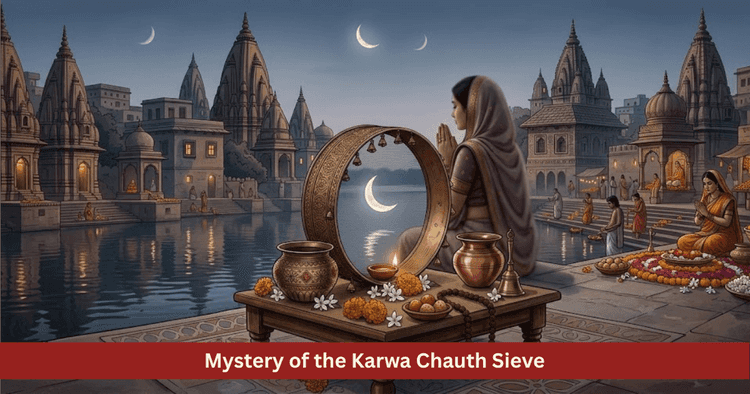
Table of Contents
A Journey of Vision from the Moon to the Spouse
When a woman observing Karwa Chauth views the Moon through a sieve and then looks at her husband through the same sieve after moonrise the moment becomes more than a beautiful tradition. Waiting, restraint, prayer, marital trust and family feeling come together in the ritual.
Viewing the Moon through the holes of a sieve is considered auspicious in many folk traditions. Looking at the husband through the same sieve is understood as connecting the coolness, stability and blessing of the Moon with married life. The Moon becomes a witness in the sky while the relationship between husband and wife becomes the earthly form of the resolve.
It is popularly believed that viewing the husband through the sieve increases his lifespan or that Moon rays entering through the holes create a special energy in the body. Such claims are better understood as religious symbols and folk beliefs. There is no established scientific basis for the claim that Moonlight filtered through a sieve creates a definite change in eyesight, lifespan or a special bodily energy.
The real power of the sieve lies in its symbolism. It gives the vision a boundary. Viewing the Moon and the husband in one sequence completes the spiritual movement of the fast. First the sky and then the relationship. First prayer and then the shared foundation of life.
The Sieve Ritual During Karwa Chauth 2026
Karwa Chauth in 2026 will be observed on Thursday, 29 October. It falls on the Chaturthi Tithi of the Kartik Krishna Paksha. According to the available New Delhi Panchanga calculation moonrise is expected around 8:11 at night. The Puja Muhurat is generally given as 5:38 in the evening to 6:56 in the evening.
Moonrise changes according to city, country and Panchanga calculation. The local Moon sighting time should be followed for breaking the fast.
| Stage | General sequence for Karwa Chauth 2026 |
|---|---|
| Sargi | Before sunrise |
| Resolve of fast | After sunrise |
| Daytime | Story, worship and restraint |
| Evening worship | According to the local Muhurat |
| Moon sighting | After local moonrise |
| Sieve ritual | First Moon and then husband |
| Arghya | Offer water to the Moon |
| Fast completion | Take water or Prasada |
Main Steps of the Sieve Ritual
-
Wait for the Moon to rise
-
Keep water, Akshata and flowers in the worship plate
-
Clean the sieve
-
Place a lamp near the sieve if family tradition follows it
-
View the Moon through the sieve
-
Offer water to the Moon
-
View the husband through the same sieve
-
Pray for the health and happiness of both partners
-
Take water from the husband or a family member
-
Take Prasada and complete the fast
Why Is the Sieve Placed Between the Eyes and the Moon?
The sieve is an ordinary household object but in Karwa Chauth it becomes a sacred medium between vision and relationship. Its mesh does not completely hide the Moon. It reveals the Moon through many small openings. This makes the view different from ordinary direct viewing.
The sieve may be understood symbolically in three ways.
| Aspect of the sieve | Symbolic meaning |
|---|---|
| Many holes | Many tests and experiences of life |
| Limited view | Restraint and concentration of vision |
| Sequence from Moon to husband | Divine witness and union of relationship |
| Same sieve | Shared life and mutual trust |
| Face beyond the mesh | Seeing love through patience and maryada |
The sieve also suggests that relationships should not be viewed only from the outside. Marriage includes difficulty along with happiness. Trust, restraint and dialogue filter these difficulties and protect the essence of the relationship.
Folk Traditions Connected with the Sieve
A popular story connected with the sieve is the story of Veeravati. According to the story Veeravati was the beloved sister of her brothers. She observed the difficult Karwa Chauth fast. Her health became weak during the day because of hunger and thirst. Seeing her suffering her brothers lit a lamp behind a tree and created the appearance of a rising Moon through a sieve.
Veeravati mistook the sign for the Moon and broke her fast. A crisis then came upon her husband. Later forms of the story describe repentance, prayer and the completion of the fast again.
It is more appropriate to understand this story as a moral teaching and not as literal history. Its message is to avoid haste, incomplete information and emotional pressure during a vow. The story also reflects the protective love of family.
Different regions preserve different Karwa Chauth stories. Some narrate the story of Karwa Mata. Some remember Savitri and Satyavan. Others focus on the marital ideal of Shiva and Parvati. The common feeling in these stories is devotion, courage, prayer and protection of relationships.
Astrological Importance of the Moon
In Vedic astrology Chandra represents the mind, emotion, memory, motherhood, water and mental peace. The Karwa Chauth fast ends with Moon sighting. This gives the Moon a special role in the festival.
Moonlight represents coolness for the mind. Waiting for the Moon after a full day of fasting practises patience and concentration. Offering Arghya gives the devotee a sacred direction for emotion.
| Lunar principle | Feeling in Karwa Chauth |
|---|---|
| Mind | Patience and waiting during the fast |
| Water | Arghya and nourishment of life |
| Coolness | Balance of anger and stress |
| Memory | Resolve toward husband, family and marriage |
| Motherhood | Protection and care of family |
| Emotion | Expression of love and trust |
The position of Chandra in the birth chart may influence emotional responses. If Chandra is weak or afflicted anxiety, irritation and weakness may be felt more strongly during the fast. Health and mental peace should then receive priority.
Psychological Meaning of Viewing Through the Sieve
Karwa Chauth is built around a long period of waiting. From morning until Moonrise the woman observing the fast remains without food and water. During this period the mind repeatedly turns toward the appearance of the Moon. When the sieve is held the waiting becomes a defined ritual.
The act of viewing through the sieve gives the mind a centre. Viewing the Moon and then the husband creates an emotional transition. The day long austerity is completed in the presence of a loved one. This may create relief, gratitude and emotional connection.
At the psychological level the ritual may create the following effects.
• Gives meaning to waiting
• Provides a clear sign for completion of the fast
• Increases emotional dialogue between husband and wife
• Brings the family into a shared moment
• Connects prayer with a personal relationship
• Reminds the couple of the importance of married life
This effect does not arise from miraculous energy. It develops through symbolism, emotional preparation, family participation and cultural belief.
Does the Sieve Purify Moon Rays?
Folk belief says that Moon rays passing through the holes of the sieve become more auspicious or cooling. From the view of optics the sieve may divide the Moon into several small views or reflections. It creates a visual boundary before the eyes.
There is no established evidence that ordinary Moonlight becomes medicinal, energetic or specially pure when viewed through a sieve. Moonlight is much weaker than sunlight. In normal conditions viewing the Moon does not harm the eyes in the same way as looking at the Sun. Even so the sieve should not be treated as a scientific eye protection device.
The most beautiful way to understand the tradition is this. The sieve does not change the Moon. It organizes the vision of the person who is viewing it. The outer light remains the same but the experience becomes more focused and ritualistic.
Marital Meaning of Viewing the Husband Through the Sieve
Viewing the husband through the same sieve after treating the Moon as a divine witness represents the meeting of cosmic witness and personal relationship. The wife prays for the health and long life of the husband. The husband can honour the austerity, love and labour of the wife.
Traditional language sometimes describes viewing the husband as viewing him like a deity. In a modern marital understanding this feeling is more balanced when it is understood as mutual respect. The wife respects the husband and the husband respects the sacrifice, labour, emotions and health of the wife. Only then does the ritual become an expression of marital dharma.
Message of the Sieve for Marriage
• Do not view the relationship in haste
• Understand each other faults with compassion
• Place dialogue above ego
• Share responsibility for health
• Maintain transparency in financial decisions
• Do not make the fast a one sided expectation
• Keep love visible through conduct throughout the year
Tradition of Placing a Lamp on the Sieve
Some families place a small lamp on the sieve while viewing the Moon. The lamp represents light, auspiciousness and awareness. The cool radiance of the Moon and the fire of the lamp together create a feeling of balance in the mind.
Fire safety is necessary while placing a lamp. The sieve should be made of metal and the lamp should remain stable. Do not place a lamp when wind is strong. Keep cotton clothes, veils and decorative material away from the flame.
The lamp may carry the following symbolic meanings.
| Lamp | Meaning |
|---|---|
| Flame | Consciousness and hope |
| Ghee or oil | Surrender and nourishment |
| Wick | Resolve of the fast |
| Moon | Mind and coolness |
| Sieve | Restrained vision |
| View of husband | Respect for shared life |
Correct Karwa Chauth Puja Vidhi
The sieve ritual is the final and emotional stage of worship. Before it the devotee remembers Karwa Mata, Gauri, Ganesha, Shiva and Kartikeya.
Simple Worship Order
-
Take Sargi before sunrise
-
Take the resolve of the fast
-
Practise restraint according to ability during the day
-
Bathe in the evening and wear worship clothes
-
Install Gauri and Ganesha on a platform
-
Fill the Karwa with water
-
Offer Roli, Akshata, flowers and a lamp
-
Listen to the Karwa Chauth story
-
Perform Arati according to family tradition
-
Wait for the Moon to rise
-
View the Moon through the sieve
-
Offer Arghya to the Moon
-
View the husband through the same sieve
-
Pray for each other
-
Take water and complete the fast
The Puja Vidhi may differ according to region and family. One folk practice does not need to be treated as compulsory for every person.
Order of Offering Arghya to the Moon
Before offering Arghya take water in a Karwa or copper vessel. Akshata and flowers may be placed in it. Fold the hands while facing the Moon and pray for the health of both partners and the family.
Simple Arghya Method
• View the Moon through the sieve
• Place the sieve down and hold the water vessel with both hands
• Offer water to the Moon
• Chant Om Somaya Namah
• View the husband through the sieve
• Receive the husband blessing
• Take water or Prasada
Do not pollute roads, electric wires or water sources while offering Arghya. Keep the worship material in a safe place.
What If the Moon Is Not Visible?
Clouds, fog, rain or urban buildings may prevent the Moon from being visible. In such a situation the woman observing the fast does not need to panic. After the local Panchanga Moonrise time the worship may be completed through mental remembrance of the Moon according to family tradition.
Continuing a waterless fast during a health emergency is not appropriate. Drinking water does not insult the feeling of the fast. The purpose of fasting is faith, restraint and goodwill in the relationship and not harm to the body.
Is the Ritual Only for Women?
The traditional identity of Karwa Chauth is connected with the fast of married women. Today many husbands also observe the fast with their wives. Some couples share water, food and household responsibilities. This can increase equality and mutual love in the festival.
No woman should be forced to observe the fast because of social pressure. Unmarried women may pray for a harmonious future marriage according to their tradition. Men may also pray for the health, long life and happiness of their wives.
The spiritual value of a fast is decided not by comparing sacrifice but by compassion and respect within the relationship.
Astrological View of the Sieve Ritual
The sieve ritual can be understood through the symbols of Chandra and Shukra. Chandra represents mind and emotions. Shukra represents love, marriage, attraction and beauty. The mesh of the sieve may symbolize bringing scattered emotions toward one centre through vision.
| Element | Astrological feeling |
|---|---|
| Chandra | Mind, emotion and marital peace |
| Shukra | Love, attraction and marital happiness |
| Sieve | Vision, restraint and selection |
| Lamp | Consciousness and auspicious resolve |
| Water Arghya | Emotional purification |
| View of husband | Respect for the marital relationship |
For personal marital results the seventh house, seventh lord, Shukra, Guru, Chandra and Navamsha should be studied. The sieve ritual does not automatically remove a planetary affliction in the birth chart.
Why Is This Ritual Psychologically Powerful?
The final stage of any long fast can be emotionally deep. When a person has been waiting for a long time and completes the fast after a defined sign relief and satisfaction may arise.
The sieve gives visual form to that sign. Viewing the Moon connects the person with the sky. Viewing the husband connects the person with the personal relationship. Seeing both in the same frame creates the feeling that married life should also remain connected with a higher value, trust and restraint.
This psychological effect may become stronger because of the following.
• Long waiting
• Participation of the family
• A tradition heard since childhood
• Emotional preparation through worship and story
• Direct conversation between husband and wife
• A clear sign that the fast is complete
The sieve ritual should not be reduced to only superstition or only science. It is a cultural symbol carrying emotional and social meaning.
Which Health Precautions Should Be Remembered?
The body may lose water and energy during fasting. Sargi should therefore be nourishing, unnecessary physical labour should be reduced during the day and food should be taken gradually after Moon sighting.
Special Caution
• Pregnant women should seek medical advice
• People with diabetes should not keep a waterless fast
• Health should receive priority in blood pressure or heart disease
• Breastfeeding mothers should not become dehydrated or undernourished
• Simplify the fast during migraine or repeated dizziness
• Seek immediate help during fainting or confusion
• Do not break the fast with excessive fried and sweet food
• Take water, fruit or light food first
Dharma contains compassion. Observing the fast according to personal condition does not mean lack of faith.
The Essence of the Sieve Tradition
The Karwa Chauth sieve does not turn Moonlight into a magical medicine. It does not scientifically increase the lifespan of the husband. It does not automatically balance a proven bodily energy. Yet its meaning remains beautiful.
The sieve gives vision a centre. It says that relationships should be viewed with patience. The Moon symbolizes calmness of mind. It says that love should remain cool and gentle. The face of the husband symbolizes respect for the life partner. It says that marriage must be cared for every day. Water Arghya gives emotion a pure direction. The lamp represents hope and awareness.
When a woman observing the fast views the Moon and then her husband through the sieve she performs more than a ritual. She joins the sky, the mind, love and shared life in one moment. This is the mythological beauty, psychological depth and astrological symbolism of the tradition.
FAQ
Why is the Moon viewed first and the husband later through the sieve?
The tradition connects the coolness of the Moon, prayer and the marital relationship. The Moon is viewed first as a witness and the husband is then viewed through the same vision.
Does viewing through the sieve make Moon rays safe for the eyes?
The sieve divides the view into small openings and changes the visual experience. It should not be treated as a scientific eye protection device or medicinal medium.
Does the sieve ritual increase the husband lifespan?
Religious belief connects it with a prayer for the husband long life and good fortune. There is no scientific evidence that viewing through a sieve increases lifespan.
When will the sieve ritual take place in Karwa Chauth 2026?
Karwa Chauth will be observed on 29 October 2026. The sieve ritual will take place after local moonrise. In New Delhi moonrise is expected around 8:11 at night.
Can men also observe the Karwa Chauth fast?
Yes. Traditionally the fast is associated with married women but husbands may also fast together with their wives for each other health and long life.
Get your accurate Kundali
Generate KundaliDid you like it?
Author

Pt. Nilesh Sharma (63)
Experience: 20
Consults About: Family Planning, Career
Clients In: Punjab, Haryana, Delhi
Share this article with friends and family
WELCOME TO
ZODIAQ
Right Decisions at the right time with ZODIAQ
