Narak Chaturdashi Yama Deepdaan
By Pt. Abhishek Sharma
Roop Chaudas, Abhyanga Snan and protection prayer
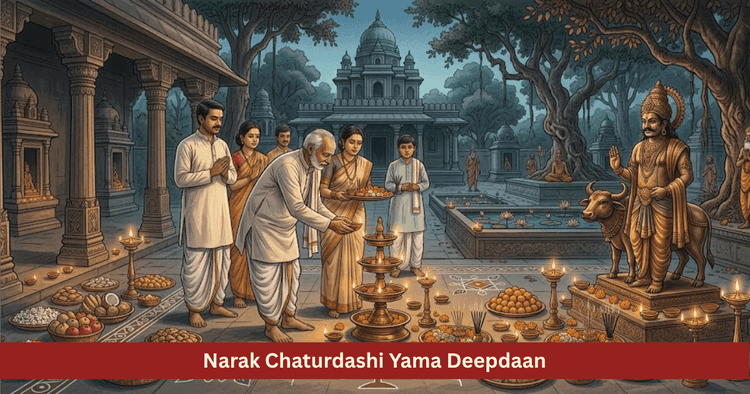
Table of Contents
The Light Practice of Chhoti Diwali
Narak Chaturdashi is also called Chhoti Diwali, Roop Chaudas and in several regions Kali Chaudas. It is observed on the Chaturdashi Tithi of the Kartik Krishna Paksha. Coming just before Deepavali this festival is connected with health, beauty, long life and the prayer for protection from untimely death.
In 2026 the Chaturdashi Tithi will begin at about 10:47 in the morning on 7 November and end at about 11:27 in the morning on 8 November. According to several Panchanga calculations in India the evening Yama Deepdaan and main Chhoti Diwali observance will be kept on Saturday, 7 November. Abhyanga Snan will be performed in many places during the Brahma Muhurta of 8 November because the Chaturdashi remains available at sunrise that morning.
Local sunrise, sunset and Panchanga methods may change the tithi and Muhurat. The final decision should therefore be taken from the local calendar.
| Detail | Narak Chaturdashi 2026 information |
|---|---|
| Festival | Narak Chaturdashi, Chhoti Diwali, Roop Chaudas |
| Evening observance | Saturday, 7 November 2026 |
| Abhyanga Snan | Morning of 8 November in many regions |
| Paksha | Kartik Krishna Paksha |
| Tithi | Chaturdashi |
| Tithi begins | About 10:47 in the morning on 7 November |
| Tithi ends | About 11:27 in the morning on 8 November |
| Abhyanga Snan Muhurat | Before sunrise, in Delhi about 5:41 to 6:38 |
| Yama Deep | Evening or Pradosh Kaal, outside main door facing south |
| Main worship | Yama, Dhanvantari feeling, remembrance of Krishna victory |
| Special bath | Sesame oil Abhyanga and Ubtan |
| Core feeling | Health, beauty, long life and light |
Basic Rules of the Day
• Perform Abhyanga Snan before sunrise if health permits
• Apply sesame oil or a mild Ubtan on the body
• Light the Yama Deep in the evening
• Place the lamp outside the main door facing south
• Perform Yama Tarpan according to family tradition and eligibility
• Complete cleaning and lighting arrangements of the home
• Care for fire safety of children and elders
• Avoid excessive crackers and pollution
Puranic Basis of Narak Chaturdashi
The most famous story of Narak Chaturdashi is connected with the destruction of Narakasura. According to Puranic tradition Narakasura imprisoned many women and troubled the gods and the worlds. Lord Krishna together with Satyabhama destroyed Narakasura and freed the imprisoned women.
After this victory the tradition of morning bathing and purification is believed to have become associated with the day. The spiritual meaning of the story is not only the end of a demon. The word Naraka also indicates inner darkness, anger, greed, violence and ignorance. When a person controls these tendencies the light of Chhoti Diwali becomes meaningful.
In some regions Goddess Kali is also worshipped on this day. Kali is regarded as the power that destroys darkness and demonic tendencies. The name Roop Chaudas is popular because Abhyanga Snan and Ubtan are performed with the wish for bodily purity and radiance.
Importance of Yama and Yama Deepdaan
Yama is also called Dharmaraja. He is not only the deity of death. He is regarded as the presiding power of the fruit of karma and justice. Lighting the Yama Deep on Narak Chaturdashi is connected with protection from the fear of untimely death, remembrance of the limits of life and gratitude toward the ancestors.
The Yama Deep is generally lit outside the main door of the home facing south because the south direction is associated with Yama. Some families light the Yama Deep on Dhanteras and some on Narak Chaturdashi. Both traditions are found according to region.
| Lamp offering | Place | Feeling |
|---|---|---|
| Yama Deep | Outside main door facing south | Protection from untimely death |
| Home lamps | Worship area and courtyard | Light of Chhoti Diwali |
| Tulsi lamp | Near Tulsi | Auspiciousness and devotion |
| Four faced lamp | According to family tradition | Feeling of protection in four directions |
The tradition of a four faced lamp is seen in some homes. A lamp with four wicks is regarded as a symbol of spreading light in the four directions. If a four faced lamp is not available one steady lamp is enough. Faith, safety and cleanliness are more important than number.
Method of Lighting the Yama Deep
Yama Deepdaan is performed in the evening or during Pradosh Kaal. Check the local time after sunset.
Simple Method
-
Take an earthen lamp
-
Add mustard oil or oil according to tradition
-
Place a cotton wick
-
Keep the lamp on a stable place outside the main door
-
Let the lamp face or shine toward the south
-
Fold the hands and remember Yama
-
Pray for long life and health of the family
-
Keep flammable objects away from the lamp
-
Maintain safe distance from children and pets
-
Dispose of ash and wick respectfully after the lamp goes out
Yama Remembrance Mantras
Om Yamaya Namah
This means salutations to Yama Dev.
Om Dharmarajaya Namah
This means salutations to the lord of dharma and justice.
These mantras are simple and may be chanted by a householder.
What Is Abhyanga Snan?
Abhyanga Snan means a bath taken after applying oil to the body. On Narak Chaturdashi bathing before sunrise after a sesame oil massage is considered auspicious. Many families also apply Ubtan.
Ubtan may generally include gram flour, turmeric, milk or yogurt, sandal and mild fragrance. Choose ingredients according to skin sensitivity. Do not use any new ingredient if it causes allergy.
Simple Method of Abhyanga Snan
-
Wake during Brahma Muhurta
-
Massage lightly with sesame oil from head to feet
-
Allow the oil to remain for a few minutes
-
Apply Ubtan if tradition allows
-
Bathe with warm water
-
Wear clean clothes
-
Apply Tilak on the forehead
-
Perform Yama Tarpan if tradition allows
-
Check the lighting arrangement of the home
-
Take sattvic food
Forced bathing in extremely cold water is not necessary. Children, elders, pregnant women and people with illness should use warm water. Seek medical advice in heart disease, blood pressure concerns or skin disease.
Vidhi of Yama Tarpan
In Yama Tarpan water is offered while facing south. In many traditions Tarpan is performed with sesame mixed water while reciting fourteen names of Yama.
Fourteen Names of Yama
-
Yama
-
Dharmaraja
-
Mrityu
-
Antaka
-
Vaivasvata
-
Kala
-
Sarvabhutakshaya
-
Audumbara
-
Dadhna
-
Nila
-
Parameshthi
-
Vrikodara
-
Chitra
-
Chitragupta
Tarpan Mantra Sequence
Om Yamaya Namah
Om Dharmarajaya Namah
Om Mrityave Namah
Om Antakaya Namah
Om Vaivasvataya Namah
Om Kalaya Namah
Om Sarvabhutakshayaya Namah
Om Audumbaraya Namah
Om Dadhnaya Namah
Om Nilaya Namah
Om Parameshthine Namah
Om Vrikodaraya Namah
Om Chitraya Namah
Om Chitraguptaya Namah
The tradition is to offer water with each name. Some teachers advise repeating each name three times. A simpler form may be adopted according to family tradition and bodily capacity.
The feeling of Yama Tarpan is not ritual performed out of panic about death. Its feeling is to understand the limit of life, respect time and resolve to live a dharmic life.
Roop Chaudas and the Feeling of Beauty
The name Roop Chaudas is connected with purification and radiance of the body. Oil massage may keep moisture in the skin. Ubtan may clean dead skin particles. Bathing gives freshness. Yet this should not be treated as a miraculous beauty treatment.
The deeper meaning of beauty is not only glow of the skin. Clean clothes, sattvic food, adequate sleep, control of anger and a cheerful mind also enhance Roop. Narak Chaturdashi reminds a person of purification both outside and inside.
| Practice | Outer benefit | Inner feeling |
|---|---|---|
| Oil massage | Skin moisture | Self care |
| Ubtan | Cleanliness | Removal of old impurity |
| Bath | Freshness | Resolve for freedom from sinful tendencies |
| Clean clothes | Beauty | Maryada |
| Lamp offering | Light | End of ignorance |
| Tarpan | Tradition | Gratitude and dharma |
Does the Yama Deep End the Fear of Untimely Death?
Religious language says that Yama Deepdaan removes the fear of untimely death. This is a form of spiritual assurance and prayer. A lamp does not prove definite prevention of accident, disease or untimely death.
Yet the tradition has practical value. Lighting the lamp makes a person careful about life. The family turns attention toward health, safety, road caution, proper treatment and discipline. Prayer steadies the mind.
Balance the fear of untimely death not only through ritual but also through these measures.
• Regular health checkups
• Distance from addiction and carelessness
• Road safety
• Fire and electrical caution at home
• Support during mental stress
• Care of elders and children
• Truthful and non violent living
Home Preparation on Chhoti Diwali
Narak Chaturdashi is also regarded as a day of preparation for Deepavali. Cleaning of the home, arrangement of lamps, Rangoli and family gathering are especially visible on this day.
Useful Order of the Day
• Abhyanga Snan in the morning
• Final cleaning of home and courtyard
• Removal of broken lamps and dirty places
• Arrangement of worship materials
• Yama Deepdaan in the evening
• Sattvic food with the family
• Preparation for Lakshmi Puja the next day
• Explaining safety rules to children
Excessive use of crackers increases air pollution, noise and accidents. If the family uses crackers keep a safe place, adult supervision and limited use.
Astrological View of Narak Chaturdashi
In astrology the Chaturdashi Tithi is often linked with intensity, sharpness and purification. During the Krishna Paksha Chaturdashi the mind may turn toward leaving old burdens, fears and negative habits. Yama is also symbolically connected with Shani, dharma, fruit of karma and time.
| Principle | Indication |
|---|---|
| Chaturdashi | Intensity and purification |
| Krishna Paksha | Inner cleaning |
| Yama | Karma, justice and time |
| South direction | Yama principle |
| Sesame and oil | Peace of Shani and unctuousness |
| Lamp | Solar fire and consciousness |
| Bath | Resolve for freedom from impure tendencies |
Personal longevity or indications of untimely death cannot be decided only from this tithi. The birth chart, planetary periods, transits and actual health condition require integrated study.
Psychological Meaning of the Narakasura Story
The story of Narakasura contains the feelings of oppression, bondage and liberation. In modern life Naraka may be an inner state more than an outer place. When anger goes out of control, greed breaks relationships, jealousy burns the mind and laziness ruins health a person lives in a Naraka created by the self.
Abhyanga Snan cleans the body. The Yama Deep reminds a person of the limit of life. Tarpan awakens gratitude and replaces a false desire for endless life with remembrance of dharma. Chhoti Diwali teaches that before the greater light a smaller purification is necessary.
Health Precautions
Sesame oil and Ubtan are not equally suitable for every skin.
• Test a new Ubtan on a small area first if the skin is sensitive
• Do not apply oil or Ubtan on eyes and wounds
• Do not bathe with very hot water
• Be careful on slippery surfaces
• Help elders during bathing
• Avoid incense and strong fragrance in asthma or allergy
• Keep lamps away from curtains and paper
• Seek medical care immediately if crackers cause burn or injury
Dharma is not against protection of the body. Any observance that neglects health should be considered incomplete.
Yama Deep and Ancestral Remembrance
Some families also connect Narak Chaturdashi with ancestral remembrance. Through Yama the remembrance of death and the world beyond arises. This is not a subject of fear. It is a subject of responsibility. A person thinks about what values, arrangements and love will remain for the family afterwards.
Donation on this day is considered auspicious.
• Sesame
• Oil
• Blanket
• Grains
• Clothes
• Lamps
• Food for the needy
Preserve the dignity of the receiver while donating.
What to Do and What Not to Do on Roop Chaudas
Do
• Abhyanga Snan
• Cleaning of the home
• Yama Deepdaan
• Sattvic food
• Gentle conversation with family
• Calm preparation for Deepavali
• Care for health
Do not
• Unnecessary conflict
• Excessive crackers
• Intoxicants
• Unsafe lamp arrangements
• Spreading dirt
• Forcing the body into harsh cold
• Spreading fear in the name of untimely death
Purification Before Light
Narak Chaturdashi teaches that the greater light of Diwali remains only when inner darkness is cleaned first. The Yama Deep burns toward the south and reminds a person of time. Abhyanga Snan touches the body and teaches self care. Tarpan awakens gratitude through water.
The fear of untimely death is calmed less by mantra alone and more by caution and dharmic living. When the home is clean, the body is healthy, the mind is peaceful and the family has compassion the lamp of Chhoti Diwali illuminates not only the courtyard but life itself.
FAQ
When is Narak Chaturdashi in 2026?
In 2026 the evening observance of Narak Chaturdashi is generally considered on Saturday, 7 November. Abhyanga Snan will be on the morning of 8 November in many places. Confirm with the local Panchanga.
In which direction should the Yama Deep be lit?
Lighting the Yama Deep outside the main door facing south is considered auspicious.
How should Abhyanga Snan be performed?
Before sunrise massage with sesame oil, apply Ubtan if desired and bathe with warm water. Keep water temperature according to health.
What is Yama Tarpan?
In Yama Tarpan sesame mixed water is offered while facing south and reciting the names of Yama. It is a practice of remembering life, karma and dharma.
Does the Yama Deep completely end the fear of untimely death?
In religious belief the Yama Deep is a symbol of protection. In practical life health caution, safe living and timely treatment are also necessary.
Get your accurate Kundali
Generate KundaliDid you like it?
Author
Pt. Abhishek Sharma (63)
Experience: 20
Consults About: Family Planning, Career
Clients In: Punjab, Haryana, Delhi
Share this article with friends and family
WELCOME TO
ZODIAQ
Right Decisions at the right time with ZODIAQ
