Sacred Shaligram Seva in Kartik
By Pt. Suvrat Sharma
Daily abhisheka Tulsi adornment and home rules
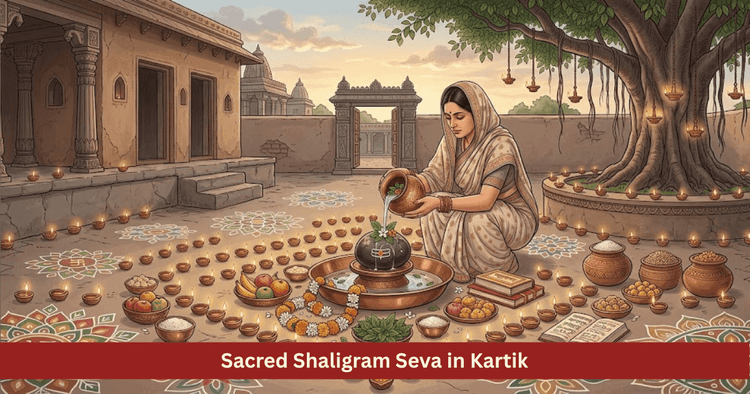
Table of Contents
Dates Muhurat and Daily Seva Summary
Kartik month is held as the clearest doorway of Vishnu tattva. In this month the seva of the Shaligram shila does not remain mere worship of a stone. It becomes a vidhi for awakening the living presence of Narayana inside the home. In 2026 according to the Purnimanta method of North India Kartik lasts from 27 October to 24 November. In Amanta regions the same month is generally seen from about 10 November to 9 December. Final confirmation of the tithi must be taken from the local panchang.
| Detail | Special information |
|---|---|
| Month | Kartik 2026 |
| Purnimanta span | 27 October to 24 November |
| Amanta span | about 10 November to 9 December |
| Paksha | both Krishna paksha and Shukla paksha |
| Special tithis | Ekadashi Dwadashi Kartik Purnima Tulsi Vivah |
| Daily time | Brahma muhurta bath then morning and evening aarti |
| Main offerings | Tulsi dal Gangajal panchamrit chandan deepa |
| Core rule | no tamasic food daily abhisheka and a pure mandir |
The first step of Shaligram seva in Kartik is that purity of mind must be decided before the tithi arrives. The home shrine should face east or north. The shila should rest near Tulsi or upon a pure wooden asana. Bathing water should be received by the family as charanamrita. The offering of eleven Tulsi leaves is the simple and deeply fruitful rule of this month.
This ordered outline of daily anushthana can be kept with ease in the home.
- After the morning bath wear clean cloth and purify the shrine with Gangajal
- Give the Shaligram a bath with pure water and then with panchamrit
- Apply chandan tilak and adorn with Tulsi dal
- Offer milk water fruit or sattvic sweets as bhoga
- Perform aarti with deepa dhupa and a Vishnu mantra
- Give charanamrita to the family and keep gratitude in silence
When Narayana Awakens in Stone
Puranic katha says that by the shaap of Vrinda Vishnu appeared in the form of a shila. That shila in the stream of the Kali Gandaki came to be called Shaligram. In Kartik this katha does not remain history alone. The devotee feels that a living compassion sits inside the coolness of stone. Tulsi is the consort tattva of that compassion. The union of the two gives the home a sacred energy like Vaikuntha.
This energy does not speak the language of theatrical miracle. It shows itself in the purity of food. It shows itself in the softness of speech. It shows itself in the sleep of night. In a house where the Shaligram receives a daily bath even the air feels more sattvic. In the view of Vedic astrology this Vishnu tattva supports the steadiness of Chandra and the dharma buddhi of Guru. The weight of karma grows lighter because daily seva itself is a continuous prayashchitta.
Kartik grows still deeper because Chaturmas draws toward its close near Devuthani Ekadashi in this month. Bhagavan rises from yoganidra. Tulsi Vivah is the worldly utsava of that awakening. The Shaligram is the bridegroom of that utsava. The home that keeps small acts of seva through the whole month does not turn this vivah into empty custom. It takes a sankalpa to make life steady in the manner of marital dharma.
Why the Rules for Keeping Shaligram Are Strict
To keep a Shaligram means to invite Narayana into the daily rhythm of a householder. If the invitation is incomplete the shila becomes a burden. Therefore the rules look severe. In truth they are the discipline of compassion.
Before sthapana it must be clear that the shila has come from a genuine river source. Carelessness in buying and selling should be avoided. One shila served with shraddha is better than a collection of many. A large size is not required. The chakra mark and natural openings are the true signs. Pride about colour is useless. Black shyama or deep brown shilas are all forms of Vishnu if the puja is regular.
Do not keep the Shaligram on the bare floor in the mandir. A silver copper or pure vessel is proper. If a Tulsi plant stands in the courtyard keep a mental bond of the shila toward that side. Women may perform puja in a state of purity. The essence of shastra is adhikara more than prohibition. In the days of menstruation another member should do the seva and touch should be avoided. This is not insult. It is respect for shuddhi.
In a house where Shaligram is seated onion garlic meat liquor and stale tamasic food should not be cooked. Falsehood anger and slander are also tamas. These must be removed not only from the kitchen but from speech. The Shaligram should not be left lonely and unclean. If there is travel appoint a trusted sevak or take proper counsel about visarjana. If daily abhisheka stops there is a belief that the tejas of the shila grows dim.
These rules exist because Vishnu tattva is pleased by cleanliness. Lakshmi dwells in that same cleanliness. In Kartik this bond grows denser because the month itself belongs to dana deepa and restraint.
How to Perform Snan and Panchamrit Abhisheka
Abhisheka is the heart of Shaligram seva. Water does not wash dust alone. It lifts a layer of pride. In Kartik this heart should stay open every day.
After the morning bath the sadhaka should sit facing east. After washing hands and feet one should take achamana. Sprinkle Gangajal on the shrine. First bathe the shila with pure water. Pouring from a shankha is excellent because the conch itself is a Vaishnava sound. Then prepare panchamrit. Milk curd ghee honey and mishri are these five nectars. Mix them in a copper vessel. Perform the abhisheka slowly with the right hand. Keep the mantra simple. The japa of Om Namo Bhagavate Vasudevaya is enough. The sequence of salutations to Keshava Narayana Madhava and Govinda may also be used. Om Namo Bhagavate Vasudevaya means I bow to Bhagavan Vasudeva the indwelling Lord.
After abhisheka wipe the shila with a soft cloth. The chakra should not be harmed by rubbing. Apply chandan tilak. If the family custom uses yellow or white cloth that may be offered. Place eleven Tulsi leaves at the feet. Offer flowers fruit and sattvic naivedya. A ghee lamp is excellent. After aarti take a little of the bathing water as charanamrita and give the rest at the root of Tulsi.
The special point of Kartik is that abhisheka should not be hurried. Even the falling of water with one long breath is dhyana. If the mind stays in market worry panchamrit becomes only a kitchen mix. If the mind is grateful the same panchamrit becomes Ganga.
The Spiritual Secret of Adornment with Tulsi
Without Tulsi the puja of Shaligram is held to be incomplete. This statement is not mere sentiment. Tulsi is the leaf of the earth most dear to Vishnu. In Kartik Tulsi herself is worshipped in the form of the bride. Adornment of the shila with her dal is a sign of marital completeness in the home. Purusha tattva and prakriti tattva sit on one asana.
Remember the rules for plucking Tulsi dal. Pluck only after bathing. After evening one should generally not pluck. On Sunday Amavasya and in some traditions on Ekadashi the plucking of dal is forbidden. Take the leaf only after asking the plant with vinaya. Dry leaves if pure may be offered yet the fragrance of fresh dal awakens a sattvic mind.
The number eleven also points in jyotisha toward the eleventh bhava. The mood of gain siddhi and ashirvada. If this number is repeated daily in Kartik the prayer of the house catches one rhythm. Rhythm is that wonder which people later name sudden happiness. In truth it is the stored punya of daily adornment.
Why Jyotisha Calls This Month Belonging to Vishnu
In Vedic astrology Vishnu is the lord of stability and sustenance. Chandra is the mind. Guru is dharma and viveka. Shukra is sukha and pure rasa. Kartik is an autumn month when the sky is clear and Chandra appears more influential. The mind at this time is fit to receive samskara. Daily seva of the Shaligram steadies Chandra. It offers pranama to Guru tattva. Tangled threads of karma slowly loosen.
This claim is not a substitute for medicine. It is medicine of the chitta. In a house where daily abhisheka happens decisions made in haste grow fewer. If there is fear of debt let dana and restraint walk together. If there is conflict keep a vrata of truthful speech. The Shaligram does not quiet anger until the sadhaka practices silence. Grahas are only mirrors. Seva is the light that cleans the mirror.
On Kartik Purnima this light becomes full. On the night of Dev Deepavali the lamp and the Shaligram tell one katha. Darkness is not simply gone. It is removed. Daily water daily Tulsi daily deepa this is the vidhi of removal.
How Psychological Peace Is Born
Modern homes are busy. The mind fills with information. Shaligram seva gives a small steady centre. The pace of falling water binds the breath. The scent of Tulsi returns memory to the shrine. The flame of aarti brings the gaze to one point. All this is dhyana even though the name is puja.
In Kartik this dhyana is repeated for about thirty days. Habit becomes character. Character opens the door of destiny. Therefore the results are called miraculous. Some illness grows quieter because the daily routine became pure. Some wealth arrives because spending and speech became restrained. Some relationship heals because seva took the place of anger. The wonder does not descend from outside. It descends from inner order.
Compassion is essential here. The sadhaka who is harsh with the self and harsh with the family still brings war before the Shaligram. Karuna is the Vaishnava mudra. Do not frighten children away from the mandir. Give them a small right to offer water. Give charanamrita to the elders. Let the home shrine not become a court. Let it become shade.
What to Do and What to Avoid
Clear limits help the Shaligram seva of Kartik.
| Do | Do not |
|---|---|
| Daily snana abhisheka and Tulsi offering | leave the shila unclean or unattended |
| Sattvic food and truthful speech | onion garlic meat liquor |
| Morning and evening deepa with grateful silence | hurried and incomplete puja |
| Honour charanamrita | throw abhisheka water in an impure place |
| Offer dal flowers and til at Tulsi Vivah | offer akshata according to some traditions |
Tulsi Vivah generally takes place in pradosha kala between Devuthani Ekadashi and Kartik Purnima. In 2026 see Ekadashi and Dwadashi on the local panchang. A red chunari suhag dravya and a humble reading of the katha are enough for the vivah. Punya does not increase by display. It increases by bhava.
Fruits That Descend Slowly and Surely
Shastra says that Shaligram puja in Kartik burns papa. The home becomes like a tirtha. Sukha and prosperity arrive. Do not turn these sentences into a market guarantee. Turn them into a direction. Daily seva increases care for health. A rhythm forms in the family. Waste of wealth reduces. Fear on travel lessens because the mind remembers a place of refuge. Even the fear of death grows softer because Vishnu smaran is preparation for the end.
The greatest fruit is that the sadhaka feels less alone. The shila is silent yet the presence is dense. The nights of Kartik are cold. The mind seated near the lamp names that density Vaikuntha. This is not exaggeration. It is the language of experience.
The Seva That Should Continue after the Month
When Kartik ends do not lift the Shaligram into a cupboard. The month is training. Life is the lesson. Daily water daily Tulsi daily truth this is the answer that remains after every question. The home that holds this simplicity no longer treats the Shaligram as stone. They become the quiet guardians of the house.
FAQ
How should one worship Shaligram in Kartik month
After the morning bath perform abhisheka of the shila with water and panchamrit. Offer chandan Tulsi dal deepa and sattvic bhoga. Chant Om Namo Bhagavate Vasudevaya perform aarti and receive charanamrita.
What are the rules for keeping Shaligram at home
Keep the shila in a pure mandir upon a vessel. Daily puja is required. Tamasic food is forbidden. Keep a bond with Tulsi and do not leave the shila unclean or alone.
How is panchamrit abhisheka of Shaligram done
Mix milk curd ghee honey and mishri and pour slowly from a copper vessel. Then rinse with pure water and wipe with cloth. Adorn with chandan and Tulsi.
Why are Tulsi leaves offered on Shaligram in Kartik
Tulsi is most dear to Vishnu. Adornment with dal awakens sacred energy like Vaikuntha in the home and completes the puja.
Can women perform Shaligram puja
Puja may be done with shraddha in a state of purity. In special periods of impurity another pure member should touch the shila. Adhikara is decided by bhava and shuddhi.
Get your accurate Kundali
Generate KundaliDid you like it?
Author

Pt. Suvrat Sharma (63)
Experience: 20
Consults About: Family Planning, Career
Clients In: Punjab, Haryana, Delhi
Share this article with friends and family
WELCOME TO
ZODIAQ
Right Decisions at the right time with ZODIAQ
