Why Is Oil Massage Vital in Magha?
By Pt. Narendra Sharma
Classical Abhyanga, Morning Sunlight and Strong Bones
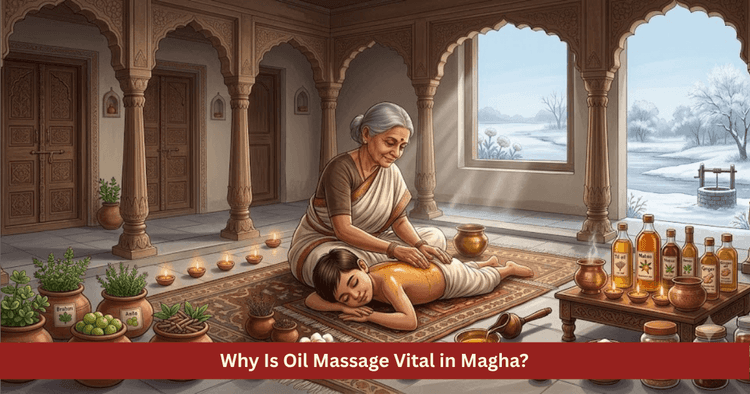
Table of Contents
Abhyanga and Sunbathing at a Glance
On the cold mornings of Magha month, massaging the body with sesame or mustard oil, known in Ayurveda as Abhyanga and then sitting in the gentle morning sunlight is regarded as an unfailing natural therapy. The cold and dry winds of Shishira Ritu increase Vata dosha in the body, causing cracked skin, joint pain and stiffness. The unctuousness of oil and the warmth of the Sun together form the simplest and most effective answer to all these problems.
| Element of Abhyanga | Details |
|---|---|
| Best Time | In the morning, before bathing |
| Suitable Oil | Sesame oil is best, mustard oil is also suitable |
| State of the Oil | Slightly warm |
| Duration of Massage | 15 to 20 minutes |
| Special Attention | Head, ears and soles of the feet |
| After the Massage | A gap of 15 to 30 minutes, then a bath in lukewarm water |
| Sunbathing | 15 to 20 minutes of gentle morning sunlight |
| Main Benefits | Calming Vata, glowing skin, strong bones and good sleep |
The Basic Rules of Abhyanga
- Use the oil only after warming it slightly.
- Do not massage right after a meal. Massage on an empty stomach or a few hours after eating.
- Use long strokes on the arms and legs and circular strokes on the joints.
- After the massage, wait for some time and then bathe in lukewarm water.
- Do not massage in fever, indigestion or any serious illness.
The Importance of Abhyanga in Ayurveda
While describing the daily routine, the Ashtanga Hridayam, a principal text of Ayurveda, says that a person should practise Abhyanga every day. According to this text, Abhyanga removes the signs of ageing, fatigue and Vata dosha. It clears the vision, nourishes the body, lengthens life, gives good sleep, beautifies the skin and brings firmness to the body.
Ayurveda holds that just as dry wood becomes strong and flexible when oiled and just as leather becomes soft and durable with oil, the human body too becomes firm, soft and healthy through regular Abhyanga. Tradition also holds that with regular Abhyanga the nourishment of the oil gradually reaches the deeper tissues of the body and nourishes all 7 dhatus, the tissues of the body.
| Benefit of Abhyanga | Effect on the Body |
|---|---|
| Calming Vata | Less joint stiffness, pain and dryness |
| Glowing skin | Moisture, softness and natural shine in the skin |
| Fewer wrinkles | The skin keeps its elasticity |
| Good sleep | Calm for the nervous system |
| Removal of fatigue | Relaxation of the muscles |
| Clear vision | Especially through massage of the soles |
| Blood circulation | Better blood flow through the whole body |
The Special Importance of the Head, Ears and Feet
Ayurveda instructs special attention to 3 parts during Abhyanga: the head, the ears and the feet.
- Head massage: Applying oil to the head calms the mind, strengthens the hair, brings good sleep and relieves headaches.
- Oil for the ears: A gentle massage of the outer ear and behind the ears calms Vata. Put oil inside the ear only on the advice of a qualified physician.
- Massage of the soles: Ayurveda describes massage of the soles of the feet as beneficial for the eyes. It removes fatigue and brings deep sleep.
The Correct Classical Technique of Abhyanga
| Step | Method |
|---|---|
| Preparing the Oil | Warm sesame or mustard oil slightly, just enough to feel comfortable on the skin |
| Start with the Head | Apply a little oil on the head and massage in circles with the fingertips |
| Face and Ears | Massage the face gently and the outer part of the ears |
| Neck and Shoulders | Massage from top to bottom |
| Arms and Legs | Long strokes on the long bones and circular strokes on the joints |
| Chest and Abdomen | Gentle circular strokes on the chest and clockwise massage on the abdomen |
| Back | Massage the back with someone's help if possible |
| Soles | Finally, massage the soles of the feet well |
| Waiting | Let the oil stay on the body for 15 to 30 minutes |
| Bath | Bathe in lukewarm water and if needed remove the oil with gram flour or ubtan |
The reason for massaging the abdomen clockwise is that food moves through the large intestine in this very direction. This helps digestion and elimination.
Which Oil Should Be Chosen and When?
| Oil | Qualities | Use in Magha Month |
|---|---|---|
| Sesame Oil | Warming, unctuous and Vata reducing | Best for Shishira Ritu |
| Mustard Oil | More warming and sharp | Popular in North India, beneficial for Kapha and cold |
| Coconut Oil | Cooling | Less useful in Shishira, in limited amounts for those of Pitta nature |
| Medicated Oils | Such as Mahanarayan oil | For joint pain, on a physician's advice |
The Importance and Right Time of Sunbathing
Sitting in the gentle morning sunlight, before or after Abhyanga, is the simplest and most beneficial practice of Magha month. In both Ayurveda and astrology the Sun is regarded as the god of health. Modern science also holds that morning sunlight helps the body produce vitamin D, which is essential for strong bones and immunity.
- Right time: The sunlight from sunrise until about 10 in the morning is regarded as the gentlest and most beneficial.
- Duration: 15 to 20 minutes are enough.
- Parts of the body: Let the sunlight fall on the back, arms and legs.
- Caution: Do not stare directly at the Sun for long and do not spend too much time in strong sunlight.
- Cover the head: It is wise to keep a light cloth on the head while sitting in the sun.
Sitting in the sun after an oil massage helps the oil absorb well into the skin and brings warmth to the body. But after sitting in the sun, the body should be allowed to return to normal temperature before bathing.
The Rules of Bathing
There is also a special rule for bathing after Abhyanga. According to Ayurveda, the body should be bathed in lukewarm water but very hot water should not be poured on the head, as it can harm the hair and eyes.
| Rule of Bathing | Reason |
|---|---|
| Lukewarm water on the body | Protection from cold and relaxation of the muscles |
| Normal or slightly warm water on the head | Protection of the hair and eyes |
| Gram flour or ubtan to remove the oil | The skin keeps its natural moisture |
| Protection from cold wind right after bathing | Protection from colds |
The Secret of Oil and Sunlight in Astrology
From an astrological point of view, oil is regarded as the substance of Saturn and sunlight as the direct radiance of the Sun. The Sun and Saturn are regarded as mutual enemies. In Magha month the Sun is in Makara, the sign of Saturn. When a person sits in the sun and massages with oil, they symbolically calm both the Sun and Saturn together.
Saturn signifies the bones, joints, nerves and skin, while the Sun signifies strength of the bones, health and vitality. In astrological tradition it is believed that the balance of these 2 brings relief from bone pain, arthritis and weakness of the nerves. Massaging with sesame oil on Saturday is a popular remedy for the peace of Saturn.
| Planet | Medium | Related Parts | Benefit |
|---|---|---|---|
| Saturn | Sesame oil | Joints, nerves, skin | Less stiffness and pain |
| Sun | Morning sunlight | Bones, eyes, vitality | Strength and energy |
| Balance of Both | Oil massage with sunbathing | The whole body | Health and stability |
Who Should Take Care?
Abhyanga is highly beneficial but in certain conditions it should be avoided or done with care.
- Do not practise Abhyanga during high fever or a fresh fever.
- Do not massage during indigestion, heaviness or right after a meal.
- If Kapha is greatly increased, as in a heavy cold with phlegm, avoid a full body massage.
- If there are wounds, infections or rashes on the skin, do not apply oil to that part.
- Pregnant women and those with serious illnesses should practise Abhyanga only on a doctor's advice.
What Should Be Done and Avoided in Abhyanga and Sunbathing?
| Do | Do Not |
|---|---|
| Massage with warm sesame or mustard oil | Do not use cold oil |
| Give special attention to the head, ears and soles | Do not massage right after a meal |
| Take the gentle morning sun | Do not sit long in the strong midday sun |
| Bathe in lukewarm water after the massage | Do not pour very hot water on the head |
| Keep the body covered after bathing | Do not massage during fever or indigestion |
The Blessing of Nourishing Oil and the Sun's Warmth
On a cold morning of Magha month, a massage with warm oil and the touch of gentle sunlight are not only care for the body but also an expression of love and respect for oneself. In Ayurveda the word for oiling is connected with sneha and sneha means both oil and love. When a person applies oil to the body with affection, they express gratitude to the body that serves them throughout life.
For the person who makes regular Abhyanga and sunbathing a part of daily life throughout Magha month, the harshness of Shishira cannot take hold. Glow comes to the skin, strength to the bones, flexibility to the joints and peace to the mind. This is the simple practice that lays the foundation for health through the whole year.
FAQ
Why should oil massage be done in Magha month?
In Magha month the cold and dry winds of Shishira Ritu increase Vata dosha. Oil massage calms Vata, moisturises the skin and relieves joint pain.
Which oil is best for Abhyanga?
Sesame oil is regarded as the best in Shishira Ritu, because it is warming, unctuous and Vata reducing. Mustard oil is also suitable in the cold.
What is the best time for sunbathing?
Sitting for 15 to 20 minutes in the gentle sunlight from sunrise until about 10 in the morning is regarded as most beneficial.
How long after an oil massage should one bathe?
Let the oil stay on the body for 15 to 30 minutes after the massage, then bathe in lukewarm water. Do not pour very hot water on the head.
In which conditions should oil massage not be done?
Abhyanga should not be done during fever, indigestion, right after a meal, when Kapha is excessive or when there are wounds or infections on the skin.
Get your accurate Kundali
Generate KundaliDid you like it?
Author
Pt. Narendra Sharma (63)
Experience: 20
Consults About: Family Planning, Career
Clients In: Punjab, Haryana, Delhi
Share this article with friends and family
WELCOME TO
ZODIAQ
Right Decisions at the right time with ZODIAQ
