Why Is Jaya Ekadashi So Powerful?
By Pt. Abhishek Sharma
Freedom from Torment, an Ancient Tale and the Vow of Victory
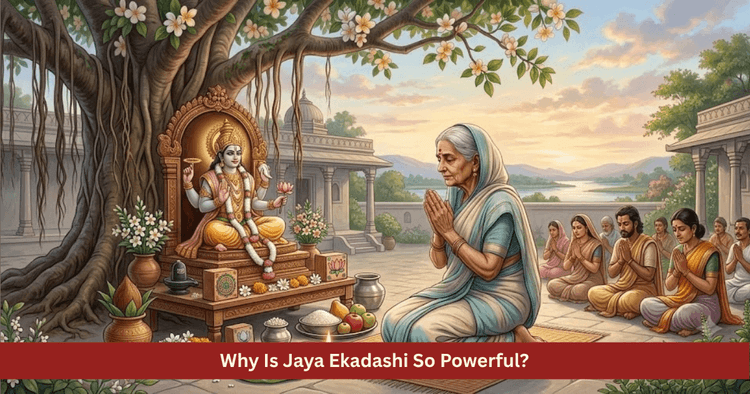
Table of Contents
Date, Fast and Parana of Jaya Ekadashi in Brief
The Ekadashi of the bright fortnight of Magha month is called Jaya Ekadashi. In some regions it is also known as Bhishma Ekadashi and Bhaimi Ekadashi. In the Gregorian calendar, this fast usually falls between late January and February. In the Padma Purana, Lord Shri Krishna tells Dharmaraja Yudhishthira that a person who keeps the fast of Jaya Ekadashi never has to enter the state of a ghost, spirit or pishacha, a restless and tormented being. The very name of this fast tells its fruit. Jaya means victory and this fast is believed to bring victory in every area of life.
| Element of the Fast | Details |
|---|---|
| Tithi | Magha Shukla Ekadashi |
| Other Names | Bhishma Ekadashi and Bhaimi Ekadashi in some regions |
| Principal Deity | Lord Vishnu |
| Nature of the Fast | Without food, on fruits or one sattvic meal |
| Prohibited | Rice, tamasic food, alcohol and quarrels |
| Principal Recitations | The Vishnu Sahasranama and the Jaya Ekadashi Vrat Katha |
| Special Practice | Night vigil and kirtan of the Lord |
| Parana | On Dwadashi, after Hari Vasar has ended |
| Expected Fruit | Freedom from the pishacha state, destruction of sins and victory |
The Basic Rules of the Fast in Brief
- From the evening of Dashami, begin following a sattvic diet and celibacy.
- On Ekadashi, bathe in the morning and take the resolve of the fast before Lord Vishnu.
- Offer yellow flowers, tulsi leaves, incense, a lamp and naivedya to the Lord.
- Remember the name of the Lord through the day and keep a night vigil if possible.
- On Dwadashi, break the fast at the time given in the local Panchang.
The Story of Malyavan and Pushpavati
The story of Jaya Ekadashi is described in detail in the Padma Purana. Once Devaraja Indra, the king of heaven, was watching the dance of the apsaras and the singing of the gandharvas in his court. In that court a gandharva named Malyavan was singing and an apsara named Pushpavati was dancing. The 2 became infatuated with each other. Their attention slipped from their art and both the notes of the song and the rhythm of the dance went astray.
Devaraja Indra took this as an insult to his court and to their art. In anger, he cursed them both to fall from heaven and be born in the mortal world in the form of pishachas. Through the power of the curse, both began to live as pishachas in a remote region of the Himalayas.
Life as a pishacha was full of suffering. They could not sleep and food gave them no satisfaction. In the bitter cold of the Himalayas they shivered day and night. One day, by chance, it was Magha Shukla Ekadashi. On that day, because of their sorrow and the cold, they ate nothing at all. They sat near fruits and roots but took nothing. Through the whole night, because of the cold, they stayed awake beneath a Peepal tree, repenting their past deeds.
In this way, without knowing it, they completed the fast of Jaya Ekadashi and the night vigil. The next day, on Dwadashi, by the grace of Lord Vishnu, they were freed from the pishacha state, regained their divine forms and returned to heaven. When Indra saw them, he asked in surprise how they had been freed from the curse. They told him that it was the power of Lord Vishnu and the fast of Jaya Ekadashi.
Lessons from the Story
Several deep lessons lie hidden in this story.
- Faithfulness to duty: Even a wandering mind at the time of one's duty can become a cause of downfall.
- The power of repentance: True repentance can cut through even the harshest curse.
- The fruit of unknowing merit: If a fast kept unknowingly can bring such fruit, how much more fruitful will a fast kept with faith be.
- The compassion of the Lord: Lord Vishnu is able to lift a being from any state.
- A message of hope: No situation is so dark that there is no freedom from it.
The Spiritual Meaning of the Pishacha State
The scriptures describe the pishacha state as a condition in which the soul wanders amid unfulfilled desires, fear and restlessness. It finds neither peace nor satisfaction. Seen symbolically, a living person too is often in a similar state. When the mind is constantly filled with fear, discontent, jealousy and uncontrolled desires, that too is a kind of mental pishacha state.
The fast of Jaya Ekadashi is also a path to freedom from this inner restlessness. Fasting teaches the senses restraint, chanting the divine name steadies the mind and the night vigil makes consciousness alert. Through the union of these 3, a person gains victory over inner fear and negativity. This is why this fast is regarded as a protection from harmful forces and mental unrest.
It is also important to remember that if a person suffers from serious mental distress, depression or fear, they should certainly seek the help of a qualified doctor along with spiritual remedies. Devotion and treatment are not opposed to each other but support each other.
The Complete Method of the Jaya Ekadashi Fast
| Time | Observance |
|---|---|
| Dashami Evening | A sattvic and light meal, celibacy and the resolve of the fast in the mind |
| Ekadashi Morning | Rise in Brahma Muhurta, bathe and wear clean yellow clothes |
| Sankalpa | Hold water, rice grains and a flower and take the resolve of the fast |
| Worship | Offer yellow flowers, tulsi leaves, sandalwood, incense, a lamp and naivedya to Lord Vishnu |
| Recitation | Recite the Vishnu Sahasranama and the Jaya Ekadashi Vrat Katha |
| Mantra | Chant Om Namo Bhagavate Vasudevaya 108 times |
| Through the Day | Bhajans, kirtan and satsang |
| Night | Vigil and remembrance of the Lord's name |
| Dwadashi | Feed a Brahmin or a needy person and break the fast at the auspicious time |
Worship Materials
- An idol, picture or Shaligram of Lord Vishnu
- Yellow flowers, tulsi leaves and sandalwood paste
- A ghee lamp, incense and camphor
- Panchamrit and Gangajal
- Fruits, dry fruits and sattvic sweets for naivedya
- Grain, sesame, clothes and dakshina for charity
The Correct Method of Parana
The full fruit of the Ekadashi fast is received only when the fast is broken at the right time and in the right way. Parana should be performed only during the Dwadashi tithi. The first part of Dwadashi is called Hari Vasar and according to tradition the fast is not broken during this time.
| Rule of Parana | Details |
|---|---|
| Time | During the Dwadashi tithi, after Hari Vasar has ended |
| Best Period | In the morning, at the parana muhurat given in the local Panchang |
| Before Parana | Worship of the Lord and feeding a needy person or donating grain |
| First Morsel | Begin with prasad that includes a tulsi leaf |
| Caution | Always break the fast before Dwadashi ends |
Only sattvic food should be taken at parana as well. Heavily fried or rich food puts a burden on digestion after a fast. Breaking the fast with light and nourishing food is best for both body and mind.
Jaya Ekadashi Through the Lens of Vedic Astrology
In Vedic astrology, the Ekadashi tithi is connected with the 11th phase of the Moon. The Moon signifies the mind and the Ekadashi fast is regarded as the most effective means of restraining the mind. Lord Vishnu is regarded as the presiding deity of Jupiter, the Guru of the gods, so the Ekadashi fast also brings the grace of Jupiter.
In astrological tradition, Rahu is regarded as the significator of fear, illusion and unseen obstacles. The worship of Lord Vishnu on Jaya Ekadashi is believed to protect from the adverse influence of Rahu, because it was the Sudarshana Chakra of Vishnu that separated Rahu and Ketu.
| Concern | Astrological Indication | Remedy on Jaya Ekadashi |
|---|---|---|
| Unknown fear and unease | Adverse Rahu | Recitation of the Vishnu Sahasranama and night vigil |
| Mental restlessness | Afflicted Moon | Fasting and japa of Om Namo Bhagavate Vasudevaya |
| Repeated failure in efforts | Weak ascendant or 10th house | The Jaya Ekadashi fast and a prayer for victory |
| Pitru Dosha | Afflicted Sun or 9th house | Dedicating the merit of the fast to the ancestors |
| Lack of the guru's grace | Weak Jupiter | Donating yellow flowers and split chickpeas |
What Should Be Done and Avoided on Jaya Ekadashi?
| Do | Do Not |
|---|---|
| Worship Lord Vishnu with faith | Do not eat rice on Ekadashi |
| Pluck tulsi leaves a day earlier and keep them | Do not pluck tulsi leaves on Ekadashi |
| Remember the Lord's name through the day | Avoid criticism, lies, anger and quarrels |
| Keep a night vigil and sing kirtan | Avoid sleeping during the day |
| Give grain and clothes to those in need | Do not eat meat, alcohol or tamasic food |
| Check the parana time in the Panchang | Do not break the fast during Hari Vasar |
The Gate of Vaikuntha That Leads to Victory
Jaya Ekadashi teaches that however deep a fall may be, the path to rising again is always open. Malyavan and Pushpavati fell from heaven and became pishachas but a single Ekadashi fast restored them to their divine forms. This story is a message of hope for everyone who feels trapped in some mistake, fear or darkness in life.
For the seeker who fasts with faith on this day, remembers Lord Vishnu and stays awake at night with the resolve to overcome inner fears and faults, Jaya Ekadashi truly becomes a festival of victory. This victory is not over anyone else but over the darkness of one's own mind and that is the greatest victory of all.
FAQ
When does Jaya Ekadashi fall? Jaya Ekadashi falls on the Ekadashi tithi of the bright fortnight of Magha month. In the Gregorian calendar it usually falls between late January and February.
What is the vrat katha of Jaya Ekadashi? According to the Padma Purana, the gandharva Malyavan and the apsara Pushpavati became pishachas through Indra's curse. By keeping the Jaya Ekadashi fast unknowingly, they were freed from that state.
What fruit does the Jaya Ekadashi fast bring? It is believed that this fast removes the fear of the pishacha state, destroys sins, removes mental restlessness and brings victory in every area of life.
When should the Jaya Ekadashi fast be broken? The fast should be broken during the Dwadashi tithi after Hari Vasar has ended. Always check the local Panchang for the exact time and break the fast before Dwadashi ends.
What should not be done on Jaya Ekadashi? On this day, do not eat rice, meat, alcohol or tamasic food, do not pluck tulsi leaves and stay away from criticism, anger and quarrels.
Get your accurate Kundali
Generate KundaliDid you like it?
Author

Pt. Abhishek Sharma (63)
Experience: 20
Consults About: Family Planning, Career
Clients In: Punjab, Haryana, Delhi
Share this article with friends and family
WELCOME TO
ZODIAQ
Right Decisions at the right time with ZODIAQ
