What Does Ayurveda Advise for Magha Month?
By Pt. Abhishek Sharma
Kapha Balance, Ritu Sandhi and Health in Late Winter
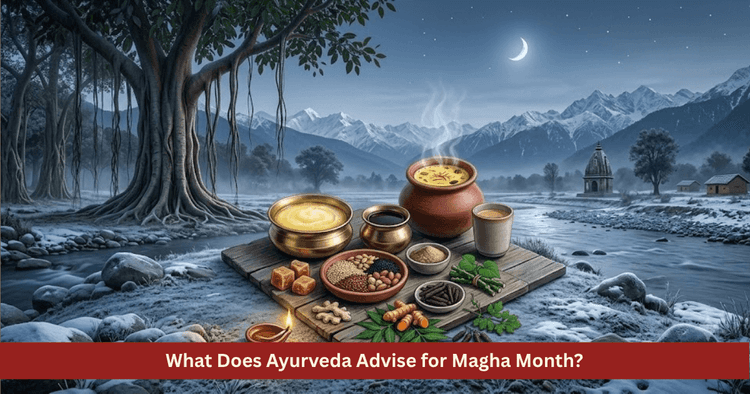
Table of Contents
The Seasonal Regimen of Magha Month at a Glance
The principal Ayurvedic texts, the Ashtanga Hridayam and the Charaka Samhita, divide the year into 6 seasons and prescribe a separate routine and diet for each season, called Ritucharya, the seasonal regimen. The months of Magha and Phalguna fall within Shishira Ritu, the late winter season. This is the coldest and driest time of the year. In the latter half of Magha, when the rays of the Sun begin to grow strong, the Kapha dosha accumulated in the body begins to move towards melting. So from the point of view of health, Magha month is a sensitive period of transition.
| Ayurvedic Element | Condition in Magha Month |
|---|---|
| Season | Shishira Ritu, which includes the months of Magha and Phalguna |
| Period | Uttarayana, that is Adana Kala, the period of depletion |
| Environment | Intense cold, dry winds and slowly increasing sunshine |
| Digestive Fire | Strong, able to digest heavy food |
| Main Dosha Condition | Accumulation of Kapha and increase of Vata |
| Main Ailments | Colds, coughs, runny nose, sinus trouble, joint pain and indigestion |
| Principle of Diet | Nourishing and warming food, gradually lighter at the junction of seasons |
| Principle of Routine | Oil massage, sunbathing, exercise and warm clothing |
The Basic Health Rules of Magha Month
- Drink lukewarm water every morning and avoid cold drinks through the day.
- Massage with sesame oil before bathing and bathe in lukewarm water.
- Always spend some time in the gentle morning sunlight.
- Eat fresh, warm and nourishing food and do not eat stale or cold food.
- In the last days of Magha, gradually move towards light and easily digestible food.
What Happens in the Body During Shishira Ritu?
According to Ayurveda, the year has 2 halves: Adana Kala and Visarga Kala. The period of Uttarayana is called Adana Kala, in which the Sun gradually grows strong and draws moisture and strength from the earth and living beings. Shishira Ritu is the first season of Adana Kala. At this time dryness increases in the atmosphere along with the cold.
Because of the cold, the pores of the skin contract and the inner heat of the body stays concentrated within. This makes the Jatharagni, the digestive fire, strong. This is why appetite increases in winter and even heavy food is digested easily. If this strong fire does not receive proper nourishment, it begins to dry up the body's own tissues, leading to weakness and Vata disorders.
In the harsh cold of Hemanta and Shishira, Kapha dosha slowly accumulates in the body. In the latter half of Magha, when the rays of the Sun begin to grow strong, this accumulated Kapha moves towards melting. In Vasanta Ritu, spring, it becomes fully aggravated. If proper diet and routine are not kept during this transition, the melting Kapha becomes the cause of colds, coughs, lung infections, sinus problems and indigestion.
| Dosha | Condition in Shishira Ritu | Signs | Means of Balance |
|---|---|---|---|
| Kapha | Accumulating, moving towards melting at the end of Magha | Heaviness, colds, phlegm, lethargy | Lukewarm water, dry ginger, exercise |
| Vata | Increased by cold and dryness | Cracked skin, joint pain, constipation | Oil massage, unctuous food |
| Pitta | Generally calm | Few special signs | Balanced diet |
The Secret of Ritu Sandhi
The concept of Ritu Sandhi, the junction of seasons, is very important in Ayurveda. The last 7 days of one season and the first 7 days of the next, a period of 14 days in all, are called Ritu Sandhi. At this time the habits of the previous season should be given up gradually and the habits of the new season adopted gradually. Sudden change is harmful to the body.
This point deserves special attention in Magha month. At the start of Magha there is the full cold of Shishira, so nourishing and warming food is necessary. But as the end of Magha draws near and the footsteps of spring begin to be heard, lightness should gradually be brought into the diet. The amount of foods with katu, pungent, tikta, bitter and kashaya, astringent tastes should be increased a little, because they balance Kapha.
| Part of Magha | Nature of the Diet | Examples |
|---|---|---|
| First Half | Nourishing, unctuous and warming | Sesame, jaggery, ghee, milk, wheat, black gram, pearl millet |
| Middle | Balanced, nourishing yet easy to digest | Green gram, rice, seasonal vegetables, a limited amount of ghee |
| Latter Half and Ritu Sandhi | Gradually lighter and Kapha reducing | Dry ginger, black pepper, barley, old wheat, a limited amount of honey |
The Complete Ayurvedic Daily Routine for Magha Month
| Time | Practice | Benefit |
|---|---|---|
| Brahma Muhurta | Waking and drinking lukewarm water | Helps digestion and elimination |
| Morning | Cleaning the teeth and tongue and gargling | Cleansing of the mouth and reduction of Kapha |
| Morning | Abhyanga, a massage with sesame oil | Pacifies Vata and protects the skin |
| Morning | Exercise, Surya Namaskar and pranayama | Reduces Kapha and warms the body |
| Bath | Bathing in lukewarm water | Cleansing of the body |
| Morning Sun | Sitting in gentle sunlight for 15 to 20 minutes | Strength of the bones and cheerfulness of mind |
| Midday | The main meal of the day | Right use of the strong digestive fire |
| Evening | A light meal, some time after sunset | Easy digestion at night |
| Night | Warm clothing and sleeping on time | Protection from Vata and Kapha |
The Balanced Use of Triphala, Haritaki and Dry Ginger
Ayurveda gives special rules for the use of certain medicines according to the season. For Shishira Ritu and Magha month, some simple and effective medicinal practices are described.
Ritu Haritaki
In Ayurveda, haritaki, the chebulic myrobalan, is regarded as a very important medicine. Tradition prescribes taking haritaki with a different substance in each season, which is called Ritu Haritaki. In Shishira Ritu the tradition is to take haritaki with pippali, the long pepper.
| Season | Supporting Substance with Haritaki |
|---|---|
| Shishira | Pippali, long pepper |
| Vasanta | Madhu, honey |
| Grishma | Jaggery |
| Varsha | Rock salt |
| Sharad | Sugar |
| Hemanta | Dry ginger |
The Use of Dry Ginger
Dry ginger, known as sonth, is one of the most useful medicines of Shishira Ritu. It balances the digestive fire, reduces Kapha and gives warmth to the body.
- A pinch of dry ginger with rock salt before meals improves appetite and digestion.
- A decoction of dry ginger, black pepper and tulsi is beneficial for colds and coughs.
- Drinking lukewarm milk with a pinch of dry ginger and turmeric brings relief from Kapha and joint pain.
The Use of Triphala
Triphala, a mixture of haritaki, bibhitaki and amla, is regarded as the finest formula for cleansing the digestive system. Taking a limited amount of Triphala with lukewarm water before sleeping at night relieves constipation, a common problem in Shishira Ritu caused by increased Vata.
The dose and duration of any medicine depend on a person's constitution, age and health. So these should be used regularly only on the advice of a qualified Ayurvedic physician, especially by pregnant women, children and those suffering from any illness.
Simple Remedies to Avoid Seasonal Ailments
| Problem | Home Remedy |
|---|---|
| Colds and runny nose | A decoction of tulsi, ginger and black pepper and steam inhalation |
| Cough | Honey with ginger juice and gargling with lukewarm water |
| Sore throat | Gargling with lukewarm water mixed with turmeric and rock salt |
| Joint pain | Massage with warm sesame oil and sitting in the sun |
| Dry skin | Using sesame or coconut oil and drinking enough water |
| Indigestion and heaviness | Ginger and rock salt before meals and light food |
| Constipation | Triphala with lukewarm water at night |
| Sinus trouble | Steam inhalation and nasya or jala neti under proper guidance |
These home remedies can bring relief from common seasonal problems. But if the fever is high, breathing is difficult or the problem persists for several days, a doctor should be consulted at once.
The Link Between Astrology and Ayurveda
In the Vedic tradition, astrology and Ayurveda are regarded as complementary to each other. In astrology the Moon is regarded as the significator of water and Kapha, Saturn of Vata and the bones and the Sun of fire and Pitta. In Magha month the Sun is in Makara, the sign of Saturn. This position reflects cold, dryness and an increase of Vata. This is why Sun worship, the use of sesame and oil massage in this month are given equal importance in both astrology and Ayurveda.
What Should Be Done and Avoided for Health in Magha Month?
| Do | Do Not |
|---|---|
| Drink lukewarm water | Do not take cold drinks or food straight from the refrigerator |
| Practise oil massage and sunbathing | Do not stay long in cold wind with the body uncovered |
| Exercise and practise Surya Namaskar regularly | Avoid sleeping during the day |
| Eat fresh and warm food | Do not eat stale, very sour or fried food |
| Adopt lighter food gradually at the junction of seasons | Do not change the diet suddenly when the season changes |
| Wear warm clothes, especially covering the head and feet | Do not suppress hunger, eat on time |
A Healthy Life That Walks with the Seasons
The greatest message of Ayurveda is that the human being is a part of nature. When nature changes, a person should also change their diet and routine accordingly. Magha month is the time of exactly this change in nature, when the harshness of winter slowly begins to turn into the softness of spring.
The person who adopts oil massage, sunbathing, a balanced diet and regular exercise in this month and who changes habits gradually at the junction of seasons, not only avoids the ailments of winter but also welcomes the coming spring with full health and enthusiasm. This is the true fruit of Ritucharya.
FAQ
In which season does Magha month fall?
According to Ayurveda, the months of Magha and Phalguna fall within Shishira Ritu, the late winter season. It is the coldest and driest time of the year.
Why does Kapha dosha increase in Magha month?
Kapha accumulates in the body during the cold of Hemanta and Shishira. In the latter half of Magha, when the Sun's rays grow strong, it begins to melt and causes colds and coughs.
What is Ritu Sandhi?
The last 7 days of one season and the first 7 days of the next are called Ritu Sandhi. At this time the diet and routine should be changed gradually.
With what should haritaki be taken in Shishira Ritu?
According to tradition, haritaki is taken with pippali in Shishira Ritu. Always consult an Ayurvedic physician about the dose and duration.
How can colds and coughs be avoided in Magha month?
Drink lukewarm water, take a decoction of tulsi, ginger and black pepper, practise oil massage and sunbathing and avoid cold and stale food.
Get your accurate Kundali
Generate KundaliDid you like it?
Author

Pt. Abhishek Sharma (63)
Experience: 20
Consults About: Family Planning, Career
Clients In: Punjab, Haryana, Delhi
Share this article with friends and family
WELCOME TO
ZODIAQ
Right Decisions at the right time with ZODIAQ
