Magha Month: What to Do and Avoid?
By Pt. Abhishek Sharma
7 Golden Rules and 7 Mistakes for Greater Merit
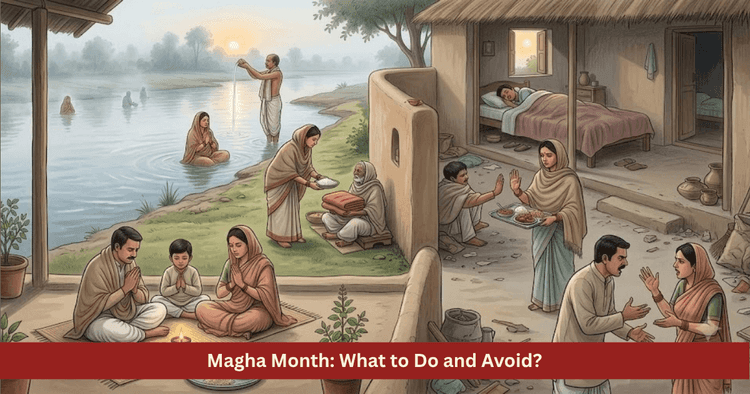
Table of Contents
The Code of Conduct for Magha Month at a Glance
To gain the full spiritual benefit of Magha month and to avoid mistakes made unknowingly, the scriptures and tradition describe a clear code of conduct. In this month, rising before sunrise every day, bathing in water with sesame, worshipping Lord Vishnu and the Sun daily, donating sesame, jaggery and warm clothes to those in need and eating sattvic food are regarded as essential. On the other hand, sleeping late, polluting rivers, eating meat and drinking alcohol, telling lies and criticising others are regarded as especially forbidden in this month.
| Area | 7 Golden Rules | 7 Forbidden Mistakes |
|---|---|---|
| Routine | Rising before sunrise | Sleeping past sunrise |
| Bathing | A sacred bath in water with sesame | Polluting rivers |
| Worship | Daily worship of Vishnu and the Sun | Turning worship into a mere formality |
| Charity | Donating sesame, jaggery, grain and warm clothes | Showing off charity and pride |
| Diet | Sattvic food | Meat, alcohol and, by tradition, radish |
| Speech | Truthful and sweet speech | Lies, criticism and gossip |
| Service | Serving parents, cows and the needy | Causing pain to any living being |
The Core Spirit Behind the Code of Conduct
- These rules are not meant to frighten but to make life disciplined and pure.
- Follow the rules according to your capacity and health.
- If a rule is missed, try again instead of feeling guilty.
- Along with the outer observance of rules, purity of mind is also necessary.
- Following the rules together as a family is the simplest and most joyful way.
The Importance of Discipline in Magha Month
Magha is called the month of austerity, bathing, charity and restraint. In the bitter cold of Shishira Ritu, rising before sunrise, bathing in cold water and living with restraint are themselves an austerity. Tradition holds that even a small discipline practised in this month brings great spiritual fruit.
The purpose of this code of conduct is not only to earn merit. It is a month of training that leads a person towards good habits. Rising early, cleanliness, sattvic food, sweet speech and charity, if these habits become firm in Magha month, they can make life beautiful for the whole year.
The 7 Golden Rules of Magha Month
Rule 1: Rising Before Sunrise
In Magha month, rising during Brahma Muhurta is the first and most important rule. Brahma Muhurta begins about 1 hour 36 minutes before sunrise. This time is regarded as the finest for meditation, japa and study.
Rule 2: A Sacred Bath in Water with Sesame
Every day, bathe in water mixed with a few black sesame seeds and Gangajal. If possible, bathe in a sacred river. It is traditional to invoke the sacred rivers before bathing. The elderly and the sick should use lukewarm water.
Rule 3: Daily Worship of Vishnu and the Sun
After bathing, offer arghya to the Sun from a copper lota and worship the Madhava form of Lord Vishnu. Offer tulsi leaves and chant Om Namo Bhagavate Vasudevaya.
Rule 4: Donating Sesame, Jaggery and Warm Clothes
Magha is the month of charity. According to your means, donate sesame, jaggery, grain, blankets and warm clothes every day or on special tithis. Always give with respect and humility.
Rule 5: Sattvic Food
Throughout the month, eat fresh, warm and sattvic food. Include sesame, jaggery, ghee and dry ginger in the diet in balanced amounts. Fast on Ekadashi.
Rule 6: Truthful and Sweet Speech
Restraint of speech is an important practice of Magha month. Speak the truth, speak sweetly and speak little. The tradition of keeping a vow of silence on Mauni Amavasya is linked with this very spirit.
Rule 7: The Spirit of Service
Serve parents, elders, cows and those in need. Set aside Gograas every day and arrange grain and water for animals and birds.
The 7 Forbidden Mistakes of Magha Month
Mistake 1: Sleeping Past Sunrise
Sleeping late in Magha month is regarded as the greatest mistake. Tradition says that it deprives a person of most of the merit of this month. From a health point of view too, sleeping late increases lethargy and Kapha.
Mistake 2: Polluting Rivers
Putting soap, shampoo, plastic, bags of worship materials or rubbish into sacred rivers is regarded as a grave sin. The river is called a mother and the bath of one who soils the mother is never complete.
Mistake 3: Eating Meat and Drinking Alcohol
Magha is the month of sattva. In this month, eating meat, drinking alcohol and taking other tamasic substances are regarded as completely forbidden.
Mistake 4: Eating Radish, According to Tradition
Tradition describes eating radish in Magha month as forbidden. According to Ayurveda, the large and hard radish of this season can increase Vata and Kapha.
Mistake 5: Telling Lies
Truth is the greatest practice of Magha month. Telling lies and deceiving others are regarded as destroying the austerity of this month.
Mistake 6: Criticism and Gossip
Criticising and gossiping about others is the greatest fault of speech. Tradition holds that it diminishes a person's merit and keeps the mind restless.
Mistake 7: Causing Pain to Any Living Being
Magha is the month of compassion. Causing pain to any person, animal or bird, chasing away or hitting a cow and insulting the helpless are especially forbidden in this month.
The scriptures describe serious consequences for these mistakes. The idea is that the effect of wrong deeds done in a sacred month like Magha is deeper than on ordinary days. But the purpose is not to create fear but to make a person careful and alert.
A Daily Checklist for Magha Month
| Time | Practice | Completed |
|---|---|---|
| Brahma Muhurta | Rising and remembering the Lord | Yes or no |
| Morning | Bathing in water with sesame and Gangajal | Yes or no |
| Sunrise | Solar arghya from a copper lota | Yes or no |
| Worship | Madhava worship, tulsi leaves and mantra japa | Yes or no |
| Before Meals | Gograas and grain for animals and birds | Yes or no |
| Day | Sattvic food and sweet speech | Yes or no |
| Charity | Donating sesame, grain or clothes according to one's means | Yes or no |
| Evening | A lamp near the tulsi and japa | Yes or no |
| Night | Reflecting on the day's deeds and sleeping on time | Yes or no |
Looking at this checklist every day keeps discipline in the mind. If family members follow it together, it becomes even simpler and more joyful.
Rules for the Special Tithis of Magha Month
| Tithi | Special Rule |
|---|---|
| Sakat Chauth | A fast for the protection of children and Moon arghya |
| Shattila Ekadashi | The 6 uses of sesame and giving up rice |
| Mauni Amavasya | A vow of silence, a sacred bath and ancestral tarpan |
| Vasant Panchami | Saraswati worship and yellow clothes |
| Ratha Saptami | A bath at Arunodaya and Sun worship |
| Bhishma Ashtami | Bhishma tarpan |
| Jaya Ekadashi | Fasting, night vigil and parana on Dwadashi |
| Magha Purnima | The great bath, the Satyanarayana Katha and charity |
The Discipline of Magha Month Through the Lens of Vedic Astrology
In Magha month the Sun is in Makara, the sign of Saturn. Saturn signifies discipline, restraint, service and karma. So the code of conduct of this month is in truth a practice of Saturn's qualities. Tradition holds that for the person who follows discipline, service and truth in this month, the grace of Saturn remains and the Sun grants inner strength and radiance.
What Should Be Done and Avoided in the Code of Conduct?
| Do | Do Not |
|---|---|
| Follow the rules according to your capacity | Do not insist on hardship that endangers health |
| Adopt the rules together as a family | Do not force the rules on others |
| Try again when you slip | Do not lose heart when a rule is missed |
| Keep the mind pure along with the outer rules | Do not follow the rules only for show |
| Make the rules good habits for the whole year | Do not drop all good habits after Magha |
Merit Flowing in the Stream of Discipline
The code of conduct of Magha month is not a harsh bondage but a simple method of making life beautiful. Rising early, bathing, worship, charity, sattvic food, sweet speech and service, these 7 golden rules keep the body healthy, the mind calm and the soul content. And avoiding the 7 forbidden mistakes keeps a person away from habits that slowly make life restless.
For the person who follows this code of conduct with faith and discernment in this month, the fast and austerity succeed. And when these same good habits remain even after Magha, the whole of life becomes one long Magha, pure, disciplined and full of light.
FAQ
What are the 7 golden rules of Magha month?
Rising before sunrise, bathing in water with sesame, worshipping Vishnu and the Sun, donating sesame, jaggery and clothes, sattvic food, truthful and sweet speech and the spirit of service are the 7 golden rules of Magha.
Which mistakes should be avoided in Magha month?
Sleeping late, polluting rivers, meat and alcohol, radish by tradition, lies, criticism and causing pain to any living being are regarded as the 7 forbidden mistakes of Magha.
Is eating radish forbidden in Magha month?
Tradition regards eating radish in Magha month as forbidden. According to Ayurveda, the large and hard radish of this season can increase Vata and Kapha.
When is Brahma Muhurta in Magha month?
Brahma Muhurta begins about 1 hour 36 minutes before sunrise. This time is regarded as the finest for meditation, japa, bathing and study.
What should be done if a rule is missed?
If a rule is missed, try again with faith from the next day instead of feeling guilt or fear. Following the rules according to your capacity and health is true observance.
Get your accurate Kundali
Generate KundaliDid you like it?
Author

Pt. Abhishek Sharma (63)
Experience: 20
Consults About: Family Planning, Career
Clients In: Punjab, Haryana, Delhi
Share this article with friends and family
WELCOME TO
ZODIAQ
Right Decisions at the right time with ZODIAQ
