Complete Spiritual and Astrological Guide to Magha Month: The Sacred January-February Transition
By Pt. Nilesh Sharma
Worship of Lord Madhava, Science of Uttarayana And Inner Cleansing
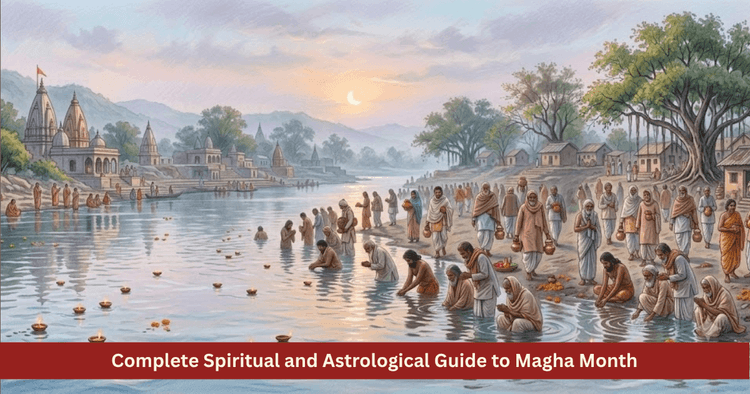
Table of Contents
Within the sublime framework of the classical Vedic calendar and celestial timekeeping, the eleventh lunar month, known as 'Magha', represents the absolute zenith of internal purification, self-discipline, sacred river ablutions and spiritual illumination. In the Gregorian calendar, this holy period typically commences in mid-January and extends through mid-to-late February. This is that unique cosmic interval when the supreme solar deity Lord Surya turns northward, embarking on his celestial journey known as Uttarayana, casting life-affirming rays across the northern hemisphere of the earth. From an astronomical and metaphysical standpoint, this seasonal threshold is far more than a simple shift in weather; it marks the awakening of subtle cosmic vitality, an exponential rise in pure sattvic vibrations across the atmosphere and the deep realignment of the five biological elements within the human body.
Classical scriptures, including the Anushasana Parva of the Mahabharata, the Uttara Khanda of the Padma Purana and the Matsya Purana, extol Magha as a sacred portal of redemption. It is dedicated primarily to the worship of Lord Sri Hari Vishnu in his transcendental 'Madhava' manifestation, harmonized with the adoration of the Sun God. Traditional treatises affirm that even a modest spiritual effort performed during Magha-such as bathing in natural waters before sunrise, practicing sacred charity of sesame and warm blankets or chanting sanctified mantras-yields spiritual merit equivalent to thousands of Ashwamedha sacrifices and the gift of countless kine. Magha frees the human soul from accumulated karmic dross, turning the consciousness away from transient material illusions toward final liberation. Below is an exhaustive, scripturally authentic guide to the astrological, metaphysical and biological dynamics of Magha month.
| Discipline and Cosmic Component | Scriptural Standard and Form | Astrological and Spiritual Dynamics |
|---|---|---|
| Chronological Placement | 11th Month of the Vedic Almanac | Threshold connecting the 11 Rudras and 12 Adityas |
| Gregorian Calendar Window | Mid-January to Mid/Late February | Direct manifestation of the northern solar course (Uttarayana) |
| Presiding Manifestation | Lord Sri Hari Vishnu as 'Madhava' | Complete alleviation of existential poverty and karmic distress |
| Core Astronomical Alignment | Full Moon in Magha Nakshatra with Sun in Capricorn-Aquarius | Harmonious blend of Ketu and Saturn cultivating inner dispassion |
| Foundational Spiritual Act | Pre-dawn ablutions in cool water with sesame | Thermo-regulation stimulating vital ojas and cranial energy channels |
| Primary Charitable Articles | Black/white sesame, raw jaggery, woolen wraps and footwear | Prompt pacification of malefic afflictions from Rahu, Ketu and Saturn |
| Recommended Chants | Vishnu Sahasranama, Aditya Hridaya Stotram, Gayatri Mantra | Amplification of willpower, intellectual sharpness and spiritual aura |
What Is the Astronomical and Solar Science of Magha Month?
The astronomical and physical foundation of Magha month is anchored in the entry of the Sun into the sign of Capricorn (Makar Sankranti). As the earth's axial orientation shifts relative to the solar path, the Sun ceases its southern descent and begins its northern progression, traditionally known as Uttarayana. In Vedic metaphysics, Uttarayana represents the waking daylight hours of the celestial forces, an epoch when ambient cosmic energy is intensely progressive, uplifting and restorative.
Following the deepest cold of winter, solar rays begin striking the northern hemisphere at an increasingly direct angle, neutralizing lingering atmospheric toxicity. During this interval, the biological resonance of solar radiation supports the regeneration of dormant human tissues. Exposing the body to the gentle morning sun and immersing in natural cool waters directly harmonizes the circadian rhythm by regulating the pineal and pituitary glands. Thus, observing the disciplines of Magha is an empirical alignment of human physiology with cosmic cycles rather than a mere ritualistic custom.
The Transcendental Worship of Lord Madhava
The primary governing deity of Magha month is Lord Sri Hari Vishnu, invoked reverently through his eternal name 'Madhava'. Classical Sanskrit etymology and Vedantic philosophy analyze the sacred syllable-structure as:
- 'Ma' refers directly to Goddess Mahalakshmi-the sovereign embodiment of spiritual luster, wisdom, abundance and illumination.
- 'Dhava' translates as the eternal consort, lord and shelter.
therefore 'Madhava' signifies the supreme lord of Goddess Lakshmi, Lord Narayana himself. The venerable sage Vyasa expounds in the Padma Purana that an aspirant who faithfully offers fresh Tulsi leaves, black and white sesame seeds, fivefold nectar (Panchamrita) and yellow blossoms to Lord Madhava during Magha dissolves ancestral poverty and mental darkness. Worshipping Lord Madhava refines the intellect, burning away base impulses like anger, greed, ego and attachment, anchoring the seeker in pure spiritual joy.
Scriptural Exaltation in the Mahabharata and Padma Purana
In the epic Mahabharata, while lying upon the bed of arrows awaiting the auspicious hour of Uttarayana, Grandsire Bhishma instructed King Yudhishthira on the unmatched power of Magha month. He emphasized that offering clean water, lighting unblemished lamps and distributing sesame seeds during this winter threshold cleanses the bodily humors and shields the soul from untimely affliction.
Similarly, in the Uttara Khanda of the Padma Purana, Lord Dattatreya declares that just as pranayama is preeminent among austerities, the Gayatri hymn supreme among sacred verses and Prayagraj foremost among sacred confluences, so is Magha the supreme among all twelve months for inner purification. Even if an individual has remained unable to perform grand sacrifices, observing early morning baths and meditating upon Lord Vishnu throughout Magha bestows the comprehensive spiritual merit of visiting all global pilgrimage sanctuaries combined.
What Are the 5 Foundational Spiritual Practices for Magha?
To assimilate the transformative spiritual benefits of Magha, classical authorities outline five mandatory daily observances:
-
Pre-Dawn Sesame Ablutions: Rise during the Arunodaya twilight (approximately 48 minutes prior to sunrise) and bathe in a natural flowing stream, clean pond or at home using water infused with sacred Ganga water and clean black sesame seeds. This practice fortifies the bio-magnetic aura and prevents cutaneous dryness caused by seasonal winds.
-
Solar Libations from a Copper Chalice: Immediately following the bath, offer clean water blended with red sandalwood paste, vermilion, unbroken raw rice, a touch of jaggery and red blossoms to the rising Sun. Pouring the water in three unbroken streams while chanting the Gayatri or solar mantras enhances eyesight, vital stamina and executive willpower.
-
Offering Tulsi and Panchamrita to Lord Madhava: Anoint a sacred Shaligrama stone or metallic icon of Lord Vishnu with the five sacred nectars, offering 108 unblemished Tulsi leaves with devotion. Recite the verse "Om Namo Bhagavate Vasudevaya" or "Om Madhavaya Namah" at least 108 times daily to invoke peace and prosperity.
-
Charitable Gifts of Sesame, Jaggery and Warmth: During this cold weather transition, donate thick woolen blankets, warm clothing, leather-free footwear, raw jaggery and sesame seeds to underprivileged, elderly or destitute individuals. This act of charity pacifies challenging planetary configurations residing in the 6th, 8th and 12th houses of the horoscope.
-
Sattvic Diet and Observance of Silence: Observe moderation in food by consuming light, freshly prepared meals once a day (Ekabhukta) or adhering to a purely vegetarian, non-stimulating diet. Radishes, stale grains and excessively sour foods should be avoided completely. Practicing at least one hour of absolute silence (Mouna) daily conserves speech energy, channeling it toward higher contemplation.
The Transformation from Material Entanglement to Liberation
Magha delivers the enduring philosophical truth that human life is meant for inward evolution rather than endless material accumulation. Just as the natural world sheds the bitter chill, dry foliage and inertia of deep winter to welcome the blossoms and fragrant breezes of spring, an individual must discard mental laziness, arrogance and worldly illusions to step into the radiant spring of self-realization. The cool bath washes away bodily torpor, charitable donations of sesame soften ego-driven barriers and the remembrance of Lord Madhava fills the heart with nectar. Magha serves as an authentic thirty-day spiritual workshop that guides the human consciousness from the cycle of birth and death toward eternal freedom.
FAQ
Between which Gregorian months does the Hindu month of Magha occur?
Based on lunisolar calculations, Magha month typically commences in mid-January (around January 14-15, coinciding with Makar Sankranti) and concludes during the middle or latter half of February.
Who is the presiding deity of Magha month and what is the fruit of their worship?
The primary presiding deity is Lord Sri Hari Vishnu in his 'Madhava' manifestation, along with the Sun God in his 'Varuna' and 'Mitra' aspects. Worshipping them bestows robust physical health, societal respect, spiritual clarity and deliverance from karmic distress.
How can one observe Magha Snana at home if visiting a holy river is not feasible?
Fill a vessel with clean, cool domestic water, add a few drops of consecrated Ganga water, a pinch of clean black sesame seeds and a blade of kusha grass. Chant the sacred river invocation "Gange Cha Yamune Chaiva..." with sincere devotion while bathing before sunrise to receive the full spiritual merit of a holy river dip.
Which specific vegetable is strictly prohibited during Magha month?
Both classical Ayurveda and traditional scriptures strictly prohibit the consumption of radishes (Mooli) during Magha. Consuming radishes during this seasonal transition severely aggravates the bodily humors of wind and phlegm (Vata and Kapha) while promoting sluggishness. Stale and cold foods should also be avoided.
Why is the use of sesame seeds considered indispensable in Magha month?
Sesame seeds are spiritually revered as having manifested from the sacred exertion of Lord Vishnu. Scientifically, consuming and applying sesame during the winter provides vital healthy lipids, calcium and internal warmth. Astrologically, sesame belongs to Saturn, so its dedicated use pacifies afflictions of Saturn, Rahu and ancestral debts (Pitru Dosha).
Get your accurate Kundali
Generate KundaliDid you like it?
Author

Pt. Nilesh Sharma (63)
Experience: 20
Consults About: Family Planning, Career
Clients In: Punjab, Haryana, Delhi
Share this article with friends and family
WELCOME TO
ZODIAQ
Right Decisions at the right time with ZODIAQ
