What Is the Secret of Magha Nakshatra?
By Pt. Suvrat Sharma
Ketu's Detachment, Ancestral Blessings and the Royal Throne
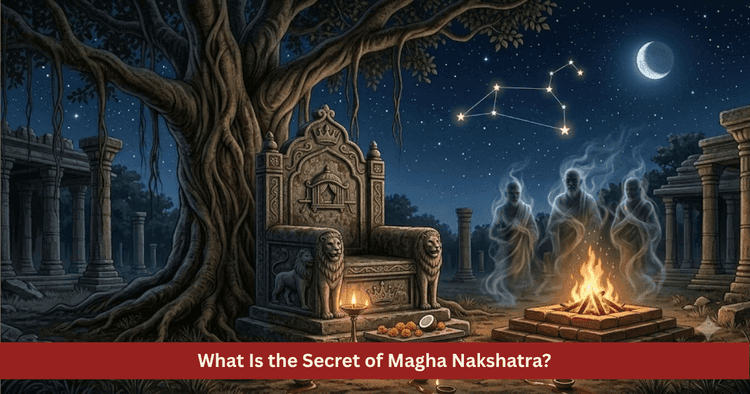
Table of Contents
Magha Nakshatra at a Glance
The soul of Magha month is Magha Nakshatra. The month takes its name from this nakshatra, because on the full moon of Magha month the Moon is usually in or near it. Among the 27 nakshatras of Vedic astrology, Magha is the 10th. It extends from 0 degrees to 13 degrees 20 minutes of Simha (Leo). Its ruling planet is Ketu, regarded as the planet that cuts worldly bonds and leads towards liberation and its presiding deities are the Pitrus, the ancestors.
| Element of the Nakshatra | Details |
|---|---|
| Position | 10th among the 27 nakshatras |
| Sign | Simha (Leo), from 0 degrees to 13 degrees 20 minutes |
| Lord of the Sign | The Sun |
| Lord of the Nakshatra | Ketu |
| Presiding Deities | The Pitrus, that is the ancestors |
| Symbol | A royal throne or a royal palanquin |
| Gana | Rakshasa Gana |
| Nature | Fierce |
| Special Category | One of the Gandmool nakshatras |
| Main Qualities | Leadership, dignity, self respect and respect for tradition |
Core Principles Linked with Magha Nakshatra
- Magha Nakshatra is linked with the ancestors, the family line and the tendencies of past lives.
- The energy of this nakshatra gives a person natural leadership, dignity and self respect.
- The influence of Ketu gives this nakshatra spiritual depth and the capacity for detachment.
- Honouring the ancestors and offering them tarpan is the main remedy for pacifying the faults of this nakshatra.
- The influence of this nakshatra is regarded as especially active in Magha month.
The Meaning of Magha and Its Form in the Sky
The word Magha means great, mighty or magnificent. In the sky, this nakshatra is recognised by the brightest star of the Leo constellation, which is clearly visible in the night sky. Since ancient times this star has been regarded as a symbol of royal dignity.
Magha Nakshatra lies entirely within Simha, the sign ruled by the Sun. The Sun is the king, the soul and the significator of the father. When a nakshatra lies in the sign of the Sun, is dedicated to the ancestors and is ruled by Ketu, a remarkable combination arises. Here royal authority, ancestral heritage and spiritual detachment all meet together.
The Symbol of the Royal Throne
The symbol of Magha Nakshatra is a royal throne or a royal palanquin. This symbol shows that the energy of this nakshatra leads a person towards honour, position and leadership. But this throne also has a deeper meaning. A throne does not come to a person through their own strength alone but through the tradition of their ancestors. The son of a king becomes king because his ancestors built that kingdom.
This is why the throne of Magha Nakshatra reminds a person that behind every achievement lie the sacrifice, hard work and blessings of the ancestors. The person who forgets this truth and lives only in ego finds the throne beginning to shake. And the person who honours the ancestors keeps a dignity that endures.
The Ancestor Deities and the Secret of Ancestral Debt
The presiding deities of Magha Nakshatra are the Pitrus. Among the 27 nakshatras, it is the only one whose deities are the ancestors themselves. This means that a person born in this nakshatra or one who connects with its energy, is directly influenced by the tendencies and debts of their ancestors.
The Sanatana tradition speaks of 3 debts carried by every human being: Deva Rina, the debt to the gods, Rishi Rina, the debt to the sages and Pitru Rina, the debt to the ancestors. Magha Nakshatra is especially linked with Pitru Rina. Ancestral debt does not mean only shraddha and tarpan. It means carrying forward the good traditions of the ancestors, maintaining the honour of the family and passing good values to the next generation.
| Received from the Ancestors | Duty Towards the Ancestors |
|---|---|
| Body and life | Honouring life through health and good conduct |
| Values and traditions | Carrying good traditions forward |
| The family name and honour | Doing deeds that increase the pride of the family |
| Property and resources | Using them well and passing them to the next generation |
| Blessings | Gratitude through shraddha, tarpan and remembrance |
The Influence of Ketu and Spiritual Liberation
The ruling planet of Magha Nakshatra is Ketu. Ketu is called a shadow planet. It is regarded as the significator of past life karma, detachment, spirituality, intuition and liberation. Ketu draws a person away from worldly attachments and leads towards the soul.
This is an interesting paradox. The symbol of Magha Nakshatra is the royal throne, the symbol of worldly power and splendour. And its ruler is Ketu, the planet of detachment and renunciation. This paradox is the greatest secret of this nakshatra. It teaches that the true king is the one who sits on the throne without being attached to it. King Janaka is the most beautiful example of this. Though a king, he was called Videha, one who had risen above the body and above splendour.
The 4 Padas of Magha Nakshatra
Every nakshatra has 4 padas or quarters. All 4 padas of Magha Nakshatra fall in Simha but each pada has a different navamsa, the ninth division, which brings subtle differences in its results.
| Pada | Degrees | Navamsa | Main Tendency |
|---|---|---|---|
| 1 | 0 degrees to 3 degrees 20 minutes | Aries | Courage, energy and leadership |
| 2 | 3 degrees 20 minutes to 6 degrees 40 minutes | Taurus | Stability, splendour and attachment to family |
| 3 | 6 degrees 40 minutes to 10 degrees | Gemini | Intellect, communication and creativity |
| 4 | 10 degrees to 13 degrees 20 minutes | Cancer | Sensitivity, tradition and a deep bond with the ancestors |
The Nature of a Person Born in Magha Nakshatra
A person born in Magha Nakshatra naturally has the qualities of leadership, dignity and self respect. They remain deeply connected with their tradition, family and values. They receive respect in society and have the ability to guide others.
- Auspicious qualities: Leadership ability, generosity, loyalty to family, respect for tradition, confidence and dignified conduct.
- Points of caution: Ego, too much attachment to position and prestige, difficulty in accepting criticism and quick anger.
- Suitable fields: Administration, politics, management, history, archaeology, family business and leadership of religious or spiritual institutions.
- Spiritual tendency: Through the influence of Ketu, there may be a deep turn towards spirituality in the later part of life.
It is important to remember that a person's whole nature is not decided by the birth nakshatra alone. The ascendant, the Moon sign, the positions of the planets and the dasha together shape the personality.
Gandmool Nakshatras and the Rite of Pacification
In Vedic astrology, 6 nakshatras are called Gandmool nakshatras: Ashwini, Ashlesha, Magha, Jyeshtha, Moola and Revati. These are the nakshatras that fall at the junction points of both sign and nakshatra. Magha Nakshatra comes right after the junction of Cancer and Leo. Tradition holds that a Gandmool Shanti should be performed for a child born in a Gandmool nakshatra.
The Gandmool Shanti is usually performed on the 27th day after birth, when the Moon returns to the same nakshatra. In it, the deity of the nakshatra, its ruling planet and the Navagrahas are worshipped and a havan is performed. The guidance of a qualified priest should be sought for this. It is also important to understand that being born in a Gandmool nakshatra is not something inauspicious. Many great people have been born in these nakshatras. The rite of pacification is only a traditional means of balancing possible adverse influences.
Vedic Remedies for Pacifying the Faults of Magha Nakshatra
| Remedy | Method | Purpose |
|---|---|---|
| Ancestral Tarpan | Tarpan with water mixed with black sesame on Amavasya and in Magha month | Satisfaction of the ancestors |
| Respect for Elders | Serving parents and elders and seeking their blessings | Ancestral grace |
| Ganesha Worship | Offering durva to Ganesha for the peace of Ketu | Reduction of Ketu's adverse influence |
| Solar Arghya | Offering water to the rising Sun every day | Strength to the Sun, lord of the sign |
| Ketu Mantra | Chanting Om Kem Ketave Namah | Peace of Ketu |
| Charity | Donating blankets, sesame and grain | Peace of both the ancestors and Ketu |
| Humility | Giving up ego and respecting everyone | Correcting the negative tendency of the nakshatra |
The Energy of Magha Nakshatra in Magha Month
The Moon passes through Magha Nakshatra about once every 27 days. But in Magha month, especially around Magha Purnima, the influence of this nakshatra is regarded as most active. When the Moon passes through Magha Nakshatra, tradition holds that certain special changes are felt in human consciousness.
- Memories of the ancestors naturally begin to rise in the mind.
- Attachment to family and tradition grows.
- Self respect and the sense of leadership awaken.
- The tendency towards spiritual reflection and detachment grows.
- The mind turns to old family matters and past deeds.
This is why the traditions of ancestral tarpan, sacred bathing and charity run so deep in Magha month. The entire month is influenced by the energy of the nakshatra that is itself dedicated to the ancestors.
The Crown of Humility on the Throne of the Ancestors
Magha Nakshatra teaches a deep truth of life. Every person is seated on some throne, whether of position, of family or of respect in society. This throne has come to them from the tradition of their ancestors. The person who sits on this throne while remembering the ancestors, remaining humble and rising above attachment is the one who lives the brightest energy of this nakshatra.
In Magha month, when the energy of this nakshatra is at its peak, remembering the ancestors, offering them tarpan and resolving to carry forward their good traditions is the truest worship of this nakshatra. The throne of ancestral blessing and the crown of Ketu's detachment together make a person a true king.
FAQ
In which sign does Magha Nakshatra fall? Magha Nakshatra falls entirely in Simha (Leo). It extends from 0 degrees to 13 degrees 20 minutes of Leo and is the 10th of the 27 nakshatras.
Who are the lord and deity of Magha Nakshatra? The ruling planet of Magha Nakshatra is Ketu and its presiding deities are the Pitrus, the ancestors. Its symbol is a royal throne or royal palanquin.
Is Magha a Gandmool nakshatra? Yes, Magha is one of the 6 Gandmool nakshatras. Tradition prescribes a Gandmool Shanti by a qualified priest for a child born in this nakshatra.
What is the nature of a person born in Magha Nakshatra? Such a person naturally has leadership, dignity, self respect and respect for tradition. They should avoid ego and too much attachment to position.
How can the faults of Magha Nakshatra be pacified? Ancestral tarpan, respect for elders, Ganesha worship, solar arghya, chanting Om Kem Ketave Namah and donating blankets and sesame are the main remedies.
Get your accurate Kundali
Generate KundaliDid you like it?
Author
Pt. Suvrat Sharma (63)
Experience: 20
Consults About: Family Planning, Career
Clients In: Punjab, Haryana, Delhi
Share this article with friends and family
WELCOME TO
ZODIAQ
Right Decisions at the right time with ZODIAQ
