The Panchang Secret of the Name 'Magha': Magha Nakshatra, Ketu's Influence and Ancestral Blessings
By Pt. Sanjeev Sharma
4 Padas of Magha, Ketu's Detachment And the Science of Ancestral Peace
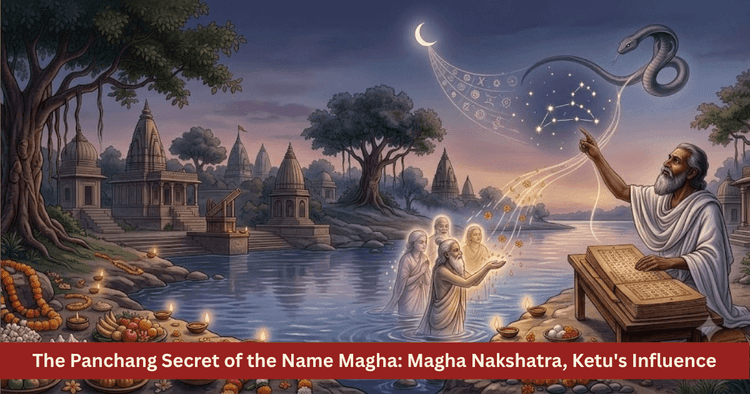
Table of Contents
The chronological architecture of the classical Vedic calendar is not based on speculative conventions; it is established upon empirical astronomical shifts, planetary ingress and precise stellar coordinates. Under classical Vedic astronomy, the nomenclature of the twelve lunar months is determined by the specific asterism (Nakshatra) occupied by the Moon at the exact moment of its complete 180-degree opposition to the Sun on the Purnima (full moon) Tithi. When the fully illuminated Moon traverses through the sacred asterism of 'Magha'-spanning between 00° 00' and 13° 20' in the solar constellation of Leo-that lunisolar month is officially designated as 'Magha'. This celestial alignment represents far more than an ordinary astronomical crossing; it marks an extraordinary metaphysical threshold where the subtle frequencies of the ancestral realm (Pitru Loka), the ascetic detachment of Ketu and the harmonious balance of solar-lunar gravitational tides converge to dissolve deep-seated karmic residues.
The presiding divinities of Magha Nakshatra are the 'Pitrus' (the divine ancestors and progenitors of humanity) and its planetary lord is 'Ketu', the cosmic significator of spiritual liberation, renunciation and transcendent perception. Its celestial emblem is the 'Royal Throne' or 'Palanquin' (Simhasana), signifying earned spiritual authority, ancestral dignity and lineage continuity. As the Moon transits through Magha, human consciousness directly interfaces with the subtle energetic imprints, genetic memories and unresolved karmic debts of the family line. Spiritual disciplines, scriptural study, ancestral libations (Tarpana) and river ablutions practiced during this month neutralize intricate astrological afflictions-most notably Pitru Dosha, Kaal Sarp Dosha and psychological blockages induced by Ketu. Below is the comprehensive astrological and scriptural profile of Magha Nakshatra:
| Astrological & Calendar Element | Scriptural Rule and Value | Astronomical & Spiritual Impact |
|---|---|---|
| Foundation of Nomenclature | Full Moon occurring in Magha Nakshatra | Conjunction of Full Moon and Magha confers the name 'Magha' |
| Zodiac Sign & Span | Leo (00° 00' to 13° 20') | Sun's fire element sign hosting the mystical energy of Ketu |
| Planetary Ruler | Ketu (Significator of Moksha & Detachment) | Severing material attachments and elevating internal prana |
| Presiding Divinity | The Pitrus (Agnishvatta, Somapa ancestral deities) | Pacification of seven generations of ancestral debt |
| Celestial Symbol | Royal Throne / Palanquin (Simhasana) | Lineage dignity, self-respect and spiritual authority |
| Element & Animal Yoni | Fire Element / Male Rat (Gana: Rakshasa) | Concentrated tapas, sharp discernment and burning of karma |
| Optimal Sadhana Window | Arunodaya (Dawn) and Kutupa Muhurta (Noon) | Sacred water baths for vitality; water libations for ancestors |
The 4 Padas of Magha Nakshatra and Panchang Computations
In Vedic astrology, every Nakshatra spans an arc of 13° 20' and is subdivided into four equal quarters or Padas of 3° 20' each. While all four quarters of Magha reside entirely within the royal sign of Leo, they map to distinct Navamsha signs, producing unique psychological, biological and spiritual attributes:
First Pada (00° 00' to 03° 20' Leo - Aries Navamsha):
Governed by Mars. This is a fire-dominated Pada that instills bold willpower, executive leadership and the martial brilliance of the ancestors. Engaging in spiritual disciplines during this Pada purges physical sluggishness, clears vascular congestion and builds moral courage.
Second Pada (03° 20' to 06° 40' Leo - Taurus Navamsha):
Governed by Venus. This earth-dominated Pada emphasizes material durability, consolidation of wealth and ancestral estates. Its influence safeguards family honor, fixed properties and lineage continuity against financial decay.
Third Pada (06° 40' to 10° 00' Leo - Gemini Navamsha):
Governed by Mercury. This air-dominated Pada sharpens analytical intellect, communication and Vedic learning. Performing ancestral rites and scriptural studies during this Pada enhances mental clarity, cognitive focus and articulate speech.
Fourth Pada (10° 00' to 13° 20' Leo - Cancer Navamsha):
Governed by the Moon. This water-dominated Pada is deeply emotional, intuitive and spiritually receptive. When the full Moon reaches this final quarter on Magha Purnima, it radiates soothing nectar-like rays that alleviate deep emotional trauma, chronic anxiety and psychological stress.
Ketu's Influence: Detachment and Kundalini Awakening
In classical astrology, Ketu is considered a shadow planet representing pure perception unbound by physical sensory illusions. Because Magha is ruled by Ketu, the month of Magha naturally quiets worldly ambitions and material cravings, redirecting human consciousness toward philosophy, austerity and meditation.
The crisp winter atmosphere combined with Ketu's introspective energy helps channel vital prana from the lower chakras up toward the crown center (Sahasrara). Ketu presides over renunciation; this explains why millions of pilgrims undertake the demanding vows of Kalpavas at the Sangam in Prayagraj during Magha, abandoning modern comforts for simple thatched huts and single daily meals. Chanting Ketu's sacred seed mantra (Om Kem Ketave Namah) during this month clears irrational fears, dissolves phantom afflictions and mitigates the harsh effects of Kaal Sarp alignments.
Ancestral Guardianship and the Science of Pitru Rina
Classical texts such as the Rigveda and Atharvaveda reveal that the ancestral plane (Pitru Loka) operates in subtle resonance with the lunar sphere. Because the divine Pitrus preside over Magha Nakshatra, this asterism governs genetic memory, inherited ancestral traits and the karmic continuity of the family line.
When the Moon moves through Magha, the subtle dimensional threshold between the physical earth and the ancestral realm becomes remarkably thin. Water libations enriched with black sesame seeds and kusha grass offered during this transit are received immediately by departed souls. If an individual's birth chart suffers from Pitru Dosha-manifesting as repetitive hurdles in family growth, unresolvable legal disputes or chronic domestic friction-performing ancestral Tarpana in Magha provides prompt pacification and lineage blessings.
5 Classical Remedies to Pacify Magha Nakshatra Afflictions
To harmonize the energies of Ketu and Magha Nakshatra while securing ancestral grace, classical treatises prescribe five targeted remedial actions:
Sesame and Kusha Water Libations (Tarpana): Daily during the midday window (Kutupa Muhurta), sit facing the south and offer clean water mixed with raw milk, black sesame seeds and sacred kusha grass from a copper or brass vessel while holding the departed ancestors in loving remembrance.
Veneration of the Sacred Banyan Tree: The banyan tree (Vata Vriksha) serves as the primary botanical representation of Magha Nakshatra. Pour water and raw milk at the roots of an ancient banyan tree during Magha, light a sesame oil lamp at twilight and circumambulate the trunk seven times.
Donation of Dual-Colored Blankets and Footwear: To pacify afflictions caused by Ketu and Saturn, donate thick blankets containing both black and white threads, along with durable non-leather footwear (Khadaun or warm shoes), to elderly, disabled or ascetic individuals.
Utilization and Gifting of Pure Silver: To balance the relationship between the Moon and Ketu, drink water stored in a pure silver tumbler throughout the month and gift a small piece of unblemished silver to a deserving person on Magha Purnima.
Recitation of the Pitru Gayatri Mantra: Every morning facing east or south, chant 108 repetitions of the sacred Pitru Gayatri Mantra using a rosary of rudraksha beads:
Om Devatabhyah Pitribhyashcha Mahayogibhya Eva Cha। Namah Swahayai Swadhayai Nityameva Namo Namah॥
The Spiritual Lesson of the Royal Throne
The symbol of Magha-the Royal Throne-carries a profound philosophical lesson: true sovereignty belongs to the one who masters their own sensory impulses. Earthly power is fleeting but the inner throne established through self-realization remains eternal. Magha month reminds us that by honoring our lineage, embracing the spiritual detachment of Ketu and attuning our actions to the higher frequencies of Magha Nakshatra, we transcend mundane karmic entanglements. An aspirant who maintains ethical purity and devotional discipline throughout Magha secures honor in this life and liberation in the hereafter.
FAQ
Why must the Moon be in Magha Nakshatra for the month to be named Magha?
Under Vedic astronomical rules, a lunar month derives its official name from the specific Nakshatra occupied by the Moon at the exact moment of its 180-degree full phase on Purnima. The occurrence of this full phase in Magha Nakshatra establishes the name 'Magha'.
Is Magha month especially significant for people born under Magha Nakshatra?
Yes. Individuals born with their natal Moon or Ascendant in Magha experience heightened vitality and spiritual alignment during this month. Performing remedies now clears career hurdles and strengthens their core vitality.
Which days in Magha are most effective for resolving Pitru Dosha?
Mauni Amavasya, Magha Purnima and Bhishma Ashtami are considered the three most potent dates of the entire year for performing ancestral libations and clearing ancestral debts.
Which sacred tree corresponds to Magha Nakshatra for remedial worship?
The Banyan tree (Ficus benghalensis / Vata Vriksha) is the botanical embodiment of Magha Nakshatra. Watering its roots and lighting evening lamps beneath its canopy pacifies stellar afflictions effectively.
Which Ketu mantra should be chanted during Magha month?
To harmonize Ketu and cultivate spiritual discernment, chant the seed mantra 'Om Kem Ketave Namah' or the classical verse 'Om Sram Sreem Sraum Sah Ketave Namah' 108 times daily.
Get your accurate Kundali
Generate KundaliDid you like it?
Author

Pt. Sanjeev Sharma (63)
Experience: 20
Consults About: Family Planning, Career
Clients In: Punjab, Haryana, Delhi
Share this article with friends and family
WELCOME TO
ZODIAQ
Right Decisions at the right time with ZODIAQ
