The Golden Month for Resolving Pitru Dosha: Secret Remedies for Magha Amavasya and Ashtami
By Pt. Suvrat Sharma
Magha Nakshatra Alignment, Mauni Amavasya Panchabali, Bhishma Tarpana And 5 Remedies
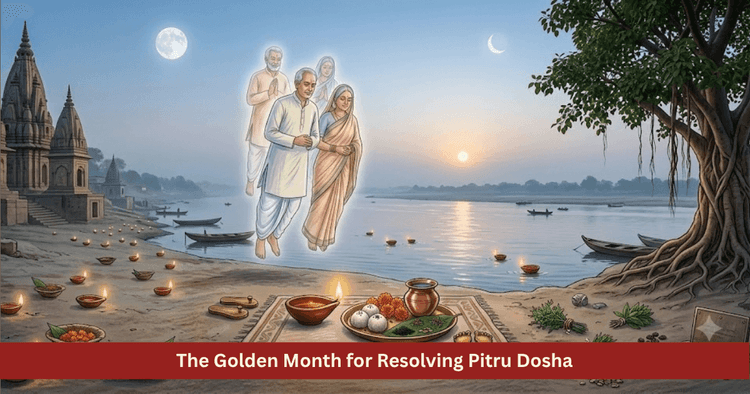
Table of Contents
Within Vedic metaphysics and classical astrological sciences, expressing reverence toward departed ancestors and neutralizing ancestral obligations (Pitru Rina) is considered the foremost spiritual duty among the three foundational cosmic debts (Deva Rina, Rishi Rina and Pitru Rina). The sacred month of Magha is universally acclaimed as the supreme window of the entire year for ancestral propitiation and the resolution of Pitru Dosha. The astronomical and cosmological reason lies in the fact that Magha derives its identity from the Magha asterism, which is directly presided over by the divine Pitrus (the celestial progenitors of humanity). Throughout this thirty-day cycle, the dimensional gateway connecting the physical earth with the ancestral plane (Pitru Loka) remains profoundly receptive.
When an individual's natal horoscope exhibits afflictions where the luminaries (Sun or Moon) are compromised by Rahu or Ketu or when the 9th house of dharma and lineage is weakened by malefic aspects, Pitru Dosha manifests. This karmic imbalance typically produces chronic impediments: unexplainable delays in progeny or family continuity, persistent domestic strife, intractable physical ailments and financial stagnation. Within Magha, two dates-Mauni Amavasya and Bhishma Ashtami-function as unmatched astrological junctures to completely dissolve these ancestral knots. The comprehensive analytical table below outlines the scriptural rules, ritual components and metaphysical results of these observances:
| Liturgical & Calendar Element | Scriptural Standard & Procedure | Astrological & Elemental Basis | Somatic, Domestic & Lineage Merit |
|---|---|---|---|
| Optimal Tarpana Window | Midday 'Kutupa Muhurta' (11:36 AM to 12:24 PM) | Confluence of peak solar heat and fluid element | Complete ancestral satisfaction; upward pranic flow |
| Primary Substances | Black sesame, barley, kusha, raw milk, Ganga water | Sesame (Saturn), Barley (Jupiter), Kusha (Vishnu) | Dissolution of 7 generations of ancestral burdens |
| Directional Orientation | Facing the Southern quadrant (Direction of Pitrus) | Yama and southern celestial alignment | Bestowal of peace and protective grace to ancestors |
| Mauni Amavasya Rites | Silent Triveni bath, Pinda-dana and Panchabali | Conjunction of Sun and Moon in Capricorn | Total pacification of Kaal Sarp and eclipse doshas |
| Bhishma Ashtami Arghya | Water libations offered to Grandsire Bhishma | Vow of unyielding celibacy and lineage duty | Satiation of childless souls; blessing of progeny |
| Peepal Tree Veneration | Offering sweet milk-water, sesame; 108 rounds | Abode of Vishnu at roots, ancestral spirits in bark | Dissolution of fear of untimely harm; family peace |
| Twilight Deepa Dana | Mustard oil lamp facing the southern quadrant | Dispelling subtle darkness; illuminating ancestral path | Shielding against sudden financial losses and crises |
The Metaphysical Alignment of Magha Nakshatra and the Ancestral Realm
According to the Vedic astronomical compendiums, the tenth lunar mansion among the twenty-seven asterisms is Magha. Classical verses from the Rigveda and Shatapatha Brahmana confirm that the planetary ruler of Magha is Ketu (the indicator of spiritual liberation), while its presiding deities are the divine Pitrus (Agnishvatta, Barhishada, Somapa and related celestial ancestral orders).
During Magha, as the Sun journeys northward through Capricorn and the Moon transits the Magha constellation, the gravitational and bio-magnetic alignment thins the dimensional boundary between the physical sphere and the subtle ancestral plane. Consequently, water libations enriched with black sesame seeds and sacred kusha grass offered during this month reach ancestral consciousness with immense efficacy. Ancestors represent the subtle guardians of familial genetic consciousness; when satisfied through disciplined rites, lineage hurdles dissolve naturally.
Mauni Amavasya: Silent Libations and the Panchabali Protocol
The new moon day of Magha Krishna Paksha (Mauni Amavasya) represents the annual apex for ancestral liberation. On this date, the rites are traditionally performed under a vow of absolute silence:
-
The Kutupa Muhurta Tarpana: Following mid-morning ablutions, sit facing south. In an untarnished copper or brass vessel, combine fresh water, a splash of Ganga water, raw milk, black sesame seeds, whole barley grains and clean kusha grass. Form a cup with the hands, wearing a kusha ring on the right ring finger and channel the libation over the space between the thumb and index finger (Pitru Tirtha) three times:
"Om Aagachhhantu Me Pitarah Evam Grihnantu Jalanjalim।
Om Tripyadhvam, Om Tripyadhvam, Om Tripyadhvam॥
Om Pitribhyah Swadhayibhyah Swadha Namah।" -
The Panchabali Charity (Five Sacred Feedings): Following the libations, arrange portions of self-cooked, unspiced food upon five clean leaves:
- Go-Bali: Feeding unrefined jaggery and fresh flatbreads to an indigenous cow.
- Shvana-Bali: Offering bread to a dark or stray dog (representing planetary sentinels).
- Kaka-Bali: Scattering cooked rice mixed with black sesame for wild crows (traditional emissaries of the ancestors).
- Pipilika-Bali: Placing whole wheat flour and raw sugar at the base of an ancient tree for ants.
- Deva/Atithi-Bali: Feeding an unannounced mendicant, ascetic or worthy guest before family meals.
Bhishma Ashtami: The Unique Rite of Universal Ancestral Libations
The eighth lunar day of Magha Shukla Paksha is commemorated as 'Bhishma Ashtami'. It marks the sacred day when Grandsire Bhishma, the venerable warrior of the Mahabharata, surrendered his physical body through his yogic boon of self-willed departure (Iccha-Mrityu) after witnessing the Sun's northern ingress.
The Scriptural Exemption and Privilege:
Classical Dharma Shastras establish an extraordinary rule: on Bhishma Ashtami, every individual in society is eligible to offer water libations to Grandsire Bhishma, irrespective of whether their biological parents are living. Having observed lifelong celibacy, Bhishma left no physical offspring. therefore water libations offered in his name satiate all departed souls across the cosmos who have left behind no living descendants to perform their memorial rites.
The Sacred Bhishma Tarpana Verse:
Face south holding clean water, black sesame and kusha grass and recite:
"Vaiyaghrapadagotraya Sankrityapravaraya Cha।
Aputraya Dadamyetadudakam BhishmavarmaNe॥
Bhishmah Shantanavo Veerah Satyavadi Jitendriyah।
Aabhiradbhirmaavapnotu Putrapautrochitam Kriyam॥"
Performing this libation secures the ancestral blessings of the cosmos, instills moral stamina and deepens spiritual resolve.
5 Potent and Discreet Remedies for Resolving Pitru Dosha
- Sacred Peepal Offerings and Twilight Lamps: Throughout Magha, especially on new moon days, pour clean water, raw cow milk, honey and black sesame at the roots of an ancient peepal tree before noon. At twilight, light an unblemished earthen lamp filled with mustard oil beneath its canopy.
- Discreet Charity of Dark Sesame and Woolen Blankets: On Saturdays or Amavasya, anonymously gift one and a quarter kilograms of clean black sesame seeds, black gram lentils and a thick woolen blanket to an elderly, disabled or destitute person.
- Daily Recitation of the Pitru Gayatri Mantra: Facing south or east at dawn or noon, chant 108 repetitions of the sacred Pitru Gayatri Mantra using a rosary of rudraksha beads:
"Om Devatabhyah Pitribhyashcha Mahayogibhya Eva Cha।
Namah Swahayai Swadhayai Nityameva Namo Namah॥" - Water and Grains for Wild Birds: Maintain a clean terracotta dish of fresh water and pearl millet (Bajra) in the southern quadrant of your roof or terrace. Nourishing wild birds directly pacifies ancestral distress.
- Recitation of Bhagavad Gita (Chapter 7 or 11): Read the 7th or 11th chapter of the Srimad Bhagavad Gita daily during Magha, dedicating the spiritual merit to departed ancestral souls to support their spiritual progression.
FAQ
Can an individual whose parents are living perform libations during Magha?
Yes. Those with living parents do not offer direct funeral oblations to parents but they may offer libations to departed grandparents, distant ancestors and specifically to Grandsire Bhishma on Bhishma Ashtami. This preserves lineage harmony without scriptural conflict.
Why is a copper vessel strictly prescribed for ancestral libations?
Copper is a sacred metal corresponding to the Sun and Mars. Water resting within an untarnished copper chalice micro-ionizes and absorbs bio-magnetic frequencies, ensuring the subtle currents of the libation are effectively transmitted during rites.
What are the primary indications of Pitru Dosha in daily life?
Common indicators include unresolvable domestic friction, unexpected blockages in childbirth or pregnancy complications, persistent health challenges across family members, chronic delays in marriage and unyielding financial instability despite hard work.
Which oil is recommended for ancestral lamps in Magha?
Pure cold-pressed mustard oil or unadulterated sesame oil should always be used for ancestral lamps. Position the lamp facing south in the domestic space or beneath a peepal tree.
Can ancestral libations be conducted at home using tap water?
Yes. If visiting a sacred river is unfeasible, fill an untarnished domestic copper vessel with fresh tap water, add a few drops of consecrated Ganga water, raw milk and clean black sesame seeds and perform the libation with deep reverence.
Get your accurate Kundali
Generate KundaliDid you like it?
Author

Pt. Suvrat Sharma (63)
Experience: 20
Consults About: Family Planning, Career
Clients In: Punjab, Haryana, Delhi
Share this article with friends and family
WELCOME TO
ZODIAQ
Right Decisions at the right time with ZODIAQ
