Which Mahavidyas to Worship in Gupt Navratri?
By Aparna Patni
The Special Grace of Tara, Tripura Sundari and Bagalamukhi
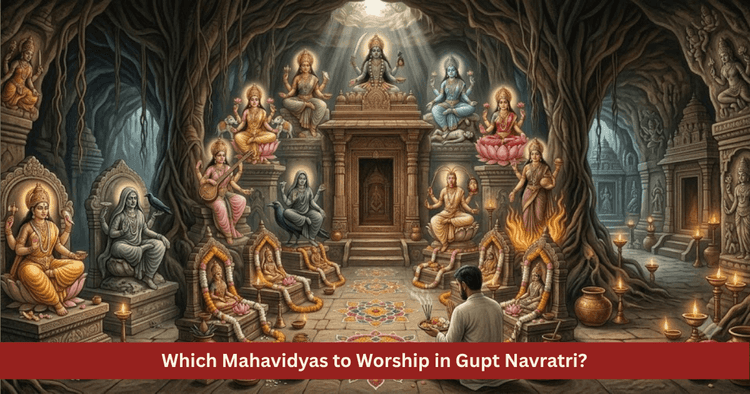
Table of Contents
The 3 Main Mahavidyas of Magha Gupt Navratri at a Glance
The Gupt Navratri, the secret Navratri, of Magha month runs from Magha Shukla Pratipada to Navami. During these 9 days seekers and selfless worshippers honour the 10 Mahavidyas. Tradition regards the sadhana of 3 of these Mahavidyas as especially popular in this Navratri: Maa Tara, Maa Tripura Sundari, also called Shodashi and Lalita and Maa Bagalamukhi, also called Pitambara. Remembering and chanting the names of these goddesses in the long, cold nights is believed to protect from the gravest crises of life.
| Mahavidya | Other Names | Main Form | Purpose of Sadhana |
|---|---|---|---|
| Maa Tara | Tarini, Neel Saraswati | The compassionate power that carries one across crises | Knowledge, speech and protection from financial crisis |
| Maa Tripura Sundari | Shodashi, Lalita, Rajarajeshwari | Goddess of beauty, completeness and grace | Charm, good fortune and prosperity |
| Maa Bagalamukhi | Pitambara | The power of restraint | Protection from enemies, lawsuits and disputes |
Core Principles for Householders
- Householders should worship these goddesses in a sattvic way through name mantras, hymns and meditation.
- Use seed mantras and Tantric methods only after receiving initiation from a qualified guru.
- The aim of worship should be self protection and self welfare, never harming anyone.
- Follow sattvic food, celibacy and restrained speech for the 9 days.
- Keep the sadhana private and do not publicise it.
Maa Tara: The Compassionate Power That Carries One Across
Among the 10 Mahavidyas, Maa Tara is the second. The word Tara means the one who carries across, that is the one who takes a person across the ocean of worldly existence and the crises of life. She is also called Tarini. In the Tantric tradition, Lord Shiva is regarded as being with her in the form of Akshobhya, the one who is never shaken in any situation.
Maa Tara is also called Neel Saraswati. She is the goddess of knowledge and speech. Tradition holds that worshipping her brings power to speech, sharpness to the intellect and freedom from the financial crises of life. Tarapith in West Bengal is her famous Shakti Peetha, where the great seeker Bamakhepa worshipped her.
| Element of Tara Worship | Details |
|---|---|
| Form | Blue in colour, compassionate and remover of crises |
| Sattvic Name Mantra | Om Tarayai Namah |
| Fruit of Worship | Knowledge, power of speech, protection from crisis and financial stability |
| Offerings | Blue flowers, a lamp and naivedya |
| Astrological Link | Traditionally linked with Jupiter |
Maa Tripura Sundari: The Goddess of Beauty and Completeness
Maa Tripura Sundari is the third Mahavidya. She is also known as Shodashi, Lalita and Rajarajeshwari. Tripura Sundari means the most beautiful in the 3 worlds. Shodashi means the one of 16 years, a symbol of completeness and eternal youth. Her worship is at the centre of the Shri Vidya tradition.
The worship of Maa Tripura Sundari is regarded as bringing good fortune, charm, prosperity and completeness to life. Tradition says that through her grace a person gains results such as honour, position and Rajyoga. The Lalita Sahasranama, which describes her 1000 names, is the most famous hymn of her worship.
| Element of Tripura Sundari Worship | Details |
|---|---|
| Form | Of a dawn red colour, gentle and presiding over beauty |
| Sattvic Name Mantra | Om Shri Lalitayai Namah |
| Main Hymn | The Lalita Sahasranama |
| Fruit of Worship | Good fortune, charm, prosperity and honour |
| Offerings | Red flowers, kumkum, kheer and sweets |
| Astrological Link | Traditionally linked with Mercury |
Maa Bagalamukhi: The Power of Restraint
Maa Bagalamukhi is the eighth Mahavidya. She is called Pitambara, because the colour yellow is very dear to her and she wears yellow garments. Her power is called stambhana shakti, the power to stop or hold something still.
Tradition holds that worshipping Maa Bagalamukhi protects from court cases, disputes and the obstacles created by hidden enemies. It is believed that through her grace the negative speech and schemes of opponents become fruitless. The Pitambara Peeth at Datia in Madhya Pradesh is her famous shrine.
| Element of Bagalamukhi Worship | Details |
|---|---|
| Form | Yellow in colour, in yellow garments and seated on a yellow seat |
| Sattvic Name Mantra | Om Bagalamukhyai Namah |
| Fruit of Worship | Protection from disputes, lawsuits and enemies |
| Offerings | Yellow flowers, turmeric, split chickpeas and yellow naivedya |
| Clothing of the Seeker | Yellow clothes and a yellow seat |
| Astrological Link | Traditionally linked with Mars |
Special Caution in Bagalamukhi Sadhana
The sadhana of Maa Bagalamukhi is regarded as extremely powerful and intense. So special caution is necessary. The scriptures clearly say that this power should be used only for self protection and justice. Sadhana performed with the aim of harming an innocent person ultimately brings suffering to the seeker. In lawsuits and disputes, along with spiritual worship, the advice of a qualified lawyer and adherence to truth are equally necessary.
A Sattvic Method of Worship for Householders
| Step | Method |
|---|---|
| Sankalpa | On the Pratipada of Gupt Navratri, resolve to worship for self welfare |
| Place | A quiet shrine at home, at the same time and on the same seat every day |
| Installation | Install a picture or symbol of the goddess |
| Lamp | Light a ghee lamp |
| Offerings | Offer flowers and naivedya in the goddess's favourite colour |
| Japa | 1 to 11 rounds of the sattvic name mantra every day |
| Hymn | Recite the Lalita Sahasranama or the Durga Saptashati |
| Meditation | Meditate for some time on the gentle form of the goddess |
| Conclusion | Havan and Kanya Pujan on Navami |
Decide which goddess to worship according to your need and faith. All 3 goddesses may also be worshipped together but for a householder, focused sadhana on one goddess is regarded as simpler and more fruitful.
The Worship of the Mahavidyas Through the Lens of Vedic Astrology
In one astrological tradition the 10 Mahavidyas are linked with the planets. According to this tradition, Maa Tara is linked with Jupiter, Maa Shodashi with Mercury and Maa Bagalamukhi with Mars.
| Concern | Related Planet | Recommended Mahavidya |
|---|---|---|
| Obstacles in education and knowledge | Jupiter | Maa Tara |
| Financial crisis | Jupiter | Maa Tara |
| Lack of charm and good fortune | Mercury and Venus | Maa Tripura Sundari |
| Lawsuits and disputes | Mars | Maa Bagalamukhi |
| Hidden enemies and schemes | Mars and Rahu | Maa Bagalamukhi |
What Should Be Done and Avoided in Gupt Navratri?
| Do | Do Not |
|---|---|
| Worship with sattvic name mantras and hymns | Do not use seed mantras and Tantric practices without a guru's initiation |
| Pray for self protection and self welfare | Do not perform sadhana to harm anyone |
| Follow a sattvic diet and celibacy | Do not take meat, alcohol or tamasic food |
| Keep the sadhana private | Do not publicise your sadhana |
| Also seek a lawyer's advice in legal matters | Do not abandon practical duties by relying only on sadhana |
The Flame of Shakti Burning Through the Dark Night
Maa Tara, Maa Tripura Sundari and Maa Bagalamukhi protect 3 important sides of life. Tara grants knowledge and freedom from crisis, Tripura Sundari beauty and prosperity and Bagalamukhi protection from opposition and injustice. In the calm, long nights of Magha Gupt Navratri, when the seeker remembers them, a light of confidence and fearlessness begins to awaken within.
For the householder who worships these goddesses in a sattvic way during these 9 days with faith, restraint and a pure heart, the compassion of the Mother becomes an invisible shield that protects life. This is the greatest blessing of the sadhana of Gupt Navratri.
FAQ
Which Mahavidyas are especially worshipped in Magha Gupt Navratri?
Tradition regards the sadhana of Maa Tara, Maa Tripura Sundari, that is Shodashi and Maa Bagalamukhi, that is Pitambara, as especially popular in Magha Gupt Navratri.
What are the benefits of worshipping Maa Tara?
Maa Tara is the goddess who carries one across crises. Tradition regards her worship as granting knowledge, power of speech and protection from financial crises.
Why is Maa Bagalamukhi called Pitambara?
The colour yellow is very dear to Maa Bagalamukhi and she wears yellow garments, so she is called Pitambara. Yellow flowers and turmeric are offered in her worship.
How should householders worship the Mahavidyas?
Householders should worship with sattvic name mantras, hymns and meditation, such as Om Tarayai Namah. Seed mantras and Tantric practices should be used only after initiation by a qualified guru.
Can Bagalamukhi sadhana be used to harm someone?
No. According to the scriptures, this power should be used only for self protection and justice. Sadhana with the aim of harm brings suffering to the seeker.
Get your accurate Kundali
Generate KundaliDid you like it?
Author

Aparna Patni (63)
Experience: 20
Consults About: Family Planning, Career
Clients In: Punjab, Haryana, Delhi
Share this article with friends and family
WELCOME TO
ZODIAQ
Right Decisions at the right time with ZODIAQ
