What Will Srimad Bhagavatam In Aghan Grant?
By Pt. Narendra Sharma
Srimad Bhagavatam Wisdom, Kaliyuga Liberation And Ancestral Peace
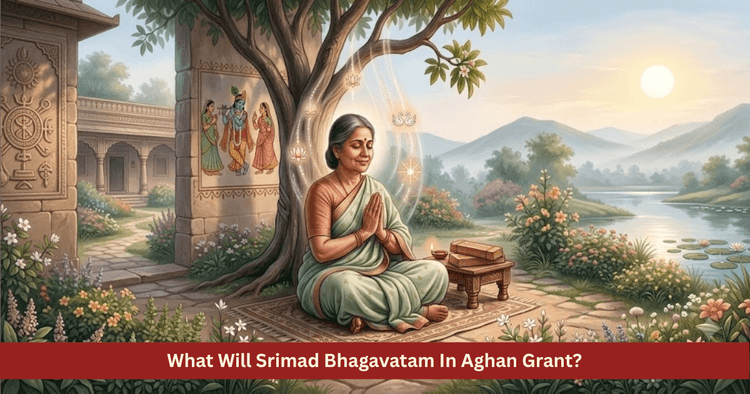
Table of Contents
Scriptural Injunctions and Sacred Rules of Srimad Bhagavatam in Aghan
Within the vast theological expanse of Vedic literature, the holy month of Margashirsha, popularly celebrated as Aghan, is revered as the visible terrestrial embodiment of Lord Sri Krishna himself. In the tenth chapter of the Shrimad Bhagavad Gita while delineating his supreme cosmic opulences, Lord Krishna unequivocally declared to Arjuna that among all lunar months, he is Margashirsha. When the entire month transforms into the living, breathing form of Govinda, engaging in the ceremonial listening or self study of Srimad Bhagavatam Mahapurana, the literary incarnation of the Supreme Lord, becomes an incomparable blessing for humanity. Listening to this sacred chronicle amidst the tranquil, profound and cooling atmosphere of Aghan yields spiritual merit far superior to the execution of countless royal horse sacrifices.
The Srimad Bhagavatam Mahapurana is not an ordinary scripture but represents the fully ripened, sweet, ambrosial fruit of the wish fulfilling tree of Vedic wisdom. When the venerable sage Veda Vyasa experienced a lingering internal restlessness even after codifying the four Vedas, Upanishads and the massive epic Mahabharata, he composed this supreme sattvic text under the divine guidance of sage Narada. The sacred narration of this chronicle incinerates accumulated karmic blemishes of past lifetimes just as a blazing fire consumes dry heaps of wood into ashes in a single instant.
| Scriptural Dimension | Classical Injunction |
|---|---|
| Niyam | Vidhan |
| Most Auspicious Month Span | Margashirsha Shukla Pratipada through Purnima |
| Primary Formats of Study | Seven day intensive discourse or daily monthly study |
| Presiding Daily Hours | First watch of early dawn and dusk during Godhuli |
| Rules for the Speaker Seat | Facing east or north, pure yellow attire, disciplined mind |
| Ultimate Spiritual Fruits | Freedom from rebirth, ancestral liberation, peace |
| Essential Daily Offerings | Fresh Tulsi blossoms, pure cow ghee lamp butter with sugar candy |
| Foundational Chants | Om Namo Bhagavate Vasudevaya or Sri Krishnah Sharanam Mama |
Prior to inaugurating the recitation of Srimad Bhagavatam in the month of Aghan, the devotee must undertake a firm vow of bodily and psychological purification. Rising before the dawn while stars still shimmer in the sky, one must bathe in cool fresh water and don clean yellow silk garments. In the domestic prayer sanctuary, spread an unblemished yellow silk cloth over a wooden platform and seat the holy book of Srimad Bhagavatam with deep reverence. Install a copper or brass pitcher before the scripture, consecrating it with Ganga water, tender mango leaves, a betel nut and a whole coconut. Holding sacred kusha grass, unbroken rice grains, fresh flowers and pure water in the right palm, the seeker takes the solemn vow to study or listen to this supreme chronicle to overcome the physical, mental and cosmic afflictions of the modern age and to deliver ancestors from bondage.
The Threefold Afflictions of Kaliyuga and the Vessel of Srimad Bhagavatam
Every living soul taking birth within this material world constantly burns within the searing fire of three severe afflictions. Our sacred scriptures classify these trials as Adhidaivika, Adhibhautika and Adhyatmika. Adhyatmika afflictions arise from one's own physical body and mind, including debilitating illnesses, chronic depression, jealousy, fear and sorrow. Adhibhautika tribulations are miseries inflicted by other living beings, enemies, wild animals or negative entities. Adhidaivika miseries encompass cosmic disasters, planetary wrath and environmental imbalances that lie entirely beyond mortal control.
In this dark iron age of Kaliyuga, where three foundational pillars of righteousness truth, cleanliness and austerity have been dismantled, leaving only charity standing, humanity finds itself defenseless against these tribulations. In such dark times, the Srimad Bhagavatam Mahapurana functions as an unsinkable spiritual ship, fully capable of carrying drowning souls across the perilous ocean of material existence.
In the Srimad Bhagavatam Mahatmya of the Padma Purana, a glorious chronicle reveals that when Bhakti Devi lay unconscious upon the banks of the Yamuna in Vrindavan, her two sons Jnana and Vairagya decrepit and dying from age, the sage Sanatkumara and his brothers organized the sacred recitation of this very scripture for their revival. The instant the sound vibrations of the Bhagavatam verses entered their ears, Bhakti, Jnana and Vairagya regained youthful vitality and began dancing in ecstasy. A scripture possessing the transcendent potency to restore living vitality to devotion, wisdom and detachment can effortlessly dispel the inner darkness of any sincere human seeker.
The Lore of Padma Purana and the Power of Chanting Half a Verse
The Padma Purana occupies an exalted pedestal within classical Sanskrit theology. This sacred text extols the daily contemplation of the Bhagavatam during Margashirsha with breathtaking spiritual reverence. Lord Sadashiva explains to Mother Parvati that if an individual is unable to read the entire eighteen thousand verses due to unavoidable physical worldly obligations, yet recites a single verse or even half a verse with sincere devotion every day in Aghan, that person instantly reaps the spiritual merit of studying all eighteen ancient Puranas.
That single half verse is not an ordinary arrangement of syllables but represents an immutable seed formula of supreme divine consciousness. When a seeker chants that sacred verse during the crisp, quiet dusk of Aghan within the domestic temple, the resulting sonic vibrations burn away all lingering negative energies from the living environment. Messengers of death bypass any home where the pages of the Bhagavatam are turned and studied daily, offering salutations from afar. Within such a blessed home, Mother Lakshmi resides permanently with all her eight divine treasures, ensuring that poverty and hunger never cross the threshold.
Winter Tranquility and the Yogic Science of Deep Meditation
The ancient Vedic seers did not designate the month of Aghan for this scriptural discourse arbitrarily but based their choice upon profound yogic and psychological wisdom. In the scorching heat of summer, excessive bodily perspiration and burning restlessness drive the human mind outward in search of physical comfort. During the torrential monsoon, high humidity, waterlogging and aggravated wind humors induce physical fatigue, preventing steady sitting postures. In contrast, the month of Margashirsha offers an exquisite, temperate and serene climate that is neither excessively cold nor warm.
During this season, the internal digestive fire of the human body blazes with strength, granting physical stamina so that a seeker can sit comfortably in one meditative posture for hours without exhaustion. Amidst the quietude of prolonged winter nights and shorter days, outer environmental chaos subsides into peaceful stillness. As ambient noise recedes, the introspective focus of the seeker ascends toward its absolute zenith.
The narrative of Srimad Bhagavatam is not ordinary literature but is rich with profound metaphysical allegories including the Gopi Gita, the Bhramara Gita and the sacred Rasa Panchadhyayi. Contemplating these transcendent mysteries demands razor sharp intellect and a peaceful heart, qualities naturally cultivated by the crisp winter climate of Aghan. This tranquil environment induces alpha brainwave patterns within the seeker, allowing every word of the discourse to penetrate deep into the soul.
The Scriptural Rite for Ancestral Deliverance and Lineage Elevation
In Sanatana theology, ancestral debt is recognized as the most binding spiritual obligation of mortal existence. If departed ancestors remain wandering within subtle disembodied realms due to unfulfilled worldly cravings, untimely physical departure or residual karmic blemishes, the generational continuity of that lineage suffers, manifesting as chronic marital delays, illness and constant domestic strife. Listening to the Srimad Bhagavatam during Aghan stands as the ultimate remedy to snap all ancestral chains, elevating forebears directly to the spiritual realm of Vaikuntha.
The Bhagavatam Mahatmya recounts the famous historical chronicle of Dhundhukari and Gokarna. Dhundhukari was an excessively cruel, sinful and degraded soul who transformed into a terrifying wandering ghost following an untimely death. When his scholarly brother Gokarna organized a seven day recitation of Srimad Bhagavatam during Margashirsha for his salvation, the disembodied spirit arrived in the subtle form of a gust of wind, entering a bamboo pole containing seven hollow nodes. As each day of the sacred narration concluded, the spiritual power of the discourse shattered one knot of the bamboo, until on the seventh day the spirit emerged transformed into a four armed divine being clothed in golden silks, ascending directly to the spiritual realm of Lord Vishnu upon a celestial chariot.
- Dedicated Consecration of Ancestral Pitchers: A special copper or earthen vessel consecrated with black sesame seeds is placed near the discourse altar on behalf of ancestors.
- Offering Kusha Grass Seats for Ancestors: A clean mat of sacred kusha grass is spread near the speaker seat, consciously invoking known and unknown ancestors to attend the feast of wisdom.
- Anointing the Household with Sanctified Water: Consecrated water gathered from the Lord's feet at the close of each day is sprinkled around the dwelling, especially toward the southern quadrant of ancestors.
- Seventh Day Oblation and Feasting: On the concluding day of the discourse, sacred oblations of sweet rice kheer, black sesame seeds and Ganga water are offered, followed by feeding virtuous brahmanas.
A person who sponsors or listens to this sacred discourse in the holy month of Aghan on behalf of parents and forebears liberates twenty one generations of ancestors, receiving their unconditional blessings of longevity, renown and lasting prosperity.
Metaphysical and Spiritual Architecture of the Twelve Cantos
The Srimad Bhagavatam Mahapurana comprises twelve cantos, three hundred and thirty five chapters and eighteen thousand divine verses. These twelve cantos are venerated as the twelve divine limbs of the cosmic form of Lord Sri Krishna. When a seeker engages in the study of these cantos, the seeker is systematically meditating upon the lotus form of the Lord from feet to crown.
| Canto of Bhagavatam | Divine Limb of the Supreme Lord | Core Metaphysical Subject Matter |
|---|---|---|
| Niyam | Vidhan | Vidhan |
| First and Second Cantos | The two lotus feet of the Lord | Qualification, nature of creation, appearance of scripture |
| Third and Fourth Cantos | The two divine thighs of the Lord | Kapila incarnation, Sati, Dhruva and King Prithu |
| Fifth Canto | The divine lotus navel of the Lord | Priyavrata, Rishabhadeva and cosmic structure |
| Sixth Canto | The broad chest of the Lord | Deliverance of Ajamila, Narayana Kavacha and Vritrasura |
| Seventh and Eighth Cantos | The two divine arms of the Lord | Prahlada, Lord Nrisimha, Gajendra and cosmic churning |
| Ninth Canto | The sacred neck of the Lord | Solar and lunar dynasties, Lord Rama and Krishna descent |
| Tenth Canto | The smiling lotus face of the Lord | Childhood pastimes of Krishna, Gopi love and Kamsa defeat |
| Eleventh Canto | The radiant forehead of the Lord | Uddhava Gita, disappearance of the Yadu race, wisdom |
| Twelfth Canto | The crown adorned head of the Lord | Description of Kaliyuga, salvation of Parikshit, glory |
The first two cantos awaken detachment and philosophical curiosity within the heart of the seeker. From the third through the ninth cantos, the soul comprehends its cosmic origin, the transient nature of the material universe and the loving protection provided across diverse incarnations. The tenth canto represents the vibrant heart of the entire Bhagavatam, celebrating pure unalloyed divine love. In the eleventh canto, Lord Krishna imparts his final spiritual instructions to his friend Uddhava, teaching how to remain detached in this worldly existence like a lotus leaf in water. The twelfth canto concludes with the reassurance that in the chaotic age of Kaliyuga, the simple chanting of the divine name remains the ultimate path to liberation.
Disciplines of Sacred Listening and Maintaining a Sattvic Regimen
Listening to the Srimad Bhagavatam is not an intellectual exercise of casual listening but a profound spiritual austerity intended to reshape one's daily life. The spiritual fruits promised by the scriptures are preserved only when the seeker adheres strictly to classical scriptural disciplines.
Throughout the seven days or the entire month of study, the seeker should sleep upon a clean mat of kusha grass or undyed wool laid upon the floor. The daily diet must be entirely free from onions, garlic, meat, intoxicants, stale leftovers and heavy lentils. Consuming a single sattvic fruit meal or simple consecrated grains once a day is considered ideal. While listening to the discourse, mundane gossip, checking digital devices, criticizing others or engaging in business arguments is completely prohibited. In the evening, the seeker should sit quietly in contemplation, meditating deeply upon the themes heard during the day. The devotee must exercise strict mastery over the senses and observe celibacy throughout this sacred observance.
Total Inner Transformation Through the Nectar of the Bhagavatam
Human incarnation is not gifted simply to accumulate temporary wealth, maintain domestic ties and ultimately dissolve into dust. The true purpose of this rare human birth is to reawaken our eternal loving relationship with the Supreme Creator. The sacred month of Aghan provides the perfect golden portal to return toward that ultimate spiritual home.
Every single syllable of the Srimad Bhagavatam is a drop of divine nectar that cleanses the human heart of fear, grief and selfish cravings. When a human being listens to this discourse with the acute urgency of King Parikshit, realizing that time is swiftly running out and spiritual liberation must be secured now, the existential dread of mortality vanishes forever. This literary incarnation of Lord Sri Krishna fills the hands of every soul that surrenders at his lotus feet. By illuminating our homes with the wisdom of the Bhagavatam in this sacred month of Aghan, we not only sanctify our present lives but build an enduring highway of righteousness and liberation for future generations.
FAQ
Why is listening to Srimad Bhagavatam exceptionally sacred in the month of Aghan? Margashirsha represents the direct embodiment of Lord Krishna, making the study of his literary form in this month superior to performing countless Vedic sacrifices.
Does reciting only a single verse of the Bhagavatam yield spiritual benefits? Yes, the Padma Purana states that reciting even one verse or half a verse daily during Aghan yields the spiritual merit of studying all eighteen classical Puranas.
How does listening to Srimad Bhagavatam grant liberation to departed ancestors? The divine vibrations of the discourse shatter all subtle karmic knots binding ancestors in lower realms, granting them radiant spiritual bodies to reach Vaikuntha.
Which fortnight of Margashirsha is ideal for organizing a Bhagavatam discourse? The waxing fortnight from Margashirsha Shukla Pratipada through Purnima is universally praised as the most auspicious period for organizing the weeklong discourse.
What essential rules must be observed while listening to the Bhagavatam recitation? The seeker should maintain a single daily sattvic meal, sleep upon the floor, observe celibacy, speak softly and avoid idle worldly gossip and negativity.
Get your accurate Kundali
Generate KundaliDid you like it?
Author

Pt. Narendra Sharma (63)
Experience: 20
Consults About: Family Planning, Career
Clients In: Punjab, Haryana, Delhi
Share this article with friends and family
WELCOME TO
ZODIAQ
Right Decisions at the right time with ZODIAQ
