Why Is Navanna Bhoga Essential In Aghan?
By Pt. Amitabh Sharma
Navanna Festival, New Crop Offering, Lineage Rites And Annakoot
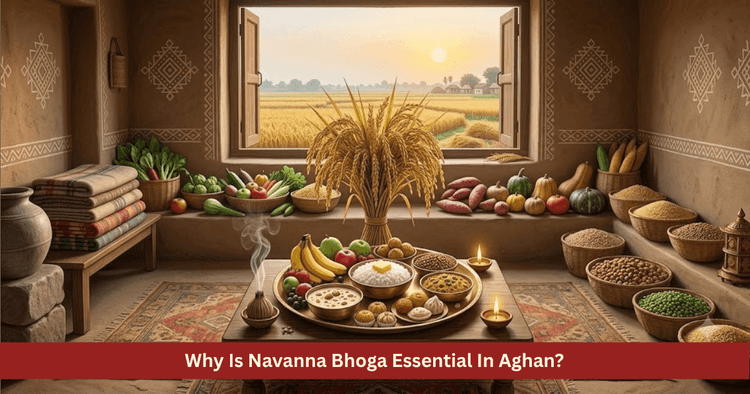
Table of Contents
Scriptural Injunctions and Sacred Rules of Navanna in Aghan
Within the sacred continuum of the Sanatana tradition, the holy month of Margashirsha, commonly known as Aghan, is revered as the visible cosmic personification of Lord Sri Krishna himself. In the luminous verses of the Shrimad Bhagavad Gita, the Lord unequivocally proclaimed that among all lunar months, he is Margashirsha. This pristine period is not merely confined to contemplative metaphysics, solitary meditation and dawn river ablutions but stands as the supreme celebration of agrarian culture, rural resilience and the fruitful culmination of the exhaustive labor of farmers. When the primary autumn paddy harvest ripens to cast a radiant golden brilliance across the meadows, journeying from thrashing grounds into household courtyards, the sacred agrarian festival of Navanna formally commences across rural Bharat.
In the Vedic scriptures, food is never reduced to a mere biological fuel for satisfying physical hunger but is elevated as the direct tangible embodiment of Supreme Brahman. The Taittiriya Upanishad resounds with the proclamation that all creatures manifest from food, abide sustained through food and ultimately dissolve into food upon physical departure. therefore when newly reaped grain enters the domestic dwelling from fertile fields, consuming it directly without prior consecration is censured in Vedic ethics as a severe transgression born of tamasic arrogance. Presenting the foundational harvest to the divine custodians of cosmic nature, ancestral lineages and household guardian deities constitutes an unalterable spiritual duty for every householder.
| Scriptural Dimension | Agrarian and Ceremonial Injunction |
|---|---|
| Niyam | Vidhan |
| Auspicious Period | Margashirsha Shukla Pratipada through Purnima |
| Primary Seasonal Harvest | Newly harvested paddy rice, sesame, fresh jaggery, winter greens |
| Primary Recipients of Offering | Lineage deities, village guardians, mother earth and departed ancestors |
| Sacred Vedic Offerings | Sweet kheer of new unpolished rice, fresh boiled rice and jaggery |
| Foundational Vedic Mantra | Om Annapate Annasya No Dehi Anamivasya Shushminah |
| Core Ethical Resolution | Prior satisfaction of destitute wanderers, birds and domestic cattle |
| Transcendental Fruits | Inexhaustible domestic granaries, ancestral peace and agricultural grace |
The sacred discipline of Navanna begins the moment the very first sheaves of golden paddy stalks are gathered from the field, wrapped reverently in pristine cloth and carried into the household prayer sanctuary. On this auspicious occasion, the homekeeper consecrates the kitchen floor with holy Ganga water and sanctifying cow dung. The raw paddy is husked inside traditional wooden mortars to separate the chaff, after which fresh cow milk is brought to a gentle boil within brand new earthen or brass pots to prepare sweet ceremonial kheer. In place of refined factory sugars, unrefined dark jaggery extracted from winter sugarcane is utilized. Once cooked, the primary oblation is committed into the sacred kitchen fire as the Vaishvadeva Yajna, offering sustenance directly to cosmic Agni. Only following this consecration do the members of the family assemble to partake of the sanctified grains together.
The Metaphysics of Food as Divine Essence in Vedic Agriculture
The ancient seers grasped the cosmic rhythm of existence with profound clarity. Within the Shatapatha Brahmana and the agricultural verses of the Rigveda, agricultural labor was accorded the supreme status of sacred penance. In the Rigveda, the sage instructs humanity unequivocally to turn away from frivolous pursuits of gambling, embrace agriculture and revere the wealth yielded by the soil. When an earnest farmer cleaves the hard earth with the iron plowshare, drenching the dry soil with honest drops of sweat while enduring winter chill and blazing heat, tender golden grains sprout forth from the dark earth. This seasonal miracle is nothing less than a grand cosmic sacrifice.
Food represents a living alchemy of solar energy, atmospheric rainfall governed by Indra, gentle wind currents guided by Vayu and the unconditional maternal affection of Mother Earth. When an individual consumes this sacred gift without deep gratitude, purely to indulge personal sensory palates, that person becomes entangled in cosmic karmic debt. Vedic philosophy warns that whoever disrespects food is ultimately consumed by food. The agricultural festival of Aghan reminds humanity that our physical breath, physical stamina and living blood remain forever indebted to the sacred soil and the labor of the cultivator. therefore bowing in humble gratitude before taking the first morsel of newly harvested grain is the supreme moral mark of Sanatana culture.
Rural Glory and Folk Traditions of the Golden Thrashing Grounds
With the arrival of Margashirsha, the physical landscape of rural Bharat undergoes a breathtaking visual transformation. Amidst crisp golden sunlight streaming across sprawling plains, the steady rhythmic harvesting of paddy fills every village lane with joyful folk melodies. Within traditional thrashing grounds, pairs of bullocks move rhythmically in circles across gathered sheaves, cleanly separating the golden grain from the dry chaff under the cooperative winter breeze. This represents that singular moment of liberation when the agrarian provider forgets past debts, market anxieties and bodily fatigue, standing proudly like a sovereign king of the soil.
- Consecration of the Thrashing Ground: After gathering heaps of golden grain, the perimeter is washed with cow dung and anointed with vermilion and sacred durva grass to welcome Goddess Lakshmi.
- Gate Garland of Sacred Sheaves: The finest unbroken green ears of paddy are woven into intricate floral garlands and hung across the primary house portal to ensure perpetual food security.
- Veneration of Cattle: Working bullocks and dairy cows that stood shoulder to shoulder with the farmer are fed sweet unrefined jaggery and fresh paddy straw with deep reverence.
- Communal Offering at the Village Shrine: Every cultivating family carries a measured wooden bowl of new grain to the shrine of the village guardian deity to ward off regional famine.
In rural culture, this sacred window transcends ordinary financial commerce, shining as a living monument of communal solidarity. Village artisans, blacksmiths, carpenters, potters and agricultural laborers are gifted generous shares of newly reaped grain, guaranteeing that no section of the human family remains deprived of holiday joy.
Regional Agrarian Festivals Across Bharat in the Month of Aghan
The dazzling cultural tapestry of Bharat reveals its most harmonious unity through the agricultural celebrations of Aghan. Though geographic contours and spoken languages shift across boundaries, the foundational essence of reverence, gratitude and communal worship remains universally aligned.
The Navanna Traditions of Northern Plains and Mithila
Across the rural belts of Uttar Pradesh, Bihar and Madhya Pradesh, the festival of Navanna is observed on the full moon day of Margashirsha with immense spiritual fervor. In the sacred cultural belt of Mithila, newly harvested rice is ground into flour to produce traditional steamed dumplings and aromatic sweet pudding. Scriptural custom in Mithila dictates that prior to domestic consumption, the newly cooked dishes must be placed beside sacred Tulsi leaves before the household deity and served to young maiden girls. Across the plains of Awadh and Vraja, fresh rice is served alongside newly harvested split black lentils and winter radishes, celebrated colloquially as Aghan Navanna.
Manabasa Gurubara and Paddy Lakshmi Rites in Odisha
In the state of Odisha, every single Thursday falling within Margashirsha is regarded as exceptionally holy, commemorated as Manabasa Gurubara. Odia women adorn their mud courtyards and doorsteps with intricate white floor paintings created using freshly ground rice paste. Freshly harvested unhusked paddy is poured into a traditional bamboo measuring container known as the Mana, which is then consecrated as the direct physical presence of Goddess Mahalakshmi. This ancient practice demonstrates that for the agrarian soul, the honest harvest itself is the tangible manifestation of divine wealth.
The Nabanna Celebrations and Winter Sweets of Bengal
In West Bengal, the month of Margashirsha is historically designated as Agrahayana, which literally translates as the foremost month of the year. The festival of Nabanna is celebrated here with boundless joy and artistic creativity. Using newly ground rice flour, women craft traditional confections including patishapta, puli pitha and sandesh. Villagers travel between households distributing consecrated sweet rice preparations, while wandering Baul minstrels strum acoustic instruments, praising the cosmic benevolence of the Divine and Mother Nature.
Southern Traditions and Storage Consecration
While the grand celebration of Pongal marks the solar ingress in January, rural communities in Tamil Nadu andhra Pradesh and Karnataka initiate the ritual cleansing of household granaries immediately following Kartika. Fresh bunches of unhusked golden paddy are tied to the monumental entrance towers of historic temples and sanctified bowls of newly harvested rice are presented before Lord Ranganatha and Lord Venkateshwara to ensure regional prosperity.
Ancestral Oblations and Sanctifying Lineage Guardians
Vedic theology affirms that departed ancestors and familial guardian deities constitute the invisible spiritual foundation of generational vitality and prosperity. When fresh nourishment springs from the terrestrial earth, it absorbs the subtle vitality of the soil nurtured through ancestral blessings. If an individual enjoys the fresh bounty without honoring departed forebears, ancestral distress can quietly accumulate within the household line.
- Rice Offerings for Ancestral Peace: Preparing small sacred balls of freshly ground rice flour blended with black sesame seeds and milk satisfies departed spirits when offered alongside water.
- Sweet Rice Offering for the Lineage Goddess: Presenting freshly cooked kheer made of new rice to the lineage goddess secures health, harmony and righteous children within the family.
- Dedicated Portions for Sacred Messengers: Setting aside a dedicated portion of consecrated new rice for crows and domestic dogs honors ancestral conduits recognized in sacred lore.
- Fire Oblations from the Hearth: Offering a spoonful of freshly prepared rice and ghee into the hearth fire with sacred chants conveys the spiritual essence directly to the celestial deities.
This sacred practice anchors a deep realization within the human heart that our present worldly comforts are entirely the fruits of ancestral sacrifices and divine grace. This perpetual mindfulness of gratitude dissolves personal vanity and self absorption.
Ayurvedic Science Governing the Consumption of Newly Harvested Grain
In the classic medical treatises of the Charaka Samhita and Sushruta Samhita, ancient physicians offered an extraordinarily sophisticated analysis regarding the biological properties of new grain. While contemporary nutritional science observes only crude carbohydrates and protein values, Ayurveda scrutinizes the digestive post absorptive effect, potency and physical properties of food grains.
Ayurvedic texts establish that freshly harvested paddy rice is naturally heavy, unctuous, increases bodily Kapha and is difficult for the digestive system to assimilate. If consumed raw or without culinary purification, it can dampen the internal digestive fire, resulting in abdominal distention, excessive mucus, lethargy and metabolic sluggishness. Consequently, the ancient sages prescribed scientific culinary measures to prepare new grain safely:
- Roasting and Sun Drying: Newly harvested paddy rice is gently parched over dry heat or sun dried thoroughly prior to cooking, which removes heavy unctuousness and makes it easily digestible.
- Integration of Digestive Spices: Preparations of new grain are seasoned with dry ginger powder, black pepper and long pepper to stimulate metabolic digestive warmth.
- Combining with Aged Jaggery: Blending new rice pudding with aged natural jaggery pacifies all three bodily humors, delivering immediate physical stamina without burdening the liver.
- Disciplined Symbolic Portioning: On the festival day, the newly harvested grain is consumed primarily as consecrated ceremonial prasada in mindful quantities rather than eaten as an uncontrolled feast.
These precise injunctions demonstrate that behind every Sanatana folk tradition lies an impeccable foundation of biological and physiological wisdom. This seamless harmony between spiritual duty and physiological health constitutes the enduring greatness of Indian life.
Annakoot Celebrations and the Consciousness of Govardhana
Throughout Margashirsha, grand collective feasts known as Annakoot are celebrated across prominent temples and rural ashrams. While the primary historic Annakoot coincides with Govardhana Puja immediately after Diwali, the arrival of abundant winter vegetables and new grain in Aghan inspires Vaishnava sanctuaries to prepare magnificent feasts and offerings of fifty six traditional preparations.
The metaphysical message of Annakoot lies in unifying the vast agricultural diversity gifted by Mother Nature and laying it humbly at the lotus feet of the Divine. In this preparation, all fresh winter vegetables including fenugreek, spinach, carrots, green peas, tender radishes and new potatoes are slow cooked together in giant cauldrons with pure cow ghee. This preparation is served alongside sweetmeats, fried breads and diverse rice dishes.
When mountains of consecrated food are offered before the deity and subsequently distributed freely among all human beings without distinction of caste, creed or economic standing, social harmony reaches its absolute zenith. The wealthy patron and the impoverished laborer sit side by side in identical rows to receive the divine remnants. This profound practice teaches that true spiritual joy never resides in selfish hoarding but blossoms through collective distribution and shared abundance.
Safeguarding Grains and the Modern Message of Waste Prevention
In an era where modern consumer culture thoughtlessly discards millions of tons of cooked food into urban garbage bins following opulent banquets, the Navanna festival of Aghan delivers a sharp moral reminder to humanity. Sanatana wisdom teaches that abandoning a single grain of rice upon a discarded dining plate is an act of irreverence toward Mother Annapurna.
A farmer nurtures the crop for six arduous months, shielding tender shoots from hailstorms, pests and blistering winds like an affectionate parent caring for a child. No civilized society possesses the moral right to squander this hard won blessing. Celebrating the Navanna festival requires taking an earnest inner vow never to waste food upon our plates. Extending wholesome nourishment to a hungry human being is the highest living worship of this festival. Every single grain holds the sacred vibration of universal life within its core. Protecting this divine sustenance is the truest reverence we can offer to Mother Nature.
Agrarian Self Reliance and the Living Soul of Bharat
The enduring spiritual soul of Bharat resides within its seven hundred thousand village communities. When the rural thrashing ground fills with golden grain during Aghan, prosperity does not belong to the farmer alone but pumps fresh lifeblood through the commercial veins of the entire national economy. Metropolitan trade, manufacturing and transport depend ultimately upon the purchasing vitality of the agricultural producer.
The golden bounty scattered across the village floor is the bedrock of national self reliance and true sovereignty. This sacred month of Margashirsha calls upon society to bow before our farming community with heartfelt respect. The noble hands that till the dark soil to draw forth nourishing nectar deserve the unconditional honor of the entire nation. So long as the farmer remains prosperous and joyful, the civilizational greatness of Bharat will remain invincible. The Navanna festival of Aghan is the eternal echo of this immortal truth that has resonated across this sacred landscape for thousands of years.
FAQ
On which specific day is the Navanna festival observed during Aghan? The Navanna festival is primarily observed during the waxing fortnight of Margashirsha upon an auspicious astrological hour or on the sacred day of Margashirsha Purnima.
Why is it mandatory to offer the newly harvested crop to deities before personal consumption? Scriptures declare food as Supreme Brahman, making it a spiritual duty to offer the first portion to lineage deities, ancestors and nature to avoid the defect of selfish consumption.
Which unique agricultural festival is celebrated in Odisha during Margashirsha? In Odisha, Manabasa Gurubara is celebrated on every Thursday of Margashirsha, where freshly harvested paddy is consecrated and worshipped as the physical embodiment of Goddess Lakshmi.
Why does classical Ayurveda advise against consuming freshly harvested raw rice directly? Freshly harvested rice is heavy to digest and provokes Kapha dosha, requiring it to be sun dried, lightly roasted and prepared alongside digestive herbs like dry ginger.
What specific sacred delicacies are prepared for lineage deities on Navanna? Lineage deities and ancestors are offered sweet ceremonial kheer prepared from new unpolished rice, fresh milk and unrefined jaggery, alongside steamed grains and seasonal winter vegetables.
Get your accurate Kundali
Generate KundaliDid you like it?
Author

Pt. Amitabh Sharma (56 Years)
Experience: 20
Consults About: Family Planning, Career
Clients In: Punjab, Haryana, Delhi
Share this article with friends and family
WELCOME TO
ZODIAQ
Right Decisions at the right time with ZODIAQ
