Why Bathe In Rivers During Aghan?
By Pt. Nilesh Sharma
Yamuna Glory, Brahma Muhurta Bath Rules And Health
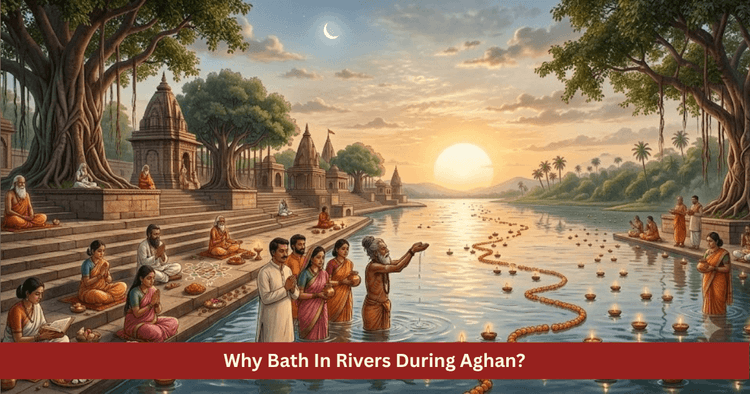
Table of Contents
Fundamental Rules and Sacred Hours of Margashirsha River Bathing
In the Sanatana tradition, the month of Aghan, also known as Margashirsha, is revered as a deeply sacred period of profound spiritual awakening. Lord Krishna himself established the immense divinity of this time in the Shrimad Bhagavad Gita by declaring that among all months, he is Margashirsha. The scriptural injunctions place paramount importance on taking a sacred bath in natural flowing water during the quiet hours of Brahma Muhurta throughout this holy month.
| Scriptural Dimension | Ritual Injunction |
|---|---|
| Niyam | Vidhan |
| Auspicious Period | Before sunrise under the canopy of stars |
| Primary Tithi Span | From Margashirsha Pratipada to Margashirsha Purnima |
| Most Glorious River | Shri Yamuna Ji, the daughter of the Sun |
| Alternative Home Ritual | Water infused with Ganga water, black sesame and Tulsi leaves |
| Primary Chanting Mantra | Om Namo Narayanaya or Om Shri Krishnaya Namah |
| Core Physiological Benefit | Regulation of blood flow and enhancement of vital life force |
| Restricted Conduct | Sleeping late, desiring heated water and speaking impure words |
The auspicious Brahma Muhurta unfolds during the final quarter of the night, when nature abides in its most tranquil and unblemished state. When a seeker enters the cold river water under the soft glow of distant stars, the purification of the subtle consciousness commences alongside the cleansing of the physical frame. Standing on the riverbank to offer humble salutations to the water element is considered an essential prerequisite, as it awakens pure reverence for cosmic nature. The devotee must take three sacred dips while holding the divine memory of the Sun and the chosen deity in the heart. Those who cannot physically journey to holy riverbanks may prepare consecrated water at home by combining water kept in a copper vessel with a few drops of Ganga water, black sesame seeds and sacred Tulsi leaves with equal devotion.
The Epic Lore of Padma Purana and Fruit of Ashvamedha Yajna
The Padma Purana holds an exalted place within Vedic literature, elaborating extensively upon the subtle mysteries of time and righteous action. The Uttara Khanda of the Padma Purana clearly states that a human being who bathes in a holy river, pond or natural spring before the very first ray of the sun appears in Margashirsha attains the immense spiritual merit equivalent to performing an Ashvamedha Yajna. In ancient ages, the monumental Ashvamedha Yajna was undertaken exclusively by sovereign emperors to establish righteousness and cosmic welfare, demanding extraordinary penance and boundless resources.
The crisp, cool waters of Margashirsha dissolve sloth and inner inertia within the human psyche just as a blazing sacrificial fire purifies ritual oblations. The scriptures affirm that all celestial deities and sacred pilgrimage waters reside in subtle essence within ordinary water bodies during this special month. When a householder overcomes the comfort of sleep and the fear of winter cold to submerge in the flow, that small act of conscious penance burns away accumulated transgressions of past lifetimes. This discipline is never a mere physical washing of the body but a profound medium to purify the eternal soul within the sacred river of time.
Exalted Glory of River Yamuna and the Krishna Principle
While every river across the sacred landscape of Bharat is a living goddess and a giver of life, the spiritual merit of the dark hued waters of River Yamuna increases manifold during the month of Aghan. Yamuna Ji is the daughter of the Sun god and the sister of Yamaraja, the lord of righteous justice, which endows her sacred waters with the miraculous power to conquer the fear of untimely demise. Furthermore, Yamuna Ji is the eternal consort of Lord Krishna and the direct embodiment of supreme devotional love.
- Influence of the Sun's daughter: Bathing in the Yamuna neutralizes malefic configurations of the Sun and Saturn in the natal chart while elevating soul power.
- Freedom from the fear of death: Due to the divine boon bestowed by her brother Yamaraja, any soul who touches the waters of Yamuna is delivered from agonizing tribulations.
- Attainment of the divine realm: Being the sovereign queen of the holy land of Vraja, bathing in Yamuna awakens the pure sprout of Krishna devotion within the heart.
- Focus of the human intellect: Spending contemplative time in close communion with Yamuna water completely stills mental restlessness and scattered thoughts.
In the Dvapara Yuga, Lord Krishna enacted countless enchanting pastimes upon the sandy banks of the Yamuna, ensuring that every grain of her banks still vibrates with divine presence. When a devout seeker dips into the cold, gentle currents of the Yamuna during Margashirsha, the soul intuitively feels the living grace of the divine cowherd. These holy waters lift human awareness above worldly attachments, transporting the inner being into higher states of spiritual joy.
How to Create a Sacred Pilgrimage Bath at Home
Due to physical distances, physical infirmity or pressing family obligations, it is not always feasible for every devotee to stand on the banks of a sacred river. The generous wisdom of the Vedic seers envisioned a profound method through which one can transform domestic bathing into a sacred pilgrimage right at home. When bathing within the household, purity of the human intent and the sanctity of the elements utilized remain of supreme significance.
Upon waking before dawn, take a fresh bucket of clean, cool water and respectfully add a few drops of holy Ganga water. Through the sacred presence of Ganga water, that everyday water immediately acquires the potent spiritual virtues of the holy confluence of Ganga, Yamuna and Saraswati. Following this, add a small pinch of black sesame seeds, which are celebrated in Vedic rites for pacifying ancestral spirits and clearing subtle karmic debris. Finally, place several fresh Tulsi leaves into the water, invoking the beloved botanical presence of Lord Narayana. While bathing, softly chant the sacred names of the seven sacred rivers: Ganga, Yamuna, Godavari, Saraswati, Narmada, Sindhu and Kaveri. A morning bath accomplished through this conscious process illuminates the subtle aura with the very same grace found at sacred riverbanks.
Scientific Mysteries of Cold Brahma Muhurta Bathing
The enduring disciplines established by ancient Indian sages were never arbitrary dogmas but were rather deeply anchored in sophisticated human physiology. During the winter season, when ambient temperatures drop, taking a cold water bath during the quiet Brahma Muhurta dramatically invigorates the entire autonomic nervous system. This ancestral practice serves as an intensely potent catalyst for activating the innate immune defenses of the body.
When cool water touches the human skin abruptly, the peripheral blood vessels instantly contract and then rapidly dilate in natural succession. This vascular gymnastics drives fresh blood and oxygen deep into internal vital organs, systematically flushing away metabolic wastes and accumulated toxins. Cold water immersion triggers an immediate rise in the count of circulating white blood cells, empowering the human anatomy to resist seasonal infections and winter illnesses. moreover cold water provides a therapeutic shock to the sympathetic nervous system, thereby dampening systemic inflammation, stress and anxiety. The human brain responds by releasing natural endorphins, keeping the seeker mentally resilient, cheerful and energized throughout the waking day.
Awakening of Spiritual Consciousness and Inner Energies
The human body is far more than a physical assembly of the five basic elements, containing within its subtle framework seven primary energy chakras and seventy two thousand vital energy nadis. Throughout the night, when the human frame rests in deep sleep, tamasic inertia dominates the physiology, directing vital prana downward. Bathing under the quiet canopy of stars during Brahma Muhurta activates the sushumna nadi nestled along the vertebral column. This auspicious hour represents the absolute zenith of sattva, when atmospheric oxygen and pranic purity exist at their supreme concentrations.
Following this sacred ablution, when the seeker sits with focused concentration to chant the sacred Gayatri mantra or personal guru mantra, the fruits of meditation blossom rapidly. The invigorating shock of cool water upon the third eye center and the crown chakra immediately stills wandering, erratic thoughts. The inner consciousness becomes as serene and clear as a tranquil lake, mirroring the profound truths of righteousness and cosmic reality. This transformative purification explains why enlightened ascetics and yogis across centuries embraced the morning bath of Margashirsha as an indispensable pillar of their spiritual life.
Resolving for Life Transformation in the Month of Aghan
The rhythmic shift of the seasons does not merely invite human beings to alter their external clothing but offers an opportunity to refine lifestyle patterns and inner character. This holy month of Margashirsha represents a period of deep self discipline, austerities and unreserved harmony with nature. When a seeker voluntarily lets go of lethargy and the temptation of soft comforts to embrace the discipline of early morning rising, life becomes suffused with an extraordinary radiance.
Viewing water not as a casual consumer resource but as the visible, flowing compassion of the Supreme Creator is the living heart of this spiritual ritual. When human beings are overcome with sincere gratitude toward the five cosmic elements, the rigid human ego naturally dissolves into reverence. Enduring the crisp chill of flowing waters before the golden dawn awakens an indomitable spiritual strength within the soul, granting the fortitude to navigate life challenges with peaceful grace. The radiant vitality and spiritual clarity gathered from this dedicated practice impart an enduring nobility to human existence.
FAQ
What is the ideal time to take a sacred bath during the month of Aghan? The most auspicious and spiritually rewarding time is during Brahma Muhurta before sunrise, while the stars are still visible in the dawn sky.
Can one receive the spiritual merit of a river bath at home using normal water? Yes, adding sacred Ganga water, black sesame seeds and holy Tulsi leaves to clean domestic water while invoking the sacred rivers yields equivalent spiritual fruits.
Why is taking a bath in River Yamuna exceptionally sacred during Margashirsha? River Yamuna is the beloved consort of Lord Krishna and the daughter of the Sun and bathing in her waters grants devotion, protection and long life.
What are the primary health benefits of taking an early morning cold bath in winter? A cold morning bath stimulates efficient blood circulation, strengthens the immune system, reduces chronic stress and maintains energetic mental alertness all day.
Which sacred mantra should be recited while taking the morning bath in Margashirsha? Mentally reciting the sacred mantras Om Namo Narayanaya or Om Namo Bhagavate Vasudevaya while taking the bath is regarded as deeply auspicious and purifying.
Get your accurate Kundali
Generate KundaliDid you like it?
Author

Pt. Nilesh Sharma (63)
Experience: 20
Consults About: Family Planning, Career
Clients In: Punjab, Haryana, Delhi
Share this article with friends and family
WELCOME TO
ZODIAQ
Right Decisions at the right time with ZODIAQ
