What Is The Secret Of Champa Shashthi?
By Pt. Amitabh Sharma
Manifestation Of Khandoba Golden Turmeric Abhishekam And Angarak Dosha Relief
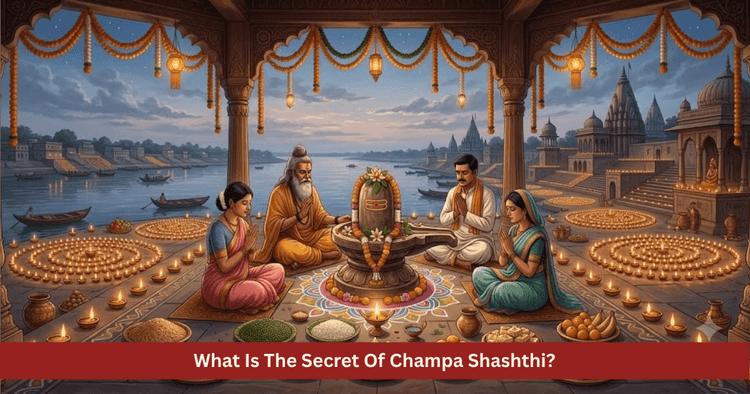
Table of Contents
Champa Shashthi Muhurat And Sacred Ritual Guidelines
According to the sacred Vedic calendar the sixth lunar day of the bright fortnight in the month of Margashirsha is celebrated as Champa Shashthi and Skanda Shashthi. This holy date is consecrated to the glorious victory of Lord Martanda Bhairava also known as Malhari Khandoba who is a formidable warrior incarnation of Lord Shiva and Lord Kartikeya the supreme commander of celestial forces. Classical scriptures declare this day to be supreme for subduing adversaries, pacifying Angarak dosha, healing blood afflictions and infusing human consciousness with fearless vigor. Seekers who confront persistent domestic friction, property disputes, legal entanglements or unprovoked fears find this sacred discipline to be an impenetrable protective armor. Observing this auspicious fast and worship demands adherence to scriptural timings, consecrated materials and traditional rules.
| Sacred Ritual Element | Scriptural Directives And Observances | Sacred Results Attained |
|---|---|---|
| Sacred Tithi And Month | Margashirsha Shukla Paksha Shashthi | Total eradication of fear and planetary distress |
| Presiding Divine Forms | Lord Martanda Bhairava Khandoba and Lord Kartikeya | Subjugation of rivals and receipt of divine courage |
| Optimum Worship Period | Early sunrise hours of dawn or noon period | Heightened spiritual vitality and focused intellect |
| Potent Seed Mantra | Om Martandaya Namah or Om Sharavanabhavaya Namah | Awakening of righteous vigor and mental fortitude |
| Traditional Food Offerings | Roasted eggplant mash, pearl millet flatbread and onion | Pacification of winter vata and physical nourishment |
| Sacred Worship Materials | Pure ground turmeric powder, bilva leaves and mustard oil | Cleansing of subtle energy channels and protection |
| Astrological Attainments | Pacification of Angarak dosha and blood purity | Removal of obstacles and victory over hostility |
To initiate the sacred discipline of Champa Shashthi the seeker must rise before sunrise during the serene quiet of Brahma Muhurta and complete morning purification. If possible add a pinch of pure ground turmeric to domestic bathing water. Put on clean yellow or red garments and sit facing the east or the north.
- Place a clean wooden pedestal on the altar and spread a pure yellow silk cloth over its surface
- Install the consecrated image of Lord Khandoba or Lord Kartikeya upon the altar
- Ignite a large earthen or copper lamp filled with pure mustard oil or sesame oil before the seat
- Offer formal water oblations to the deity followed by a generous offering of pure turmeric powder known as Bhandara
- Present fragrant champa blossoms, sacred bilva leaves and unbroken rice grains with deep devotion
- Offer the traditional rustic feast of roasted eggplant mash along with freshly baked pearl millet flatbreads
- Recite the potent seed mantra of Bhairava or the Skanda Gayatri mantra 108 times using a rosary of rudraksha beads
- Following the recitation burn pure camphor in a brass or copper vessel and perform the formal prayer
- Apply a sacred mark of the energized turmeric powder upon your forehead and sprinkle a small portion near the entrance
- Abstain completely from domestic arguments, untruthful speech, heavy foods, intoxicants and immoral conduct
Faithfully observing this scriptural ritual purges negative subtle vibrations from the home of the seeker immediately. Domestic peace returns to the family and physical debility begins to dissolve steadily.
Slaying Of Demons Mani And Malla And Martanda Bhairava Advent
In ancient cosmic times two extraordinarily powerful and ruthless demonic brothers named Mani and Malla performed severe austerities dedicated to Lord Brahma. Through those penances they secured an exceptional boon ensuring that no ordinary god, human being or worldly weapon could vanquish them in battle. Blown with arrogance arising from this invincibility the demonic brothers unleashed terror across the physical earth. They demolished the hermitages of ascetics, desecrated holy sacrifices and attempted to eradicate righteous living entirely.
Venerable sages approached Mahadeva Shiva begging for divine protection. Hearing their distressed prayers Lord Shiva blazed with righteous anger. To eradicate the demonic tyrants the supreme lord assumed an effulgent and terrifying form radiant like the midday sun celebrated as Martanda Bhairava. In this divine manifestation Lord Shiva shone like molten gold, brandishing a trident, a sword and a sacred damaru drum in his hands. Folk traditions revere this very form as Lord Khandoba or Malhari.
Lord Martanda Bhairava descended upon the earth accompanied by his divine forces to confront the demonic army of Mani and Malla. This cosmic battle of righteousness raged furiously for six continuous days. Commencing on the first day of the bright fortnight of Margashirsha the monumental struggle continued without pause until the sixth day.
- On the final day Lord Martanda Bhairava struck down demon Malla using his formidable trident
- Demon Mani fell before the lotus feet of the lord prior to his departure, seeking forgiveness with deep remorse
- The lord liberated Mani through his grace and granted a boon that his image would forever rest near the divine feet
- Upon the total annihilation of evil celestial beings showered golden turmeric powder across the earth in celebration
- This historic triumph concluded on the sixth day of the bright fortnight of Margashirsha, immortalizing the day as Champa Shashthi
Thus humanity received the timeless reminder that no matter how vast the expanse of unrighteousness appears, it crumbles inevitably before cosmic justice.
Lord Kartikeya And The Traditions Of Skanda Shashthi
Across northern and southern parts of India the sixth lunar day of the bright half of Margashirsha is observed as a grand festival dedicated to Lord Kartikeya, the eldest son of Lord Shiva and Goddess Parvati. In southern regions he is adored as Murugan, Subrahmanya and Skanda. Ancient Puranic lore records that when the demon Tarakasura seized control of the three worlds, Kartikeya manifested from the blazing seed of Lord Shiva carried by the fire god Agni.
Because he was nurtured lovingly by the six Krittika sisters he became celebrated as Kartikeya. When he attained youth the celestial deities consecrated him as the supreme commander of their armies. Wielding his divine spear known as the Vel, Lord Kartikeya eliminated Tarakasura and his demonic brothers with a single decisive stroke to restore cosmic virtue.
Worshipping Lord Kartikeya on Champa Shashthi awakens dynamic leadership qualities, intellectual brilliance and supreme courage within the human vessel. At sanctified southern shrines such as Palani, Tiruchendur and Swamimalai hundreds of thousands of pilgrims conduct sacred processions, bathing the deity with fresh milk and cooling sandalwood paste. This sacred day teaches us that through focused determination and mastery over the senses any monumental crisis can be conquered.
Turmeric Abhishekam And The Sacred Symbolism Of Bhandara
During the festival of Champa Shashthi at shrines dedicated to Lord Khandoba, particularly at the renowned holy hill of Jejuri in Maharashtra, an extraordinary ceremony of turmeric offering takes place. Hundreds of thousands of devotees assemble to shower golden turmeric powder into the sky, coating the entire sacred mountain in a radiant golden hue. This sanctified custom is celebrated in vernacular culture as Bhandara. The gathered masses chant the sacred praise of Yelkot Yelkot Jai Malhar with joyful devotion.
This shower of turmeric is not merely an external folk spectacle, but carries profound philosophical and therapeutic significance. In classical Ayurveda turmeric is celebrated as Haridra, an exceptional natural medicine that purges biological toxins, infections and circulatory impurities. As the early winter season sets in, applying and viewing warm turmeric stimulates natural heat within the physical frame.
- The radiant yellow hue of turmeric embodies the celestial rays of the Sun and Devaguru Brihaspati
- Scattering turmeric into the open air symbolizes surrendering all personal pride and mental impurities to the divine
- Applying a sacred mark of this consecrated turmeric calms the brow center and stabilizes mental focus
- Preserving a portion of this energized turmeric in the household altar or business safe invites enduring abundance
- This golden radiance declares that the life of the seeker is now illuminated by divine wisdom
This sacred shower of golden turmeric purifies the outer physical vessel and subtle inner body, guiding the spiritual practitioner toward higher consciousness.
The Rustic Feast Of Roasted Eggplant And Millet Flatbread
The consecrated meal offered to Lord Khandoba on the sacred occasion of Champa Shashthi is a remarkable mirror of rural folk culture. On this day the deity is not presented with elaborate royal confections, but is offered simple rustic flatbreads made from pearl millet along with fire roasted eggplant mash. In certain traditional customs raw onions and garlic are also presented as sacred offerings.
This custom provides living proof that in Vedic spirituality there is no divide between nature and the divine. During the month of Margashirsha the fresh harvest yields tender eggplant and newly harvested pearl millet across agricultural fields. It remains a sacred principle of Vedic culture to offer the first fruits of the land to the divine with sincere gratitude.
From physiological and Ayurvedic perspectives this seasonal diet harmonizes with the early winter climate. Pearl millet supplies the human body with essential caloric warmth and stabilizes digestion. Roasted eggplant assists in regulating the bodily vata humor. Lord Khandoba who is the supreme protector of farmers, shepherds and pastoral communities is delighted by this humble offering. This sacred feast reminds humanity that the divine seeks not pretentious displays of luxury, but simplicity and unselfish love.
Astrological Analysis Of Shashthi Mars And Angarak Dosha
In the predictive principles of Vedic astrology the sixth lunar day is governed directly by Lord Kartikeya. Astrological doctrines recognize an intimate connection between the sixth tithi and the planetary commander Mars. Mars is the cosmic significator of physical courage, valor, immovable property, red blood tissue and strategic warfare.
When Mars forms an afflicted conjunction or aspect with shadow nodes Rahu or Ketu in a birth chart, the volatile condition known as Angarak dosha manifests. Under the influence of this planetary flaw an individual becomes prone to impulsive wrath, reckless behavior and internal instability. The person suffers recurring blood impurities, accidental hazards, setbacks in litigation and persistent anxiety caused by adversaries. Champa Shashthi is recognized as the most potent annual date for neutralizing this fiery affliction.
| Astrological Factor | Manifestation In Daily Life | Remedial Practice On Champa Shashthi |
|---|---|---|
| Angarak Dosha | Explosive anger, accidents and blood impurities | Kartikeya worship and offering turmeric powder |
| Sixth House Affliction | Hidden rivals, heavy debts, lawsuits and ailments | Chanting Martanda Bhairava prayers to defeat foes |
| Debilitated Mars | Lack of self confidence, timid mindset and fear | Observing Champa Shashthi fast to rebuild valor |
| Real Estate Disputes | Obstacles in acquiring land and family property strife | Lighting mustard oil lamps on Shashthi tithi |
| Circulatory Disorders | High blood pressure and muscular tension | Offering water from copper vessels and applying turmeric |
Conducting joint worship of Lord Kartikeya and Lord Khandoba on Champa Shashthi tempers the destructive fire of Mars, transforming it into satvic strength.
- Seekers afflicted with Angarak dosha should bathe a Shivalinga or Khandoba icon with water mixed with turmeric
- Ignite six lamps filled with pure mustard oil at the entrance of your home and near an ancient temple in the evening
- Recite the seed mantra of Mars 108 times using a rosary of red sandalwood beads to receive planetary benevolence
- Distribute pearl millet flatbreads, raw jaggery and warm clothing to indigent individuals to relieve planetary distress
- Anointing the forehead with consecrated turmeric while remembering family deities forms an impenetrable protective shield
This astrological analysis confirms that spiritual practices conducted on Champa Shashthi eliminate human fear and bestow lasting victory.
The Eternal Radiance Of Righteous Valor And Strength
The sacred festival of Champa Shashthi reminds human civilization that establishing enduring peace sometimes requires decisive struggle against destructive tendencies. Lord Martanda Bhairava and Lord Kartikeya symbolize that when strength remains subordinate to righteousness and compassion, it preserves the welfare of creation.
The internal demons of greed, pride, unbridled lust and arrogance are the living manifestations of Mani and Malla within our own consciousness, constantly eroding spiritual discernment. The sacred discipline of Champa Shashthi inspires us to conquer these internal flaws. When we discard narrow selfishness and embrace the golden turmeric of wisdom, our life blossoms with divine grace. Remembering Lord Khandoba and Lord Kartikeya liberates the seeker from fear, illuminating the path toward victory in every struggle of life.
FAQ
On which day and month is Champa Shashthi observed? Champa Shashthi is observed with reverence every year on the sixth lunar day of the bright fortnight in the month of Margashirsha.
Why is turmeric powder offered to Lord Khandoba on Champa Shashthi? Following the victory over demons the celestial deities showered golden turmeric, making it an eternal symbol of healing, triumph and solar radiance.
What traditional food offering is presented on Champa Shashthi? A traditional meal consisting of fire roasted eggplant mash and freshly prepared pearl millet flatbreads is offered to the deity on this day.
Which astrological planetary affliction is pacified on this festival? Observing this sacred fast and performing worship pacifies the volatile Angarak dosha while removing the malefic afflictions of Mars.
Whose incarnation is Lord Khandoba recognized to be? Lord Khandoba is recognized as Lord Martanda Bhairava, an effulgent and righteous warrior incarnation of Mahadeva Shiva.
Get your accurate Kundali
Generate KundaliDid you like it?
Author
Pt. Amitabh Sharma (56 Years)
Experience: 20
Consults About: Family Planning, Career
Clients In: Punjab, Haryana, Delhi
Share this article with friends and family
WELCOME TO
ZODIAQ
Right Decisions at the right time with ZODIAQ
