What Is The Spiritual And Astronomical Impact Of Dhanu Sankranti?
By Pt. Suvrat Sharma
Sun Transit In Sagittarius Kharmas Lore And Charity Rituals
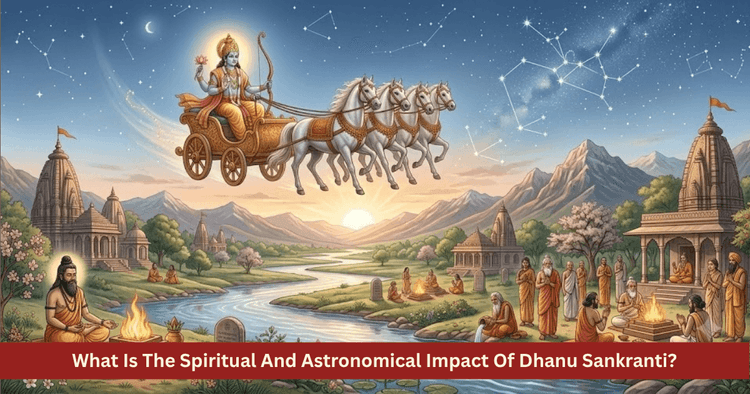
Table of Contents
| Details | Date and Time | Sampradaya | Main Worship Items | Core Rules |
|---|---|---|---|---|
| Dhanu Sankranti | Margashirsha Month (Mid December) | Sanatana and Vedic | Red Flowers, Copper Vessel, Ganges Water, Akshata | Sun Arghya, Holy River Bath |
| Main Deity | Lord Surya Deva (Aditya) | All | Jaggery, Wheat, Sesame, Red Sandalwood | Kharmas Rules, Sattvic Conduct |
| Spiritual Benefit | Willpower Growth, Health, Freedom from Sins | Sanatana | Clothes, Grain, Sesame and Jaggery Donation | Auspicious Events Forbidden, Self-Study |
When Lord Surya Deva, the visible deity of the cosmos and the ruler of all planets, completes his journey through the watery sign of Scorpio and enters the fiery sign of Sagittarius governed by Jupiter, this significant astronomical event is known as Dhanu Sankranti. Every year, this transit occurs around the fifteenth or sixteenth day of December. Sagittarius is recognized as the sign of wisdom, higher learning, righteousness, philosophy and penance. With the establishment of this sacred connection between the Sun and Jupiter, sattvic qualities expand throughout cosmic consciousness, inclining the soul toward spiritual wisdom rather than material desires.
What Is The Legendary Story Of Dhanu Sankranti And The Secret Of Kharmas?
According to Vedic scriptures and traditional beliefs, seven horses are yoked to the chariot of Lord Surya Deva, continuously encircling the entire cosmos. This chariot of the Sun never stops because if the movement of the Sun were to halt, the balance of the whole universe would be disrupted. According to sacred lore, during his continuous journey, when the horses of Lord Surya Deva became excessively exhausted and thirsty, Lord Surya Deva led them near a lake to grant them rest. On the bank of that lake stood two khara, meaning donkeys. Lord Surya Deva unyoked his horses, allowing them to quench their thirst with the lake water and yoked those two donkeys to his chariot to continue his journey at a slow pace.
Due to the slow pace and erratic gait of the donkeys, the speed of Lord Surya Deva slowed down significantly. This slow and quiet entry of the Sun into the zodiac sign of Jupiter is known as Kharmas or Dhanurmas. Throughout this entire one month period, the influence of the Sun becomes deeply sattvic and tranquil, due to which worldly and material auspicious ceremonies such as marriages, tonsures, housewarmings and new business inaugurations remain forbidden. This period is meant not for external celebrations but for introversion, meditation on God, yoga and scripture study.
What Is The Astrological Significance And Impact On 12 Zodiac Signs?
In astrology, the Sun is considered the significator of soul, father, vitality, royal authority and leadership, while Jupiter governs wisdom, righteousness, prosperity and sound intellect. When Lord Surya transits into the sign of Sagittarius belonging to his friend Jupiter, a tendency for self-introspection awakens within individuals. This transit provides spiritual progress and intellectual clarity rather than mere worldly success.
| Element Group | Affected Signs | Primary Astrological Influence |
|---|---|---|
| Fire Element | Aries, Leo, Sagittarius | Wisdom, higher studies, inclination toward virtue and willpower growth |
| Earth Element | Taurus, Virgo, Capricorn | Research, occult sciences, need for patience in career |
| Air Element | Gemini, Libra, Aquarius | Improvement in communication skills, travels and social prestige |
| Water Element | Cancer, Scorpio, Pisces | Health awareness, control over expenses and devotion |
During this Sankranti phase, native individuals belonging to Aries, Leo and Sagittarius experience immense success in higher education, spiritual pilgrimages and intellectual endeavors. For other zodiac signs, this period provides an opportunity to evaluate past actions and quietly prepare future plans.
What Are The Authentic Worship Rituals And Donation Rules Of Dhanu Sankranti?
The scriptures prescribe special rituals for bathing and charity during the holy window of Sankranti. On this day, one should rise before sunrise in the early morning to bathe in a sacred river or add Ganges water to bathing water at home. After bathing, offer water to the rising Sun using a copper vessel containing red sandalwood, unbroken rice, kumkum and red flowers.
- Rise before sunrise in the morning, bathe and wear clean red or yellow clothes.
- Mix Ganges water, clean water, red flowers and unbroken rice in a copper vessel to offer Arghya to the Sun.
- While offering water, chant the mantra Om Suryaya Namah or Om Ghrini Suryaya Namah.
- Stand facing Lord Surya Deva and recite the Aditya Hridaya Stotra.
- Light a sesame oil lamp at the altar and perform Aarti for Lord Vishnu and Lord Surya.
- Donate sesame seeds, jaggery, copper, red clothes and wheat to needy people.
- Consume pure sattvic food only once during the day and meditate on God in the evening.
Charity performed on the day of Dhanu Sankranti yields infinite spiritual merit. Offering delicacies prepared from sesame seeds and jaggery on this day grants auspicious results from both the Sun and Jupiter in one's birth chart.
What Should And Should Not Be Done On This Sacred Day?
- Offer water to Lord Surya Deva in the morning and recite Aditya Hridaya Stotra reverently.
- Donate grain, clothes and jaggery to needy people according to your capacity.
- Maintain sattvic conduct throughout the day and engage in holy study of God.
- Do not disrespect any elderly person, father figure or spiritual teacher.
- Avoid performing auspicious events like marriages, housewarmings and tonsures on this day.
- Refrain completely from purchasing or selling new vehicles or properties.
- Do not consume non-vegetarian food, alcohol, garlic or onions.
- Renounce arrogance and anger completely while keeping your mind peaceful.
FAQ
What is called Dhanu Sankranti? When Lord Surya Deva moves out of Scorpio and transits into Sagittarius governed by Jupiter, this astronomical event is called Dhanu Sankranti.
Why does Kharmas begin on the day of Dhanu Sankranti? When the Sun transits into Jupiter's sign Sagittarius, his energy becomes quiet and introverted; this phase is called Kharmas during which auspicious events are paused.
Can auspicious ceremonies like marriage be performed on Dhanu Sankranti? No, Kharmas begins with Dhanu Sankranti, so marriages and housewarmings are not performed throughout this entire month.
Which deity is primarily worshipped on Dhanu Sankranti? On this sacred date, the primary worship is dedicated to Lord Surya Deva and Jupiter.
Which items are considered auspicious to donate on Dhanu Sankranti? Donating sesame seeds, jaggery, wheat, copper utensils and red clothes on this day is considered extremely auspicious and rewarding.
Get your accurate Kundali
Generate KundaliDid you like it?
Author
Pt. Suvrat Sharma (63)
Experience: 20
Consults About: Family Planning, Career
Clients In: Punjab, Haryana, Delhi
Share this article with friends and family
WELCOME TO
ZODIAQ
Right Decisions at the right time with ZODIAQ
