What Is The Secret Of Margashirsha Month?
By Pt. Nilesh Sharma
The Sacred Story Rituals And Astrological Significance Of The Divine Agahan Month
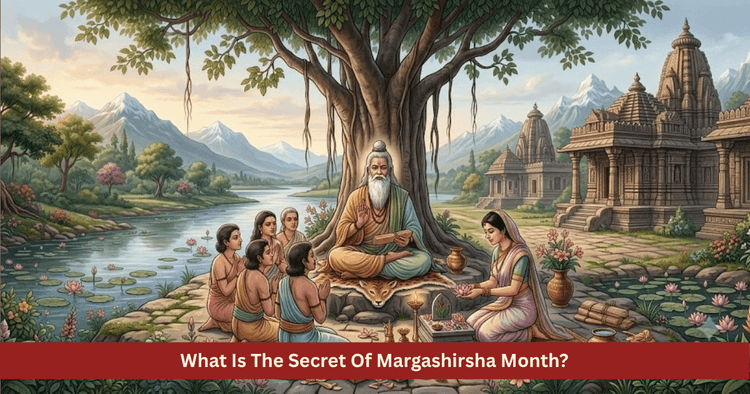
Table of Contents
Margashirsha Vrata Rules And Sacred Ritual Guidelines
Within the sacred calendar system of Vedic tradition the ninth month named Margashirsha is revered as the living embodiment of Yogeshwara Lord Krishna. When autumn departs and the early winter season of Hemanta enters creation this holy month turns human awareness away from mundane distractions toward unalloyed divine devotion. Spiritual austerities, holy river bathing, scriptural chanting and selfless charity performed during this period bear fruit manifold compared to other lunar cycles. Ancient scriptures delineate specific regulations for every sacred day and ritual observance throughout this time.
| Astrological And Ritual Elements | Vedic Mandates And Observance Guidelines |
|---|---|
| Calendar Position | Ninth month of the Hindu year, early winter, mid November to mid December |
| Presiding Deities | Lord Krishna, Lord Sri Hari Vishnu, the sacred Conch deity and the Moon |
| Holy River Ablutions | Bathing before sunrise during Brahma Muhurta in Yamuna or Ganga waters |
| Potent Seed Mantra | Om Namo Bhagavate Vasudevaya or Hare Krishna Maha Mantra |
| Sacred Materials | Tulsi leaves, white sandalwood paste, Dakshinavarti conch, incense, sesame and jaggery |
| Spiritual Benefits | Destruction of past sins, ancestral peace, mental purity and spiritual liberation |
Devotees observe the discipline of rising during the peaceful Brahma Muhurta before sunrise throughout Margashirsha. Bathing in sacred rivers or mixing a few drops of consecrated Ganga water with domestic bath water cleanses both the physical frame and the mental field. Following physical purification one must stand facing the eastern horizon to offer water oblations to the rising Sun before performing worship of Lord Krishna and Lord Vishnu.
- Bathe the consecrated icon of Lord Vishnu using pure water poured from a sacred conch every morning
- Recite at least one complete chapter of the Bhagavad Gita daily while offering sacred tulsi leaves
- Ignite an earthen or copper lamp filled with pure cow ghee near the sacred tulsi altar every evening
- Perform special worship dedicated to Goddess Lakshmi every Thursday, offering sweet rice kheer
- Distribute blankets, warm woolen garments, sesame seeds, jaggery and grains to destitute individuals with humility
- Abstain completely from tamasic food, alcohol, onions, garlic, harsh words and immoral conduct for the entire month
Observing these spiritual guidelines with steadfast devotion resolves deep seated crises in worldly life. The satvic vibration permeating the winter atmosphere quiets restless mental fluctuations and awakens inner stillness. This sacred discipline guides humanity toward selfless duty and complete surrender at the lotus feet of the Supreme Lord.
Manifest Form Of Krishna And Gita Discourse
In the tenth chapter of the Bhagavad Gita known as the Vibhuti Yoga when warrior prince Arjuna inquired about the divine manifestations of the Absolute, Lord Krishna revealed his supreme cosmic opulences. In that sacred revelation Lord Krishna declared with unequivocal clarity that among all twelve months he is personally Margashirsha. This profound declaration proves that this sacred month is not merely dedicated to the worship of a celestial deity but is the visible manifestation of the Supreme Reality.
Ancient Puranic lore records that the golden age of Satya Yuga commenced on the very first tithi of this sanctified month. Sage Kashyapa established the sacred valley of Kashmir during this seasonal period as an exalted center for penance and meditative absorption. It was during Margashirsha that Lord Vishnu assumed his primeval Matsya incarnation to salvage the sacred Vedas and protect the seeds of creation from the dissolving waters of the deluge.
From an environmental perspective this month brings delightful harmony to the natural world. The fierce heat of summer has completely subsided while the biting frost of deep winter has not yet arrived. Solar rays feel soothing and invigorating to all living creatures. Agricultural fields stand golden with ripe grain, welcoming prosperity into every home. When the external world rests in such tranquil equilibrium, the human intellect turns naturally toward introspection and contemplative prayer. For this very reason Lord Krishna elevated this month by declaring it his own divine persona.
Which Major Festivals Fall In Agahan Month?
A vibrant garland of spiritually transformative observances and festivals adorns the month of Margashirsha across the Vedic cultural spectrum. This entire lunar period reflects a harmonious blend of festive joy, austere self restraint and deep devotional surrender.
The eleventh lunar day of the bright fortnight of Margashirsha is celebrated as Mokshada Ekadashi. When grief and moral hesitation paralyzed Arjuna upon the battlefield of Kurukshetra during the Dwapara Yuga, Lord Krishna imparted the immortal teachings of the Bhagavad Gita on this auspicious tithi. Consequently this holy day is observed worldwide as Gita Jayanti. Spiritual tradition maintains that observing a complete fast and contemplating the verses of the Gita on this date liberates the soul from the endless cycles of worldly transmigration.
The fifth day of the bright fortnight is celebrated with reverence as Vivah Panchami. On this sacred date in the Treta Yuga Lord Sri Rama wedded Princess Sita, the daughter of King Janaka. While some regional traditions avoid scheduling human weddings on this date out of deep reverence, meditating upon the divine union of Rama and Sita harmonizes domestic relationships and deepens family peace.
- The eighth day of the dark fortnight is observed as Kalabhairav Jayanti, invoking the fierce protector form of Lord Shiva to dispel fear and malevolent energies
- The full moon day of Margashirsha marks Dattatreya Jayanti, celebrating the descent of the unified incarnation of Brahma, Vishnu and Shiva who embodies the supreme lineage of spiritual preceptors
- Every Thursday of this month is observed as Agahan Guruvar Vrata, wherein women perform detailed worship of Goddess Mahalakshmi for domestic abundance
- The new moon day of Margashirsha is highly auspicious for performing tarpan and charitable rites for departed ancestors to pacify ancestral debts
- Worshipping the sacred conch holds immense merit during this month because the Panchajanya conch emerged from the cosmic ocean and remains dear to Lord Vishnu
Every one of these sacred occasions functions as a doorway to liberate mortal beings from temporal bondages and align them with transcendent consciousness.
Planetary Influences And Nakshatras In Vedic Astrology
In Vedic astrology lunar months derive their classical names from the specific constellation in which the full Moon resides during the culmination of the cycle. On the full moon night of Margashirsha the Moon aligns with the asterism of Mrigashira, which gives this month its name. In traditional vernacular language it is known as Agahan, derived from the Sanskrit word Agrahayana, meaning the crowning or foremost part of the year.
| Astrological Factor | Dimension And Influence In Margashirsha |
|---|---|
| Primary Asterism | Mrigashira nakshatra (Ruled by Mars and symbolized by the head of a deer) |
| Presiding Asterism Deity | Chandra the Moon god (Significator of coolness, mental peace and divine nectar) |
| Dominant Planetary Currents | Auspicious grace of Jupiter and the transit of the Sun into Sagittarius |
| Solar Ingress | Dhanu Sankranti marking a dedicated period for spiritual contemplation |
| Therapeutic Astrological Remediation | Harmonizing the natal energies of the Moon, Mars and Jupiter |
The celestial emblem of Mrigashira nakshatra is the head of a deer. A deer wanders through forests in restless pursuit of the fragrant musk hidden within its own navel, just as the human mind wanders through sensory objects searching for peace. The subtle energy of Mrigashira guides human consciousness to recognize that lasting joy resides not in transient external things, but within the divine reality dwelling within the heart.
During the second half of this month Lord Surya leaves the water sign of Scorpio to enter the expansive fire sign of Sagittarius governed by Jupiter. This astronomical transition is celebrated as Dhanu Sankranti. The arrival of Dhanu Sankranti initiates the period of Kharmas. Astrological wisdom advises pausing celebratory social events such as marriages and new home consecrations during Kharmas so that human beings can devote their full vitality toward philosophical studies, pilgrimage and inner communion with the divine.
When an individual suffers from a weakened Moon in their natal chart or experiences chronic anxiety and emotional unrest, worshipping Lord Vishnu and the Moon during Margashirsha brings deep psychological stability. The expansive grace of Jupiter illuminates the intellect with wisdom and spiritual discernment.
Ayurvedic Living And Science Of Seasonal Health
Vedic celebrations and calendar months rest upon rigorous scientific and physiological foundations. According to classical Ayurvedic texts the month of Margashirsha coincides with the early winter phase known as Hemanta ritu. As atmospheric temperatures drop, the innate digestive fire of the human body known as Jatharagni becomes concentrated and exceptionally potent.
Because the internal fire burns with greater intensity during this season, the physical body requires nourishing, unctuous and energy dense foods. If one fails to provide adequate nourishment, the heightened digestive fire begins consuming the bodily tissues themselves. Recognizing this physiological reality ancient sages designed specific seasonal diets for Agahan.
- Consuming dishes prepared with sesame seeds, natural jaggery, black gram, peanuts and pure cow ghee provides vital warmth and nourishment
- Bathing with lukewarm water in the early morning and massaging the body with sesame or mustard oil balances the vata humor
- Refrain from consuming yogurt, radishes and refrigerated food items late in the evening
- Sitting in gentle morning sunlight infuses the skeletal system with natural vitamins and stimulates vitality
- Ayurvedic wisdom recommends reducing raw cumin intake while consuming warm milk blended with pure saffron or turmeric
These classical dietary guidelines strengthen immune resilience, preparing the human organism to endure the harsher winter cold that follows. When the physical body is maintained in radiant health, the intellect remains undisturbed and spiritual contemplation blossoms effortlessly.
Elevation Of Consciousness And Meditative Lifestyle
The sacred month of Margashirsha delivers the eternal lesson that nourishing the soul is the most vital duty of human life amidst the chaotic demands of the world. Just as deciduous trees shed their worn leaves upon the arrival of winter to conserve vital life energy, human beings must consciously release outmoded resentments, mental knots and egotistical attachments to purify their inner awareness.
This beloved month of Lord Krishna invites humanity to weave daily existence into an unbroken harmony of celebratory devotion and inward discipline. When an earnest seeker meditates upon the tranquil banks of the sacred Yamuna in the stillness of dawn and chants the holy prayer of twelve syllables, all internal darkness dissolves into light. This period reminds us that the ultimate aim of mortal life is not the accumulation of transient wealth, but union with the supreme consciousness that sustains all creation. Lighting the lamp of simplicity, unselfish charity and pure love during this holy month fulfills the true purpose of human birth.
FAQ
Why is Margashirsha month known as Agahan? Margashirsha is traditionally known as Agrahayana in Sanskrit, signifying the crowning or foremost part of the year, which became Agahan in common vernacular usage.
What did Lord Krishna declare regarding Margashirsha in the Bhagavad Gita? In the tenth chapter of the Bhagavad Gita Lord Krishna declared that among all twelve months he is personally Margashirsha.
When is the sacred festival of Gita Jayanti celebrated? Gita Jayanti is celebrated on Mokshada Ekadashi, which is the eleventh lunar day of the bright fortnight in the month of Margashirsha.
Which holy river is considered most auspicious for bathing in Margashirsha? Bathing in the holy waters of the sacred river Yamuna, which is deeply cherished by Lord Krishna, is considered most meritorious during Margashirsha.
Which charitable gifts are most beneficial during Agahan month? Donating sesame seeds, natural jaggery, warm woolen blankets, nourishing grains, sacred conch shells and pure cow ghee brings profound spiritual merit during this month.
Get your accurate Kundali
Generate KundaliDid you like it?
Author

Pt. Nilesh Sharma (63)
Experience: 20
Consults About: Family Planning, Career
Clients In: Punjab, Haryana, Delhi
Share this article with friends and family
WELCOME TO
ZODIAQ
Right Decisions at the right time with ZODIAQ
