What Is The Secret Of Margashirsha?
By Pt. Suvrat Sharma
Astrological Analysis Of The Divine Bond Between Mrigashira And The Moon
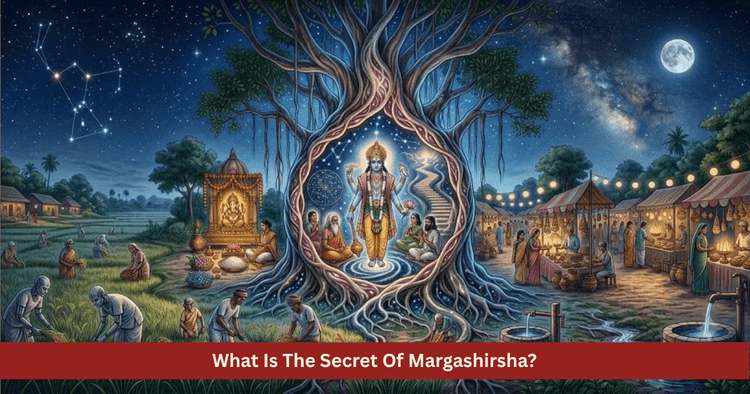
Table of Contents
Sacred Moon Worship And Mrigashira Ritual Guidelines
Within the sacred Vedic tradition the full moon of Margashirsha is revered as an extraordinary opportunity for absorbing nectarine lunar vibrations and attaining mental tranquility. When an individual suffers from unprovoked depression, mental restlessness, insomnia or deep seated anxieties, structured worship of the Moon and Lord Soma during Margashirsha pacifies all emotional turmoil completely. On this auspicious night the Moon displays all 16 divine digits, illuminating the earth with soothing rays. Fulfilling this spiritual discipline requires careful adherence to auspicious dates, consecrated materials and traditional scriptural rules.
| Sacred Element | Vedic Mandate And Ritual Process |
|---|---|
| Auspicious Timing | Full moon day of Margashirsha during the evening moonrise hours |
| Presiding Deities | Chandra the Moon god, Lord Soma and Mars as the asterism ruler |
| Potent Lunar Mantra | Om Som Somaya Namah or Om Cham Chandramase Namah |
| Sacred Materials | Clean silver vessel, fresh cow milk, holy water, white sandalwood, unbroken rice and camphor |
| Spiritual Benefits | Relief from mental depression, balance of bodily water elements, enhanced intellect and peace |
To begin this spiritual practice on the full moon day of Margashirsha complete evening ablutions following sunset and put on clean white garments. When the radiant full moon rises along the eastern horizon sit facing east either upon your terrace or in an open courtyard.
- Fill a pure silver vessel with fresh water, adding raw cow milk, white sandalwood paste, unbroken rice and white flowers
- Raise the silver pot above the level of your head and offer oblations while gazing upon the lunar orb through the falling water
- Chant the sacred lunar prayer or the seed mantra 11 times with a serene and focused heart during the water offering
- Sit upon a clean white mat after the oblation and recite the potent lunar seed mantra 108 times using a consecrated rosary
- Offer sweet rice pudding or milk delicacies to the Moon after the chanting and consume the energized food as sanctified grace
- Abstain completely from heavy tamasic food, harsh speech, anger and pointless nocturnal conversations throughout this sacred day
Observing this discipline with reverence cools the central nervous system within the physical vessel. Difficult planetary afflictions related to the Moon begin to subside, creating an uninterrupted flow of pure thoughts and mental resilience.
Astronomical Naming System Of The Vedic Calendar
The traditional Vedic calendar is not merely a record of numerical dates, but an advanced astronomical science tracking the movements of luminaries across the heavens. Ancient Vedic seers devised the names of all 12 lunar months through a precise observational method. Every month of the Hindu year is named after the specific asterism in which the full Moon reaches total luminosity directly opposite the Sun.
The celestial sphere of 360 degrees is divided into 27 equal arcs known as the 27 lunar mansions or nakshatras. Each constellation spans an arc of 13 degrees and 20 minutes. The Moon traverses approximately one nakshatra per day during its orbital cycle of 27.3 days. When the Sun and the Moon stand exactly 180 degrees apart in total opposition, the sacred full moon day takes form.
| Lunar Month | Asterism Of The Full Moon | Celestial Ruler Of The Asterism |
|---|---|---|
| Chaitra | Chitra nakshatra | Mars |
| Vaishakha | Vishakha nakshatra | Jupiter |
| Jyeshtha | Jyeshtha nakshatra | Mercury |
| Ashadha | Purva Ashadha or Uttara Ashadha | Venus or the Sun |
| Shravana | Shravana nakshatra | The Moon |
| Bhadrapada | Purva Bhadrapada or Uttara Bhadrapada | Jupiter or Saturn |
| Ashvina | Ashwini nakshatra | Ketu |
| Kartika | Krittika nakshatra | The Sun |
| Margashirsha | Mrigashira nakshatra | Mars |
| Pausha | Pushya nakshatra | Saturn |
| Magha | Magha nakshatra | Ketu |
| Phalguna | Purva Phalguni or Uttara Phalguni | Venus or the Sun |
This astronomical record demonstrates that after the full moon of Kartika concludes within Krittika nakshatra, the subsequent full moon inevitably occurs within the boundaries of Mrigashira nakshatra. Because the full moon resides within Mrigashira, this sanctified month received the timeless name Margashirsha. This systematic nomenclature proves that ancient Vedic traditions rest entirely upon cosmic astronomical realities.
Nature Of Mrigashira Nakshatra And Influence Of Mars
Within the sequence of 27 celestial asterisms Mrigashira holds the 5th position. This constellation extends from 23 degrees 20 minutes in the sign of Taurus to 6 degrees 40 minutes in the sign of Gemini. The initial half resides within the fixed earth sign of Venus while the concluding half falls into the dual air sign of Mercury.
The planetary governor of Mrigashira is the energetic planet Mars, whereas its presiding celestial deity is Soma, the divine lord of the Moon. This creates a rare astrological combination where the fiery vitality of Mars and the cooling nectar of the Moon operate through a single celestial portal.
The word Mrigashira translates as the head of a deer. In the night sky the stars comprising this asterism outline the alert face of a gentle deer. A deer represents swiftness, graceful movement, innocence, vigilance and an unceasing quest.
- The musk deer roams throughout the forest searching for the intoxicating fragrance that originates within its own navel
- This symbol reflects the innate yearning of human consciousness searching across the world for truth and realization
- The lordship of Mars endows this asterism with sharp intellectual vitality, investigative capability and thirst for knowledge
- The presence of lunar deity Soma grants individuals born under its rays a compassionate heart and creative imagination
- When the Moon reaches absolute fullness within this asterism in Margashirsha, spiritual research energies intensify across the planet
This asterism teaches humanity that just as the fragrance rests within the deer itself, all enduring peace and joy reside inside the human spirit rather than transient outer objects.
Soma Principle Water Element And Mental Equilibrium Science
In Vedic philosophy the Moon is addressed as Soma. The concept of Soma does not merely signify divine nectar, but represents the foundational cosmic cooling principle that nourishes all living forms. Vedic sages declared millennia ago that the cosmic mind brought forth the Moon, making it the primary governor of human emotional currents and subconscious impressions.
Modern physical science acknowledges that over 70 percent of the earth surface is covered with water and lunar gravity creates oceanic tides. In an identical manner the human organism is composed of approximately 70 percent water and biological fluids. When the Moon reaches fullness in the sky, subtle tidal currents ripple through the cerebrospinal fluid and bloodstream of the human body.
If an individual has an afflicted Moon in their natal chart, proximity to the full moon can destabilize emotional balance. Uncontrolled mental thoughts, irritability, depressive states or extreme emotional vacillations often manifest.
The occurrence of the full moon within Mrigashira nakshatra during Margashirsha establishes profound equilibrium within the bodily water element. When the refined fire of Mars meets the soothing nectar of the Moon, bodily fluids remain protected against stagnation and toxicity. This astronomical harmony regulates blood circulation and relaxes cranial nerves. For this reason gazing upon the Moon and offering prayers during this month dissolves chronic emotional depression naturally.
How Does Moon And Mars Synergy Influence Astrology?
In the interpretive principles of Vedic astrology the relationship between the Moon and Mars is considered exceptionally potent. When the Moon and Mars align in a natal chart through conjunction or mutual aspect, an auspicious combination known as Chandra Mangala yoga takes shape. The entire energetic foundation of Margashirsha rests upon this balanced dynamic between lunar and martial energies.
| Astrological Factor | Dimension And Influence In Margashirsha |
|---|---|
| Asterism Coordinates | Mrigashira nakshatra (23 degrees 20 minutes Taurus to 6 degrees 40 minutes Gemini) |
| Elemental Synthesis | Harmonious balance between Earth and Air elements |
| Psychological Impact | Transformation of mental restlessness into creative focus and discernment |
| Physiological Impact | Purification of blood circulation and pacification of biological bile and phlegm |
| Spiritual Discipline | Optimum window for yoga, pranayama, silent meditation and mantra practice |
The Moon represents the emotional imagination while Mars provides the decisive willpower to ground that imagination into practical reality. When the Moon is strong but Mars is weak, an individual remains lost in daydreams without the courage to act. Conversely when Mars is powerful while the Moon is damaged, a person becomes abrasive, impulsive and easily agitated.
- The transit of the full Moon through Mrigashira builds a balanced bridge between feeling and courageous action
- The Taurus segment of the constellation bestows artistic appreciation, material stability and patience
- The Gemini segment grants sharp eloquence, analytical intellect and quick learning capacity
- Seekers whose charts suffer from lunar eclipses or affliction by lunar nodes find profound relief through practices during this period
- Offering fresh milk over a sacred Shivalinga during Margashirsha pleases both Mars and the Moon simultaneously
This planetary harmony elevates human consciousness, steering it away from mundane sensory agitation toward the stillness of the inner soul.
Ascension Of Consciousness And Path To Inner Stillness
The naming of Margashirsha reminds humanity that the Vedic calendar is not an arbitrary system, but an exalted science of living in harmony with cosmic law. As we gaze upon the radiant stars of Mrigashira and the luminous orb of the 16 digit full Moon, we become aware of our humble place within this wondrous universal tapestry.
When the restless deer like impulses of the mind are guided by spiritual discipline, sensory wandering transforms into divine wisdom and refined intellect. This sacred month delivers the timeless message that like the musk deer, we must stop searching for contentment in the ephemeral distractions of the external world and seek the supreme reality dwelling within our own heart. When the soothing rays of the Margashirsha full moon bathe the forehead of the seeker in the quiet of the night, all mental conflicts subside, submerging the soul into an ocean of light and unbroken peace.
FAQ
Which lunar asterism gives its name to the month of Margashirsha? The month of Margashirsha derives its name from Mrigashira, the 5th lunar asterism, because the full Moon always occurs within this constellation.
What does the deer head symbol of Mrigashira nakshatra signify? The deer head symbol represents the continuous search for knowledge, curiosity, vigilance and the inward quest for spiritual truth.
Which celestial deities govern Mrigashira nakshatra? Mrigashira nakshatra is astrologically ruled by Mars, while its presiding celestial deity is Soma, the lord of divine nectar and the Moon.
What benefits arise from worshipping the Moon on Margashirsha Purnima? Worshipping the Moon on this day balances the water element of the physical body, relieves emotional depression and establishes mental stillness.
How does the Vedic calendar determine the name of each lunar month? The Vedic calendar assigns names to months based on the specific nakshatra in which the Moon attains full illumination on the Purnima night.
Get your accurate Kundali
Generate KundaliDid you like it?
Author

Pt. Suvrat Sharma (63)
Experience: 20
Consults About: Family Planning, Career
Clients In: Punjab, Haryana, Delhi
Share this article with friends and family
WELCOME TO
ZODIAQ
Right Decisions at the right time with ZODIAQ
