What Is The Secret Of Vivah Panchami?
By Aparna Patni
The Divine Marriage Of Rama Sita Breaking Of Pinaka And Astrological Remedies
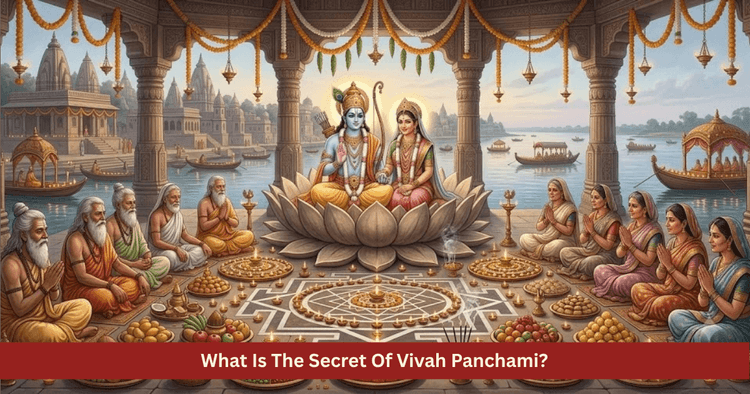
Table of Contents
Overcoming Marital Obstacles And Vivah Panchami Muhurat Rituals
Within the sacred Vedic tradition the fifth lunar day of the bright fortnight in the month of Margashirsha is celebrated as the auspicious festival of Vivah Panchami. On this sanctified tithi during the Treta Yuga the divine wedding of Maryada Purushottam Lord Rama and Janakanandini Mother Sita was solemnized upon the holy soil of Mithila. Ancient scriptures describe this sacred date as a wish fulfilling tree for dissolving discord in marital life, attracting an ideal life companion and clearing persistent obstacles in matrimonial alliances. For individuals confronting chronic delays in marriage or suffering domestic disharmony within family life, spiritual disciplines conducted on this date serve as a supreme healing shield.
| Ritual Factor | Scriptural Directives And Observances | Sacred Results Attained |
|---|---|---|
| Sacred Tithi And Paksha | Margashirsha Shukla Paksha Panchami | Dissolution of matrimonial delay and discord |
| Presiding Divine Couple | Lord Rama and Janakanandini Mother Sita | Harmonious family life and unbroken marital bliss |
| Auspicious Worship Time | Early sunrise hours or Abhijit Muhurat at noon | Heightened spiritual receptivity and grace |
| Potent Seed Mantra | Om Janakivallabhaya Namah or Om Ram Ramaya Namah | Awakening of divine affection and mental peace |
| Consecrated Offerings | Yellow silk cloth, unbroken rice, yellow sandalwood, durva grass and fragrant garlands | Blessings of lasting domestic harmony and auspicious fortune |
| Spiritual And Matrimonial Fruits | Timely marriage, deep spousal fidelity, removal of defects and lasting peace | Overcoming planetary afflictions and emotional fulfillment |
To begin the sacred discipline of Vivah Panchami the seeker must rise before sunrise during the serene hours of Brahma Muhurta and complete morning purification. Put on clean yellow or white garments and sit facing the east or the north. Cleanse the worship altar by sprinkling pure holy water and establish the sanctified seat.
- Place a clean wooden pedestal on the altar and spread a pure yellow silk cloth over its surface
- Install the consecrated image of the divine couple Lord Rama and Mother Sita upon the pedestal
- Offer clean water mixed with holy river water, unbroken rice grains and cooling yellow sandalwood paste for formal ablutions
- Dress Lord Rama in bright yellow silk attire and present a consecrated red veil along with traditional bridal ornaments to Mother Sita
- Ignite a lamp filled with pure cow ghee and fragrant incense before the divine altar
- Adorn both divine images with fresh fragrant flower garlands, visualizing their celestial wedding ceremony in your heart
- Recite the potent seed mantra of the divine couple 108 times with a peaceful mind using a consecrated rosary
- Following the recitation read the sacred narrative of Sita Swayamvara and the wedding ceremony from the Balakanda of the Ramcharitmanas
- Consecrate sweet rice pudding prepared from pure cow milk or yellow sweets and offer them with devotion before performing the formal prayer
- Distribute yellow fruits, unstitched garments, split yellow lentils and raw jaggery to worthy priests or destitute maidens
- Abstain completely from domestic arguments, untruthful speech, heavy foods, intoxicants and harsh expressions throughout this holy day
Faithfully observing this scriptural ritual infuses the household with satvic energy. Astrological obstacles delaying marriage dissolve naturally and married couples experience renewed affection, mutual respect and domestic harmony.
The Swayamvara In Mithila And Breaking The Pinaka Bow
During the Treta Yuga in the kingdom of Mithila ruled by the illumined philosopher king Janaka, an acute drought caused severe hardship across the land. Guided by the counsel of venerable sages King Janaka ploughed the sacrificial soil using a golden plough, whereupon a sacred earthen vessel emerged from the earth containing an exquisite female infant. Because she was protected by King Janaka she became known as Janaki, and because she manifested from the furrow of the plough she was named Sita.
During her early childhood Mother Sita lifted the formidable divine bow of Lord Shiva with a single hand while playing, a celestial weapon that mighty warriors could not even stir from the earth. That divine bow was celebrated as Pinaka, entrusted by Lord Shiva to the royal ancestors of King Janaka as a cosmic legacy. Witnessing this supernatural feat King Janaka took a solemn vow that whoever could string the colossal bow of Shiva would be granted the hand of Princess Sita in marriage.
When Mother Sita attained the age of marriage King Janaka organized a magnificent Swayamvara assembly. Renowned monarchs, powerful princes and formidable warriors from across the earth assembled in the royal court of Mithila. Even mighty warriors such as King Ravana of Lanka and Banasura stood humbled before the immense weight of the bow. Not a single ruler could move the weapon by even the width of a sesame seed. Witnessing this failure King Janaka cried out in despair, asking whether the earth had become destitute of heroic warriors.
Hearing the distressed lament of King Janaka the warrior courage of Prince Lakshmana blazed with righteous indignation. At that pivotal moment their spiritual preceptor Maharishi Vishwamitra looked toward Lord Rama, commanding him to rise and relieve the sorrow of the king.
- Touching the feet of Guru Vishwamitra with deep reverence Lord Rama walked toward the platform with serene grace
- In the divine persona of Lord Rama there was neither arrogance nor boastfulness, only humble obedience to his preceptor
- The lord lifted the heavy bow of Shiva with his lotus hands as effortlessly as a gentle flower
- As the prince drew the bowstring to bend the arc, the celestial weapon shattered in the middle with a thunderous roar
- The reverberation of the breaking bow echoed across the universe, shaking the foundations of the cosmos
When the thunderous sound subsided an ocean of joy flooded every direction. Celestial beings showered blossoms from the heavens. Accompanied by her maiden companions Mother Sita stepped forward and placed the fragrant wedding garland around the neck of Lord Rama, choosing him as her eternal lord. Every corner of Mithila rejoiced, witnessing this divine union.
From Janakpur To Ayodhya The Sacred Wedding Tradition
Following the breaking of the divine bow King Janaka dispatched a royal invitation to King Dasharatha in Ayodhya. Accompanied by the royal preceptor Maharishi Vashistha, Bharata, Shatrughna and his imperial army, King Dasharatha arrived in Janakpur with great honor. This grand union between Mithila and Ayodhya was not merely the alliance of two royal dynasties, but the sacred meeting of divine wisdom and pure devotion.
On the fifth lunar day of the bright fortnight of Margashirsha the royal wedding pavilion was consecrated in Janakpur. Under the guidance of Sage Vashistha and Sage Shatananda amid the chanting of sacred Vedic verses, the wedding of Lord Rama and Mother Sita was solemnized. In that very same pavilion the daughters of King Kushadhvaja the younger brother of Janaka were married to the other three princes.
- Lord Rama was wedded to Princess Sita the daughter of King Janaka
- Prince Lakshmana was married to Princess Urmila the second daughter of Janaka
- Prince Bharata was wedded to Princess Mandavi the elder daughter of Kushadhvaja
- Prince Shatrughna was married to Princess Shrutakirti the younger daughter of Kushadhvaja
The simultaneous marriage of the four princes and the four princesses established an enduring standard of righteousness across ancient lands. To this day in Janakpur Dham situated in modern Nepal this holy date is celebrated with immense joy. Pilgrims from all parts of India and Nepal assemble in Janakpur to witness the divine wedding reenactment and receive spiritual blessings.
Popular Misconceptions And Spiritual Reality In Astrology
Across several regions of Northern India a folk belief persists where families hesitate to schedule human weddings on the date of Vivah Panchami. This hesitation stems from the historical tragedy that followed the marriage, wherein Mother Sita had to endure fourteen years of forest exile and subsequent trials of separation. Popular sentiment fears that conducting a worldly wedding on this day might bring similar trials of separation to the newlyweds.
However from the standpoint of classical Vedic astrology and philosophical wisdom this fear is completely unfounded. The descent of Lord Rama and Mother Sita was never meant for transient sensory pleasures. They manifested upon the earth to vanquish demonic forces and demonstrate the ultimate ideals of self denial, duty and righteousness for all humanity.
Their marital life was an elevated spiritual sadhana that transcended mundane happiness and grief. Mother Sita embraced the hardships of forest exile willingly to remain by the side of her husband, proving that authentic love rests upon spiritual devotion rather than palace comforts.
Vivah Panchami is the sacred celebration of the union between the individual soul and the supreme reality. Just as the marriage of Lord Shiva and Goddess Parvati sustains the welfare of the cosmos, the divine marriage of Rama and Sita supports the moral fabric of existence. Therefore worshipping the divine couple on this day eradicates marital afflictions, fears of separation and domestic friction permanently. While human social custom may avoid scheduling marriages on this date, for spiritual purification and matrimonial healing it remains the most potent day of the year.
Astrological Analysis Of The Seventh House And Marriage Remedies
In classical Vedic astrology the seventh house of the birth chart governs matrimonial happiness, the character of the spouse, spousal harmony and long term partnerships. In the horoscope of a man the planet Venus is the natural significator of marriage, whereas in the chart of a woman Jupiter acts as the supreme significator of the husband and marital joy. Furthermore when Mars occupies the first, fourth, seventh, eighth or twelfth house from the ascendant, Manglik dosha manifests, triggering conflict and delay in marital alliances.
The festival of Vivah Panchami provides an extraordinary astrological window to pacify these planetary disharmonies. The cosmic vibrations on this day remain exceptionally pure and harmonious, awakening matrimonial energy within the seeker.
| Astrological Factor | Manifestation In Matrimonial Life | Remedial Practice On Vivah Panchami |
|---|---|---|
| Saturn Or Rahu In Seventh House | Unexplained delays and broken matrimonial proposals | Offer yellow garments and 7 whole turmeric roots to Rama and Sita |
| Affliction Of Planet Jupiter | Obstacles in finding a groom and lack of marital bliss | Donate yellow split lentils and recite the Vishnu Sahasranama |
| Weak Or Afflicted Planet Venus | Emotional distance and lack of warmth between spouses | Offer natural perfume and white flowers to Mother Sita with love |
| Severe Manglik Dosha | Impulsive anger, domestic friction and emotional tension | Offer fresh tulsi leaves to Lord Rama and chant the Sundarkand |
| Sun And Ketu Dissociative Aspect | Mutual mistrust, ideological conflict and fear of separation | Recite the Janaki Stotra and Rama Raksha Stotra eleven times |
Young men and women confronting obstacles in marriage should perform a special ritual on Vivah Panchami. Fill a clean copper vessel with fresh water, adding a pinch of turmeric powder and golden saffron strands to bathe the divine images of Rama and Sita. Following the bath take a drop of sanctified vermilion from the feet of Mother Sita and apply it upon your forehead.
Chanting the sacred verses of the wedding ceremony from the Balakanda of the Ramcharitmanas on this date attracts a worthy and compatible life partner. This sacred discipline strengthens the lord of the seventh house, removing all unseen karmic impediments on the matrimonial path.
The Eternal Union Of Purusha And Prakriti
Vivah Panchami is far more than an ancient matrimonial event, for it represents the eternal philosophical union of Purusha and Prakriti. In the teachings of Samkhya philosophy and Vedanta Prakriti is the creative maternal energy of the universe while Purusha is the supreme witnessing consciousness. When Rama and Sita unite in marriage, dynamic action and transcendent wisdom, power and consciousness, divine order and tender love achieve absolute harmony.
The life of Lord Rama establishes the golden standard of an ideal husband. He adhered to an unswerving vow of spousal fidelity throughout his existence, fashioning a golden image of Mother Sita to sit by his side during imperial sacrifices rather than taking another queen. Simultaneously Mother Sita personifies supreme resilience, dignity and spiritual purity that remains unshaken even during the darkest trials.
In modern times where human relationships are becoming increasingly fragile and driven by selfish motives, the marriage of Rama and Sita stands as a guiding beacon of truth. Their journey proves that true marital happiness is not found in favorable external conditions, but in mutual trust, unselfish dedication and shared moral values. Observing Vivah Panchami inspires humanity to dissolve personal pride and bow before the divine couple, ushering in an era of love, righteousness and enduring spiritual peace within every home.
FAQ
On which date and month is Vivah Panchami observed? Vivah Panchami is observed with reverence every year on the fifth lunar day of the bright fortnight in the month of Margashirsha across India and Nepal.
Which divine bow was lifted and broken by Lord Rama during the Swayamvara? Lord Rama lifted and broke the heavy divine bow of Lord Shiva known as Pinaka while attempting to string it during the Swayamvara in Mithila.
Why do some communities avoid worldly marriages on Vivah Panchami? Due to local folk beliefs regarding the subsequent forest exile and separation endured by Mother Sita, some communities choose to avoid scheduling human weddings on this day.
What spiritual remedy is recommended on Vivah Panchami for timely marriage? Offering yellow garments, whole turmeric roots and reading the wedding passage from the Balakanda of the Ramcharitmanas is considered highly effective for timely marriage.
Where is the primary historical celebration of Vivah Panchami held? The most magnificent celebration of Vivah Panchami takes place in Janakpur Dham in Nepal, the ancient maternal home of Mother Sita, and in the holy city of Ayodhya.
Get your accurate Kundali
Generate KundaliDid you like it?
Author

Aparna Patni (63)
Experience: 20
Consults About: Family Planning, Career
Clients In: Punjab, Haryana, Delhi
Share this article with friends and family
WELCOME TO
ZODIAQ
Right Decisions at the right time with ZODIAQ
