Lunar Cycles and Agricultural Phases - From Seed to Harvest
By Pt. Suvrat Sharma
The Traditional Science of Aligning Agriculture with Lunar Gravity and Light
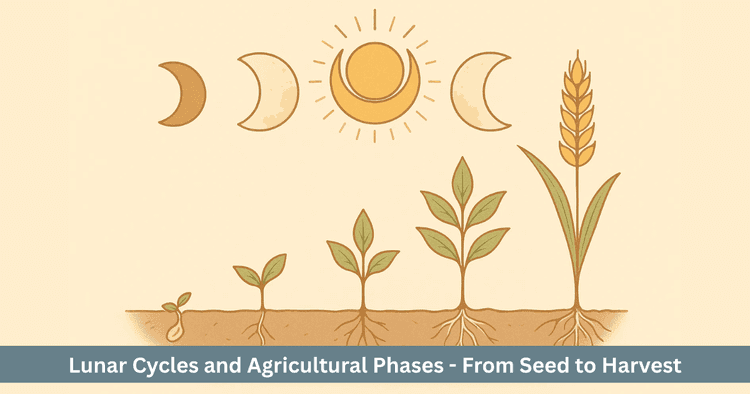
Table of Contents
This article is based on moon sign in Vedic astrology. The moon sign represents your mind and emotions. To know your moon sign, you need your birth date, exact time and place of birth. The zodiac sign in which the Moon is placed at the time of your birth is called your moon sign or Chandra Rashi.
In traditional Indian agriculture, the Panchang serves as a master guide orchestrating the entire farming process from seed to harvest according to the intricate dance of the lunar cycle. This ancient practice, a cornerstone of biodynamic and organic farming, is rooted in the principle that the moon's phases exert a powerful influence on the Earth's energies affecting everything from soil moisture and sap flow to seed germination and plant vitality. By aligning agricultural activities with these celestial rhythms, farmers work in harmony with nature boosting crop health and yield without relying on artificial inputs.
The Fundamental Physics of Lunar Influence on Crops
Lunar cycles exert measurable gravitational and electromagnetic effects on Earth's biosphere, with water being the primary transmission medium through which lunar forces affect plants. The Moon's gravitational pull creates tidal effects not only in oceans but also in soil water and plant sap, with the strongest gravitational influence occurring at New Moon and Full Moon when Sun-Moon-Earth alignment creates maximum tidal force.
Peak Soil Moisture at Lunar Extremes
During New Moon and Full Moon phases, the Moon's gravitational pull intensifies, drawing soil moisture upward from deep underground layers through capillary action. This increased soil moisture availability directly supports enhanced seed germination and root water uptake during these critical periods. Seeds planted during these maximum-moisture windows absorb water more effectively, germinating more rapidly with superior initial vigor.
Sap Flow and Plant Physiology
Analogously to tidal effects on oceans, lunar gravity modulates plant sap composition and distribution. During waning moon phases when gravitational pull decreases gradually moving away from Full Moon toward New Moon sap concentrations change creating conditions favoring root development and downward energy distribution. Conversely during waxing moon phases meaning New Moon toward Full Moon increasing gravitational pull supports upward sap movement and aerial growth stimulation.
Lunar Light and Growth Stimulation
Beyond gravitational effects, the Moon's illumination directly affects plant development through photomorphogenetic mechanisms meaning the plant's growth responses to light quality and intensity changes. Full Moon's maximum illumination during nighttime hours triggers distinct developmental pathways from New Moon darkness influencing flowering timing, fruit set and reproductive processes.
The Two Phases of the Agricultural Dance
The Waxing Moon (Shukla Paksha): A Time to Sow and Nurture
This is the period from the New Moon to the Full Moon when the moonlight is visibly increasing. During this phase, the lunar gravitational pull is believed to draw moisture upwards in the soil, making it more available to seeds near the surface. The increasing light encourages robust leaf and stem growth. This makes the waxing phase ideal for:
Sowing Above-Ground Crops: It is considered the perfect window to plant crops that bear their produce above the ground such as leafy greens meaning spinach lettuce, grains meaning rice wheat and fruiting vegetables meaning tomatoes beans.
Applying Liquid Fertilizers: Plants are thought to be more receptive to absorbing nutrients through their leaves during this time making it optimal for applying foliar sprays and liquid manures.
Grafting: The increased sap flow during the waxing moon is believed to promote the successful fusion of grafts.
The Waning Moon (Krishna Paksha): A Time to Root and Harvest
This is the period from the Full Moon to the New Moon when the moonlight is decreasing. During this phase, the cosmic energy is said to be directed downwards into the soil. The gravitational pull is still strong but is now encouraging energy to flow into the roots. This is the optimal time for:
Planting Root Crops: The downward energy flow makes this the perfect time to plant vegetables that grow underground such as carrots potatoes onions beets and turmeric.
Pruning and Weeding: As the sap flow is reduced pruning during the waning moon causes less stress to the plants. It is also considered a good time for weeding as the weeds are thought to have less vigor.
Harvesting for Storage: Crops harvested during the waning moon are believed to have a lower water content making them less prone to rot and better suited for long-term storage.
Four Lunar Cycles and Their Agricultural Implications
1. The Synodic Cycle (Waxing and Waning): 29.5 Days
Waxing Moon Phase New Moon to Full Moon:
This 14.75-day phase represents lunar growth and expansion energy characterized by increasing gravitational pull and luminosity. Plants respond with upward aerial growth emphasis making this the optimal window for crops where above-ground yields matter most including leafy vegetables meaning spinach kale lettuce cabbage, fruiting crops meaning tomatoes beans peas blackberries, flowering plants meaning cauliflower broccoli and grain crops meaning wheat rice cereals.
Critical Timing: The three to four days immediately before Full Moon represent the absolute optimal window for sowing above-ground crops capturing peak gravitational pull and illumination while establishing seedling root systems during maximum soil moisture availability.
Waning Moon Phase Full Moon to New Moon:
This 14.75-day phase represents lunar decline and contraction energy characterized by decreasing gravitational pull and illumination. Plants naturally redirect energy downward toward root development and below-ground processes making this the optimal window for root crops and subterranean vegetables including root vegetables meaning carrot potato beet turnip radish, bulbs and tubers meaning onion garlic ginger and perennial underground crops meaning tapioca turmeric.
Critical Timing: The three to four days immediately before New Moon represent the optimal window for sowing root crops establishing seedlings during the lowest gravitational-pull period when downward energy concentration proves maximum.
2. The Ascending and Descending Cycle: 27.3 Days
Ascending Phase Moon Moving Away from Earth:
When the Moon moves away from Earth in its elliptical orbit increasing distance gravitational pull gradually diminishes. This ascending phase approximately 13.65 days supports activities emphasizing reduced gravitational stress and increased autonomy including transplanting seedlings meaning reduced gravitational stress supports establishment of transplanted roots with minimal transplant shock, pruning and pruning-related work meaning reduced sap flow due to lower gravitational pull minimizes bleeding meaning excessive sap loss from cut surfaces and fertilization and nutrient absorption meaning reduced gravitational constraint on nutrient transport increases nutrient availability to roots.
Descending Phase Moon Moving Toward Earth:
When the Moon moves toward Earth decreasing distance gravitational pull gradually intensifies. This descending phase supports activities emphasizing increased gravitational engagement and root-directed energy including soil preparation and cultivation meaning increased gravitational pull supports soil settling and consolidation into prepared beds, water absorption and root establishment meaning enhanced gravitational pull draws moisture downward into soil supporting root hydration and maintenance activities meaning the heightened gravitational pull provides support for structurally demanding agricultural work.
3. The Sidereal Cycle: 27.3 Days (Moon Through 12 Zodiac Signs)
| Zodiac Element | Associated Crops | Moon Transit Duration | Agricultural Operation |
|---|---|---|---|
| Earth Element | Root crops: potato, beetroot, carrot, turnip | 2-3 days per sign | Plant roots when Moon in Earth signs |
| Water Element | Leafy plants: spinach, kale, lettuce, cabbage | 2-3 days per sign | Plant leaves when Moon in Water signs |
| Air Element | Flowering plants: cauliflower, broccoli | 2-3 days per sign | Plant flowers when Moon in Air signs |
| Fire Element | Fruit-seed crops: beans, peas, blackberries | 2-3 days per sign | Plant fruits when Moon in Fire signs |
4. The Apogee-Perigee Cycle: 27.2 Days
Apogee Moon at Maximum Distance from Earth:
When the Moon reaches apogee approximately 406,700 kilometers from Earth gravitational pull reaches its minimum intensity. This period supports activities where reduced gravitational constraint proves beneficial including seed collection and storage meaning reduced gravitational pull supports better seed preservation through decreased moisture-drawing forces and hay cutting meaning lower sap content due to minimal gravitational moisture pull creates drier hay of superior storage quality.
Perigee Moon at Minimum Distance from Earth:
When the Moon reaches perigee approximately 356,500 kilometers from Earth gravitational pull reaches its maximum intensity. This period supports activities maximizing gravitational engagement including watering and irrigation meaning maximum gravitational pull draws water deeply into soil supporting root-zone saturation and nutrient application meaning enhanced gravitational momentum supports nutrient transport to deeper soil layers.
Complete Seed-to-Harvest Lunar Timing
Seed Selection and Storage
Optimal Collection Timing: Collect seeds during New Moon periods when gravitational pull is weakest enabling superior seed preservation and longevity through reduced moisture-drawing forces. The minimal gravitational stress during New Moon collection supports better seed viability maintenance throughout storage duration.
Storage Phase: Store collected seeds through the waning moon period when downward gravitational emphasis supports stable undisturbed preservation in cool dark storage conditions.
Seed Sowing
Optimal Sowing Timing: Sow seeds 3 to 4 days before Full Moon during Shukla Paksha meaning waxing moon for above-ground crops or 3 to 4 days before New Moon during Krishna Paksha meaning waning moon for root crops.
Transplanting and Vegetative Growth
Optimal Transplanting Timing: Transplant established seedlings during the ascending lunar phase meaning Moon moving away from Earth when reduced gravitational stress minimizes transplant shock and supports root establishment.
Fertilizer Application: Apply fertilizers during Full Moon periods when gravitational momentum supports nutrient transport into soil layers and maximum root uptake capacity.
Harvesting and Yield Optimization
Optimal Harvest Timing: Harvest during Full Moon periods and immediately following capturing maximum crop maturity nutritional density and post-harvest stability through peak gravitational-moisture saturation creating firm quality produce.
Full Moon Harvest Benefits:
- Maximum water content and nutrient concentration
- Superior shelf life and storage longevity
- Enhanced flavor and nutritional density compared to non-optimal harvest timing
Grain Drying and Storage
Optimal Drying Timing: Dry harvested grains during waning moon phases when minimal gravitational moisture pull supports faster drying and superior moisture removal from grain storage.
Storage Commencement: Begin grain storage during stable Lagna periods meaning Taurus Leo Scorpio Aquarius zodiac signs and during New Moon when gravitational withdrawal supports long-term grain preservation stability.
Four-Quarter Agricultural Framework
| Quarter | Phase | Timing | Optimal Operations | Growth Emphasis |
|---|---|---|---|---|
| First Quarter | Waxing, Moon 0-90° from Sun | New to First Quarter Moon | Fruit-bearing plants, leafy vegetables | Above-ground, expansive growth |
| Second Quarter | Waxing, Moon 90-180° from Sun | First Quarter to Full Moon | Root crops, bulbs, below-ground vegetables | Below-ground, root development |
| Third Quarter | Waning, Moon 180-270° from Sun | Full Moon to Last Quarter | Compost application, soil amendments | Soil regeneration |
| Fourth Quarter | Waning, Moon 270-360° from Sun | Last Quarter to New Moon | Cultivation, weeding, pest management | Maintenance, disease prevention |
Frequently Asked Questions
What is the best Panchang day for sowing seeds?
Sow seeds 3 to 4 days before Full Moon during waxing moon for above-ground crops or 3 to 4 days before New Moon during waning moon for root crops.
When should root crops be planted?
Plant root crops during the waning moon phase meaning Full Moon to New Moon when downward energy emphasis supports root development.
What is the optimal time for harvesting?
Harvest during Full Moon periods when crop maturity and nutrient density are maximum.
Does the lunar cycle really affect crop growth?
Yes research shows that rice seeds sown during Full Moon phase exhibit significantly better growth in plant height number of tillers and dry matter production.
When should grains be dried and stored?
Dry grains during waning moon phases when minimal gravitational moisture pull supports faster drying and begin storage during New Moon for optimal preservation.
What does moon sign reveal about me?
My Moon SignDid you like it?
Author

Pt. Suvrat Sharma (63)
Experience: 20
Consults About: Family Planning, Career
Clients In: Punjab, Haryana, Delhi
Share this article with friends and family
WELCOME TO
ZODIAQ
Right Decisions at the right time with ZODIAQ
