How Will Aditya Hridaya Stotra Strengthen The Sun?
By Aparna Patni
Valmiki Ramayana Lore, Sadhana Rules, Heart Healing And Career Triumph
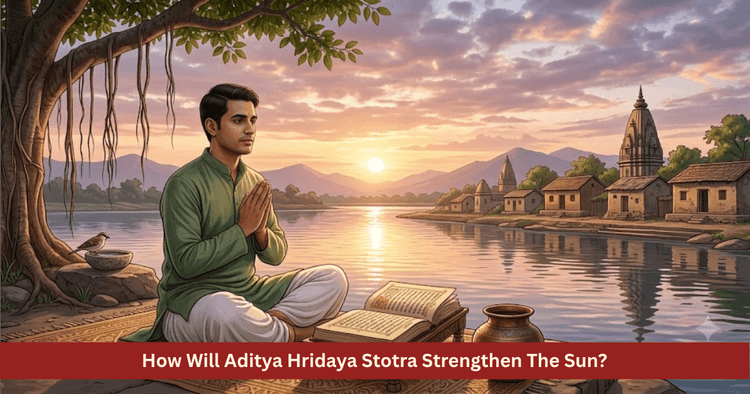
Table of Contents
Historical Framework of Aditya Hridaya Stotra in Valmiki Ramayana
According to the classical doctrines of Sanatana cosmological computation, the sacred month of Paush is recognized as the most spiritually charged, luminous and introspective period of the entire annual cycle. During this winter month, classical scriptures mandate dedicated worship of the Sun God in his transcendent emanation known as 'Bhaga Aditya'. To invoke solar grace, dissolve severe planetary afflictions and awaken indomitable inner courage, reciting the venerable 'Aditya Hridaya Stotra' is universally acclaimed as the supreme, infallible spiritual remedy across the Vedic tradition.
The historical foundation of this sacred hymn is preserved within the one hundred and fifth (105th) sarga of the Yuddha Kanda in the immortal Valmiki Ramayana. During Treta Yuga, as the epic war between Maryada Purushottama Lord Sri Rama and the demon king Ravana reached its critical turning point, demonic illusions, advanced armaments and destructive pride were surging. Following days of unrelenting combat, Lord Sri Rama's physical vessel displayed subtle fatigue as he stood in deep reflection upon the dust of the battlefield.
| Historical & Spiritual Dimension | Classical Reference & Setting | Tangible Life Manifestation |
|---|---|---|
| Canonical Source Text | Valmiki Ramayana (Yuddha Kanda, Sarga 105) | Worldly victory, conquering fear, spiritual awakening |
| Presiding Enlightened Preceptor | Brahmarshi Agastya (Son of Mitra-Varuna) | Transmission of divine knowledge, Brahmic aura |
| Sovereign Divine Aspirant | Maryada Purushottama Lord Sri Rama | Eradication of physical fatigue, surge of valor |
| Presiding Cosmic Divinity | Visible Supreme Brahman, Lord Surya Narayana | Vital aura, social honor, robust health, willpower |
| Ideal Seasonal Window | Paush Month (Golden pre-dawn and sunrise hours) | Elevating a debilitated natal Sun to royal strength |
| Core Oblation Substances | Pure copper vessel, red sandalwood, rice, jaggery | Optical clarity, cardiovascular balance, vitality |
| Manifest Spiritual Fruit | Absolute triumph in conflict, freedom from disease | Resolution of administrative delays, legal victories |
At that decisive moment, Sage Agastya descended from the celestial realms onto the battlefield before Lord Sri Rama. He addressed the prince: "O Rama! Listen to this eternal, all-auspicious hymn, the Aditya Hridaya Stotra, which destroys all adversaries. Reciting this three times in this very hour will grant you decisive and final victory over Ravana." Lord Sri Rama purified himself with water, raised his celestial bow and recited the hymn three times. Divine, invincible energy surged through his frame, leading to the vanquishing of Ravana and the re-establishment of righteous cosmic order.
Metaphysical and Acoustic Secrets of the Aditya Hridaya Stotra
The Aditya Hridaya Stotra is far more than traditional devotional poetry; it is an advanced acoustic science grounded in Rigvedic solar metaphysics and higher consciousness. The Sanskrit designation 'Aditya' refers to that which is unbroken, unfragmented and eternal, while 'Hridaya' signifies the core center, the spiritual heart and the animating soul. therefore the inner meaning of this stotra is the conscious awakening of the radiant solar presence within one's own heart.
Composed of thirty-one (31) classical verses, the hymn's sonic meters are structured so that chanting them aloud creates resonance within the subtle chakras, particularly the Anahata (heart center) and the Ajna (third eye center).
- Adoration of the Cosmic Trinity: The opening verses proclaim that the Sun God is the living embodiment of Brahma (the Creator), Vishnu (the Preserver) and Shiva (the Dissolver). He is the primordial source of Indra, Varuna, Yama, Kubera and Agni.
- Synthesis of the Twelve Adityas: The hymn unifies the energetic rays of all twelve solar emanations, including Bhaga Aditya, gathering the cumulative vitality of the solar cycle into a focused spiritual stream.
- Dissolving Subconscious Shadows: Just as sunrise dispels nocturnal darkness from the sky, reciting this hymn burns away subconscious despair, fear, hesitation, self-doubt and seasonal depression.
- Subduing Internal and External Adversaries: The verses repeatedly invoke the epithet 'Shatrughnaya' (the destroyer of foes). These adversaries encompass worldly competitors as well as the six internal obstacles-lust, anger, greed, infatuation, arrogance and jealousy.
Astrological Analysis: Transforming a Debilitated Natal Sun
In classical Parashari astrology, the Sun reigns as the natural significator of the soul (Atmakaraka), sovereignty, executive authority, paternal heritage, skeletal integrity and societal honor. When the Sun is debilitated in Libra, placed in difficult dusthana houses (sixth, eighth or twelfth), afflicted by the shadowy nodes Rahu or Ketu or aspected by Saturn, the individual struggles with persistent obstacles, low vitality and unearned disgrace.
Reciting the Aditya Hridaya Stotra during Paush dissolves these natal afflictions, helping realign the native's inner drive with royal confidence.
| Natal Solar Placement | Real-World Life Affliction | Remedial Fruition via Stotra Chanting |
|---|---|---|
| Debilitated Sun in Libra | Loss of status, chronic self-doubt, cowardice | Fortifying the Sun to royal strength, robust confidence |
| Solar Eclipse Affliction (Rahu/Ketu) | Unjust blame, scandals, persistent paranoia | Auric purification, dismantling malicious conspiracies |
| Hostile Aspect from Saturn | Friction with father, career stagnation | Healing paternal ties, career stability and growth |
| Sun in 6th or 8th House | Chronic litigation, debt, bureaucratic penalties | Favorable legal resolutions, freedom from penalties |
| Combust or Powerless Sun | Eye fatigue, fragile bones, physical lethargy | Sharp optical vision, bone density, radiant health |
When solar vitality is restored, the native displays natural executive charisma, authoritative speech and administrative leadership. For candidates preparing for competitive civil services, administrative governance or judicial examinations, this sadhana serves as an effective spiritual catalyst.
Cardiovascular Health, Optical Vision and Blood Circulation
The recitation of the Aditya Hridaya Stotra carries direct applications for cardiovascular health and human physiology. Modern cardiology documents that the human heart functions as the central pump sustaining systemic life breath and circulation. In Ayurvedic and astrological traditions, the Sun is the sovereign ruler of the cardiovascular matrix.
During the deep winter cold of Paush, peripheral vasoconstriction narrows arterial vessels, elevating blood pressure and increasing cardiovascular strain.
- Energetic Cleansing of the Heart Center: Chanting the stotra aloud generates acoustic micro-vibrations across the thoracic cavity. These rhythmic sound waves soothe arterial tension, supporting healthy coronary circulation and toning the myocardium.
- Optimizing Blood Circulation: The Sun governs Rakta Dhatu (blood tissue). Regular recitation supports healthy hemoglobin levels and oxygen-carrying capacity, alleviating winter lethargy, chronic fatigue and cold extremities.
- Optical Rejuvenation: The sacred Vedas revere the Sun as the cosmic eye of the universe (Chakshoh Suryo Ajayata). Touching residual drops of consecrated oblation water to closed eyelids after chanting soothes micro-capillaries within the eyes, relieving digital eye strain and supporting vision.
- Anchoring Mountain-Like Inner Resolve: When the cardiovascular system functions in balance, the human endocrine system stabilizes. Circulating cortisol levels decline while dopamine and serotonin rise, helping the individual confront worldly adversity with grounded confidence.
Step-by-Step Liturgical Methodology for Paush Sadhana
To harvest the full physical, mental and spiritual benefits of this sadhana during Paush, one should observe classical liturgical guidelines. This practice is an advanced energetic discipline designed to recharge the physical vessel with cosmic solar rays.
1. Pre-Dawn Purification and Preparations
Rise during Brahma Muhurta, roughly forty-five minutes before dawn. Bathe using fresh, soothing lukewarm or cool water. Don clean, unstitched cotton or silk garments of crimson, saffron or golden yellow. Dark black, navy blue and soiled clothing are strictly prohibited during solar sadhana.
2. Copper Vessel Solar Oblation (Arghya)
The foundational preliminary step is the presentation of morning solar oblations:
- Select an unblemished pitcher fashioned from pure copper, filling it with fresh drinking water.
- Add a few drops of sacred river water, red sandalwood paste, unbroken rice grains (akshata), fresh crimson blossoms (hibiscus or red oleander), a piece of unrefined jaggery and a pinch of black sesame seeds.
- Step beneath the open sky, standing upon a red woolen mat facing the eastern horizon.
- Raise the copper vessel eight to ten inches above the forehead, pouring an unbroken stream of water toward the rising sun.
- Gaze gently at the infant solar disc through the cascading veil of water, offering the oblation in three measured intervals while chanting 'Om Bhagaya Namah' or 'Om Ghrinih Surya Adityah'.
- Place a broad brass or copper basin beneath your hands to catch the consecrated water, preventing it from splashing upon your feet.
3. Step-by-Step Recitation Protocol
Following the water oblation, sit upon the red mat facing east, assuming a comfortable Padmasana or Sukhasana posture. Place an unblemished copper platter before you, draw an eight-petaled lotus using vermilion paste and kindle a lamp filled with pure cow ghee.
Take water, unbroken rice and a red blossom in your right palm, stating your resolve (Sankalpa):
"O Supreme Lord Surya Narayana! For the purification of my inner awareness, the pacification of natal planetary afflictions, the attainment of physical health and triumph in all righteous endeavors, I resolve to chant the sacred Aditya Hridaya Stotra three times on this blessed day of Paush."
Release the water onto the earth. Fold your hands in reverent contemplation of the Sun, chanting the thirty-one verses of the Aditya Hridaya Stotra three times with clear pronunciation and steady rhythm. Avoid chanting with rushed speed or inaudible whispering.
4. Concluding Circumambulation
Upon completing the three recitations, stand and circumambulate clockwise three times on the spot, bowing low before the Sun God. Gather a few sacred droplets from the oblation basin with your ring finger, gently touching them to your eyelids, throat and third eye center. Pour the remaining water at the base of a sacred botanical specimen, such as a Tulsi, Shami or Bael tree.
Code of Conduct and Daily Disciplines During the Sadhana
To preserve the spiritual integrity of this discipline throughout Paush, practitioners should observe these daily lifestyle practices:
- Dietary Salt Restrictions: Completely renounce common salt on Sundays or consume only mineral rock salt once daily. Salt-free dietary discipline accelerates the fortification of the natal Sun.
- Celibacy and Mental Purity: Maintain physical and mental celibacy throughout the period of sadhana, keeping thoughts elevated above sensory turbulence.
- Renunciation of Tamasic Foods: Strictly avoid meat, alcohol, seafood, eggs, onions, garlic and stale leftovers. Meals should be fresh, warm and prepared with pure cow ghee.
- Mastery of Speech and Conduct: The Sun represents the soul. Avoid harsh speech, anger and showing disrespect toward parents, teachers and elders. Touch your father's feet for blessings daily.
- Renouncing Daytime Sleep: Avoid sleeping during daylight hours, as daytime sleep increases tamasic heaviness, dissipating the ojas cultivated through solar chanting.
Overcoming Administrative Roadblocks, Litigation and Career Hurdles
In classical treatises, the Aditya Hridaya Stotra is celebrated as 'Sarva Shatru Vinashanam' (the destroyer of all adversaries) and 'Jayavaham' (the bestower of enduring triumph). It operates as an effective spiritual tool when mundane human efforts encounter persistent bureaucratic barriers.
- Triumph in Administrative Inquiries and Legal Disputes: Individuals navigating prolonged litigation, false accusations or stalled governmental clearances should commence this practice on a Shukla Paksha Sunday during Paush. Chanting the stotra three times at dawn for twenty-one consecutive days resolves hostiles maneuvers, clearing the path for fair outcomes.
- Success in Competitive Examinations: For aspirants preparing for civil services, military commissions or judicial careers, this hymn sharpens cognitive retention and mental focus. During interviews, it projects calm executive presence and authoritative composure.
- Resolving Ancestral Property Disputes: In families struggling with prolonged conflict over ancestral real estate, this practice calms bitter tempers, guiding involved parties toward equitable and harmonious resolutions.
Realizing the True Self Through the Radiance of the Sun
Reciting the Aditya Hridaya Stotra is an experiential journey reuniting human awareness with the infinite light of the Divine. It reminds the seeker that the human spirit is neither frail nor helpless but an immortal ray of Supreme Brahman, whose cosmic will guides the movement of galaxies.
When an individual sits in the gentle morning warmth of Paush, facing the eastern horizon, chanting this hymn with complete surrender, the petty ego dissolves. In its place awakens a lasting sun of wisdom, compassion, courage and vitality.
A seeker who completes this sacred discipline during the month of Paush walks through life's trials with the poise of Lord Sri Rama. Defeat, chronic illness, poverty and darkness recede, replaced by enduring honor, radiant vitality and peace.
FAQ
Who originally imparted the Aditya Hridaya Stotra and to whom was it given? According to the Yuddha Kanda of the Valmiki Ramayana, Sage Agastya imparted this hymn to Lord Sri Rama on the battlefield to ensure total victory over Ravana.
How does chanting this hymn during Paush help elevate a debilitated natal Sun? Paush is the month of the Sun; offering morning copper vessel oblations and chanting the hymn three times infuses the solar center with directional and spiritual strength, reversing debilitation.
In what way does the Aditya Hridaya Stotra protect cardiovascular health? The Sun governs the heart; the acoustic vibrations of the stotra stimulate the Anahata chakra, ease arterial constriction and help balance systemic circulation.
How many times should the Aditya Hridaya Stotra be recited daily according to scripture? Following the instruction of Sage Agastya to Lord Sri Rama, the hymn should be recited three times consecutively each morning for optimal benefit.
Is it necessary to avoid consuming salt on Sundays while practicing this sadhana? Yes, renouncing salt entirely on Sundays or consuming only minimal rock salt once daily is scripturally recommended to strengthen solar vitality in the body.
Get your accurate Kundali
Generate KundaliDid you like it?
Author

Aparna Patni (63)
Experience: 20
Consults About: Family Planning, Career
Clients In: Punjab, Haryana, Delhi
Share this article with friends and family
WELCOME TO
ZODIAQ
Right Decisions at the right time with ZODIAQ
