How To Receive Blessings of 33 Koti Deities With Cow Seva in Paush?
By Pt. Amitabh Sharma
Suryaketu Nadi Science, Winter Shelter Care, Spiced Flatbreads And Planetary Peace
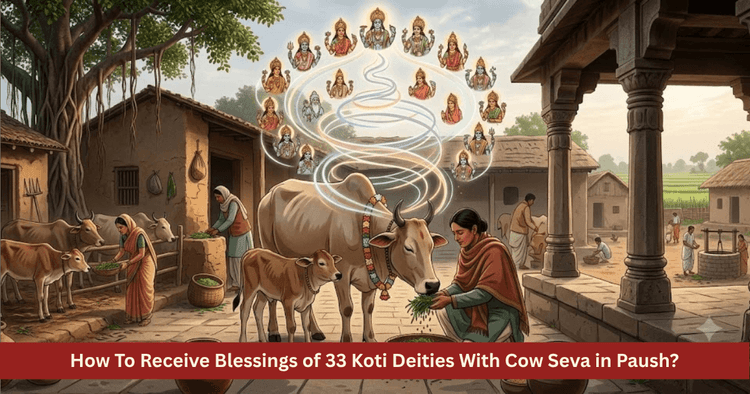
Table of Contents
Winter Chill and the Scriptural Foundations of Cow Worship in Paush
According to the classical doctrines of Sanatana chronological computation and the Vedic calendar, the month of Paush represents the most severe, dry and energy-conserving window of the entire annual cycle. With the onset of deep winter (Shishira Ritu), ambient temperatures plunge sharply, blanketing the northern plains in biting frost, dense fog and chilling winds. While humans secure themselves with heated dwellings and woolen vestments, stray and vulnerable indigenous cattle wandering without shelter face severe winter exposure.
In the Padma Purana, Skanda Purana and the Anushasana Parva of the Mahabharata, the venerable sage Veda Vyasa proclaims: Gavo Vishwasya Matarah-the sacred cow is not merely a domestic animal but the living mother of the cosmos and the physical abode of thirty-three categories (Koti) of celestial divinities. During Paush, when the planetary Sun radiates in his 'Bhaga' aspect near the end of his southern course (Dakshinayana), the 'Suryaketu Nadi' situated within the cow's dorsal hump becomes exceptionally receptive to subtle solar radiation. Visiting shelters (Gaushalas) during this season to provide windbreaks, dry straw bedding and warming medicinal nutrition yields spiritual merit surpassing thousands of Ashvamedha sacrifices.
| Service & Astrological Dimension | Classical Scriptural Injunction | Subtle Biological & Spiritual Manifestation |
|---|---|---|
| Optimal Observance Window | Entire month of Paush, especially Saturdays, Tuesdays, Sankranti | Dissolving past karmic demerits, lineage preservation |
| Presiding Sovereign Deities | Thirty-three categories of celestial divinities (Kamadhenu) | Appeasement of nine planets, ancestral peace, liberation |
| Essential Cold Defense Measures | Tarpaulins, paddy straw bedding, burlap coats, evening bonfires | Freedom from untimely death fear, architectural Vastu peace |
| Prescribed Medicinal Nutrition | Whole wheat flatbreads with dark jaggery, carom, fenugreek | Preventing respiratory distress, muscle and marrow stamina |
| Primary Bio-Solar Conduit | The 'Suryaketu Nadi' running through the dorsal hump | Synthesizing auric lipids, infusing environmental prana |
| Remedial Astrological Fruition | Resolving Kaal Sarp Dosha, Sade Sati and nodal afflictions | Reversing business stagnation, deflection of acute crises |
| Core Worldly Merits | Graceful passage across the cosmic threshold, enduring wealth | Domestic tranquility, fertility blessings, marital harmony |
When a seeker clothes a shivering cow with a warm burlap coat or provides a steaming meal of spiced grain and jaggery during deep winter, challenging malefic planetary combinations within the natal horoscope soften naturally.
The Subtle Science of the Suryaketu Nadi and Solar Alignment
Traditional bovine sciences record that indigenous Indian cows (Bos indicus) possess a prominent dorsal hump. Within this structure runs a subtle bio-energetic channel known as the 'Suryaketu Nadi'.
Examined through modern biophysics and traditional Vedic insights, this channel functions as an organic solar antenna:
- Absorption of Solar Rays: As early morning winter sunlight contacts the dorsal hump, the Suryaketu Nadi absorbs concentrated auric wavelengths from the solar spectrum.
- Synthesis of Gold-Enriched Lipids: The channel metabolizes this solar energy into trace mineral salts within the cow's milk and bodily fluids. This accounts for the natural golden hue of indigenous cow milk, celebrated in classical Ayurveda as restorative ojas.
- Winter Solar Convergence in Paush: Due to the oblique angle of winter sunlight during Paush, spending quiet time near indigenous cattle provides accessible exposure to natural prana, supporting the human immune system. Stroking the dorsal hump with open palms allows the seeker's biofield (Aura) to absorb harmonious bio-magnetic frequencies.
The Thirty-Three Koti Deities and Complete Planetary Harmony
Classical scriptures map cosmic planetary energies across the anatomy of the sacred cow. Caring for a cow during Paush harmonizes all nine planetary forces simultaneously:
| Anatomical Region | Residing Celestial Deity & Planet | Remedial Fruition in the Native's Life |
|---|---|---|
| Forehead & Horn Bases | Lord Shiva and King Indra | Mental calmness, relief from mortal fear, societal honor |
| Eyes | Lord Surya (Sun) and Lord Chandra (Moon) | Sharpening optical vision, lifting depression, inner resolve |
| Mouth and Tongue | Lord Agni (Fire) and Mother Saraswati | Eloquence in speech, academic retention, intellectual focus |
| Nostrils and Ears | The Ashwini Kumaras (Celestial Physicians) | Rapid relief from stubborn, chronic physical ailments |
| Dorsal Hump (Suryaketu) | Lord Surya Narayana and Deva Guru Jupiter | Spiritual wisdom, career expansion, blessings of progeny |
| Abdomen | Mother Annapurna and the Earth Element | Bountiful domestic granaries, freedom from poverty |
| Hooves (Soles of Feet) | Gandharvas, Ancestral Spirits and Saturn | Pacifying Sade Sati, clearing severe ancestral debts |
| Tail Tuft | Lord Dharmaraja (Yama) and Ketu | Nullifying Kaal Sarp Dosha, protection from unseen fears |
| Dung and Fluid Essence | Mother Lakshmi and Mother Ganga | Uprooting domestic poverty, energetic cleansing of Vastu |
For individuals whose horoscopes carry complex planetary afflictions and who lack the resources for expensive gemstones or elaborate rituals, offering daily food to cows during Paush serves as a direct, scripturally authorized remedy.
Practical Winter Shelter Care: Bedding, Tarpaulins and Warmth
During December and January, supporting shelters with practical winter care is direct service to the Divine. Classical treatises emphasize four essential winter protections:
- Dry Paddy Straw Bedding (Purali): Resting on bare, damp concrete or frozen soil drains biological heat, making cattle vulnerable to hypothermia, pneumonia and winter arthritis. Spreading dry paddy straw, clean hay or wood shavings four to six inches deep creates an insulating barrier that protects cattle from ground cold.
- Protective Tarpaulins and Windbreaks: Hang thick canvas tarpaulins or woven jute screens along the sides of shelters exposed to icy northwesterly drafts. These can be drawn back during sunny midday hours to allow fresh air and sunlight to circulate.
- Burlap Winter Coats (Jhool): Fit vulnerable calves, nursing cows and older animals with simple coats fashioned from clean burlap bags or quilted cotton. This helps conserve core body warmth through freezing nights.
- Safe Evening Smoke and Bonfires: Kindle small, controlled fires outside the shelter using dried cow dung cakes, dried neem leaves, guggul and camphor. The heat moderates ambient drafts, while the aromatic herbal smoke clears mosquitoes and winter biting pests naturally.
Nutritious Spiced Flatbreads and Winter Grains
During deep winter, cattle experience an active metabolic fire but grazing on frost-damp grass can provoke digestive gas (Vata) and respiratory phlegm (Kapha). Supplementing their diet with warm, energy-dense provisions supports overall vitality.
Ingredients for Medicinal Jaggery Flatbreads:
- Whole Wheat Flour (with bran): 2 to 3 kilograms (per adult cow).
- Aged Dark Jaggery: 250 to 500 grams (supplying bioavailable iron and core warmth).
- Carom Seeds (Ajwain): 20 to 30 grams (relieving intestinal gas and aiding digestion).
- Coarsely Ground Fenugreek Seeds (Methi): 20 to 30 grams (lubricating joints and easing stiffness).
- Raw Turmeric Powder: 10 grams (natural antimicrobial and systemic immune support).
- Pure Cold-Pressed Mustard Oil: 2 tablespoons (nourishing intestinal linings).
Preparation and Feeding Guidelines:
Combine the flour, crushed dark jaggery, carom seeds, fenugreek, turmeric and mustard oil with lukewarm water to form a dense dough. Shape into thick flatbreads and toast lightly over an open pan (or offer as unbaked dough balls). Serve these warm treats to cows at midday. This seasonal feed supports core body temperature and helps maintain healthy milk yields through cold snaps.
Astrological Remedies: Kaal Sarp Dosha, Sade Sati and Ancestral Peace
When challenging configurations like Kaal Sarp Dosha, Saturn's Sade Sati or Pitru Dosha cause persistent delays, dedicated bovine service during Paush offers steady relief:
- Remedy for Kaal Sarp Dosha: On any Wednesday or Saturday in Paush, wash whole barley grains in raw cow milk and dry them in the sun. Grind the grain into coarse flour, blend with dark jaggery, shape into flatbreads and offer them to a black or reddish-brown cow with both hands. Touch your forehead to the dust beside her hooves to help neutralize erratic nodal transits.
- Soothing Saturn's Sade Sati and Dhaiya: On Saturday evenings, mark the forehead of a dark cow with vermilion, apply a few drops of mustard oil to her horn bases and feed her flatbreads stuffed with split black lentils and black sesame sweets. Circumambulating her clockwise three times eases Saturn's disciplinary pressure.
- The Daily First Bread Offering (Go-Grasa): Reserve the first freshly baked flatbread each morning, brushed with ghee and topped with a piece of jaggery. Face south, remember your departed forebears and recite: Idam Go-Grasam Pitribhyo Namah. Feeding this daily bread to a cow satisfies departed ancestors, bringing blessings of peace to the home.
The Subtle Benefits of Circumambulation and Foot Dust
Sanatana traditions teach that circumambulating an indigenous cow yields the spiritual merit of walking around the sacred earth.
- Releasing Negative Mental Energy: Approaching a calm cow barefoot and touching her hooves with reverence grounds nervous tension, anger and emotional fatigue into the earth element.
- Aura Expansion and Blood Pressure Regulation: Indigenous cows emit calm bio-magnetic frequencies. Gently stroking the cow's back and dorsal hump helps soothe the human nervous system, helping stabilize elevated blood pressure and ease cardiac stress.
- Merit Equal to All Holy Rivers: The Mahabharata notes that an individual who touches the fine dust stirred by a cow's hooves (Godhuli) to their forehead receives the spiritual benefits of bathing in all sacred pilgrimage rivers.
Compassion, Reverence and Collective Well-Being
The practice of cow service in Paush extends beyond individual ritual; it represents practical compassion, ecological balance and social responsibility. A society that protects its vulnerable, aged and stray animals preserves its own moral foundation.
When we visit a rural shelter during the freezing cold of Paush, help hang windbreaks, lay down clean straw bedding and offer warm jaggery flatbreads to hungry cows, their quiet relief touches the heart.
In that moment of shared warmth, lingering personal anxieties soften. The household remains blessed with peace, emotional stability and vitality. During this winter month, let us visit a nearby shelter to provide seasonal bedding and feed, honoring these gentle creatures and walking in harmony with timeless wisdom.
FAQ
Why is feeding jaggery and flatbreads to cows especially meritorious in Paush? Jaggery supplies core metabolic warmth and bioavailable iron, while whole wheat provides sustained energy; in deep winter, this nourishment fortifies cattle against the cold while pleasing the planetary deities.
What is the significance of the 'Suryaketu Nadi' in indigenous cattle? Running through the dorsal hump of indigenous cows, the Suryaketu Nadi absorbs morning solar rays and synthesizes trace minerals into milk and bodily fluids, enriching the surrounding environment with prana.
What practical winter measures protect shelter cattle from severe cold? Lay down thick, dry paddy straw bedding, install canvas tarpaulins against northwesterly winds, provide burlap coats for vulnerable calves and light safe herbal bonfires in the evening.
How does cow seva help resolve Kaal Sarp Dosha during Paush? Feeding flatbreads made from barley flour washed in raw milk and mixed with jaggery to a cow, followed by touching the dust of her hooves, helps pacify the lunar nodes Rahu and Ketu.
Does stroking a cow's back have measurable physical health benefits? Yes; spending calm, mindful time with indigenous cattle and gently stroking their dorsal hump soothes the human autonomic nervous system, helping regulate blood pressure and stress naturally.
Get your accurate Kundali
Generate KundaliDid you like it?
Author

Pt. Amitabh Sharma (56 Years)
Experience: 20
Consults About: Family Planning, Career
Clients In: Punjab, Haryana, Delhi
Share this article with friends and family
WELCOME TO
ZODIAQ
Right Decisions at the right time with ZODIAQ
