What Foods Are Forbidden During Paush Month?
By Pt. Sanjeev Sharma
Radish, Eggplant, Curd And Stale Food Ban: Ayurvedic Science
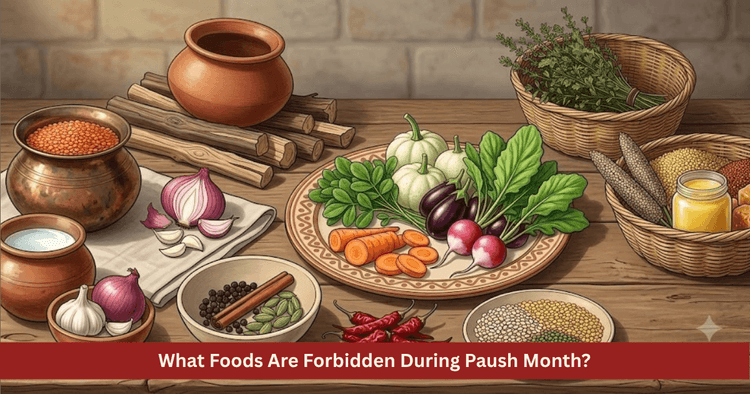
Table of Contents
Classical Dietary Injunctions and the Winter Seasonal Junction
According to the classical doctrines of Sanatana cosmological computation and fundamental Ayurvedic science, the sacred month of Paush (spanning mid-December through mid-January) represents a sensitive seasonal junction marking the formal transition from early winter (Hemanta) to deep winter (Shishira). During this period, ambient nature is chilled by intense frost, dense fog and biting northwesterly winds. While classical treatises prescribe the consumption of unctuous, warm, dense and fortifying foods to nourish the hyper-potent internal metabolic fire (Jatharagni), certain specific dietary items are strictly prohibited by both sacred lawbooks and classical medical compendiums.
The Brahma Vaivarta Purana, Padma Purana and Charaka Samhita warn that if an individual fails to master sensory appetites and partakes of contraindicated substances during seasonal transitions, the metabolic fire becomes contaminated. This impaired fire produces 'Ama' (systemic metabolic toxins), which obstructs micro-circulatory channels, triggering severe neuromuscular disorders, facial palsy, ischemic strokes, severe arthritis and acute gastrointestinal breakdown.
| Prohibited Food Category | Core Contraindicated Substances | Classical Scriptural & Ayurvedic Rationale | Manifest Physical & Systemic Pathology |
|---|---|---|---|
| Primary Vegetable Bans | Radish (Raw and nocturnal) & Eggplant | Vata-provoking, drying, cooling, tamasic | Abdominal bloating, severe joint stiffness, gas |
| Dairy Contraindications | Nighttime curd, cold raw milk buttermilk | Channel-obstructing (Abhishyandi), heavy, mucus-forming | Sinusitis, bronchial congestion, dampened digestion |
| Cooked Grain Restrictions | Stale leftover food, cold uncovered meals | Prana-depleted, heavy to digest, toxic residues | Enteric infections, sluggish metabolism, toxicity |
| Spices & Flavor Bans | Excessive cumin, hyper-sour and spicy items | Excessive desiccation, aggravated Pitta, mucus | Epidermal cracking, blood toxicity, dried nerve sheaths |
| Tamasic Substances | Meat, alcohol, stale seafood, eggs | Blood contamination, mental dullness, tamasic surge | Elevated blood pressure, hepatic distress, spiritual fall |
| Lifestyle Prohibitions | Daytime sleeping (Divaswapna) & cold baths | Excessive accumulation of Kapha and tamasic inertia | Facial paralysis, physical heaviness, metabolic arrest |
Ancient medical philosophy maintains that without adhering to proper seasonal dietary restrictions (Pathya), medicines and spiritual prayers fail to bear fruit. The Paush dietary prohibition code is not arbitrary ritualism; it is a physiological shield designed to protect the human biological vessel from severe winter diseases, ensuring vitality and longevity.
The Scriptural Radish Ban in the Brahma Vaivarta Purana
Authoritative sacred treatises, particularly the Brahma Khanda of the Brahma Vaivarta Purana, delineate specific botanical prohibitions for diverse calendar months. The text explicitly mandates the total renunciation of radish throughout the month of Paush:
Paushe mulakam varjayet.
(One must completely renounce the consumption of radish throughout the month of Paush.)
While modern society frequently regards radish as an ordinary winter salad staple, classical Ayurveda reveals that its biological properties undergo an adverse shift during deep winter frost. Radish is inherently sharp, heavy, Vata-provoking and causes systemic gas formation following gastrointestinal breakdown.
- Severe Provocation of Vata Humor: During Paush, environmental conditions are dry and freezing. Consuming radish triggers an expansion of downward-moving wind (Apana Vayu), causing painful abdominal flatulence, sour belching, intestinal cramping and acute colic.
- Depletion of Synovial Joint Fluid: When aggravated Vata circulates through the bloodstream into skeletal junctions, it desiccates the natural lubricating synovial fluid. Consequently, osteoarthritis, chronic knee inflammation and sciatic nerve pain flare up.
- Cutaneous Eruptions from Raw Radish: Classical Ayurveda notes that eating raw radish during deep winter contaminates the blood tissue (Rakta Dhatu), causing sudden outbreaks of urticaria, chronic itching and winter hives.
- Moral and Energetic Invalidation: The Brahma Vaivarta Purana notes that partaking of radish in Paush carries moral demerits akin to consuming intoxicants, neutralizing the spiritual fruits of daily prayers and ancestral libations.
If radish must be consumed under specific dietary protocols, it should never be eaten raw or at night. It must be cooked in pure cow ghee, tempered with carom seeds, pure asafoetida and dry ginger powder and taken only in strict moderation at midday.
Metaphysical and Medical Logic Behind the Eggplant Prohibition
In Sanatana culinary traditions, eggplant (Vartaka) is classified as contraindicated across diverse sacred months and lunar tithis. Classical treatises of Ayurveda and Dharma Shastras advise renouncing eggplant during Paush, noting distinct botanical vulnerabilities.
- Dual Aggravation of Vata and Pitta: Eggplant is heating and heavy but it irritates and contaminates the bloodstream. In deep winter, when cutaneous tissues are parched, consuming eggplant provokes internal burning sensations, inflammatory rashes and systemic pruritus.
- Colonization of Microscopic Larvae: During deep winter frost, eggplant fruit commonly harbors microscopic insect larvae and invisible fungal spores. Ingesting these contaminated nightshades triggers enteric parasites and gastrointestinal infections.
- Joint Inflammation and Uric Acid Spikes: Modern rheumatology confirms that as a member of the Solanaceae (nightshade) family, eggplant contains solanine and alkaloids that elevate serum uric acid levels, aggravating rheumatoid arthritis, gout and spinal stiffness.
- Awakening Tamasic Inertia: Tantric and Vaishnava liturgical compendiums categorize eggplant as a tamasic vegetable. Consuming it fosters mental lethargy, lustful agitation and procrastination, undermining pre-dawn rising and mantra meditation.
Why Curd and Cold Milk Are Prohibited at Night
The Charaka Samhita outlines strict clinical rules regarding the consumption of curd. Sage Charaka issues this unyielding mandate:
Na ratrau dadhi bhunjita.
(Under no circumstances should curd ever be consumed during the night.)
Consuming curd buttermilk or cold raw milk during the chilly nights of Paush is clinically contraindicated.
| Dairy Preparation | Classical Inherent Property | Biological Impact During Paush Nights | Manifest Clinical Debilities |
|---|---|---|---|
| Unheated Curd | Heating potency, sour taste, channel-blocking | Occluding micro-circulatory channels (Strotas) | Sinusitis, tonsillar inflammation, asthma, hives |
| Cold Raw Milk | Cooling potency, heavy, mucus-accumulating | Extinguishing internal metabolic digestive fire | Bronchial pneumonia, chest congestion, chronic flu |
| Thin Sour Buttermilk | Vata-pacifying (Day), cooling (Night) | Simultaneously provoking Vata and Kapha at night | Acute arthritic flare-ups, tension migraines, insomnia |
| Uncooked Milk Solids | Dense, sticky, extraordinarily difficult to digest | Producing toxic Ama from incomplete digestion | Acute dyspepsia, sour reflux, intestinal stagnation |
The Science of Channel Occlusion (Abhishyandi)
Curd is inherently 'Abhishyandi'-a pharmacological term denoting substances that secrete heavy, unctuous and sticky moisture into the micro-capillaries of the human body, obstructing the circulation of vital fluids. During the freezing nights of Paush, when external temperatures plummet, this attribute causes biological phlegm (Kapha) to congeal within bronchial passages. This triggers upper respiratory blockages, morning headaches and facial puffiness.
If milk is consumed at night, it must be boiled, enriched with dry ginger, turmeric, cinnamon or saffron and sipped steaming hot. Prepared this way, it provides internal thermal protection without promoting congestion.
Stale Leftover Food and the Elevated Risk of Strokes
A common winter misconception assumes that cold ambient temperatures preserve cooked food indefinitely, leading individuals to consume meals cooked days prior. Classical Ayurveda and modern microbiology warn that this habit carries severe health risks.
- Dissipation of Living Prana: Vedic tradition teaches that cooked food loses its vital life energy (Prana) three hours after preparation, turning stale. In the seventeenth chapter of the Bhagavad Gita, Lord Sri Krishna explains that cold, stale, putrid and decomposed food is tamasic, breeding systemic illness.
- Atmospheric Inversion and Bacterial Contamination: When cooked food sits exposed during cold winter nights, atmospheric dampness and frost settle upon it. Introducing cold, stale food into the stomach extinguishes the internal metabolic fire like cold water poured over glowing coals, arresting digestion.
- Elevated Risk of Facial Palsy and Ischemic Strokes: When cold, heavy and stale food fails to digest, it produces toxic Ama that thickens the blood, contributing to micro-vascular clogs and severe Vata aggravation. In deep winter mornings, when peripheral arteries are already constricted by cold weather, this circulatory strain can trigger facial palsy (Bell's palsy) or ischemic strokes.
Food during Paush should always be freshly cooked, steaming hot and unctuous with pure cow ghee. Repeatedly reheating refrigerated foods damages intestinal tissues, fostering chronic ulcers.
The Rationale Behind Restricting Cumin and Hyper-Acidic Tastes
While cumin is a ubiquitous culinary seed in Indian kitchens, its excessive use is restricted during Paush.
- The Desiccating Nature of Cumin: While cumin aids digestion, its post-digestive action is drying and cooling. During Paush, when environmental winds are already desiccating, excessive culinary use of cumin absorbs essential moisture from the skin and internal nerves. This leads to chapped lips, cracked heels and chronic constipation. It should be replaced with warming, unctuous digestive spices such as carom seeds, fenugreek and pure asafoetida.
- Contraindication of Hyper-Acidic Substances: Concentrated tamarind, dried mango powder, raw green mangoes and commercial vinegars should be avoided. Excess sour taste disturbs blood chemistry and aggravates internal heat, triggering joint inflammation, muscle cramps and dental hypersensitivity.
Complete Renunciation of Tamasic Foods, Meat and Alcohol
The sacred month of Paush is dedicated to solar adoration, mental introspection and conserving spiritual vitality. Partaking of tamasic substances during this window causes both physical and spiritual harm.
| Tamasic Substance | Moral & Spiritual Degradation | Biological & Physiological Pathology |
|---|---|---|
| Distilled Alcohol | Disrespect to Sun and Jupiter, loss of wisdom | Severe liver inflammation, dehydration, blood pressure drop |
| Animal Flesh (Meat) | Heavy karmic burden, elevating tamasic inertia | Arterial plaque deposition, elevated cardiovascular risk |
| Stale Fish and Eggs | Provoking severe Kapha and Pitta humors | Outbreaks of psoriasis, eczema, systemic blood toxicity |
| Raw Onions & Garlic | Inflaming lower desires, mental turbulence | Gastrointestinal burning, bad breath, spiritual agitation |
While alcohol creates a temporary sensation of surface warmth, medical science confirms that it dilates peripheral capillaries, causing core biological heat to radiate rapidly out of the body. This sudden drop in core body temperature makes the individual vulnerable to hypothermia in cold weather. Abstaining from alcohol during this month is essential for biological self-preservation.
Comprehensive Prohibitions Summary for Paush Month
A practical reference summarizing essential dietary and behavioral rules for householders and spiritual seekers during Paush:
Dietary Contraindications:
- Avoid raw radish during daylight hours and avoid all radish preparations at night.
- Refrain from consuming eggplant curries, roasted mash or nightshades.
- Completely avoid curd buttermilk and cold unboiled milk after sunset.
- Discard cold, unheated leftover food and meals stored in refrigerators for days.
- Restrict the excessive use of cumin, tamarind, chemical vinegars and hot red chilies.
- Renounce brown lentils (masoor), stale meat, eggs and distilled alcohol.
Daily Behavioral Injunctions:
- Avoid daytime sleeping; it increases Kapha dosha, induces lethargy and slows metabolism.
- Refrain from lingering in bed late into the morning; rise before the sun.
- Never wash the head or bathe using ice-cold water.
- Avoid leaving domestic living spaces in darkness at dusk; kindle lamps near portals and Tulsi.
- Refrain from showing disrespect toward elders, parents and vulnerable creatures.
Preserving Vitality, Balance and Longevity Through Restraint
The disciplines of the Sanatana tradition are designed to protect human life in harmony with natural laws. The dietary restrictions of Paush provide practical guidance for living in balance with winter rhythms.
By exercising conscious mastery over culinary desires and setting aside contraindicated substances, the internal metabolic fire remains balanced. The seven structural tissues are nourished, the mind remains peaceful and the soul rests in tranquility. An individual who observes these classical guidelines remains protected from winter ailments, strokes and joint inflammation, laying a foundation of robust health, vitality and longevity for the year ahead.
FAQ
Why is consuming radish strictly prohibited in the month of Paush by scripture and Ayurveda? In deep winter, radish aggravates Vata and causes severe gas and joint inflammation; the Brahma Vaivarta Purana states its consumption during Paush carries moral faults akin to drinking alcohol.
What adverse health effects result from eating curd at night during deep winter? Curd is channel-blocking (Abhishyandi) and mucus-forming; consuming it at night clogs micro-channels, triggering acute sinusitis, bronchial congestion and joint stiffness.
Why should eggplant be avoided during Paush month? Eggplant aggravates Vata and Pitta, elevates serum uric acid levels due to solanine, increases joint inflammation and often harbors hidden winter larvae.
Does consuming stale, cold leftover food during deep winter elevate the risk of strokes? Yes, cold stale food extinguishes the digestive fire and thickens the blood with toxic Ama; in freezing weather, this circulatory strain can trigger facial palsy or ischemic strokes.
Which warming digestive spices should replace cumin in culinary preparation during Paush? Because cumin is drying and cooling, it should be replaced with warming, unctuous spices such as dry ginger, carom seeds, pure asafoetida, fenugreek and black pepper.
Get your accurate Kundali
Generate KundaliDid you like it?
Author

Pt. Sanjeev Sharma (63)
Experience: 20
Consults About: Family Planning, Career
Clients In: Punjab, Haryana, Delhi
Share this article with friends and family
WELCOME TO
ZODIAQ
Right Decisions at the right time with ZODIAQ
