How To Boost Inner Willpower With Gayatri Sadhana In Paush?
By Pt. Sanjeev Sharma
Acoustic Science Of 24 Letters, Savitr Invocation, Academic Focus
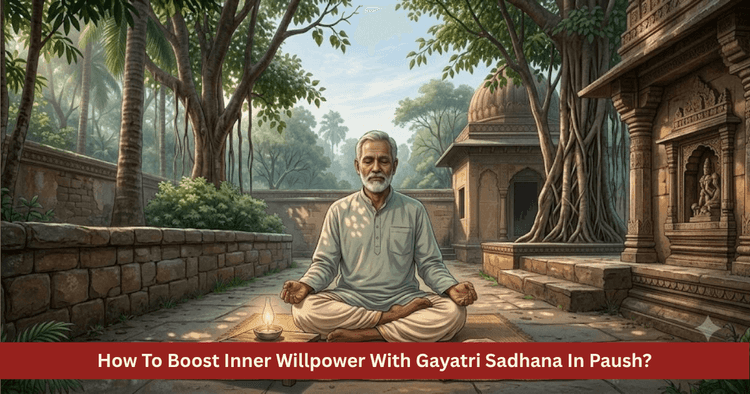
Table of Contents
The Stillness of Paush Nights and Classical Foundations of Gayatri Sadhana
According to the classical doctrines of Sanatana cosmological computation and the sacred Vedic calendar, the month of Paush represents the most introspective, energy-conserving and silent window of the entire annual cycle. With the onset of deep winter (Shishira Ritu), ambient atmospheric temperatures plunge sharply, enveloping the external environment in stillness, dense fog and biting cold waves. Mundane worldly chatter naturally quietens and night hours expand to their annual peak. According to Vedic Samhitas, the Upanishads and classical yogic treatises, this quiet seasonal atmosphere provides an ideal environment for serious practitioners to withdraw their senses from outward distractions and journey deep into internal consciousness.
During this seasonal period, undertaking dedicated sadhana of the supreme 'Gayatri Mahamantra' produces profound spiritual, mental and physical benefits. Recorded in the Rigveda (3.62.10), Yajurveda and Samaveda, the Divine Mother Gayatri embodies the primordial, creative and conscious solar essence addressed as 'Savitr'. The term Savitr denotes that Supreme Cosmic Reality which births creation, sustains its movement and illuminates living beings with transcendental awareness. During Paush, when the Sun radiates through his transcendent emanation known as 'Bhaga Aditya', the sonic frequencies of the Gayatri Mantra generate internal spiritual heat within the human body, dispelling winter sluggishness.
| Sadhana & Metaphysical Dimension | Classical Scriptural Injunction | Subtle Spiritual & Practical Manifestation |
|---|---|---|
| Prescribed Sadhana Window | Paush Month (Brahma Muhurta, 4:00 AM to 6:00 AM) | Dissolving mental turbulence, internal purification |
| Presiding Solar Deity | Lord Savitr (The Creative Solar Consciousness) | Refining the intellect (Dhi), awakening higher intuition |
| Mantric Sonic Architecture | 24-syllable, three-line (Tripada) meter | Activating 24 subtle energy centers and endocrine glands |
| Prescribed Meditation Mat | Pure red woolen blanket or kusha grass mat | Preventing grounding loss, preserving bio-electric energy |
| Recommended Rosary (Mala) | 108 beads of five-faced Rudraksha or sacred Tulsi | Calming the nervous system, steady blood pressure |
| Foundational Seating Posture | Sukhasana, Siddhasana or Padmasana (Erect spine) | Smooth ascent of prana through the Sushumna nadi |
| Academic Benefits for Students | Enhanced cognitive focus, overcoming exam panic | Expanding retentive memory, calming restlessness |
| Spiritual Protection | Cultivating a radiant golden energetic shield (Aura) | Dispelling winter depression, shielding against negativity |
Practiced in deep winter, this sadhana liberates consciousness from physical heaviness, guiding the soul toward inner illumination where doubt, fear and hesitation naturally dissolve.
Invoking Lord Savitr: Acoustic Science of the 24 Syllables
The Gayatri Mahamantra is an advanced acoustic formulation rooted in Vedic physics and subtle vibrations. Revealed by the sage Vishwamitra, the twenty-four syllables are arranged so that their rhythmic recitation gently stimulates specific energetic points across the tongue, palate, teeth and lips.
Om Bhur Bhuvah Swah Tat Savitur Varenyam Bhargo Devasya Dheemahi Dhiyo Yo Nah Prachodayat.
The translation reveals its depth: "We meditate upon the transcendental glory of that Supreme Divine Being, the creator of the physical, subtle and causal realms, who dispels all suffering and embodies pure bliss. May that Supreme Light illuminate and guide our intellect upon the path of truth."
- Bhur, Bhuvah, Swah (The Great Vyahritis): These three primordial utterances correspond to the terrestrial (Bhur), astral (Bhuvah) and celestial (Swah) planes of manifestation. Within human subtle anatomy, they align the Muladhara (root), Anahata (heart) and Ajna (third eye) chakras into harmonious coherence.
- Tat Savitur Varenyam: Choosing and surrendering to that supreme, adorable radiance of Savitr, the source of creation.
- Bhargo Devasya Dheemahi: Meditating upon that pure, sin-destroying divine light within the core of the spiritual heart.
- Dhiyo Yo Nah Prachodayat: Directing our intellect, thoughts and actions toward truth and righteousness.
| Metrical Quarter (Pada) | Associated Vedic Realm | Subtle Energetic Channel Action | Corresponding Endocrine Nexus |
|---|---|---|---|
| First Quarter (Tat Savitur Varenyam) | Rigvedic Domain of Wisdom | Cleansing the Ida Nadi (Lunar Channel) | Pineal and pituitary glands |
| Second Quarter (Bhargo Devasya Dheemahi) | Yajurvedic Domain of Action | Activating the Pingala Nadi (Solar Channel) | Thyroid and adrenal glands |
| Third Quarter (Dhiyo Yo Nah Prachodayat) | Samavedic Domain of Devotion | Flow of Prana through Sushumna Nadi | Thymus and pancreas |
As the tip of the tongue contacts twenty-four reflexology points along the upper palate during recitation, it sends signals to the cerebral cortex. This gentle stimulation supports neuroplasticity, clears mental fatigue and infuses the biofield with vitality.
Igniting the Internal Metabolic Hearth in Deep Winter
Classical Ayurveda and yogic physiology note that the severe cold of Paush tends to numb peripheral tissues. Cutaneous pores constrict and blood vessels tighten to preserve core warmth. When a practitioner rises during Brahma Muhurta to engage in Gayatri sadhana, the rhythmic chanting naturally activates the body's internal energetic furnace.
- Generating Biological Heat (Tejas): The breathwork accompanying focused mantra recitation creates gentle friction, stimulating the Samana Vayu centered at the Manipura chakra (solar plexus). This supports the internal digestive fire (Jatharagni), distributing warmth throughout the frame to ease winter cold.
- Expanding the Pranic Sheath (Pranamaya Kosha): Freezing weather often leads to shallow breathing. Practicing rhythmic chanting expands bronchial capacity, supporting healthy oxygenation and delivering vitality to tissues.
- Balancing Serotonin and Ojas: Early morning meditation helps halt excessive daytime melatonin production while supporting serotonin synthesis. This lifts morning lethargy and winter melancholy, replacing them with quiet clarity.
Mental Clarity, Focus and Academic Triumph for Students
For students preparing for competitive examinations or demanding academic terms, practicing Gayatri sadhana during Paush offers valuable mental support. Cold winter mornings can bring sluggishness, difficulty concentrating and study fatigue.
The Gayatri Mantra directly addresses the 'Dhi'-the higher discerning intellect. Regular morning practice during Paush helps cultivate steady mental stamina and focus:
| Cognitive Challenge | Common Winter Difficulty | Transformation Through Gayatri Sadhana |
|---|---|---|
| Fragmented Attention | Restless mind, digital distractions | Deepened concentration, ability to study with focus |
| Memory Fatigue | Difficulty retaining complex material | Enhanced memory encoding and cognitive recall |
| Exam Anxiety | Restlessness, nervousness, self-doubt | Mental calmness, steady emotional composure |
| Morning Sluggishness | Lingering in bed, delaying daily studies | Natural pre-dawn wakefulness, sustained morning energy |
The Three-Round Water Consecration Protocol
Students should sit facing the eastern horizon following their morning bath. Place a clean copper cup filled with drinking water upon the altar. Recite three rounds of the Gayatri Mantra (324 repetitions) with steady focus. Concluding the chanting, take three sips of the water and gently touch a few droplets to your closed eyelids and third eye center. This practice calms the central nervous system, preparing the mind for focused learning.
Subtle Energetic Activation and the Path of Kundalini
In Hatha yoga and classical Shakta tantra, the Gayatri Mahamantra is revered as a foundational tool for awakening subtle spiritual potential (Kundalini Shakti). During the quiet nights of Paush, when ambient environmental noise is minimal, the human spine operates as a natural conductor for spiritual energy.
Seated with the spine upright, breathing through both nostrils while practicing silent or whispered (Upanshu) japa, the practitioner supports the gentle movement of prana along three main stages:
- Ascent from Root to Navel: Initial rounds of japa warm the lower energetic centers-Muladhara, Svadhisthana and Manipura. This helps redirect scattered emotional energies into courage, vitality and grounded presence.
- Opening the Heart Center (Anahata): Chanting the second quarter of the hymn encourages the opening of the twelve-petaled heart chakra, helping quiet personal irritation, envy and anxiety, replacing them with compassion and peace.
- Third Eye Clarity (Ajna Chakra): As subtle sound vibrations resonate at the Ajna chakra between the eyebrows, practitioners often perceive a gentle golden light in meditation. This awakens inner intuitive discernment, bringing clarity to complex life decisions.
Step-by-Step Liturgical Methodology for Paush Sadhana
To harvest the full physical, mental and spiritual benefits of Gayatri sadhana, one should follow classical liturgical guidelines:
1. Pre-Dawn Purification and Preparations
- Optimal Timing: Rise during Brahma Muhurta (roughly forty-five to ninety minutes before sunrise, between 4:30 AM and 5:30 AM).
- Bathing: Bathe in fresh water infused with a few drops of consecrated Ganga water or a pinch of black sesame seeds.
- Attire: Wear clean, unstitched garments of pale yellow, white or saffron cotton or silk. Avoid wearing dark black or synthetic textiles during sadhana.
2. Seating and Directional Alignment
- Sit facing the eastern horizon to align with incoming morning solar rays.
- Place a clean red woolen blanket or a kusha grass mat beneath you. Wool acts as a natural insulator, preventing the subtle bio-energy cultivated during japa from earthing into the ground.
3. Altar Setup and Preliminary Resolve (Sankalpa)
Spread a clean red cloth upon a raised wooden platform. Place an unblemished copper vessel filled with water upon it, kindling a lamp of pure cow ghee.
Take water, unbroken rice grains and a flower in your right palm, stating your resolve:
"O Divine Mother Gayatri! O Supreme Lord Savitr! During this sacred month of Paush, I undertake the daily recitation of five rounds of the Gayatri Mahamantra for the purification of my mind, the elevation of inner willpower and the awakening of truth within my intellect. Bless my consciousness with your radiant light."
Release the water onto the earth. Visualize the form of Mother Gayatri and the rising sun before beginning the recitation.
4. Rosary Discipline and Repetition Count
- Mala Selection: Use a 108-bead rosary of authentic five-faced Rudraksha or Tulsi, keeping it resting within a cloth bag (Gomukhi) during chanting.
- Chanting Quantum: Complete at least five rounds of the rosary (540 repetitions) daily.
- Chanting Technique: 'Upanshu Japa' (whispered recitation where the lips move gently without audible sound to others) is ideal for deep concentration and mental stillness.
Code of Conduct and Daily Disciplines During Sadhana
Practitioners observing dedicated Gayatri sadhana during Paush should maintain disciplined lifestyle boundaries:
- Purity and Celibacy: Observe mental and physical purity throughout the period of sadhana, keeping thoughts elevated above sensory turbulence.
- Wholesome Nutrition: Strictly avoid onions, garlic, meat, alcohol, eggs and stale leftovers. Meals should be fresh, warm, easily digestible and prepared with pure cow ghee.
- Practicing Mindful Speech and Silence: Dedicate at least one hour daily to intentional silence (Mauna), conserving vocal energy and avoiding arguments or gossip.
- Mastery Over Anger: Maintain patience and calmness in domestic and professional interactions, meeting difficult moments with quiet composure.
- Renouncing Daytime Sleep: Avoid sleeping during the afternoon, as daytime napping promotes sluggishness and dissipates the clarity gained through early morning japa.
Awakening the Light Within
The sacred discipline of Gayatri sadhana in Paush reminds us that the deepest shadows of human existence are inner self-doubt, fear, hesitation and emotional confusion. External comforts cannot grant lasting peace until this internal darkness is addressed.
When a seeker sits in the stillness of a winter morning, facing the eastern horizon, chanting this sacred hymn with devotion, the accumulated weights of past doubts begin to clear.
Fear of adversity and anxiety about the future recede, replaced by steady inner light, mental clarity and vitality. An individual who integrates this dedicated practice during Paush becomes an anchor of strength and clarity, living in harmony with timeless wisdom and inspiring their community.
FAQ
Why is Gayatri Mantra sadhana considered especially potent during the month of Paush? The long, quiet winter nights and serene mornings of Paush create an ideal setting for deep introspection, while invoking the solar Savitr principle builds vital energy and clears winter sluggishness.
Why is sitting upon a red woolen blanket recommended for Gayatri chanting? Wool acts as an energetic insulator, preventing subtle bio-electric energy cultivated during meditation from dissipating into the cold ground.
How should students practice Gayatri japa to enhance their studies in winter? Students should sit facing east at dawn before a copper vessel of water, chanting three rounds of the rosary with steady focus and drink a few sips of the water afterward to support mental clarity.
Why is Upanshu Japa (whispered chanting) preferred for mental peace? In Upanshu Japa, the lips move without audible sound; this quiet method calms the nervous system and deepens meditative focus.
What physiological benefits come from chanting five rounds of the Gayatri Mantra daily during winter? It stimulates the solar plexus to support digestion, promotes deep breathing, supports healthy circulation and helps lift seasonal winter blues.
Get your accurate Kundali
Generate KundaliDid you like it?
Author

Pt. Sanjeev Sharma (63)
Experience: 20
Consults About: Family Planning, Career
Clients In: Punjab, Haryana, Delhi
Share this article with friends and family
WELCOME TO
ZODIAQ
Right Decisions at the right time with ZODIAQ
