How Will Makar Sankranti Transform Your Life?
By Aparna Patni
Sun Ingress Into Uttarayana, Kharmas End, 12 Zodiac Impacts And Remedies
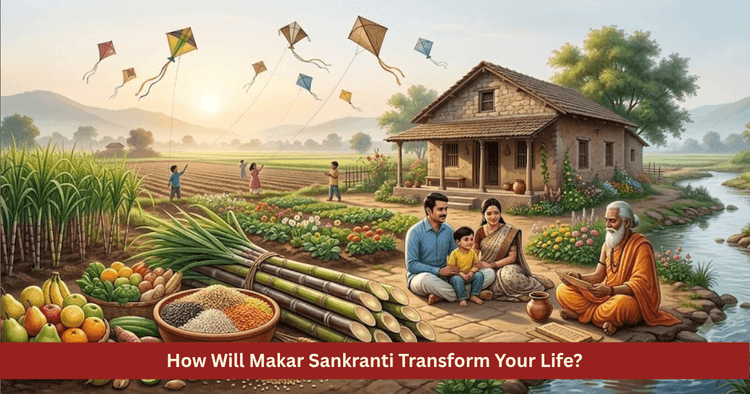
Table of Contents
Astronomical and Liturgical Nature of Makar Sankranti
According to the classical doctrines of Vedic astronomical computation, Makar Sankranti stands as the most critical, luminous and transformative celestial festival of the entire solar cycle. In classical panchangic reckoning, when the sovereign celestial ruler Lord Surya Narayana concludes his monthly transit through the fiery Martian sign of Sagittarius and steps across the boundary into the cardinal earth sign of Capricorn (Makara), owned by his son Saturn, that sacred transition is revered as 'Makar Sankranti'. Reckoned through the Gregorian solar calendar, this magnificent festival is observed annually across the globe on January 14 or 15.
This planetary ingress is far more than a routine sign transition; it represents the monumental turning point where the Sun shifts from Dakshinayana to Uttarayana. In Sanatana metaphysics, Uttarayana is celebrated as the 'Daytime of the Gods' (Devayana), while Dakshinayana embodies the 'Nighttime of the Gods' (Pitrayana). With the advent of Makar Sankranti, the month long restrictive window of Kharmas formally dissolves, sounding the cosmic trumpet for the resumption of sacred matrimonial rites, housewarmings, tonsures and commercial inaugurations across human society.
| Calendrical & Cosmic Dimension | Classical Injunction & Astrological Reality | Manifest Terrestrial & Spiritual Fruit |
|---|---|---|
| Niyam | Vidhan | Vidhan |
| Name of the Ingress | Makar Sankranti (Ascension to Uttarayana) | The grandest cyclical transformation in the solar year |
| Solar Sign Transition | Ingress from Sagittarius into Capricorn | Sublime reconciliation of Sun and Saturn |
| Solstice Dynamic | Conclusion of Dakshinayana, dawn of Uttarayana | Commencement of the six month divine day of the gods |
| Dissolution of Kharmas | Formal conclusion of Dhanurmas restrictions | Resumption of worldly and spiritual auspicious sacraments |
| Elemental Harmonization | Fire Element (Sun) and Earth Element (Capricorn) | Infusion of stability, vital aura and practical energy |
| Sacred River Ablutions | Prayagraj Confluence, Gangasagar, Haridwar | Annihilation of accumulated past life sins, liberation |
| Prescribed Charitable Gifts | Black sesame, unrefined jaggery, copper, woolens | Pacification of Sun and Saturn flaws, inexhaustible merit |
| Nutritional Observance | Sesame sweets, jaggery confections, black lentil khichdi | Balancing internal digestive fire, soothing winter humors |
As the Sun embarks upon his northward journey, daylight hours across the northern hemisphere expand and winter nights recede. The soft, gentle sunlight of deep winter begins to reclaim its brilliance, infusing nature with revitalizing life force.
Solar Ingress into Uttarayana and the Sacred Vow of Bhishma Pitamaha
The Shanti Parva and Anushasana Parva of the Mahabharata preserve a glorious exposition regarding the metaphysical sanctity of Uttarayana. During the catastrophic war of Kurukshetra, when the supreme commander of the Kaurava forces, Bhishma Pitamaha, was felled by Arjuna's arrows and lay upon a bed of darts, he held the divine boon of self willed departure (Iccha Mrityu) gifted by his father King Shantanu. While he possessed the spiritual authority to abandon his physical frame immediately, he refused to depart while the Sun traversed the southern celestial path.
For fifty-eight long, agonizing days, the patriarch lay upon that bed of piercing iron tips, enduring physical agony to await the Sun's entry into Capricorn and the dawn of Uttarayana.
- The Transcendental Path of Liberation: In the Chandogya Upanishad and the eighth chapter of the Shrimad Bhagavad Gita, Lord Sri Krishna declares that enlightened souls departing the physical frame during the sacred path of fire, light, daytime, the waxing moon and the six months of Uttarayana attain Supreme Brahman directly, never returning to material bondage.
- The Pitru Path of Dakshinayana: Conversely, departure during Dakshinayana is linked to subtle ancestral realms where the departing jiva, shrouded in psychic smoke, remains tethered to cyclical rebirth.
- The Liberation of Bhishma: The moment the Sun crossed the celestial threshold of Capricorn on Makar Sankranti, Bhishma gathered his vital life breaths through yogic will, fixed his consciousness upon the four-armed transcendental form of Lord Krishna and pierced the crown aperture of his head, merging into eternity.
This immortal chronicle reminds humanity that mortal departure is not an arbitrary accident but the ultimate spiritual transition of human consciousness. Makar Sankranti inspires human beings to steer personal awareness away from worldly darkness toward spiritual illumination and liberation.
Cosmic Reconciliation: The Sacred Meeting of Sun and Saturn
In classical Vedic astrology, the relationship between the Sun and Saturn is celebrated as one of the most enigmatic allegories of cosmic polarity. The Sun represents radiant light, soul consciousness, sovereign leadership and royalty, whereas Saturn embodies darkness, detachment, grueling penance and karmic justice. Being the son of Chhaya (the shadowy emanation), Saturn carries an ancient ideological tension with his radiant father.
Yet, Makar Sankranti provides the supreme scriptural model for transforming ancestral friction into harmonious love and filial reconciliation.
| Cosmic Relationship Dimension | Mythological Foundation | Metaphysical Manifestation on Sankranti |
|---|---|---|
| Niyam | Vidhan | Vidhan |
| Meeting of Father and Son | Sun enters the home of Saturn (Capricorn) | Surrender of ego, triumph of familial harmony |
| Veneration with Black Sesame | Saturn worshipping his father with black sesame | Neutralization of Saturn's disciplinary maleficence |
| The Solar Blessing | Sun blessing Saturn's realm with prosperity | Infusion of divine vitality into Capricorn |
| Astrological Integration | Convergence of Atma (Sun) and Karma (Saturn) | Attainment of spiritual wisdom through detached action |
According to the Srimad Devi Bhagavatam and the Bhavishya Purana, Lord Surya visited the household of his son Saturn, who was living in material austerity. Possessing no lavish worldly treasures to welcome his radiant father, Saturn gathered black sesame seeds and offered them with pure devotion. The Sun God was deeply moved by his son's humble sincerity, blessing Saturn that whenever the solar disc enters the realm of Capricorn, that dwelling will overflow with inexhaustible wealth, peace and spiritual stature.
Consequently, presenting black sesame seeds to the Sun and distributing sesame charity on Makar Sankranti pacifies both solar and Saturnian afflictions simultaneously. This sacred festival reminds humanity that regardless of past family grievances, humble respect and service can heal long standing wounds.
Consecrated Timings: Punya Kala, Mahapunya Kala and Sacred Rituals
The liturgical hours of Makar Sankranti are delineated with scientific precision. The exact moment the solar center crosses the boundary of Sagittarius to touch zero degrees of Capricorn is designated as the 'Sankranti Sparsha Kala'. According to the Nirnaya Sindhu and Dharma Sindhu, the temporal window flanking this moment is classified into Punya Kala (Auspicious Time) and Mahapunya Kala (Supreme Auspicious Time).
Any spiritual austerity, scriptural chanting, sacred bath or charitable deed executed during this window yields merits magnified manifold compared to ordinary days.
| Temporal Division | Classical Scriptural Window | Commended Spiritual Deeds & Fruit |
|---|---|---|
| Niyam | Vidhan | Vidhan |
| Sankranti Ingress Moment | Exact astronomical entry into Capricorn | Silent contemplation, mental resolve, meditation |
| Mahapunya Kala | Approximately two hours around ingress | Sacred river ablutions, copper and gold charity |
| Standard Punya Kala | Entire sunrise to sunset on festival day | Sesame jaggery charity, feeding the poor, ancestral rites |
| Invariable Night Rule | When ingress occurs after sunset | Punya Kala observed during dawn hours of following morning |
Step-by-Step Methodology for Sacred Bathing and Charity
- Ablution in Consecrated Waters: Rise before dawn on Makar Sankranti to bathe in a sacred river, especially at the Triveni Sangam, Ganga, Yamuna, Godavari or Narmada. If river access is impossible, mix consecrated Ganga water, black sesame seeds and kusha grass into domestic bathwater at home.
- Application of Sesame Paste: Before bathing, perform full-body Abhyanga using unrefined sesame oil or crushed sesame paste. Scriptures prescribe six distinct applications of sesame on this day: bathing in sesame water, applying sesame paste, offering sesame into fire, drinking sesame-infused water, eating sesame foods and donating sesame seeds.
- Solar Oblation with Copper Pitcher: Following the bath, fill an unalloyed copper pitcher with clean water, red sandalwood, unbroken rice, vermilion, fresh crimson flowers, unrefined jaggery and sesame seeds. Face the eastern horizon and offer water in three streams to the rising Sun.
- The Sacred Khichdi Charity: Prepare wholesome, raw culinary gifts consisting of newly harvested rice, split black lentils, rock salt, golden cow ghee, turmeric and seasonal vegetables, presenting them to a virtuous scholar or destitute wanderer.
Charity rendered on this day dissolves poverty across generations, anchoring the perpetual grace of Mother Annapurna within the domestic dwelling.
Gangasagar Pilgrimage and the Legend of King Bhagiratha
The spiritual glory of Makar Sankranti is tied to Gangasagar, one of the supreme pilgrimage sites of Bharat. A traditional folk proverb reflects its sanctity: "All other pilgrimages may be visited repeatedly but Gangasagar needs to be visited only once." Located in West Bengal where the holy Ganga concludes her long terrestrial journey to merge into the Bay of Bengal, this confluence is venerated as an open portal to liberation.
Mythological annals record that sixty thousand sons of the solar king Sagara were reduced to ashes by the fiery wrath of sage Kapila after disturbing his meditation while searching for a lost sacrificial horse. Their disembodied spirits remained trapped in lower realms, unable to attain peace unless the celestial river Ganga descended from heaven to sanctify their ashes.
- The Penance of Bhagiratha: King Bhagiratha, the great-grandson of Sagara, undertook intense penance to propitiate Lord Brahma and Lord Shiva, bringing the celestial Ganga down to earth.
- The Hermitage of Sage Kapila: Bhagiratha guided the river upon his golden chariot, with Ganga following his path. On the sacred day of Makar Sankranti, Ganga reached the hermitage of sage Kapila, washing over the ashes of the sixty thousand princes.
- Liberation of Sixty Thousand Ancestors: The moment the sacred waters touched their ashes, the curse dissolved and the ancestors assumed luminous spiritual bodies, ascending directly to Vaikuntha.
To commemorate this historical redemption, millions of pilgrims gather at Gangasagar on Makar Sankranti to take a sacred dip. Performing ancestral tarpana at this confluence on this date liberates twenty-one generations of ancestors, freeing the seeker from the cycle of mortal rebirth.
The Ayurvedic and Environmental Science of Sesame, Jaggery and Kites
Makar Sankranti is not merely a day of spiritual contemplation; it is an integration of preventive medicine, seasonal nutrition and community celebration. The foods and outdoor traditions practiced on this day are grounded in physiological wisdom.
| Cultural Tradition & Practice | Scientific & Ayurvedic Mechanism | Tangible Physical & Mental Health Benefits |
|---|---|---|
| Niyam | Vidhan | Vidhan |
| Consumption of Sesame & Jaggery | High bioavailable calcium and iron | Fortified bone density, Vata pacification, thermal energy |
| Hot Black Lentil Khichdi | Balanced protein, complex carbohydrates, spices | Digestive regulation, gentle intestinal detox, nutrition |
| Open-Air Kite Flying | Prolonged morning exposure to sunlight | Cutaneous synthesis of vitamin D, ocular clarity, mood lift |
| Communal Gatherings & Feasts | Social engagement breaking winter isolation | Dissolution of seasonal depression, community harmony |
During deep winter, dropping temperatures deplete moisture from human skin and stiffen skeletal joints. The natural fatty acids in sesame seeds nourish internal tissues, while dark jaggery enhances blood hemoglobin, regulating core body temperature.
Consuming khichdi prepared from split black lentils pacifies Saturn, as black lentils are his planetary grain. Flying kites draws people outdoors into the morning sunlight for hours. This sun exposure stimulates the synthesis of natural vitamin D, purifies the skin of seasonal microbes, accelerates peripheral blood circulation and banishes the winter blues.
Comprehensive Astrological Impact on All 12 Zodiac Signs
The ingress of the Sun into Capricorn brings significant energetic shifts across the twelve zodiac signs. For some, this transit brings professional promotion and material wealth; for others, it calls for introspection, patience and careful health management.
1. Aries (Mesha)
The Sun enters your tenth house of career and professional authority, where he attains directional strength (Digbala). This transit brings career promotions, new professional responsibilities, administrative victories and renewed societal prestige. Paternal relationships will flourish.
2. Taurus (Vrishabha)
The Sun transits your ninth house of fortune, righteousness and long-distance travel. Fortune supports your endeavors. Opportunities for spiritual pilgrimages and higher learning will materialize. Maintain careful attention toward your father's physical health.
3. Gemini (Mithuna)
The Sun moves into your eighth house of longevity, sudden transformations and esoteric sciences. Exercise caution while operating vehicles and avoid impulsive financial speculation. This period is fruitful for research, metaphysical study and deep spiritual meditation.
4. Cancer (Karka)
The Sun enters your seventh house of marital partnerships and business contracts. Guard against ego clashes and abrasive language in your marriage. New commercial contracts may emerge but scrutinize legal documents thoroughly before signing.
5. Leo (Simha)
As your sign ruler, the Sun enters your sixth house of health, debts and competitive challenges. This is an empowering transit. Hidden adversaries will be silenced, legal disputes will resolve in your favor and stubborn health ailments will clear.
6. Virgo (Kanya)
The Sun transits your fifth house of intellect, learning and progeny. Students will discover enhanced concentration and mental clarity. Avoid arrogance in personal relationships. Favorable investment opportunities will emerge, securing long-term financial growth.
7. Libra (Tula)
The Sun moves into your fourth house of domestic environment, real estate and maternal well-being. Guard against domestic friction and attend to your mother's health. Opportunities to acquire real estate, land or vehicles will arise alongside professional duties.
8. Scorpio (Vrishchika)
The Sun enters your third house of courage, initiative and siblings. This transit brings a surge in confidence and dynamic drive. Strategic initiatives taken now will yield lasting success, supported by siblings and close associates.
9. Sagittarius (Dhanu)
Leaving your sign, the Sun enters your second house of wealth, speech and family resources. Your speech carries commanding authority, yet you must avoid abrasive language. Accumulated savings will grow and long-standing ancestral property disputes will resolve peacefully.
10. Capricorn (Makara)
The Sun enters your first house of physical self and core personality. Your aura gains radiant vitality and natural leadership capability. Guard against seasonal headaches or fluctuating blood pressure and maintain mutual respect within your marriage.
11. Aquarius (Kumbha)
The Sun moves into your twelfth house of expenditure, foreign connections and spiritual isolation. Budget mindfully to avoid unbudgeted expenses. Commercial ventures linked to foreign enterprises or distant lands will flourish. Protect ocular health.
12. Pisces (Meena)
The Sun illuminates your eleventh house of income, social networks and fulfillment of desires. This transit brings a golden phase for financial expansion. Stalled funds will be recovered, new revenue streams will open and social alliances will flourish.
Powerful Astrological Remedies and Festive Charities
Executing authentic Vedic remedies on Makar Sankranti dissolves karmic roadblocks, inviting peace, longevity and steady prosperity into the household.
- Charity of Copper and Jaggery: To elevate the Sun, donate natural dark jaggery and a clean copper vessel to a sacred temple or deserving wanderer.
- Distribution of Black Sesame Khichdi: To soothe the trials of Saturn's Sade Sati or Dhaiya, distribute warm khichdi prepared from split black lentils and black sesame seeds to the hungry.
- Serving Mother Cow: Feed fresh green grass, dark jaggery and sesame sweets to a sacred cow with your own hands on this day to receive the blessings of thirty-three categories of celestial deities.
- Chanting the Aditya Hridaya Stotram: Sitting before the morning sun, recite the sacred Aditya Hridaya Stotram from the Valmiki Ramayana three times to dismantle administrative roadblocks and legal anxieties.
- Nocturnal Sesame Lamp for Ancestors: Lighting an unrefined sesame oil lamp at dusk near an ancient Peepal tree or beside a flowing river satisfies departed ancestors, ensuring generational continuity.
The Awakening of New Life and the Eternal Message of Sankranti
Makar Sankranti is far more than an annual festive celebration; it is a cosmic initiation into higher consciousness. This festival reminds humanity that just as the Sun pierces through winter darkness to embark upon his northward journey, human beings must discard ignorance, sloth and petty selfishness, stepping forward into the light of knowledge, righteousness and service.
Amidst the winter freeze, the Sun's entry into Capricorn kindles a flame of hope within human hearts. It whispers the eternal truth that the darkest trials are temporary and the dawn of renewal is inevitable. Let us take a sacred dip in holy waters on this blessed day of Makar Sankranti, cleanse our hearts of lingering bitterness, serve the underprivileged with open hands and absorb the divine radiance of Lord Surya Narayana into our lives.
FAQ
Why is Makar Sankranti observed specifically on January 14 or 15 each year? Unlike lunar festivals, Makar Sankranti is determined by solar transit; the Sun's astronomical entry into Capricorn consistently aligns with January 14 or 15.
What is the deeper reason for eating sesame and jaggery on this festival? Sesame and jaggery are warming foods that balance Vata and Kapha during winter, while spiritually harmonizing the planetary energies of the Sun and Saturn.
Why did Bhishma Pitamaha wait specifically for Uttarayana before passing away? Classical scriptures declare that departing the physical body during Uttarayana liberates the soul from the cycle of mortal rebirth, granting direct entry into the spiritual realm.
What is the historical and spiritual glory of Gangasagar on Makar Sankranti? On this date, holy Ganga reached sage Kapila's ashram to liberate sixty thousand cursed princes of King Sagara; bathing here brings ancestral peace and spiritual freedom.
When does Kharmas formally conclude, allowing auspicious ceremonies to resume? Kharmas ends the moment the Sun enters Capricorn on Makar Sankranti, opening the astrological window for weddings, housewarmings and sacred ceremonies.
Get your accurate Kundali
Generate KundaliDid you like it?
Author

Aparna Patni (63)
Experience: 20
Consults About: Family Planning, Career
Clients In: Punjab, Haryana, Delhi
Share this article with friends and family
WELCOME TO
ZODIAQ
Right Decisions at the right time with ZODIAQ
