How To Pacify Vata Dosha During Paush Month?
By Pt. Nilesh Sharma
Joint Pain, Arthritis, Stroke Prevention, Medicated Oils And Decoctions
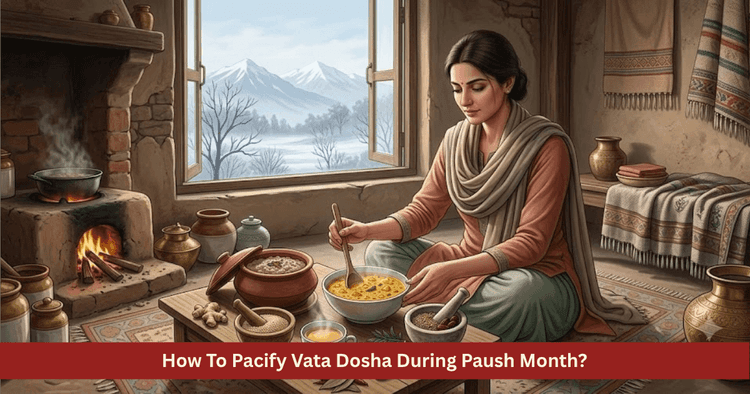
Table of Contents
Ayurvedic Principles and Seasonal Dynamics of Vata Aggravation in Paush
According to the classical doctrines of Sanatana cosmological computation and the foundational principles of Ayurveda, the sacred month of Paush (spanning mid-December through mid-January) marks a critical seasonal junction between the conclusion of early winter (Hemanta) and the onset of deep winter (Shishira). During this window, the terrestrial environment is subjected to severe cold waves, dense fog, atmospheric frost and biting northwesterly winds. In the Sutrasthana of the Charaka Samhita and the Ashtanga Hridayam of Vagbhata, this period is recognized as the time of peak aggravation and accumulation of 'Vata Dosha'-the primary and most volatile of the three bodily humors. Vata is composed of the Air (Vayu) and Space (Akasha) elements, carrying intrinsic qualities that are dry (Ruksha), cold (Sheeta), light (Laghu), subtle (Sukshma) and mobile (Chala).
When external ambient temperatures drop sharply and atmospheric dryness peaks, the foundational Ayurvedic law of macrocosm-microcosm affinity ('Sarvada Sarvabhavanam Samanyam Vriddhi Karanam') causes internal biological Vata to surge. This aggravated Vata induces peripheral vasoconstriction, depletes natural subcutaneous lipids and desiccates the unctuous synovial fluid (Shleshaka Kapha) lubricating skeletal joints. For individuals above forty-five years of age-who have naturally transitioned into the Vata-predominant phase of the human lifespan-this humoral imbalance can trigger severe, chronic debilities if left unchecked.
| Ayurvedic & Astrological Dimension | Classical Status & Description | Manifest Physical & Systemic Pathology |
|---|---|---|
| Seasonal Transition | Hemanta departure to Shishira onset | Extreme atmospheric cold, dryness, piercing wind |
| Primary Provoked Humor | Peak Vata aggravation, secondary Kapha build-up | Joint agony, synovial fluid loss, neural contraction |
| Vulnerable Demographics | Adults aged 45 and above | Natural age-related tissue depletion and Vata rise |
| Astrological Governor | Lord Shani (Saturn, sovereign ruler of air element) | Skeletal frailty, lower limb pain, stroke vulnerability |
| Prescribed Medicinal Oils | Nirgundi, Mahanarayan, Dashamula and Sesame oil | Joint nourishment, Vata pacification, nerve tonification |
| Therapeutic Herbal Decoction | Dry ginger, fenugreek seeds, carom seeds, cinnamon | Digesting toxic Ama, clearing channels, internal warmth |
| Core Worldly Fruition | Protection against arthritis, sciatica and paralysis | Preserving ojas, smooth blood circulation, longevity |
If provoked Vata remains unaddressed during deep winter, it does not stop at joint inflammation; it constricts major arterial pathways and elevates systemic blood pressure, creating conditions that can precipitate ischemic strokes and facial palsy.
Pathophysiology of Winter Vata Disorders: Arthritis, Sciatica and Strokes
Classical Ayurveda categorizes eighty distinct systemic debilities caused exclusively by aggravated Vata (Nanatmaja Vata Vyadhi). When cold winter drafts contact the physical frame, Vata combines with Rakta (blood) and Majja (marrow) tissues, lodging within structural weak points. This manifests through two distinct pathological pathways: channel-obstructive Vata (Avaranajanya) and tissue-depleting Vata (Dhatukshayajanya).
- Osteoarthritis (Sandhivata): Severe environmental cold desiccates the natural lubricating moisture within joint capsules. As articular cartilage wears thin, exposed bone surfaces grind against one another, causing sharp pain, inflammatory swelling and audible crepitus in the knees, hips and fingers.
- Rheumatoid Arthritis (Amavata): When sluggish winter metabolism leaves ingested food incompletely digested, toxic metabolic residues ('Ama') form in the gut. Circulating Vata carries this toxic sludge into joint junctions, triggering morning stiffness, burning sensations and systemic joint inflammation.
- Sciatica (Gridhrasi): Low atmospheric temperatures aggravate compression along the lumbar spine (L4-S1 nerve roots). Sharp, electric-shock pain shoots from the gluteal region down the back of the leg into the heel, severely limiting mobility.
- Ischemic Strokes and Facial Palsy (Pakshaghata & Ardita): Between 4:00 AM and 7:00 AM in deep winter, peripheral blood vessels undergo peak constriction. When aggravated Vata obstructs cerebral arteries, localized oxygen starvation can cause acute facial paralysis (Bell's palsy) or full-side hemiplegia (stroke).
- Frozen Shoulder (Apabahuka): The accumulation of dry Vata and congealed Kapha within the glenohumeral joint capsule causes chronic inflammation in tendons, severely restricting rotational arm movements.
Astrological Dynamics: The Influence of Saturn and the 45-Year Threshold
In classical Parashari astrology, Lord Shani (Saturn) governs the bodily air humor, skeletal joints, neuromuscular pathways, teeth and chronic degenerative diseases. Saturn is naturally cold, slow-moving, dry and astringent. In the cosmic chart (Kalapurusha), Saturn's signs Capricorn and Aquarius preside over the knees, calves and ankles.
When natal Saturn is debilitated in Aries, afflicted by the Sun or Mars or transiting difficult houses during Sade Sati or Dhaiya, the native faces an elevated risk of severe Vata flaring during Paush.
| Natal Astrological Placement | Manifest Physical Debility | Prescribed Paush Month Remedy |
|---|---|---|
| Debilitated Saturn in Aries | Cartilage degradation, chronic knee pain, stiffness | Saturday sesame oil charity, lighting evening Peepal lamps |
| Saturn-Rahu Conjunction (Shrapit) | Tremors, nerve desiccation, paralysis vulnerability | Gifting dual-toned blankets, chanting Mahamrityunjaya |
| Saturn in 6th or 8th House | Severe rheumatic arthritis, spinal column degeneration | Distributing black lentil khichdi, Nirgundi oil massage |
| Native Age Exceeding 45 Years | Natural depletion of bone minerals and synovial fluid | Consuming daily sesame-jaggery, morning warm water ushapan |
The stage of life beyond forty-five years is classically recognized as the Vata-predominant phase of adulthood. During this period, cellular regeneration slows and natural bone density declines. Individuals in this age group must take proactive care of their diet and daily routine during the winter freeze of Paush.
Therapeutic Oil Massage (Abhyanga): Nirgundi, Mahanarayan and Sesame
In classical Ayurveda, the supreme therapy to pacify aggravated Vata is 'Snehana' (unctuous oil therapy through Abhyanga). Sage Vagbhata notes that just as a dry, brittle wooden branch becomes supple and resistant to snapping when nourished with oil, an aging, stiff human body becomes resilient, flexible and free from pain through regular warm oil massage.
Three classical herbal formulations are praised for pacifying winter Vata:
1. Nirgundi Oil (Vitex negundo)
Nirgundi is celebrated in Ayurvedic pharmacology as an exceptional anti-inflammatory (Shothahara) and natural analgesic (Shulaprashamana).
- The fresh botanical juice of Nirgundi leaves is decocted into a base of pure unrefined sesame oil.
- It penetrates deep into soft tissues, soothing inflammation along peripheral nerves and easing deep-seated aches.
- Massaging warm Nirgundi oil over the lower back, hips and knees for fifteen minutes relieves the pain of sciatica, spondylitis and osteoarthritis.
2. Mahanarayan Oil
This classical formulation combines over fifty botanicals-including Dashamula, Ashwagandha, Shatavari, Bala and Devadaru-processed in raw cow milk and pure sesame oil.
- It nourishes bone marrow, strengthens skeletal junctions and supports cartilage preservation.
- For individuals recovering from strokes or nerve damage, gentle full-body massage with Mahanarayan oil helps restore circulation to numb or weakened limbs.
3. Pure Cold-Pressed Black Sesame Oil (Tila Taila)
When specialized medicated oils are unavailable, pure virgin sesame oil remains nature's foundational remedy for Vata imbalances.
- Sesame oil possesses a subtle, penetrating quality (Sukshma Guna), allowing it to travel through epidermal layers into deeper tissues.
- Rich in bioavailable magnesium, calcium and linoleic acid, it relieves muscle tightness and protects joints against winter stiffness.
| Therapeutic Oil | Core Ingredients & Energetic Attributes | Specific Clinical Application | Classical Method of Application |
|---|---|---|---|
| Nirgundi Oil | Vitex negundo extract, sesame oil, penetrating | Sciatica, spondylitis, inflammatory joint pain | Warm massage for 15 mins, followed by dry heat |
| Mahanarayan Oil | Dashamula, Ashwagandha, cow milk, unctuous | Stroke recovery, severe nerve weakness, arthritis | Full spine and limb massage morning and evening |
| Pure Sesame Oil | Raw black sesame lipids, heating, nourishing | Generalized body stiffness, dry skin, muscle cramps | Daily full-body massage 30 mins before warm bath |
Digestive Decoctions: Dry Ginger, Fenugreek, Carom and Cinnamon
External massage must be matched with internal digestive care. Clearing the digestive tract of toxic Ama and sustaining a strong metabolic fire (Jatharagni) is essential to resolving Vata imbalances. A warm herbal decoction prepared with dry ginger, fenugreek and carom seeds acts as a natural restorative for the gastrointestinal system.
Preparation of the Classical Anti-Vata Decoction
- Ingredients:
- Sunthi powder (Dry ginger) - 1/2 teaspoon
- Whole fenugreek seeds (Methi dana) - 1 teaspoon
- Carom seeds (Ajwain) - 1/2 teaspoon
- Cinnamon bark (Dalchini) - 1 small stick
- Crushed black peppercorns - 2 corns
- A pinch of rock salt (Saindhava) or a small piece of dark jaggery
- Method: Combine all ingredients in 250 mL of clean drinking water in a stainless steel or clay pot. Simmer gently over low heat until the liquid reduces by half (to approximately 100 mL). Strain and sip the warm tea slowly.
- Optimal Timing: Drink this decoction on an empty stomach in the morning after bowel elimination or in the late afternoon between 5:00 PM and 6:00 PM.
Therapeutic Properties of the Ingredients
- Dry Ginger (Sunthi): Revered as 'Vishwabheshaja' (the universal medicine), dry ginger digests systemic Ama, clears arterial pathways and supports peripheral circulation without overheating the blood.
- Fenugreek Seeds (Methi): Packed with natural alkaloids and anti-inflammatory compounds, fenugreek helps reduce serum uric acid and relieves joint stiffness.
- Carom Seeds (Ajwain): High in natural thymol, ajwain alleviates gas, abdominal distension and muscular cramps.
- Cinnamon (Dalchini): Cinnamon supports healthy microvascular circulation, helps maintain arterial flexibility and provides sustained core warmth during cold weather.
Dietary Code for Vata Disorders: What to Favor and What to Avoid
For individuals managing winter joint pain and Vata sensitivity, dietary choices can either soothe or aggravate symptoms. Consuming dry or cold foods can quickly intensify pain.
| Dietary Category | Prescribed Foods (Pathya) | Strictly Contraindicated Foods (Apathya) |
|---|---|---|
| Whole Grains | Aged wheat, pearl millet (Bajra), maize, warm rice | Refined flour (Maida), stale breads, deep-fried snacks |
| Legumes & Pulses | Split yellow moong dal, whole red lentils with ghee | Chickpeas, kidney beans (Rajma), dry white peas, night urad |
| Vegetables | Bathua, fresh fenugreek greens, drumstick, parwal | Raw radish, eggplant, raw cauliflower, cabbage, okra |
| Healthy Fats | Pure cow ghee, unrefined sesame oil, mustard oil | Refined seed oils, hydrogenated fats, commercial margarine |
| Beverages | Warm water, dry ginger milk, garlic milk (Ksheerapaka) | Chilled refrigerated water, carbonated sodas, nighttime curd |
| Tastes (Rasas) | Sweet (Madhura), Sour (Amla) and Salty (Lavana) | Excessive Pungent (Katu), Bitter (Tikta), Astringent (Kashaya) |
Garlic is a valued botanical food for Vata conditions. Boiling two to three crushed cloves of fresh garlic in milk (Rasona Ksheerapaka) and consuming it warm in the morning helps protect the cardiovascular system and eases sciatic nerve pain.
Daily Regimen: Preventing Morning Strokes and Winter Cold Shock
Cold drafts entering unprotected doorways or sudden exposure to freezing morning air can provoke severe vascular contractions. Individuals prone to Vata sensitivity should observe these protective daily routines:
- Morning Wake-Up Caution: Between 4:00 AM and 7:00 AM, avoid stepping out of a warm bed directly onto freezing bare floors. Move your fingers, wrists, toes and ankles while still under blankets for two minutes to stimulate circulation before standing.
- Insulate the Head, Ears and Soles: The body loses significant thermal energy through the head and ears. Wear a woolen cap or scarf covering the ears and put on warm socks whenever walking outdoors in the morning fog.
- Warm Compress Therapy (Swedana): After massaging affected joints with warm oil, apply gentle heat using a hot water bottle or a heated sandbag compress. This opens cutaneous pores and helps the medicinal oil penetrate into deeper tissues.
- Regular Morning Sun Exposure: Sit with your back facing the morning sun for at least twenty minutes between 8:00 AM and 10:00 AM. Gentle infrared warmth soothes the spinal column and supports peripheral blood flow.
- Avoid Daytime Napping: Sleeping during the afternoon promotes sluggish digestion and encourages the buildup of toxic Ama, which can worsen joint stiffness.
Astrological Remedies for Pacifying Saturn and Vata Afflictions
Balancing Vata-related physical discomfort is supported by harmonizing the cosmic energies of Lord Shani (Saturn) during the month of Paush:
- The Shadow Vessel Donation (Chhaya Patra Dana): On Saturdays, fill a small iron or bronze bowl with pure mustard oil, dropping in a copper coin. Gaze into the oil to view your reflection clearly, praying for the alleviation of bodily illness. Present this oil to a traditional temple or an impoverished individual to help deflect acute crises.
- Feeding Creatures: Offer a fresh flatbread brushed with mustard oil and dark jaggery to a black dog and scatter whole pearl millet grains for birds. This traditional service brings peace to the nervous system.
- Mahamrityunjaya Mantra Chanting: Kindle a four-faced sesame oil lamp beneath a sacred Peepal tree at dusk, reciting one round of the Mahamrityunjaya Mantra on a Rudraksha rosary to cultivate vitality and longevity.
- Charity to the Disabled and Vulnerable: Visit an elder care home or charitable ward on a Saturday to distribute warm woolen blankets, insulated socks and supportive herbal ointments to those in need.
Living in Harmony with Nature's Rhythms
The cold of Paush invites us to slow down and align with natural cycles. Just as trees shed their leaves in winter to draw their life sap down into protective roots, human beings must shift toward an unctuous, warm and grounded daily routine during this season.
When we practice warm oil Abhyanga, enjoy warming herbal decoctions of dry ginger and fenugreek and keep our minds calm through mindful reflection, the winter cold cannot penetrate our natural defenses.
An individual who integrates these Ayurvedic and astrological guidelines remains protected against winter joint pain, sciatica and severe circulatory disruptions. The body stays resilient, the mind remains peaceful and life is sustained by steady health and vitality through the winter season.
FAQ
Why are adults over forty-five years of age more vulnerable to Vata disorders in Paush? After forty-five, the body naturally enters the Vata phase of life, characterized by lower bone density and thinning synovial joint fluid, which severe winter cold exacerbates.
What is the proper method for using Nirgundi oil to relieve sciatica and arthritis? Warm the Nirgundi oil gently, massage it over the affected joints and lumbar spine for fifteen minutes and follow with a warm compress using a hot water bottle.
How does a decoction of dry ginger, fenugreek and carom seeds help the body in winter? It digests toxic metabolic residues (Ama), lowers serum uric acid, stimulates sluggish circulation and eases intestinal gas and muscle cramps.
Why is the risk of strokes and facial palsy elevated between 4:00 AM and 7:00 AM in winter? Peripheral blood vessels constrict sharply in early morning cold; sudden exposure to freezing air can compromise cerebral blood flow, elevating the risk of stroke.
What astrological remedy helps pacify severe Saturn-induced joint and nerve pain? Perform the Chhaya Patra Dana on Saturdays, donate warm woolen blankets and black sesame to the destitute and chant the Mahamrityunjaya Mantra before a sesame oil lamp.
Get your accurate Kundali
Generate KundaliDid you like it?
Author

Pt. Nilesh Sharma (63)
Experience: 20
Consults About: Family Planning, Career
Clients In: Punjab, Haryana, Delhi
Share this article with friends and family
WELCOME TO
ZODIAQ
Right Decisions at the right time with ZODIAQ
