What Is The Significance Of Paush Bada Mahotsav?
By Pt. Abhishek Sharma
Rajasthan Folk Lore, 16 Spices, Moong Dal Halwa And Social Harmony
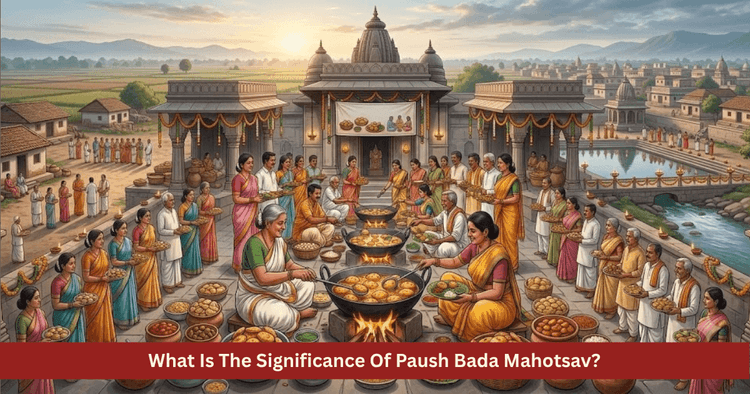
Table of Contents
Cultural Foundations and Folk Heritage of Paush Bada Mahotsav
According to the classical doctrines of Sanatana cosmological computation, the sacred month of Paush marks the onset of intense cold, dense fog and bone-chilling northwesterly breezes across the Indian subcontinent. Amidst these severe winter conditions, traditional shrines, domestic courtyards and socio-religious institutions across Rajasthan, Uttar Pradesh, Madhya Pradesh and Haryana celebrate a distinctive, compassionate and community-centered festival known as 'Paush Bada Mahotsav' or 'Paush Bada Prasadi'. This observance is far more than a routine temple feast; it represents the living embodiment of ancient seasonal nutrition, community equality, universal food charity and humble devotional service.
In the historical city of Jaipur, Rajasthan, Paush Bada Mahotsav assumes the grandeur of a magnificent spiritual fair. Across prominent sacred abodes-including the revered temple of Lord Sri Govind Dev Ji, Khole Ke Hanuman Ji, Chandpole Parwate Hanuman Ji, Moti Dungri Ganesh Ji and the Shila Mata shrine-large-scale public feasts are organized continuously from the waning to the waxing fortnights of Paush. Hundreds of thousands of devotees gather daily to receive this hot, unctuous and energizing consecrated food offering presented to the Divine.
| Cultural & Religious Dimension | Traditional Framework & Description | Practical & Metaphysical Influence |
|---|---|---|
| Primary Calendar Window | Entire month of Paush (Mid-December to Mid-January) | Overcoming winter sluggishness, civic engagement |
| Prominent Geographic Sphere | Rajasthan (Jaipur, Shekhawati, Marwar), UP, MP | Folk solidarity, community kinship, selfless service |
| Presiding Sovereign Deities | Sankat Mochan Lord Hanuman & Lord Sri Krishna | Freedom from fear, radiant vitality, physical stamina |
| Core Consecrated Offerings | Moong-Moth fritters, moong halwa, pooris, spiced curries | Balancing bodily humors, delivering dense bioavailable protein |
| Essential Digestive Spices | Fennel seeds, coriander, black pepper, dry ginger, asafoetida | Igniting digestive fire, clearing phlegm, easy digestion |
| Foundational Social Mission | Communal floor dining, dissolving social divides | Social harmony, universal hospitality, selfless seva |
| Ecological Harmony | Biodegradable broadleaf plates (pattal-dona) | Environmental preservation, zero-plastic sustainability |
This festival affirms that devotion is never restricted to the inner sanctum of a temple. When spiritual faith manifests as piping hot, wholesome nutrition served to the most vulnerable members of society, it transforms into direct worship of the Divine.
Historical Origins and Devotional Traditions of the Feast
The historical emergence of Paush Bada Mahotsav is connected to the devotional bhakti movement, royal patronage and the temple traditions of Rajasthan. In centuries past, as the arid expanses of Rajasthan were chilled by dry continental cold waves, ruling monarchs, community leaders and Vaishnava saints instituted organized public food distributions to safeguard public health and ensure proper seasonal nutrition.
Tradition records that since the founding of Jaipur, the royal court of Lord Govind Dev Ji observed the practice of offering warming culinary delicacies to the deity during Paush to shield the divine presence from the severe winter chill.
- Warming Offerings for the Divine: Within the Pushtimarg and Nimbarka traditions of Vaishnavism, the deity is worshipped with tender affection, as a beloved child or cherished master. To protect the deity from the biting winter chill, idols are adorned in silk and woolen vestments, portable charcoal hearths are placed near the sanctum and the daily menu emphasizes warming, unctuous and fortifying ingredients.
- The Sovereign Grace of Lord Hanuman: Lord Hanuman is revered as the son of the wind, the living protector of Kali Yuga and the embodiment of physical and spiritual strength. In northern shrines, offering deep-fried savory fritters (badas) to Lord Hanuman during Paush became an established tradition. Badas prepared from pulses resonate with the grounding earth and martial Mars energies, fortifying human physiology.
- The Historic Legacy of Khole Ke Hanuman Ji: Nestled within the rocky hills of Laxman Dungri along the Jaipur-Delhi highway, the historic Khole Ke Hanuman Ji shrine, revitalized by Pandit Radhelal Choubey, elevated Paush Bada Mahotsav into a globally renowned community festival. Tonnes of spiced pulse fritters are prepared here in a single day, served freely to hundreds of thousands seated side by side on floor mats, transcending social divisions.
Thus, a liturgical practice that originated within temple kitchens spread into public courtyards and neighborhood gatherings, evolving into an enduring cultural celebration.
Culinary Alchemy and the Sixteen Spices of Paush Bada
The traditional Paush Bada is far more than an ordinary street snack; it is an Ayurvedic preparation designed to balance bodily humors. Its formulation requires strict cleanliness, traditional culinary skill and attention to medicinal properties.
The primary foundation of the batter consists of unpolished split green gram (moong dal) combined with moth beans (moth dal). Green gram is light, easily digestible and cooling, whereas moth beans are warming, dry and energizing. Blending these two legumes in balanced proportions creates an ideal dietary anchor for the winter freeze.
| Spice / Botanical Article | Ayurvedic Property & Energetic Potency | Systemic Physiological & Digestive Benefit |
|---|---|---|
| Coarsely Crushed Fennel | Sweet, bitter, digestive and cooling | Prevents abdominal heaviness, soothes intestinal walls |
| Whole Coriander Seeds | Cooling, diuretic, tridosha-balancing | Clears internal heat, gently removes metabolic waste |
| Coarse Black Pepper | Heating, penetrating and mucolytic | Protects respiratory pathways, breaks down winter phlegm |
| Ground Dry Ginger (Saunth) | Fiery, wind-pacifying and stimulating | Relieves joint stiffness, ignites internal digestive fire |
| Pure Asafoetida (Hing) | Hot, digestive and anti-flatulent | Neutralizes legume-induced gas, alleviates bloating |
| Crushed Whole Cloves | Sharp, antimicrobial and invigorating | Soothes throat inflammation, imparts sustained core warmth |
| Fresh Green Chili & Ginger | Stimulating, metabolic and carminative | Stimulates digestive enzymes, naturally sharpens appetite |
| Whole Cumin Seeds | Calming, carminative and aromatic | Soothes digestive distress, enhances overall flavor profile |
After soaking the legumes for hours, they are coarsely ground using traditional stone mills to retain a rustic texture. The coarse batter is folded with the spices, fresh green chilies, minced ginger and chopped coriander leaves. Dropped by hand into broad iron cauldrons filled with pure groundnut or mustard oil, the fritters are fried slowly until the exterior forms a crisp, golden crust while the interior remains tender and airy. These savory fritters are served hot alongside tangy mint-coriander chutney and spiced sweet tamarind-amchur reduction, enhancing flavor and digestion.
Rich Moong Dal Halwa and Traditional Accompaniments
A Paush Bada feast extends beyond savory pulse fritters; it is paired with rich Moong Dal Halwa, crisp unleavened wheat breads (pooris) and spiced potato curry. Sanatana culinary traditions emphasize balancing all six primary tastes (shad-rasa), harmonizing savory, piquant and sweet profiles.
Moong Dal Halwa: A Restorative Winter Confection
To balance the spicy notes of the fried fritters, a rich confection of split yellow lentils roasted in pure indigenous cow ghee is prepared.
- Washed moong dal is ground into a paste and roasted in heavy iron cauldrons over low heat with pure ghee for hours until it turns a deep golden brown.
- The roasted pulse is simmered with milk, solidified milk solids (khoya), strands of wild saffron, green cardamom and nuts (cashews, almonds and pistachios).
- This halwa provides sustained caloric energy to human tissues, supports bone mineral density and prevents winter dryness across mucous membranes.
Spiced Potato Curry and Crisp Pooris
Alongside the fritters, cooks prepare a thin, spiced potato and tomato curry tempered with asafoetida, cumin and fenugreek, served without onions or garlic. Accompanying this are hot, crisp whole wheat flatbreads folded with dried fenugreek leaves (kasoori methi). Served together on fresh broadleaf platters, this meal provides wholesome, balanced nourishment during the winter cold.
The Ayurvedic Science of Winter Nutrition and Digestive Fire
Classical treatises of Ayurveda, including the Charaka Samhita and the Ashtanga Hridayam of Vagbhata, note that during deep winter (Hemanta and Shishira), the cold atmosphere constricts cutaneous pores across human skin, preventing internal biological heat from dissipating. Consequently, this conserved heat gathers within the digestive tract, causing the internal metabolic fire (Jatharagni) to burn with exceptional intensity.
If human biology is deprived of dense, unctuous and protein-rich nutrition during this period, the intense digestive fire begins to consume bodily tissues, resulting in emaciation, dryness and aggravated wind disorders (Vata vyadhi).
- Abundant Bioavailable Protein: Moong and moth beans serve as accessible sources of plant-based protein. During cold weather, when muscles and tendons are vulnerable to winter fatigue, these legumes support tissue repair and structural strength.
- Pacifying Vata and Kapha Humors: The biting winter winds aggravate both dryness (Vata) and congestion (Kapha). Spices such as fennel, dry ginger, asafoetida and black pepper prevent mucus from settling in the bronchial passages while promoting healthy peripheral circulation.
- Sustained Caloric Warmth: Frying these foods in pure vegetable oils and roasting sweets in golden ghee provides the calories needed to sustain core body temperature around 37 degrees Celsius.
- Strengthening Gut Immunity: The combination of fresh ginger, coriander seeds and asafoetida supports a balanced gut microbiome, protecting against seasonal influenza, common colds and respiratory bugs.
Thus, traditional winter food practices reflect practical preventive medicine framed within community celebration.
Social Equality, Communal Dining and Selfless Service
The most enduring aspect of Paush Bada Mahotsav is its social framework. In a world often fractured by social divides, financial disparities and titles, Paush Bada Mahotsav brings people together on common ground.
Within open temple courtyards and public squares, artificial social boundaries dissolve.
- Equality upon the Dining Mat: Seated side by side upon woven floor runners (pangat), business leaders and humble manual laborers share the same space. Both receive identical broadleaf platters and are served the same consecrated food with equal care.
- Dissolving Personal Pride: Community leaders, scholars and officials set aside titles to carry serving buckets, ladle hot curries and hand out fritters to the seated crowd. This selfless service quiets the ego.
- Collective Community Effort: These large feasts rarely rely on a single patron; rather, neighborhood families, local merchants and volunteers contribute dal, oil, spices, ghee and labor according to their means.
- Ecological Sustainability: The use of single-use plastics or polystyrene is avoided. Meals are served on plates woven from the broad leaves of Palash (flame of the forest) or Sal trees, accompanied by unglazed clay cups that return naturally to the soil.
This festival reflects the timeless Vedic ideals of 'Vasudhaiva Kutumbakam' (the world is one family) and 'Sarve Bhavantu Sukhinah' (may all beings be happy), engaging communities in mutual care and shared celebration.
Historic Shrines of Jaipur: Khole Ke Hanuman Ji and Govind Dev Ji
The celebration of Paush Bada Mahotsav in Rajasthan is renowned for its scale and devotion, anchored by two prominent historical shrines in Jaipur:
1. Khole Ke Hanuman Ji Temple (Jaipur)
Set within the valleys of the Aravalli hills off the Jaipur-Delhi highway, the sprawling temple complex of Khole Ke Hanuman Ji hosts gatherings that draw visitors from across the region.
- Large kitchen pavilions house more than fifty monumental iron cauldrons where skilled cooks fry pulse fritters around the clock.
- Experienced cooks and hundreds of volunteers work together to grind lentils, blend spices and manage the frying stations.
- The valley seating areas accommodate more than ten thousand devotees at a time, sharing consecrated meals in organized floor rows.
- The festival balances large-scale hospitality with cleanliness, discipline and communal warmth.
2. Sri Govind Dev Ji Temple (City Palace, Jaipur)
At the spiritual heart of Jaipur, within the historic City Palace complex, the royal shrine of Lord Govind Dev Ji observes its grand 'Jhanki Paush Bada Mahotsav' on the twelfth lunar day of Paush or designated festival dates.
- Lord Govind Dev Ji and Mother Radha are adorned in warm woolen and silk attire, surrounded by ornate silver and gold platters presenting badas, halwa, kheer, sweet pancakes and seasonal fruits.
- From the pre-dawn Mangala Arati to the evening Shayan Arati, tens of thousands of pilgrims receive leaf bowls filled with warm prasada.
- Devotees receive this food as an act of divine grace, holding it to their foreheads with reverence before partaking.
Enduring Lessons of Community, Heritage and Care
In a fast-paced, digitally fragmented world where individuals often live isolated lives, the communal gathering of Paush Bada Mahotsav offers a grounding sense of connection.
This folk celebration reminds us:
- The Warmth of Gathering: Stepping out into the winter cold to join communal gatherings revitalizes human relationships with warmth and shared joy.
- Passing Traditions Forward: When younger generations serve hot meals in community rows and clean kitchen cauldrons, they learn service, humility and cultural heritage firsthand.
- Relieving Winter Hunger: This celebration helps ensure that no destitute individual, wandering monk or vulnerable family goes hungry during the bitter cold of Paush.
- Celebrating Wholesome Food: In an era of processed foods, Paush Bada demonstrates that traditional culinary practices offer deep nutritional value, seasonal balance and enduring flavor.
Paush Bada Mahotsav remains a living symbol of the cultural spirit of Rajasthan and northern India-a tradition where faith moves beyond private prayer to become a warm, shared meal, transforming community care into an act of worship.
FAQ
During which specific month and in which regions is Paush Bada Mahotsav celebrated? This festival is celebrated during the Hindu month of Paush (mid-December to mid-January), primarily in Rajasthan, Uttar Pradesh, Madhya Pradesh and Haryana.
Which legumes and spices are essential to preparing authentic Paush Bada? The badas are prepared from unpolished split green gram (moong dal) and moth beans (moth dal), spiced with fennel, whole coriander, black pepper, dry ginger, asafoetida and cloves.
What are the primary Ayurvedic and nutritional benefits of consuming Paush Bada in winter? The intensified winter digestive fire assimilates the dense protein of the legumes, while the warming spices balance Vata and Kapha, providing internal heat and supporting immunity.
Which two shrines in Jaipur are most famous for their large-scale Paush Bada celebrations? The celebrations at the Khole Ke Hanuman Ji Temple in the Aravalli hills and the Sri Govind Dev Ji Temple within the City Palace complex are the most famous in Jaipur.
What is the social significance of communal floor dining (pangat) during this festival? Communal floor dining unites people of diverse economic backgrounds and social positions, seated side by side on natural mats to share identical meals on leaf plates, fostering equality.
Get your accurate Kundali
Generate KundaliDid you like it?
Author

Pt. Abhishek Sharma (63)
Experience: 20
Consults About: Family Planning, Career
Clients In: Punjab, Haryana, Delhi
Share this article with friends and family
WELCOME TO
ZODIAQ
Right Decisions at the right time with ZODIAQ
