What Is The Spiritual Mystery Of Paush Month?
By Pt. Amitabh Sharma
Solar Worship, Bhaga Aditya Rites, Kharmas And Energy
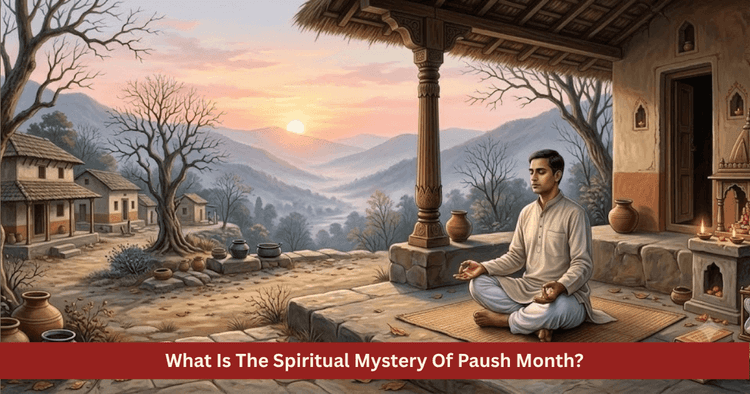
Table of Contents
Classical Framework and Panchang Overview of Paush Month
According to the ancient Vedic principles of cosmic time reckoning, the sacred month of Paush is revered as the tenth and profoundly spiritually charged period across the Sanatana annual calendar. In traditional folk parlance and rural traditions, this period is universally addressed as the month of Poos. This distinct seasonal window marks a monumental natural transition, signifying the formal departure of early winter and heralding the arrival of deep winter chill. Reckoned through the Gregorian solar calendar, this sacred month generally begins during the concluding week of December and extends across the middle of January each year.
The theological nomenclature of Paush originates from the full moon arriving in conjunction with the auspicious Pushya constellation. Within the classical hierarchy of twenty seven lunar mansions, Pushya is celebrated as the sovereign emperor of all stars, embodying pure sustenance, vital nourishment and divine nectar. When the full moon illuminates the cosmos with the brilliance of Pushya, celestial currents of spiritual nourishment circulate unimpeded throughout the terrestrial plane. During this holy window, the celestial alignment of stars creates an exceptional environment that accelerates the awakening of dormant spiritual faculties within human physiology.
| Astrological Dimension | Classical Scriptural Injunction | Philosophical and Cosmic Impact |
|---|---|---|
| Niyam | Vidhan | Vidhan |
| Month Sequence | Tenth lunar month of the Sanatana Samvatsara | Maturity of karmic actions and spiritual penance |
| Presiding Sovereign Deity | The Bhaga manifestation of Lord Surya Narayana | Surge in administrative glory, vital ojas and health |
| Associated Lunar Mansions | Pushya Nakshatra and Punarvasu Nakshatra | Nourishment, stability and intellectual awakening |
| Seasonal Transition | Confluence of Hemanta and Shishira Ritu | Physical conservation of internal pranic warmth |
| Celestial Ingress | Solar transit from Sagittarius into Capricorn | Cessation of Dakshinayana and dawn of Uttarayana |
| Core Sadhana Practices | Copper pot solar oblations, Gayatri japa, sesame charity | Ancestral pacification and planetary harmony |
| Essential Spiritual Vow | Sattvic warm nutrition, dawn rising, sacred baths | Radiance of bodily aura and mental equanimity |
| Resonating Sacred Metal | Pure unalloyed copper and spiritual gold | Enhanced absorption of vital bioelectric currents |
| Primary Vow Continuum | Saphala Ekadashi, Putrada Ekadashi and Paush Purnima | Resolution fulfillment, family protection, liberation |
When a human being structures daily activities in conscious harmony with the classical injunctions of this sacred calendar, profound mental serenity blossoms, anchoring lasting stability within family life and worldly endeavors. Ancient enlightened seers accorded paramount importance to self discipline and austerities during this month, as the peaceful winter atmosphere remains completely unburdened by worldly distractions, making it peerless for deep contemplation upon Supreme Reality.
Scriptural Heritage and Esoteric Wisdom of Solar Adoration
Exhaustive references celebrating the glory of Paush are preserved within classical Puranic literature and the Mahabharata. Classical treatises identify this sacred month as the personal domain of Lord Surya. Vedic wisdom reveals that throughout the twelve calendar months, the Sun radiates through twelve distinct manifestations known as the Dwadasha Adityas. During Paush, spiritual traditions mandate the dedicated worship of the Bhaga manifestation of the Sun god.
The Sanskrit term Bhaga signifies that supreme transcendental reality which possesses six absolute opulences: sovereign authority, righteousness, universal renown, divine beauty, transcendental knowledge and absolute detachment. When a seeker meditates upon Bhaga Aditya during Paush, deep seated psychological lethargy, ignorance and physical frailties are consumed by divine light. Ancient scriptures narrate that when the Sun manifested in response to the deep penance of sage Kashyapa and Mother Aditi, he assumed the responsibility of cosmic sustenance specifically during this sacred month.
- Blessings of Bhaga Aditya: Worshipping this solar manifestation elevates social standing, ensures success in governance and bestows robust vitality upon the mortal frame.
- Identity of Narayana and Surya: Vedic seers declared that Lord Narayana abides permanently at the heart of the solar disc. Consequently, offering prayers to the Sun represents direct devotional service to Lord Vishnu.
- Annihilation of Transgressions: The Padma Purana records that presenting daily morning water oblations from a copper vessel throughout Paush dissolves accumulated sins of several previous lifetimes.
- Awakening the Higher Self: The Sun acts as the natural significator of the human soul. Dedicated solar contemplation during this month reinforces inner willpower, dissolving mental anxiety and depression.
- Healing Ocular and Bodily Debilities: Individuals reciting sacred solar hymns while seated before the morning sun discover lasting relief from chronic ailments and visual weaknesses.
- Deliverance from Ancestral Faults: The Sun represents paternal lineage and soul vitality, meaning that worshipping the Sun in this month grants immense satisfaction to departed forebears.
The Sun is not merely a glowing star in outer space but the visible supreme deity who grants direct audience to human eyes every morning. When the rays of the Sun turn mild and gentle amidst winter cold, honoring that life giving light becomes a sacred obligation. When a devotee folds hands in morning adoration, the inner mind becomes flooded with transcendental radiance.
Winter Peak and the Biological Science of Preserving Internal Energy
During the convergence of Hemanta and Shishira, atmospheric temperatures plummet to their lowest points across the northern hemisphere. This environmental freeze directly affects human biological rhythms. The classical Ayurvedic treatises of Charaka Samhita and Ashtanga Hridayam offer an extraordinary scientific exposition regarding this seasonal transformation.
As external winter cold intensifies, the microscopic pores across human skin naturally contract to protect the body against biting winds. This physiological response seals the pores, preventing internal bodily warmth from escaping into the environment. As a result, this preserved heat gathers within the digestive tract, causing the internal metabolic fire known as Jatharagni to blaze with supreme intensity.
| Biological Phenomenon | Classical Ayurvedic Doctrine | Preventive Health Measures |
|---|---|---|
| Niyam | Vidhan | Vidhan |
| Intensified Digestive Fire | Core accumulation of biological thermal energy | Intake of sesame, jaggery, ghee and wholesome grains |
| Cutaneous Dryness | Atmospheric absorption of epidermal moisture | Daily full body Abhyanga massage with sesame oil |
| Vata and Kapha Imbalance | Environmental impact of steep temperature drops | Consuming dry ginger, carom seeds and warm water |
| Sloth and Excessive Sleep | Tamasic inertia provoked by darkness and cold | Waking during Brahma Muhurta and Surya Namaskar |
| Sluggish Blood Circulation | Cold induced vasoconstriction across extremities | Basking in morning sunlight and practicing yoga |
| Skeletal and Joint Stiffness | Localization of aggravated Vata within joints | Dashamula decoctions and warm sesame oil rubs |
| Respiratory Contractions | Accumulation of damp phlegm within chest tissues | Warm infusions of holy basil, black pepper and ginger |
When the digestive fire burns with such strength, human biology requires nutrition that is nutrient dense, substantial and capable of sustaining long term energy release. If adequate nutrition is withheld, this intensified digestive fire begins to consume bodily tissues, leading to systemic degeneration. For this precise physiological reason, ancient sages established the scriptural practice of consuming sesame seeds, dark jaggery, pearl millet, maize, split black lentils and pure golden cow ghee throughout the month of Paush.
The Conclusion of Dakshinayana and the Sacred March to Uttarayana
From an astronomical perspective, the sacred month of Paush witnesses a monumental celestial realignment. The Sanatana calendar divides the solar year into two monumental halves: Dakshinayana and Uttarayana. Dakshinayana represents the cosmic night of the gods, during which the Sun journeys along the southern celestial latitudes, whereas Uttarayana symbolizes the glorious daytime of the gods.
During the latter half of Paush, when the planetary Sun concludes its transit through Sagittarius to step into the sign of Capricorn, the auspicious festival of Makar Sankranti unfolds. Makar Sankranti marks the formal commencement of Uttarayana. The entire preceding fortnight of Paush functions as a period of spiritual purification to welcome this solar ascension.
- Journey from Darkness to Light: As the Sun turns northward, daylight hours begin to expand and winter nights recede, symbolizing the victory of spiritual illumination over ignorance.
- Awakening of Celestial Forces: The advent of Uttarayana charges the terrestrial atmosphere with benevolent, sattvic vibrations that facilitate spiritual meditation.
- The Vow of Bhishma Pitamaha: In the epic Mahabharata, the warrior patriarch Bhishma lay upon a bed of arrows, delaying his departure from the physical world until the arrival of Uttarayana, as scriptures declare that leaving the mortal frame during this period leads directly to liberation.
- Atmospheric Cleansing: During this transition, atmospheric life prana achieves a state of unblemished balance, purifying all living creatures.
- Upward Ascent of Kundalini: During Uttarayana, subtle pranic currents within human anatomy flow effortlessly from the root center toward the crown of the head.
- Spiritual Fruits of Holy Pilgrimage: Bathing in sacred confluences like Prayagraj, Gangasagar and Haridwar on Makar Sankranti yields merits surpassing thousands of royal sacrifices.
The sacred month of Paush teaches humanity that no matter how deep the winter chill or how long the night, the return of radiant warmth and spiritual light remains an absolute law of the universe. When human beings align their lives with this cosmic truth, every worldly hardship is faced with serene patience and noble joy.
Metaphysical Meaning of Kharmas and the Path of Introspection
A major portion of Paush falls under the astrological governance of Kharmas, also celebrated as Dhanurmas. When the planetary Sun transits through the fiery sign of Sagittarius governed by Jupiter, traditional Vedic astrology strictly halts all outward social sacraments including weddings, betrothals, housewarming ceremonies, tonsure rites and commercial launches.
Casual observers often mistake this pause for an inauspicious omen, yet classical Vedic philosophy reveals its profound spiritual necessity. The Sun represents the individual soul, while Jupiter embodies transcendental spiritual wisdom. When the soul enters the house of supreme wisdom, the hour is not meant for superficial social display or worldly pomp but demands introspective contemplation, study of sacred texts, silent meditation and communion with the Divine.
- Period of Worldly Rest: Kharmas provides an opportunity to pause frantic worldly pursuits and examine our inner consciousness with honest clarity.
- Pathway to Self Realization: This sacred window encourages individuals to cast aside material entanglements and rediscover their timeless spiritual heritage.
- Thousandfold Spiritual Merit: Sacred chanting, rigorous penance, scriptural study and Gayatri Sadhana performed during this window yield spiritual fruits a thousand times greater than during ordinary periods.
- Sacred Union of Soul and Wisdom: Because the Sun remains dedicated to honoring Jupiter during this transit, students and seekers engaged in higher learning discover limitless intellectual expansion.
- Dissolution of Personal Vanity: Surrendering personal ego before the feet of the Divine during this quiet period dissolves subconscious arrogance effortlessly.
Kharmas reminds humanity that external worldly achievements are never the ultimate objective of mortal life but inner spiritual illumination remains the supreme goal. An individual who utilizes this period for meditative sadhana emerges with radiant confidence and spiritual vigor as soon as Kharmas concludes.
Daily Sadhana Protocol and Classical Solar Water Oblations
To infuse life with purity and spiritual vitality throughout Paush, every seeker should adopt a disciplined morning routine. Offering a single copper vessel of consecrated water to the Sun god during this month holds the power to awaken dormant good fortune.
One must rise before sunrise during the peaceful hours of Brahma Muhurta. After completing morning ablutions with cool or soothing lukewarm water, don clean unstitched garments of red or yellow color. Fill an unblemished copper pitcher with fresh drinking water, adding a pinch of red sandalwood paste, sacred vermilion, unbroken rice grains, red flowers and a small lump of natural dark jaggery.
Standing beneath the open sky, face the eastern horizon and raise both arms gently above the forehead. Pour the water in three uninterrupted streams while gazing upon the radiant red disc of the rising sun through the cascading water. While pouring, repeat the sacred solar mantra: Om Hreem Hreem Suryaya Sahasrakiranaya Manovanchhita Phalam Dehi Dehi Swaha, or recite the sacred Gayatri Mahamantra with focused devotion.
- Rejuvenation of Visual Faculties: Viewing the morning sun through the flowing stream of water soothes ocular nerves, sharpening optical vision naturally.
- Harmonization of Energy Centers: As dawn solar rays touch the heart center and third eye during oblations, all seven major chakras settle into natural alignment.
- Preserving Ritual Sanctity: To prevent sacred water from splashing upon the feet, place a clean copper basin or vibrant flower bed directly beneath.
- Clockwise Circumambulation: Following the offering, circumambulate clockwise three times on the spot, touching droplets of sanctified water to the forehead and eyes.
- Recitation of Aditya Hridaya Stotram: Sitting upon a red woolen mat to chant the sacred Aditya Hridaya Stotram three times dispels adversarial challenges and attracts administrative grace.
This morning ritual reinforces natural immunity within human biology, causing the personal auric field to glow with golden radiance. An individual who observes this discipline throughout the month carries an unmistakable divine magnetism upon the countenance.
Ancestral Peace and Auspicious Charities of Paush Month
The sacred month of Paush is celebrated as an exceptional period to ensure the spiritual elevation and peaceful satisfaction of departed ancestors. Ancient texts frequently refer to this month as a secondary Pitru Paksha. Performing commemorative rites, water oblations and sacred food offerings during this window brings immense contentment to departed forebears, who bless their descendants with long life, domestic harmony and prosperity.
- Donating Sesame and Jaggery: Black sesame seeds are dear to Lord Vishnu and Lord Shani, while jaggery represents the vitality of the Sun. Donating these articles satisfies ancestors and dissolves inherited karmic faults.
- Distributing Warm Woolens and Blankets: Presenting heavy woolen blankets, warm clothing, or footwear to destitute and frail individuals during this harsh cold pacifies the afflictions of Rahu and Saturn.
- Wholesome Food Charity and Warm Khichdi: Distributing hot khichdi prepared from newly harvested rice, split lentils and pure cow ghee to hungry wanderers on Saturdays or the new moon day ensures the household granary never encounters empty scarcity.
- Loving Service to Sacred Cattle: Feeding fresh wheat flatbread enriched with dark jaggery and black sesame seeds to cows every morning satisfies thirty three divine categories of celestial energies at once.
- Auspicious Evening Lamps: Kindling an unrefined mustard or sesame oil lamp beneath an ancient Peepal tree and beside the home entrance at dusk dissolves the terror of untimely physical death.
- Distributing Medicines to the Sick: Providing warm herbal infusions, medicines and thermal shelter to frail elders and sick wanderers represents direct worship of Lord Narayana.
Charity must always be offered without the slightest trace of personal arrogance, holding the humble awareness that a modest portion of wealth gifted by the Creator is simply being returned to suffering living beings. When charity is rendered with pure detachment, its spiritual blessings protect descendants across generations.
Major Fasting Traditions and Sacred Celebrations of Paush
The holy month of Paush hosts several monumental vows and festivals that provide profound direction to human life. This sacred period is dedicated not merely to individual contemplation but unites communities in collective adoration of the Divine.
- Saphala Ekadashi: Falling during the dark fortnight of Paush, this sacred vow ensures the smooth completion of all stalled and challenging worldly endeavors.
- Paush Putrada Ekadashi: Celebrated during the bright fortnight, this fast acts as a wish fulfilling tree for childless couples seeking virtuous and healthy progeny.
- The Sacred Bath of Paush Purnima: The arrival of the full moon marks a monumental pilgrimage bath, formally inaugurating the holy Kalpavas disciplines at Prayagraj.
- Shakambhari Navratri: Spanning from the eighth waxing day through the full moon, this festival honors Mother Shakambhari, celebrating profound gratitude for fruits, vegetables and botanical life.
- Monthly Shivaratri Observance: Worshipping Lord Shiva with warm water ablations and sacred bael leaves on Krishna Chaturdashi washes away chronic mental anxiety.
These sacred vows elevate human awareness above mundane attachments, uniting the individual soul with divine cosmic intelligence. Beneath every fast lies an exquisite combination of spiritual philosophy and scientific discipline designed to elevate human life.
Holistic Spiritual Rejuvenation Through Paush Observance
The holy month of Paush inspires humanity to walk in sacred rhythm with the disciplines of cosmic nature. Synchronizing our daily activities with the rising and setting of the sun aligns our personal biological rhythms with the universal clock of the cosmos.
This month is far more than a passing chronological date, serving as an opportunity to refine nutritional habits, master sensory desires, immerse ourselves in sacred wisdom and wash away karmic blemishes through active compassion. A human being who honors the classical disciplines of Paush emerges with a physical body as resilient as an impenetrable fortress, while inner consciousness becomes suffused with eternal divine peace.
Let us dedicate this sacred period to solar adoration, extend compassionate protection to shivering creatures and kindle the unquenchable flame of spiritual wisdom within our hearts. This dedicated practice alone will guide our souls out of the dark valleys of worldly ignorance into the everlasting brilliance of supreme spiritual liberation.
FAQ
Why is the month of Paush celebrated specifically as the month of the Sun god? During Paush, the Bhaga manifestation of Lord Surya is worshipped to receive vitality, health and spiritual radiance, making it the premier month of solar worship.
Across which Gregorian calendar months does the sacred period of Paush fall? Paush generally begins during the final week of December and extends through the middle of January, culminating around Makar Sankranti.
Why are weddings and housewarmings prohibited during the month of Paush? The Sun enters Sagittarius during this month, initiating Kharmas; this solar position temporarily subdues the benefic power of Jupiter, pausing worldly celebrations.
What specific ingredients should be mixed into the copper vessel when offering water to the Sun? One should mix fresh water with red sandalwood paste, sacred vermilion, unbroken rice grains, red flowers and a piece of natural dark jaggery.
Which charitable donations yield the highest spiritual merit during this cold month? Donating black sesame seeds, natural jaggery, heavy woolen blankets, warm clothing, footwear and warm khichdi brings immense spiritual merit and pacifies planetary distress.
Get your accurate Kundali
Generate KundaliDid you like it?
Author
Pt. Amitabh Sharma (56 Years)
Experience: 20
Consults About: Family Planning, Career
Clients In: Punjab, Haryana, Delhi
Share this article with friends and family
WELCOME TO
ZODIAQ
Right Decisions at the right time with ZODIAQ
