How Will Paush Putrada Ekadashi Grant Progeny Joy?
By Pt. Narendra Sharma
Santana Gopala Mantra, King Suketuman Lore, Bala Gopala Puja And Parana Rules
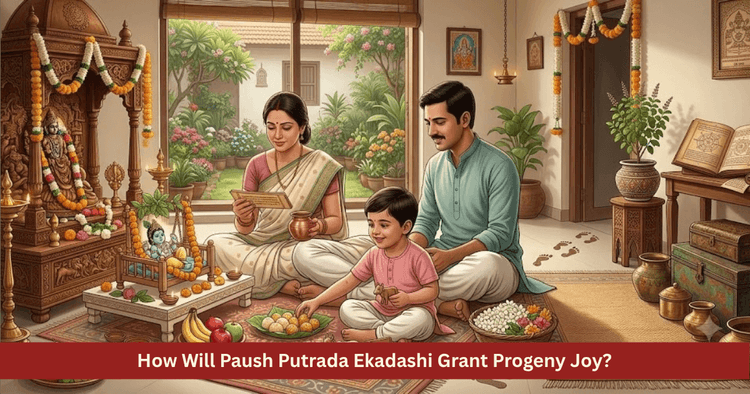
Table of Contents
Classical Framework and Astrological Setting of Paush Putrada Ekadashi
According to the classical doctrines of Vedic astronomical computation, the sacred lunar date falling during the waxing fortnight (Shukla Paksha) of the month of Paush is universally venerated as 'Paush Putrada Ekadashi'. Within the annual Sanatana liturgical cycle of twenty-four Ekadashis, only two distinct lunar dates bear the exalted title of 'Putrada' (the granter of progeny). The first Putrada Ekadashi occurs during the monsoon month of Shravana, while the second unfolds during the deep winter chill of Paush. Occurring just prior to the monumental solar ingress of Makar Sankranti, this winter observance serves as an infallible divine boon for householders longing for the blessings of virtuous, healthy and noble progeny.
Authoritative scriptural compendiums, including the Bhavishya Purana and the Padma Purana, proclaim that this sacred vow acts as a wish-fulfilling tree for married couples struggling with inexplicable delays in conception, medical complications or severe astrological afflictions such as Guru Chandal Dosha, Pitru Dosha or an afflicted fifth house. Furthermore, it protects existing children from chronic illnesses, developmental setbacks and premature physical dangers. Upon this blessed date, humanity renders dedicated worship to the infant manifestation (Bala Gopala) of Lord Sri Hari Vishnu with profound parental tenderness and devotion.
| Observance Dimension | Classical Injunction and Liturgical Protocol | Spiritual & Worldly Manifestation |
|---|---|---|
| Niyam | Vidhan | Vidhan |
| Presiding Lunar Date | Paush Shukla Paksha Ekadashi | Eradication of childlessness and generational continuity |
| Presiding Sovereign Form | Lord Sri Hari Vishnu (Manifested as Bala Gopala) | Conception of virtuous offspring, fetal protection, long life |
| Primary Vow Discipline | Complete waterless fast or pure fruit-milk regimen | Cellular detoxification, uterine energetic cleansing, focus |
| Essential Offering Substances | Pure yellow silk, fresh butter, rock sugar candy, Tulsi | Elemental equilibrium, awakening of Bala Gopala grace |
| Core Invocation Mantra | Om Shreem Hreem Kleem Glaum Devakisuta Govinda Vasudeva | Pacification of fifth-house afflictions, radiance of ojas |
| Joint Spousal Discipline | Unified vow, prayer and havan performed together | Purification of reproductive seed, invoking noble souls |
| Breaking the Fast (Parana) | Dwadashi tithi following dawn in auspicious hours | Vow completion, remission of sins, attainment of progeny |
The spiritual vibrations of this waxing winter Ekadashi exert a profound influence upon human consciousness and the subtle energetic anatomy. When husband and wife observe celibacy, mental purity and dedicated prayer before Lord Achyuta on this day, accumulated past-life karmic demerits blocking generational continuation are burned away like dry grass before a forest fire.
The Immortal Lore of King Suketuman from the Puranas
Classical Sanskrit treatises preserve a transformative chronicle illustrating the potency of Paush Putrada Ekadashi. In ancient times, a righteous sovereign named King Suketuman ruled over the prosperous kingdom of Bhadravati alongside his noble queen, Champa. The monarch was deeply devoted to righteousness, caring for his subjects like a father, defending virtue and dispensing justice. The realm flourished with abundance, peace and security. Yet, despite possessing vast armies, royal treasuries and worldly luxuries, the royal couple lived in unceasing sorrow.
King Suketuman was childless. Deprived of an heir, the king and queen were haunted by the realization that their lineage would perish, the throne would remain vulnerable to chaos and their departed ancestors would be denied funeral oblations (Pinda Tarpana).
- The King's Despair and Journey to the Forest: Overwhelmed by grief, King Suketuman abandoned his royal garments, ministers and palace, riding alone into dense, untamed forests. He hovered on the verge of physical collapse, wrestling with dark thoughts of ending his life but his philosophical wisdom checked him, knowing that suicide was a grave sin that would only plunge his ancestors deeper into darkness.
- The Miraculous Forest Lake and Assembly of Seers: Wandering through the wilderness, parched with thirst, he discovered an ethereal freshwater lake surrounded by blossoming lotuses and gliding swans. Upon its banks sat a congregation of radiant, enlightened sages chanting Vedic hymns in celestial harmony.
- Meeting the Ten Vishvedevas: Dismounting his steed, King Suketuman prostrated before the holy sages with tearful humility. Inquiring into his identity, the ascetics asked the cause of his distress. The monarch shared his sorrow of childlessness and the impending collapse of his lineage. Smiling with compassion, the sages revealed: "O King! We are the ten Vishvedevas, gathered here on this sacred day of Paush Shukla Ekadashi-the celebrated Putrada Ekadashi-to observe our sacred seasonal ablutions."
- The Sage's Injunction and the Sacred Vow: The Vishvedevas instructed the king: "Observe a strict, unbroken waterless fast on this very day alongside your queen, dedicating your heart to the infant form of Lord Narayana. By virtue of this vow, you will be blessed with a glorious, valiant and long-lived son."
King Suketuman embraced their guidance, sitting upon a mat of kusha grass on the lake's edge to execute a rigorous waterless fast and mental worship of Lord Narayana. At dawn on Dwadashi, he broke his fast with sanctified water after receiving the sages' blessings, returning to Bhadravati. He narrated the divine encounter to Queen Champa, who adopted the same disciplines with unwavering devotion.
Through the grace of this observance, Queen Champa conceived and delivered a radiant, virtuous and mighty son. Upon reaching maturity, the prince ruled as a righteous monarch, sustaining the kingdom and liberating his ancestors through sacred funeral oblations. Thus, Paush Putrada Ekadashi preserved a royal lineage from extinction.
The Science of Santana Gopala Mantra and Esoteric Seed Syllables
In classical mantra therapeutics and Vedic tantra, the 'Santana Gopala Mantra' is celebrated as the premier acoustic formula to dissolve physiological and karmic infertility. It is a precise arrangement of sonic frequencies designed to stimulate subtle reproductive chakras and biological endocrine centers:
Om Shreem Hreem Kleem Glaum Devakisuta Govinda Vasudevaya Jagatpate.
Dehi Me Tanayam Krishna Tvamaham Sharanam Gatah.
The sacred seed syllables (Bija Mantras) embedded within this invocation interact directly with the human endocrine system and cerebral neurochemistry:
- Shreem (Lakshmi Bija): Bestows biological vitality, physical nourishment and cellular fertility to the reproductive tissues.
- Hreem (Maya and Shakti Bija): Awakens divine dynamic energy, cleansing subtle blockages across the Svadhisthana (sacral) chakra.
- Kleem (Kamaraja Bija): Attunes emotional intimacy, psychological harmony and biochemical balance between husband and wife.
- Glaum (Prithvi Bija): Infuses structural stability and resilience into the womb, preventing miscarriages and premature fetal distress.
| Liturgical Phase | Classical Prescribed Protocol | Subtle Biological & Spiritual Fruition |
|---|---|---|
| Niyam | Vidhan | Vidhan |
| Chanting Rosary Selection | Pure Tulsi rosary of 108 beads or dried lotus seeds | Rectification of reproductive fluids, deep mental peace |
| Daily Chanting Quantum | Minimum 11 or 21 full rounds of the rosary on Ekadashi | Comprehensive purification of sacral and solar chakras |
| Posture and Alignment | Facing the eastern horizon, sitting in Padmasana | Smooth upward ascension of vital prana along the spine |
| Consecration of Ghee | Placing cow ghee in a bronze bowl before the deity | Hormonal equilibrium, enhancing conception vitality |
On Paush Putrada Ekadashi, husband and wife should sit together facing the eastern horizon to chant this invocation with focused resolve. Place a consecrated idol of Bala Gopala upon a yellow silk cloth, offering fresh butter and rock sugar candy before chanting. Following the worship, partake of this consecrated butter as a sacred divine gift.
Prescribed Worship Protocols for Lord Bala Gopala
The liturgical worship of Lord Bala Gopala on Paush Putrada Ekadashi must be executed with deep parental affection and refined reverence. In view of the deep winter season, the deity should be adorned with soft, warm woolen and silk vestments to reflect loving seasonal care.
1. Dawn Ablutions and Consecration of Altar
Awaken during Brahma Muhurta, bathing in water enriched with sacred Ganga water, black sesame seeds and fresh Tulsi leaves. Both partners should wear clean, unstitched yellow silk or cotton garments. Consecrate the domestic shrine with holy water, establishing an auspicious wooden platform in the eastern or northern quadrant. Cover it with yellow silk, drawing an eight-petaled lotus pattern with unbroken rice grains. Position a copper or brass water pitcher upon the pattern, filled with clean water, mango foliage, a betel nut and a whole coconut resting on its rim.
2. Five Nectars Ablution and Sacred Adornment
Place the deity of Lord Bala Gopala or a sacred Shaligram stone within a broad silver or copper basin before the consecrated pitcher. Bathe the Lord with warm Ganga water, followed by anointment with the five divine nectars (Panchamrita):
- Raw Indigenous Cow Milk: To grant generational nourishment and lineage continuation.
- Fresh Cow Curd: To infuse domestic sweetness, peace and cooling tranquility.
- Pure Cow Ghee: To enhance physical vitality, longevity and metabolic radiance.
- Raw Wild Honey: To cultivate magnetic eloquence and harmonious family speech.
- Unrefined Sugar Candy Powder: To bestow radiant biological health and mental clarity.
Following the Panchamrita bath, cleanse the deity with warm water and dry with a soft cloth. Adorn Bala Gopala with soft yellow or crimson woolen garments. Apply an auspicious mark of Gopi-chandan, white sandalwood and fragrant saffron to his forehead. Place a radiant crown adorned with a peacock feather upon his head, draping his neck with a garland of fresh Tulsi and marigolds and resting a golden flute in his hands.
| Worship Sequence | Scriptural Substances Utilized | Parental Devotion & Desired Fruit |
|---|---|---|
| Niyam | Vidhan | Vidhan |
| First | Foot-Washing & Purification | Scented rose water blended with sacred Tulsi leaves |
| Second | Sacred Vestments | Radiant yellow garments and warm protective woolen cape |
| Third | Fragrant Pastes & Flowers | Ashtagandha, saffron sandalwood, yellow marigolds |
| Fourth | Continuous Tulsi Offering | Unbroken Tulsi leaves and fragrant herbal blossoms |
| Fifth | Consecrated Food Offerings | Fresh hand-churned butter, rock sugar candy, milk sweets |
| Sixth | Seasonal Botanical Gifts | Pomegranate, fresh coconut, wild water chestnuts, apples |
| Seventh | Illumination & Grand Arati | Natural guggul, pure camphor and multi-wicked ghee lamp |
While offering the sweet butter, pray with heartfelt sincerity: "O beloved son of Yashoda! Just as you blessed the courtyards of Gokula with your divine laughter, bless our home with a virtuous, radiant child to carry forward the light of our lineage."
Astrological Analysis: The Fifth House, Jupiter and Karmic Blockages
In classical Parashari astrology, the fifth house of the natal horoscope governs progeny, creative intelligence, spiritual merit and the fruits of past-life deeds. Concurrently, Deva Guru Jupiter serves as the natural planetary significator of children across the zodiac. If the fifth house, its ruling planet or Jupiter suffers severe affliction, the individual endures agonizing delays, medical obstacles or grief concerning offspring.
Paush Putrada Ekadashi serves as an effective astrological remedy to pacify these planetary distresses simultaneously.
1. Pacifying Guru Chandal Dosha
When the shadowy nodes Rahu or Ketu conjoin Jupiter in the fifth house, Guru Chandal Dosha manifests, often causing unexpected miscarriages or arrested fetal development. Observing this fast and donating yellow articles to virtuous scholars clears node-induced afflictions, restoring Jupiter's protective vitality.
2. Resolving Ancestral Impediments to Progeny
When the lords of the fifth and ninth houses are afflicted by Saturn or Rahu, unfulfilled ancestral spirits block generational continuity. Paush is the month of solar introspection and ancestral peace; observing this fast and offering charity satisfies ancestors, turning generational obstacles into blessings.
3. Rectifying Biological Afflictions of Mars and Venus
In reproductive biology, Venus governs the vitality of the seed, while Mars presides over blood, uterine vitality and ovulatory cycles. Fasting on Paush Putrada Ekadashi purifies internal bodily humors, eliminates cellular toxins and strengthens biological vitality naturally.
| Planetary Position | Specific Astrological Challenge | Recommended Paush Putrada Ekadashi Remedy |
|---|---|---|
| Niyam | Vidhan | Vidhan |
| Rahu/Ketu in the Fifth House | Recurrent miscarriages, difficult pregnancies | Consecrate Santana Gopala Yantra with 108 chants |
| Debilitated or Combust Jupiter | Extreme delays in conception | Donate roasted gram sweets, turmeric, yellow silks |
| Fifth Lord in Malefic Houses | Medical treatments failing to yield results | Offer 1,008 fresh Tulsi leaves upon Shaligram stone |
| Sun-Saturn Mutual Aspect | Ideological friction, frail infant health | Offer copper pot water oblation with jaggery at dawn |
Time-Tested Remedies for Fertility and Fetal Protection
Ancient scriptural compendiums outline specific remedies to be executed on Paush Putrada Ekadashi to dispel negative energies and protect conception:
- The Sacred Yellow Thread and Gomti Chakra Shield: Consecrate eleven natural Gomti Chakras and an unstitched yellow silk thread at the lotus feet of Bala Gopala, infusing them with eleven recitations of the Santana Gopala Mantra. Tie the yellow thread with seven knots around the mother's waist and wrap the Gomti Chakras in clean red silk within the domestic wardrobe. This shields against subtle psychic negativity and environmental dampness.
- Circumambulation of the Sacred Peepal Tree: At midday, approach an ancient Peepal tree with a copper pitcher of water enriched with raw cow milk, honey and yellow blossoms. Pour this offering at the roots while repeating 'Om Namo Bhagavate Vasudevaya', walking clockwise around the tree 108 times, winding sacred cotton threads around its trunk.
- Serving Mother Cow with Her Calf: Visit a local cow shelter to serve a nursing cow accompanied by her young calf. Offer them fresh green fodder, wheat flatbreads enriched with dark jaggery and soaked chickpeas. Apply vermilion to the cow's forehead, touching the dust from her hooves to your head to invoke universal maternal blessings.
- Gifting Yellow Attire and Sweets to Children: Invite a young boy from an underprivileged family into your home. Gift him clean yellow garments, serve him a wholesome meal of sweet butter and milk confections and receive his innocent blessings, visualizing the presence of Bala Gopala.
Liturgical Rules for the Fast and Canonical Breaking Protocol
Attaining the spiritual fruits of this observance requires disciplined adherence to classical rules spanning Dashami, Ekadashi and Dwadashi.
Observances on Dashami
Partake of a single sattvic meal before sunset on Dashami. Avoid onions, garlic, lentils, eggplants and stale leftovers. Sleep upon a clean natural mat on the floor and maintain strict celibacy.
Observances on Ekadashi Day
- Complete Fasting: Observe a waterless fast or consume only fresh milk and fruits if physical stamina is limited. Avoid excessive physical exertion.
- Absolute Grain Renunciation: The consumption of rice, wheat and pulses is prohibited on Ekadashi.
- Silence and Spiritual Study: Refrain from idle gossip, commercial arguments and digital screens. Dedicate the day to studying the Bhagavad Gita, chanting the Vishnu Sahasranama and reciting the holy names of God.
- Nocturnal Vigil (Jagarana): Remain awake through the night before a steady ghee lamp, singing devotional hymns across the four watches of the night.
Canonical Fast-Breaking on Dwadashi
The observance concludes with the fast-breaking meal (Parana) on Dwadashi morning, which must be executed in accordance with scriptural timelines.
- Auspicious Timings: Break the fast following sunrise on Dwadashi, ensuring that the restrictive window of 'Harivasara' (the first quarter of Dwadashi) has expired.
- Charity Before Eating: Feed a virtuous scholar or impoverished wanderer before personal consumption, offering raw provisions (wheat, lentils, ghee, jaggery, salt) and respectful remuneration.
- Feeding Creatures: Reserve the first portion of the prepared meal for a sacred cow, the second for birds and the third for dogs.
- Fast-Breaking Medium: Conclude the fast by partaking of sanctified foot-nectar (Charanamrita), a fresh Tulsi leaf or a piece of Indian gooseberry (Amla) before eating regular sattvic grains.
- Restraint on Dwadashi: Continue to avoid tamasic foods, alcohol, anger and sensual indulgence on Dwadashi to preserve the spiritual merits of the observance.
Universal Motherhood and Generational Blessing
In Sanatana philosophy, children are not mere biological extensions of their parents but sacred custodians of cultural and spiritual heritage. A righteous, virtuous and spiritually conscious child brings solace to parents while elevating twenty-one generations of ancestors through noble deeds.
Paush Putrada Ekadashi reminds humanity that when medical sciences reach their natural boundaries, divine grace steps forward. Lord Bala Gopala responds to love and devotion. When parents surrender their longing before the feet of the Divine, their domestic sanctuary is touched by grace.
Couples who observe this holy fast with faith, disciplined celibacy and scriptural integrity discover their homes blessed with the laughter of a radiant child. This observance dispels the darkness of childlessness, establishing domestic joy, harmony and spiritual prosperity across generations.
FAQ
Which couples should prioritize observing the Paush Putrada Ekadashi fast? This fast is recommended for married couples facing prolonged delays in conception, medical complications or anxieties concerning the health and longevity of existing children.
Which manifestation of Lord Vishnu is worshipped on this specific day? Dedicated worship is rendered to the infant manifestation of Lord Sri Hari Vishnu, popularly adored as 'Bala Gopala' or 'Laddu Gopala', with deep parental affection.
What is the primary scriptural mantra chanted for obtaining progeny on this date? The Santana Gopala Mantra ('Om Shreem Hreem Kleem Glaum Devakisuta Govinda Vasudeva Jagatpate Dehi Me Tanayam Krishna Tvamaham Sharanam Gatah') should be chanted for at least eleven rounds of the rosary.
Is it mandatory for both husband and wife to observe the fast simultaneously? Yes, when both partners observe the fast together with shared devotion, celibacy and prayer, the spiritual and biological fruits manifest swiftly.
How and with which specific items should the fast be concluded on Dwadashi morning? The fast must be concluded on Dwadashi morning after the expiration of Harivasara, breaking the vow with sanctified Tulsi leaves or Charanamrita after feeding the needy.
Get your accurate Kundali
Generate KundaliDid you like it?
Author

Pt. Narendra Sharma (63)
Experience: 20
Consults About: Family Planning, Career
Clients In: Punjab, Haryana, Delhi
Share this article with friends and family
WELCOME TO
ZODIAQ
Right Decisions at the right time with ZODIAQ
