How Will Shakambhari Navratri Eradicate Illness And Poverty?
By Pt. Nilesh Sharma
Secret Sadhana, 60 Vegetable Offerings, Navarna Mantra And Shatakshi Lore
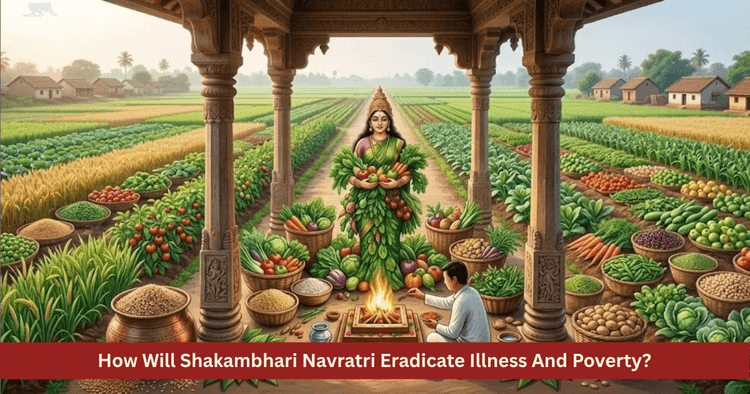
Table of Contents
Classical Framework and Astrological Setting of Shakambhari Navratri
Within the venerable traditions of Sanatana chronological computation and Shakta liturgical worship, a deeply compassionate, esoteric and nature-centric festival is celebrated alongside the four primary seasonal Navratris: 'Shakambhari Navratri'. This sacred observance commences annually on the Ashtami (eighth lunar day) of the waxing fortnight (Shukla Paksha) in the month of Paush and culminates on Paush Purnima (the full moon day), spanning eight transformative days. In classical scriptural treatises, Paush Shukla Ashtami is celebrated as 'Banadashtami' or 'Durga Ashtami', while the concluding full moon is venerated across the subcontinent as 'Shakambhari Jayanti'.
The divine advent of this incarnation is recorded in the eleventh chapter (Narayani Stuti) of the Devi Mahatmya within the Markandeya Purana and across the seventh skandha of the Srimad Devi Bhagavatam Mahapurana. This sacred window is far more than an ordinary religious observance; it is a spiritual festival of deep reverence and biological gratitude toward nature, agricultural abundance, medicinal flora and the five primordial elements. Occurring during the depths of winter when the earth battles frost and atmospheric desiccation, Mother Jagadamba assumes this nurturing form to bless living beings with sustained nourishment, pristine water and physical vitality.
| Liturgical & Ritual Dimension | Classical Scriptural Injunction | Spiritual & Physical Manifestation |
|---|---|---|
| Niyam | Vidhan | Vidhan |
| Sacred Timeframe | Paush Shukla Ashtami (Banadashtami) to Purnima | Deliverance from famine, droughts and chronic disease |
| Liturgical Duration | 8 Days (Concluding on Shakambhari Jayanti) | Harmonizing five elements, physical vitality, long life |
| Presiding Sovereign Divinity | Goddess Shakambhari (The Shatakshi Form) | Dissolution of poverty, eradicating malnutrition, wealth |
| Primary Consecrated Offerings | Seasonal raw and cooked green vegetables, fruits, roots | Complete pacification of internal humors (Vata, Pitta, Kapha) |
| Special Worship Articles | Fresh green durva, raw turmeric, neem and Tulsi leaves | Immediate healing of cutaneous disorders and blood toxicity |
| Core Mantra Sadhana | Navarna Mantra and Shakambhari Bija Invocations | Awakening eloquence, chakra alignment, radiant ojas |
| Prominent Sacred Abodes | Saharanpur (UP), Sambhar (Rajasthan), Badami (Karnataka) | Protection of lineage, Vastu peace, worldly security |
Sadhana undertaken during Shakambhari Navratri purifies the physical vessel while realigning the pranic sheath with the life force of cosmic nature. Householders who venerate Mother Jagadamba with green vegetables and newly reaped grains during these eight days ensure their domestic granaries remain abundant year-round, while shielding the family from debilitating winter ailments.
Scriptural Mythology: The Century-Long Drought and the Shatakshi Advent
According to the sacred narrative preserved in the Srimad Devi Bhagavatam, an arrogant demon named Durgamasura (son of Ruru) executed grueling austerities to please Lord Brahma, extracting a boon that placed all four Vedas under his absolute control, while redirecting all sacrificial oblations away from celestial deities. With the disappearance of the Vedas, spiritual wisdom, ritual offerings, scriptural study and truth vanished from the earth. The priestly order ceased performing daily devotions, provoking the wrath of Lord Indra, who halted atmospheric precipitation across the globe.
A devastating drought parched the terrestrial plane for a hundred continuous years. Rivers, lakes, domestic wells and natural springs dried into arid deserts. The soil fractured into dust, forests and crops burned to ash and every trace of grain and potable water vanished. Millions of animals, birds and humans starved to death in agony.
- The Agony of the Sages and the Himalayan Hermitage: In this desperate hour, surviving sages and ascetics retreated to the caves of the Himalayas, undertaking waterless penance and crying out to Supreme Mother Jagadamba with tearful humility.
- The Manifestation of Shatakshi: Moved by the cries of her children, Mother Jagadamba manifested before them. Her divine form bore a hundred (shata) compassionate, weeping eyes. Beholding the agony of all living beings, tears flowed from her hundred eyes for nine continuous days and nights. These divine tears saturated the parched ground, replenishing rivers, lakes and subterranean aquifers with sweet water. Hence, she was first glorified as 'Shatakshi' (the hundred-eyed one).
- Advent as Mother Shakambhari: Following this, the Goddess manifested nourishing vegetation, green leafy vegetables, roots, edible tubers, fruits and life-saving medicinal herbs directly from her divine body. Partaking of these foods, the starving creatures of the earth regained life, vitality and strength. Because she nourished the entire cosmos through 'Shaka' (botanical greens and vegetables), she became renowned as 'Shakambhari'.
- The Slaying of Durgamasura: Learning that the earth was flourishing once more, Durgamasura marched upon the Goddess with his demonic legions. Mother Shakambhari pierced the demon with her trident, recovering the stolen Vedas and returning them to the celestial seers. Because she vanquished the demon Durgama, she earned the eternal title of 'Durga'.
This sacred legend reminds humanity that whenever the natural balance is threatened and human society drifts into moral darkness, cosmic nature manifests her maternal love to sustain life.
Metaphysical Secrets of Offering 60 Botanical Greens
Presenting green vegetables, medicinal botanicals and fruits to Mother Shakambhari during this festival is an active form of 'Dravya Yajna' (elemental material sacrifice). Liturgical compendiums prescribe presenting at least sixty distinct botanical greens and medicinal plants to the Goddess during this eight-day observance. If securing sixty distinct varieties is not feasible, assemble as many fresh, seasonal vegetables as possible to place at her lotus feet.
From the perspectives of Ayurveda and plant pharmacology, the freezing weather of Paush aggravates Vata and Kapha humors within human physiology. The winter vegetables produced by the earth at this time are naturally bitter, astringent and warming, making them effective for clearing metabolic toxins.
| Botanical Offering | Classical Astrological & Elemental Quality | Tangible Health & Spiritual Benefit |
|---|---|---|
| Niyam | Vidhan | Vidhan |
| Leafy Greens (Spinach, Fenugreek, Bathua, Amaranth) | Earth & Water elements, rich in iron and alkali | Intestinal cleansing, blood hemoglobin surge, stamina |
| Earth Tubers (Radish, Carrot, Sweet Potato, Yam) | Grounding Muladhara energy, subterranean strength | Skeletal reinforcement, tissue stability, physical endurance |
| Bitter Botanicals (Bitter Gourd, Fenugreek Seeds, Neem) | Pitta-cleansing, antimicrobial, blood purifier | Regulating blood sugar, clearing skin flare-ups, vitality |
| Digestive Aromatics (Fresh Ginger, Green Chili, Coriander) | Igniting the internal digestive fire (Jatharagni) | Balancing tridoshas, relieving intestinal gas and sluggishness |
| Gourd Varieties (Bottle Gourd, Ridge Gourd, Pumpkin) | Water element, soothing sattvic cellular moisture | Cardiovascular support, mental calmness, blood pressure balance |
| Fresh Raw Turmeric Knots | Jupiter energy, natural antimicrobial properties | Building natural immunity, purifying blood, radiant skin |
Arranged upon clean wooden or brass platters before Mother Shakambhari, these ordinary vegetables are transformed into 'Mahaprasada' and potent medicine through her divine gaze. Concluding the daily worship, these consecrated vegetables are cooked into simple vegetarian meals without onions or garlic, distributed to family members and shared with underprivileged communities. Partaking of this sanctified food dissolves chronic health conditions.
The Science of Navarna Mantra and Shakambhari Invocations
Because Shakambhari Navratri functions as an esoteric, hidden Navratri, mantra japa practiced during this period yields swift spiritual rewards. The foundational invocation for this period is the nine-syllabled 'Navarna Mantra', synthesizing the potencies of Mahakali, Mahalakshmi and Mahasaraswati:
Om Aim Hreem Kleem Chamundayai Vichche.
Concurrently, the classical dhyana mantra of Mother Shakambhari from scriptural compendiums holds immense transformative power:
Shakambhari Nilavarna Nilotpalavilochana.
Mushtim Shilimukhapurnam Kamalam Kamalalaya.
Om Hreem Shreem Kleem Bhagavatyai Shakambharyai Namah.
Classical Disciplines for Mantra Chanting
- Posture and Directional Alignment: Rise during Brahma Muhurta, cleanse the body and don clean garments of green, yellow or crimson hues. Sit upon a mat of red wool or kusha grass facing the eastern or northern horizon.
- Selection of Rosary: For chanting the Navarna Mantra, select a rosary of authentic Rudraksha beads, pure quartz crystal (Sphatika) or red sandalwood.
- The Sacred Vow (Sankalpa): Hold pure water, unbroken rice grains, fresh durva grass and fragrant blossoms in the right palm, resolving: "O Divine Mother Shakambhari! I undertake the dedicated recitation of your sacred mantra across these eight days for the alleviation of bodily disease, the preservation of domestic nourishment and internal spiritual purification."
- Daily Chanting Count: Maintain a focused discipline of reciting at least 11 or 21 full rounds of the rosary daily. Visualize Mother Shakambhari seated before you, holding seasonal greens, fruits and vessels of sweet water in her hands, her gaze purifying your biofield.
These sonic sound waves clear and balance the seven major energy centers, stimulating the Manipura (solar plexus) and Anahata (heart) chakras.
Daily Liturgical Worship Protocol for the Eight Days
Executing a consistent daily worship protocol morning and evening during these eight days invites divine harmony into the home.
1. Altar Preparation and Kalasha Consecration
Cleanse the domestic prayer altar with holy Ganga water. Spread an unstitched green or crimson silk cloth across a raised wooden platform. Form an eight-petaled lotus pattern using unbroken rice grains, placing a copper or earthen Kalasha at its center. Fill the vessel with fresh drinking water, Ganga water, durva grass, a betel nut, a raw turmeric knot and a silver coin. Rest five mango or ashoka leaves within the vessel's neck, seating a consecrated, thread-wound coconut on its rim.
2. Consecration and Adornment of the Deity
Place an image or brass idol of Mother Durga or Mother Shakambhari before the Kalasha. If a specific image of Shakambhari is unavailable, worship Mother Jagadamba visualizing her Shakambhari manifestation. Adorn the deity with garlands of fresh red and green blossoms, marking her forehead with natural vermilion, unbroken rice and sandalwood paste.
3. Presenting the Botanical Bounty
Arrange fresh green vegetables (tender spinach, fenugreek, carrots, radishes, bell peppers, bottle gourd) and seasonal fruits before the altar. Present a freshly prepared, warm vegetarian meal alongside puffed breads, semolina halwa or sweet rice kheer, prepared using pure cow ghee without onions or garlic.
4. Illumination and Concluding Arati
Kindle a single-faced lamp of pure cow ghee alongside natural guggul or camphor incense. Recite the Durga Chalisa, the eleventh chapter of the Devi Mahatmya or the Shakambhari Stotram. Wave burning camphor before the altar, concluding the liturgy with the blowing of the sacred conch shell.
Sacred Pilgrimage Sites: Saharanpur, Sambhar and Badami
Three prominent historical and energetic Shakta shrines dedicated to Mother Shakambhari are revered across the Indian subcontinent, drawing pilgrims throughout this festival.
1. Shakambhari Devi Peetha (Saharanpur, Uttar Pradesh)
Nestled within the forested Shivalik foothills of Saharanpur, this shrine is recognized as the foremost seat of Mother Shakambhari. Tradition maintains this serene valley is the exact site where the Goddess manifested as Shatakshi and Shakambhari to end the century-long drought. The central sanctum houses deities of Mother Shakambhari flanked by Bhima, Bhramari and Shatakshi. Nearby sits the shrine of Baba Bhura Deva (Bhairava), whose darshan is essential to complete the pilgrimage.
2. Shakambhari Mata Peetha (Sambhar Lake, Rajasthan)
Situated on the shores of the expansive salt-water Sambhar Lake, this ancient shrine is revered as the patron tutelary deity of the imperial Chauhan dynasty. Local lore recounts that the Goddess transformed the local landscape into solid silver to relieve poverty; later, to avert destructive wars among mortals, the silver plains were converted into precious salt reserves. A vibrant agricultural and vegetable fair takes place here during Navratri.
3. Banashankari Amma Temple (Badami, Karnataka)
Located near Badami in the Bagalkot district of Karnataka, this shrine honors the southern manifestation of Mother Shakambhari. In Kannada, 'Bana' signifies the forest; hence, the guardian of the woodlands is worshipped as Banashankari. Revered since the era of the Chalukya kings, the temple hosts a magnificent annual chariot festival during the month of Paush.
Astrological Remedies for Health Restoration and Debt Relief
Simple Vedic and tantric remedies executed during Shakambhari Navratri resolve stubborn life crises and physical debilities:
- Vegetable Weighing Ritual (Tula Dana) for Healing: If a family member suffers from a chronic or undiagnosed illness, weigh fresh green vegetables (such as spinach, cabbage and gourds) equal to the patient's body weight on any day between Ashtami and Purnima. Offer these greens to sacred cows in a shelter or distribute them among destitute communities. This practice soothes severe illness.
- Raw Turmeric and Gomti Chakra Remedy for Wealth: On the opening day, place five whole raw turmeric knots and five consecrated Gomti Chakras before Mother Shakambhari. Anoint them with vermilion while chanting the Navarna Mantra 108 times. On Paush Purnima, wrap these articles in a yellow silk cloth, depositing them within your home safe or commercial cash drawer to maintain steady financial flow.
- Consecrating the Domestic Kitchen for Abundance: Keep the kitchen spotless throughout the festival. Place a pair of whole cloves within your salt container, drawing an auspicious vermilion swastika upon your cooking hearth. Reserve the first freshly prepared bread with a touch of ghee and jaggery for a sacred cow daily.
- Herbal Cleansing for Skin Allergies: If troubled by stubborn skin allergies or dermatological inflammation, present fresh neem leaves and wild giloy vines to Mother Shakambhari. Following the worship, brew the giloy into a warm herbal tea, consuming it upon an empty stomach in the morning to purify the bloodstream.
Ecological Balance, Botanical Gratitude and Spiritual Awakening
The core philosophy of Shakambhari Navratri extends far beyond external ritualism, delivering a profound ecological lesson on harmonizing human civilization with natural systems. In an era where unchecked industrialization, deforestation and chemical agriculture pollute our soil, air and water, Mother Shakambhari's advent reminds us that human survival rests upon the green mantle of the earth.
Every grain of wheat and every green leaf is a manifestation of the divine body of Mother Jagadamba. Discarding food or treating natural resources with contempt wounds our connection to the divine mother. During this Navratri, let us make these firm commitments:
- Renounce the wastage of food and potable drinking water.
- Plant and care for at least one fruit-bearing or medicinal tree annually.
- Reduce processed, chemical-laden food in favor of wholesome, sattvic nutrition.
- Relieve the hunger of impoverished human beings and animals whenever the opportunity arises.
When human beings observe Shakambhari Navratri with this expanded awareness, personal selfishness dissolves into universal kinship. As this eight-day celebration concludes on Paush Purnima, the practitioner discovers life blessed with robust physical health, lasting prosperity, emotional tranquility and spiritual radiance.
FAQ
Across which specific dates is Shakambhari Navratri observed annually? Shakambhari Navratri is celebrated annually from the Ashtami (eighth lunar day) of the waxing fortnight in the month of Paush through Paush Purnima (full moon), lasting eight days.
Why was the Divine Mother given the sacred name 'Shakambhari'? During an ancient century-long drought, the Goddess manifested nourishing green vegetables (Shaka), edible roots and medicinal plants from her divine body to sustain starving creatures, earning the title Shakambhari.
What primary food offerings are presented to the Goddess during this festival? Devotees present a bounty of raw and cooked seasonal green vegetables, fresh roots, seasonal fruits and wholesome sattvic grains prepared without onions or garlic.
Which remedy is considered most efficacious for resolving chronic illnesses during this period? Weighing fresh green leafy vegetables equal to an afflicted individual's physical body weight and feeding them to sacred cows or distributing them to the poor brings rapid healing.
Where is the primary and most celebrated historical shrine of Mother Shakambhari situated? The foremost historical and spiritual seat of Mother Shakambhari is located at the Shakambhari Devi shrine in the Shivalik foothills of Saharanpur district, Uttar Pradesh.
Get your accurate Kundali
Generate KundaliDid you like it?
Author

Pt. Nilesh Sharma (63)
Experience: 20
Consults About: Family Planning, Career
Clients In: Punjab, Haryana, Delhi
Share this article with friends and family
WELCOME TO
ZODIAQ
Right Decisions at the right time with ZODIAQ
