What Is the Philosophy of Poos Ki Raat?
By Aparna Patni
Munshi Premchand Classic Tale, Rural Realities And Vedic Life Lessons
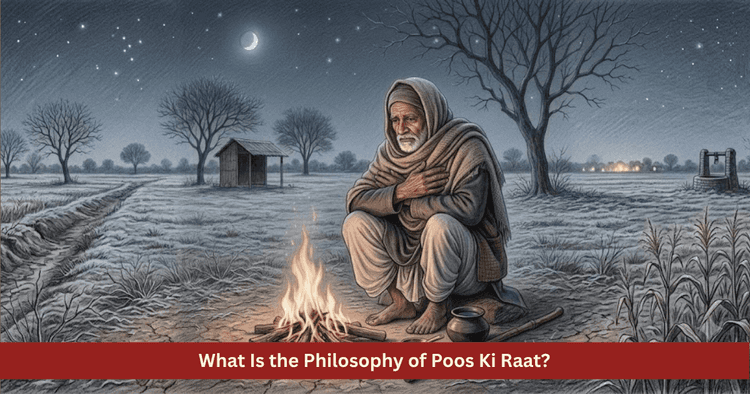
Table of Contents
The immortal short story Poos Ki Raat, masterfully crafted by the supreme pioneer of Hindi fiction and authentic chronicler of Indian rural realities Munshi Premchand, is far more than a basic social narrative documenting the debts, tears and domestic deprivations of an impoverished cultivator; it stands as an intensely moving, profound, astonishing and timeless philosophical allegory exploring the cosmic cycle of time, the unyielding cruelty of nature, the dehumanizing layers of feudal exploitation and the resilient spiritual struggle of human consciousness against overwhelming adversity. According to the traditional time calculations of the Vedic calendar, the sacred month of Pausha represents an exceptionally serious, tranquil, dry and introspective seasonal interval when the supreme solar deity Lord Surya transits across the outermost boundary of his southern celestial journey termed Dakshinayana. Because of this distinctive astronomical and meteorological alignment, daylight hours across the northern hemisphere contract into brief windows, nights become exceptionally prolonged, dense and icy and piercing drafts carry a frost capable of chilling human bones to the marrow, numbing normal biological reflexes. Such a freezing winter night does not merely indicate a steep physical decline in environmental temperatures; it tests the outer boundaries of human existence, moral endurance and inner patience where worldly wealth, thin cotton coverings and fragile thatched huts prove utterly helpless and ineffective.
The central protagonist Halku, his dignified and proud wife Munni and his faithful canine companion Jabra are not merely three fictional figures sketched on paper; they embody the living symbols of the traditional Indian agrarian community that has endured the crushing weight of winter cold and social oppression across centuries. While affluent and comfortable urban classes rest securely inside sheltered, heated residences, using heavy quilts and modern conveniences to romanticize the charm of the winter season, the true cultivator of the earth spends the night upon a barren boundary of his field beneath the stars, wrapped in an old, torn cotton sheet, fighting an existential battle against the freezing draft to protect his life. When examined through the profound lens of ancient Vedic philosophy, the wisdom of the Upanishads and classical Indian metaphysics, this narrative creates an extraordinary synthesis between realistic literature and timeless wisdom, compelling thoughtful minds to ask whether modern civilization has fulfilled its ethical, social and moral duties toward the cultivator who sustains human life. The foundational characters, philosophical themes, spiritual principles and societal realities embedded within this classic work appear systematically arranged in the table below.
| Narrative and Philosophical Element | Premchand Realist Depiction | Vedic and Spiritual Philosophy | Core Human and Societal Insight |
|---|---|---|---|
| Central Protagonist Halku | Impoverished, indebted and silently enduring farmer | An embodied soul exhausting karma through duty | Exploitation of farmers and systemic social apathy |
| Companion Hound Jabra | Faithful, wordless and equal partner in suffering | Unconditional companion echoing Dattatreya traditions | Universal non dual love bridging man and beast |
| Freezing Night of Pausha | Bone chilling frost, pervasive mist and absolute silence | Tamasic dark half of the year and cosmic testing | Raw adversity and the physical struggle to survive |
| Bonfire of Fallen Leaves | Fire ignited from dry mango orchard foliage | Earthly sacrificial hearth and primal vital luster | Fleeting physical comfort and inner triumph |
| Ruin Caused by Wild Herds | Destruction of the ripe harvest and Halku quietude | Severance of worldly attachments and dispassion | Bitter relief derived from escaping forced farming |
| Dignity of Munni | Articulate voice of a housewife stung by feudal insults | Householder duty, moral honor and practical realism | Silent rebellion against unfair agrarian taxation |
How Does the Bond Between Halku and Jabra Reveal Non Duality?
The most deeply touching, sensitive and philosophically resonant episode within Poos Ki Raat arrives when the bitter frost pierces the marrow of Halku's bones, compelling him to lift his domestic dog Jabra into his arms, wrapping the animal inside his worn cotton cloth. Munshi Premchand observes with delicate perception that in that intimate moment of shared survival, Halku perceives no repulsive animal odor emanating from the dog; instead, he experiences an extraordinary, transcendent, sacred and gentle wave of peace. This profound scene strikes at the core of superficial cleanliness, artificial social distinctions and hypocritical prejudices that judge worth based purely on outer physical forms while remaining spiritually hollow and indifferent to suffering.
The non dual philosophy of the Upanishads and the Advaita Vedanta formulated by ancient seers affirm that a singular, undivided cosmic consciousness breathes identically through every embodied entity across creation. In the sacred chapters of the Srimad Bhagavata Mahapurana, Lord Dattatreya acknowledged a dog among his twenty four teachers, honoring the animal as the supreme living emblem of unselfish loyalty, humble contentment and steadfast devotion. When Halku and Jabra huddle together beneath the freezing sky, drawing warmth from each other to preserve their breath, the artificial boundaries dividing master and servant or human and beast, dissolve completely. What remains are two conscious sparks of life standing together against the indifferent chill of nature, proving that genuine love and selfless compassion remain unbounded by species or form. This intimate union becomes the living expression of the Vedic ideal that beholds the entire universe as an extended family.
Is the Cold of Pausha a Bodily Torment or a Spiritual Trial?
Secular materialism defines winter merely as a decline in environmental temperature caused by the oblique inclination of solar rays, yet traditional Vedic philosophy recognizes seasonal transitions as transformative spiritual furnaces designed to purify human consciousness. The cold of Pausha strips away the illusions of worldly possessions that humans chase throughout life. Halku labors through the heat of the year to accumulate three rupees to purchase a protective winter blanket, yet when the ruthless village landlord arrives at his doorway shouting insults, Halku yields those savings to protect his moral honor.
This poignant choice demonstrates that for an honorable cultivator, the bodily torment of cold is minor compared to the degradation of human dignity inflicted by social injustice. The freezing night of Pausha confronts human existence with an enduring question: does the soul possess the courage to preserve its humanity, moral boundaries and patience amidst destitution? As Halku circles his small plot leaning upon his staff, he is not merely guarding his crops from wild animals; he is standing firm for the dignity of his labor, confronting the unyielding cosmic laws of life through sheer willpower. The winter frost numbs his physical frame, yet it leaves his inner sense of duty unbroken.
What Is the Symbolic Link Between the Bonfire and Fire Sacrifices?
A dramatic turning point in the story occurs when the freezing chill exceeds the endurance of both the farmer and his canine companion. Slipping into an adjacent mango grove in darkness, Halku gathers piles of dry leaves, carrying them to the field to kindle a large blaze using an ember from his clay pipe. The moment the leaves catch fire, the dark shadows of the orchard retreat as golden flames leap toward the night sky. Sitting before the fire warming his palms, an unexpected wave of courage and triumph surges through Halku. Leaping over the flames with childish delight, he challenges the dog, boasting of having conquered the cold.
Within classical Vedic traditions, elemental fire is revered as the manifest mouth of all sacred offerings and the divine transporter of human intentions. The modest leaf fire kindled by Halku is no less sacred than an elaborate Vedic fire sacrifice conducted with ancient verses. That fire served as the altar where an impoverished farmer surrendered his anxieties, weaknesses and fear of death into the flames. The fragrant smoke rising from burning mango leaves transformed that barren plot into a consecrated sanctuary where living consciousness asserted its victory over frozen inertia. That luminous moment reveals that no matter how resource poor an individual may be, if the will to live remains intact, the human spirit can ignite its own solar warmth amidst the darkest winters of existence.
Does the Destruction of the Harvest Bring Bitter Liberation?
The conclusion of Poos Ki Raat stands among the most striking, unexpected and thought provoking endings in world literature. Softened by the comforting warmth of the fire, Halku's limbs relax into deep slumber beneath his sheet. Nearby, Jabra barks desperately, warning that a herd of wild blue bulls has invaded the field, trampling the ripe harvest. Halku stirs twice, yet the sweet warmth and physical exhaustion overwhelm his resolve. He rationalizes his inaction, assuming that no wild creature could breach the perimeter while his faithful dog was on guard and drifts back to sleep.
At daybreak when his wife Munni wakes him in tears, lamenting that the entire crop is ruined and questioning how they will survive the year or pay taxes, Halku stretches his limbs with an unexpected, peaceful smile across his face. He remarks that at least he will no longer have to sleep outdoors in the freezing winter cold. This response is not the despair of a defeated man; it marks a moment of profound spiritual and existential realization. In that single breath, Halku finds himself freed from the endless cycle of agricultural exploitation that yielded only debt, humiliation and physical torment. Classical Indian thought affirms that when an individual loses their worldly possessions, an unattached spiritual dispassion arises within. The field was Halku's final material chain. Its destruction brought financial catastrophe, yet it offered liberation from an inhumane seasonal torture.
What Are the 5 Societal Lessons of the Winter Season?
Through the narrative of this timeless literary masterpiece, the month of Pausha imparts far more than seasonal rituals; it reminds society of five essential humanitarian responsibilities.
-
Expressing gratitude to farmers and ending exploitation: As citizens enjoy the comforts of winter festivals and warm delicacies in urban homes, they must reflect on the hardships endured by the cultivators who produce that food. Society must build economic systems where no farmer is forced to compromise their basic human dignity to survive.
-
Practicing active compassion toward voiceless animals: Through the character of Jabra, Premchand demonstrates that animals experience cold, hunger and suffering just like human beings. Providing warm shelters, food and protection to stray cattle, dogs and birds during the winter chill is a direct fulfillment of the scriptural duty of sustaining all living beings.
-
Recognizing the impermanence of material acquisitions: Halku's struggle over three rupees demonstrates that the material wealth pursued by modern society can vanish in an instant before the forces of nature. True security rests within inner resilience, contentment and moral strength.
-
Distributing warm clothing and blankets to the needy: Classical scriptures consider the donation of woolen blankets and protective garments during Pausha to be an exceptional act of charity. Shielding a vulnerable human being from the cold yields spiritual merit surpassing pilgrimages to holy river shrines.
-
Harmonizing with nature and releasing ego: This narrative teaches that humanity is not the sovereign ruler of nature but an integral part of its fabric. When nature reveals its cold winter face, human technological pride is humbled. Aligning one's life with seasonal realities rather than resisting them remains the timeless path of wisdom.
What Is the Eternal Message of the Cultivator's Will?
The traditional Indian farmer is far more than a basic laborer; he is a silent contemplative sage anchored to the soil. Across centuries, the cultivator has accepted droughts, floods, scorching heat and freezing winters as natural parts of existence. When he scatters seeds across the soil, he does so not merely for personal gain but to sustain society, birds, beasts and insects. Munshi Premchand's Poos Ki Raat stands as an epic testament to the quiet patience and unshakeable resilience of this agrarian soul. Halku remains undefeated because the inner vitality that drives his existence cannot be destroyed by external misfortune.
This classic story delivers the timeless lesson that the true value of human life does not lie in comfortable ease; it resides in preserving self respect, dignity and empathy while walking across trials. The month of Pausha reveals that no matter how deep the darkness, how sharp the cold or how unjust the world may seem, if a small flame of love, compassion and dignity burns within the heart, the human soul can endure the harshest winters of life. This literary masterpiece of Munshi Premchand remains an enduring mirror of the soul of India, keeping human consciousness compassionate, alert and dignified across generations.
FAQ
What is the core philosophical message of Munshi Premchand's Poos Ki Raat? The primary philosophical message is that when social exploitation and the indifference of nature push human endurance to its outer limits, material loss can paradoxically spark deep dispassion and liberation from oppressive burdens. Additionally, it highlights the non dual bond of love and mutual support bridging human beings and animals.
Why does Halku embrace his dog Jabra during the freezing night? Amidst the bone chilling frost of Pausha when his thin cotton sheet fails to protect him from the wind, Halku embraces his dog Jabra to share biological warmth. This profound act dissolves artificial societal boundaries between human and animal, revealing universal compassion and shared vulnerability.
Why does Halku feel a sense of relief after his entire crop is destroyed? Halku experiences quiet relief because the destruction of the harvest frees him from the endless cycle of agricultural debt and seasonal torture that forced him to risk his life sleeping in the freezing fields every winter.
What is the symbolic meaning of lighting the leaf bonfire in the story? Lighting the bonfire of dry mango leaves symbolizes the awakening of inner vitality, courage and the primal life force that refuses to surrender to cold despair. It represents the timeless triumph of living consciousness over frozen inertia.
What social lesson does this story offer to modern society? The narrative urges modern society to remain compassionate toward the agricultural community that feeds the world, to work toward fair economic justice and to actively protect vulnerable human beings and stray animals during the harsh winter season.
Get your accurate Kundali
Generate KundaliDid you like it?
Author

Aparna Patni (63)
Experience: 20
Consults About: Family Planning, Career
Clients In: Punjab, Haryana, Delhi
Share this article with friends and family
WELCOME TO
ZODIAQ
Right Decisions at the right time with ZODIAQ
