How Will Sesame And Jaggery Balance Sun-Saturn Afflictions?
By Pt. Narendra Sharma
Sesame-Jaggery Virtues, Shat-Tila Rules, Ayurveda And Planetary Peace
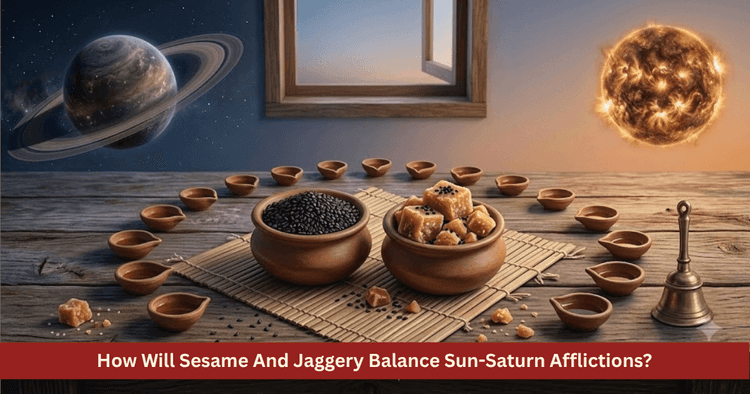
Table of Contents
Classical and Astronomical Context of Sesame and Jaggery in Paush
According to the classical doctrines of Sanatana cosmological computation, the sacred month of Paush is recognized as the most severe, dry and energy-conserving window of the entire annual cycle. With the arrival of deep winter (Shishira Ritu), ambient atmospheric temperatures drop sharply, prompting nature to enter a period of quiet hibernation. In response, ancient scriptural compendiums, classical Ayurvedic treatises and Vedic astrological authorities prescribe the regular consumption and ritual charity of sesame seeds (both black and white) combined with pure unrefined jaggery, elevating this mixture to the status of living nectar. While popular culture often views winter sesame sweets merely as festive confections, classical philosophy reveals that this combination serves as an alchemical remedy designed to harmonize human physiology, mental equilibrium and subtle karmic destiny.
From an astronomical perspective, during the month of Paush, the planetary Sun concludes his transit through Jupiter's sign of Sagittarius, moving steadily toward Capricorn, the celestial domicile of his son Saturn. The ancient metaphysical friction and elemental tension between the fiery Sun and the airy, disciplinary Saturn are balanced and transformed into mutual cooperation through the medium of sesame seeds and jaggery.
| Astrological & Nutritional Dimension | Classical Component & Method | Cosmic & Biological Manifestation |
|---|---|---|
| Primary Calendar Window | Entire month of Paush, especially Saturdays & Sankranti | Pacifying winter humors and harmonizing planetary forces |
| Foundational Substance Pair | Black and white sesame seeds with pure unrefined jaggery | Harmonious union of Saturn (sesame) and Sun (jaggery) |
| Inherent Physical Potency | Naturally heating, unctuous, fortifying and digestive | Igniting digestive fire, clearing intestinal tract, warmth |
| Essential Micronutrients | Bioavailable calcium, iron, magnesium, healthy lipids | Bone mineral density, hemoglobin synthesis, stamina |
| Governing Celestial Deities | Lord Surya Narayana (Sun) and Lord Shani Deva (Saturn) | Reconciling paternal bonds, unlocking blocked fortune |
| Traditional Festive Delicacies | Tilkut, gajak, sesame laddus, revdi, brittle chikki | Alleviating seasonal blues, cellular nourishment |
| Core Liturgical Disciplines | Shat-Tila rites, solar oblations, ancestral tarpana | Pacifying Sade Sati, satisfying ancestors, protection |
When the natural unctuousness of dark sesame seeds merges with the concentrated thermal energy of unrefined jaggery, it creates a dietary shield against the winter freeze while pacifying difficult planetary configurations in the natal horoscope.
Sun-Saturn Cosmic Polarity and the Mediating Grace of Sesame-Jaggery
In classical Vedic astrology, the Sun represents the cosmic soul, radiant light, paternal lineage, executive authority and personal identity, whereas Saturn embodies karmic accountability, ascetic detachment, subterranean darkness and impartial justice. Mythological annals record that Saturn was born of the Sun's shadowy consort, Chhaya. Witnessing the dark complexion and austere demeanor of his infant son, the Sun rejected him, initiating an ideological polarity between father and son.
In natal horoscopy, when the Sun and Saturn form tight conjunctions, mutual aspects or hostile transits, the native frequently encounters strained relationships with the father, administrative roadblocks, skeletal frailty, chronic eye disorders and public humiliation.
- The Saturnian Essence of Sesame: While sacred lore traces the origin of sesame seeds to the divine perspiration of Lord Vishnu, their dark color and oily, grounding nature resonate with Saturn. Sesame embodies the air and earth elements, providing structural stability and patience.
- The Solar Radiance of Jaggery: Created by concentrating the fresh juice of sugarcane over an open flame, dark jaggery represents the fiery energy of the Sun. It governs vitality, metabolism and blood formation.
- The Spiritual Alchemy of Tilkut: When brittle, dry and dark sesame seeds are crushed together with warm, sweet jaggery, 'Tilkut' is formed. The act of pounding symbolizes the surrender of the ego. The sweetness of jaggery absorbs the astringency of Saturn, while the natural oils of sesame soften the harsh heat of the Sun.
- The Festival of Reconciliation: On Makar Sankranti, when the Sun enters Capricorn, Saturn welcomes his father by offering black sesame seeds. Pleased by this humble devotion, the Sun blesses humanity, declaring that whoever consumes and donates sesame and jaggery during this season shall receive the benevolent grace of both planetary sovereigns.
Ayurvedic and Physiological Science of Winter Nutrition
Classical medical compendiums, including the Charaka Samhita and the Ashtanga Hridayam of Vagbhata, note that during deep winter, external environmental cold constricts cutaneous pores across human skin. This physiological response prevents internal bodily warmth from escaping into the environment, causing the internal metabolic fire (Jatharagni) to burn with exceptional intensity. If the body is deprived of nutrient-dense and unctuous nutrition during this period, the intensified digestive fire begins to consume bodily tissues, resulting in emaciation, dryness and aggravated wind disorders (Vata vyadhi).
Sesame and jaggery provide balanced nourishment for deep winter:
| Anatomical System | Common Winter Debility | Therapeutic Action of Sesame-Jaggery |
|---|---|---|
| Musculoskeletal Framework | Joint stiffness, thinning of synovial fluid | High bioavailable calcium and zinc reinforce bone density |
| Circulatory System | Peripheral vasoconstriction, sluggish blood flow | Iron from jaggery boosts hemoglobin and circulation |
| Respiratory Pathways | Excess phlegm accumulation, dry cough, asthma | Sesame oils and jaggery soothe and clear bronchial mucus |
| Gastrointestinal Tract | Sluggish digestion, dry intestinal walls, constipation | Soluble fiber and natural digestive enzymes ease elimination |
| Central Nervous System | Cold-induced nerve tremors, muscular cramps | Magnesium and copper nourish and calm neural pathways |
Sesame seeds contain approximately 50% healthy fats, rich in polyunsaturated and monounsaturated fatty acids. This natural lipid profile protects the skin from cracking and lubricates internal mucous membranes. Concurrently, unrefined jaggery is a complex carbohydrate that provides sustained metabolic warmth, helping the body maintain its core temperature through biting cold waves.
Black Sesame Versus White Sesame: Energetic and Ritual Differences
In traditional liturgical rituals and Ayurvedic pharmacology, black and white sesame seeds are assigned distinct applications based on their energetic properties:
- Glories of Black Sesame Seeds (Kala Tila):
- Presiding Deities: Lord Vishnu, Lord Shani and ancestral spirits (Pitrus).
- Primary Uses: Ancestral water oblations (Tarpana), funeral rites, pacifying Saturn and neutralizing node afflictions.
- Therapeutic Profile: Black sesame seeds contain higher concentrations of antioxidants, calcium and natural lipids than white varieties. The fibrous outer husk aids systemic detoxification and cellular rejuvenation.
- Glories of White Sesame Seeds (Safed Tila):
- Presiding Deities: Lord Surya Narayana, Deva Guru Jupiter and the Moon.
- Primary Uses: Daily culinary preparations, sacred fire sacrifices, festive confections and child-blessing rituals.
- Therapeutic Profile: Sweeter in flavor, lighter to digest and soothing to the palate, white sesame seeds support cognitive memory, mental tranquility and physical stamina.
The Shat-Tila Discipline: Six Sacred Applications of Sesame
Authoritative scriptural compendiums outline six distinct applications of sesame seeds during Paush and Magh, known collectively as the 'Shat-Tila' discipline. Observing these six practices purifies physical, vocal and mental actions:
- Tilodvarti (Sesame Body Rub): Massaging the body with warm unrefined sesame oil or crushed sesame paste before bathing opens cutaneous pores, pacifies Vata dosha and enhances peripheral circulation.
- Tilasnayi (Sesame Consecrated Bath): Mixing black sesame seeds into domestic bathwater cleanses the biofield of stagnant psychic negativity.
- Tilohomi (Sesame Fire Oblations): Offering black sesame seeds, unrefined jaggery and pure cow ghee into the morning and evening sacred hearth purifies the immediate atmosphere of microbial pathogens.
- Tilodaki (Sesame Ancestral Libations): Facing the southern horizon to offer water and black sesame libations from a copper vessel quenches the thirst of departed ancestors, bringing peace to the lineage.
- Tilabhuk (Sesame Consumption): Consuming sesame seeds combined with jaggery daily sustains internal biological heat and protects bodily tissues.
- Tiladata (Sesame Charity): Gifting black sesame seeds and dark jaggery to scholars and the destitute on Saturdays, new moon days or Makar Sankranti yields lasting spiritual merit.
Time-Tested Astrological Remedies for Planetary Afflictions
When planetary afflictions cause prolonged stagnation, health crises or domestic friction, executing targeted scriptural remedies with sesame and jaggery during Paush brings rapid relief:
- Pacifying Saturn's Sade Sati and Dhaiya: On Saturdays, wrap one and a quarter kilograms of black sesame seeds and half a kilogram of dark jaggery in a clean black cotton cloth. Circle this package over your head seven times and donate it to a traditional Saturn shrine or an afflicted individual. Concurrently, kindle an unrefined sesame oil lamp beneath an ancient Peepal tree at dusk.
- Resolving Sun-Saturn Conjunction Afflictions: If the Sun and Saturn occupy the same house in your birth chart, causing tension with the father or administrative roadblocks, rise at dawn throughout Paush. Fill a clean copper pitcher with fresh water, black sesame seeds and dark jaggery, offering it to the rising sun while chanting 'Om Suryaya Namah'.
- Neutralizing Rahu and Ketu Disruptions: If troubled by recurring nightmares or sudden life disruptions, prepare small sweet balls using equal parts black and white sesame seeds bound with melted jaggery. Feed these confections to a black dog or scatter them near anthills on Wednesday and Saturday evenings.
- Strengthening a Weak Sun and Low Vitality: Individuals struggling with low self-confidence and chronic fatigue should consume a piece of dark jaggery and a spoonful of roasted white sesame seeds followed by a cup of warm water every morning at dawn.
Traditional Winter Delicacies: Tilkut, Gajak and Revdi
Across northern India, particularly in Rajasthan, Uttar Pradesh and Bihar, the preparation of traditional sesame sweets during Paush is a celebrated winter craft.
- Tilkut: Prepared by gently roasting sesame seeds and pounding them in stone mortars with unrefined sugar or jaggery, Tilkut is the primary offering during Paush, featured prominently during Sankat Chauth.
- Gajak and Revdi: Cities like Beawar in Rajasthan and Meerut in Uttar Pradesh are famous for artisan gajak. Hot jaggery syrup is pulled repeatedly to aerate the candy before being layered with roasted sesame seeds, producing a crisp, flaky confection that provides easily digestible calories for children and elders.
- Til-Patti (Brittle Chikki): Poured thin on polished stone surfaces, melted jaggery and whole sesame seeds form crisp, golden sheets that serve as natural energy bars for winter travel.
Practical Guidelines and Dietary Restraints
While sesame and jaggery are deeply nourishing, their consumption should remain balanced:
- The Principle of Moderation: Both sesame and jaggery are naturally heating. A daily portion of 20 to 30 grams of sesame seeds paired with an equal amount of jaggery is sufficient for a healthy adult. Excessive consumption can aggravate internal bile (Pitta), potentially triggering nosebleeds or skin breakouts.
- Considerations for Diabetics: While unrefined jaggery is superior to refined white sugar, individuals managing diabetes should consume it in strict moderation under medical guidance.
- The Rule of Water Intake: Avoid drinking cold water immediately after consuming sesame and jaggery confections. Waiting fifteen to twenty minutes before sipping soothing lukewarm water supports optimal digestion.
FAQ
Why is it considered essential to consume sesame and jaggery together during Paush? Sesame represents Saturn and jaggery represents the Sun; eating them together harmonizes their astrological energies while providing essential lipids, iron and warmth during deep winter.
How should black sesame seeds be used to pacify Saturnian afflictions? Donate black sesame seeds and jaggery on Saturdays, kindle a sesame oil lamp beneath a Peepal tree and feed flatbreads enriched with sesame and jaggery to a black dog.
What is the core difference between the applications of black and white sesame seeds? Black sesame seeds possess higher mineral and oil concentrations, making them suited for ancestral rites and Saturn remedies, while white sesame seeds are sweeter, lighter and ideal for daily nutrition and solar worship.
Why are sesame seeds and jaggery added to water when offering morning oblations to the Sun? Jaggery honors the Sun while sesame appeases Saturn; offering them together in oblation water resolves ancestral and planetary tension, bringing vitality and social respect.
What is the optimal time of day to consume sesame and jaggery according to Ayurveda? Consuming sesame and jaggery during morning breakfast or immediately following the midday meal stimulates the digestive fire, sustaining physical energy throughout the day.
Get your accurate Kundali
Generate KundaliDid you like it?
Author

Pt. Narendra Sharma (63)
Experience: 20
Consults About: Family Planning, Career
Clients In: Punjab, Haryana, Delhi
Share this article with friends and family
WELCOME TO
ZODIAQ
Right Decisions at the right time with ZODIAQ
