What Is The Spiritual Merit Of Winter Pilgrimage Baths?
By Pt. Narendra Sharma
Haridwar, Kashi, Prayag Sangam, Brown Fat Science And Solar Arghya
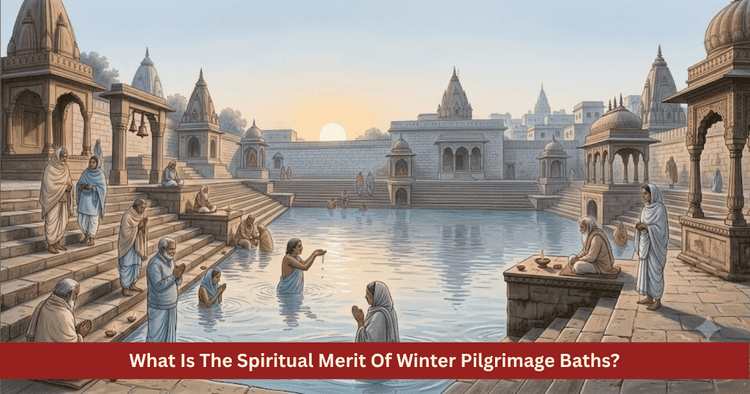
Table of Contents
Classical Foundations of Winter Pilgrimage Ablutions in Paush
According to the classical doctrines of Sanatana cosmological computation and the sacred Vedic calendar, the month of Paush represents the most severe, introspective and energy-conserving window of the entire annual cycle. With the formal arrival of deep winter (Shishira Ritu), ambient atmospheric temperatures plunge sharply, prompting cosmic nature to enter a period of quiet hibernation. In foundational scriptural treatises-including the Matsya Purana, Padma Purana and the Anushasana Parva of the Mahabharata-taking a sacred dip in consecrated river waters during this intense freeze is revered not merely as routine bodily cleansing but as supreme ascetic penance and a direct elemental water sacrifice (Jala Yajna).
During this period of intense cold, when ordinary individuals hesitate even to bathe in lukewarm domestic water, rising before dawn during Brahma Muhurta to submerge within the icy torrents of the Ganga at Haridwar, the holy steps of Manikarnika and Dashashwamedh in Kashi or the Triveni Sangam at Prayagraj transforms human consciousness. Classical scriptures affirm that just as impure raw gold is smelted within fiery crucibles to emerge as refined, unblemished ornament, an individual submerging within the freezing waters of Paush washes away the karmic residues of past incarnations.
| Pilgrimage & Bath Dimension | Classical Scriptural Injunction | Subtle Cosmic & Terrestrial Manifestation |
|---|---|---|
| Optimal Seasonal Window | Entire month of Paush, especially pre-dawn Brahma Muhurta | Cellular purification of the pranic sheath, vital ojas |
| Supreme Pilgrimage Triad | Haridwar (Har Ki Pauri), Kashi (Ghats), Prayagraj (Sangam) | Balancing Ida, Pingala and Sushumna subtle channels |
| Physical Water State | Freezing temperatures, mineral-rich, high dissolved oxygen | Biological activation of Brown Adipose Tissue (BAT) |
| Presiding Sovereign Deities | Lord Shiva, Lord Sri Hari Vishnu and Mother Ganga | Freedom from the wheel of rebirth, attaining Vaikuntha |
| Primary Spiritual Fruit | Merit equivalent to Ashvamedha and Rajasuya sacrifices | Pacifying tridoshas, clearing mental torpor, inner resolve |
| Invariable Liturgical Codes | Solar adoration, Gayatri japa, copper pot oblations | Thermoregulatory stabilization, arterial flexibility |
| Concluding Charitable Gifts | Warm woolens, black sesame, dark jaggery, river lamps | Satiating ancestors, pacifying Saturn-Rahu, lineage peace |
This winter pilgrimage bath lifts human awareness above physical comfort, establishing the soul in a state where attachment to the physical frame falls away, leaving the pure light of the True Self shining unobstructed.
The Spiritual Energy Triangle: Prayagraj, Haridwar and Kashi
Within sacred geography, Prayagraj, Haridwar and Kashi are recognized as geopolitical portals of concentrated spiritual energy. During the month of Paush, the movement of the holy Ganga across these three sanctuaries interacts with human consciousness in distinct ways:
- Haridwar (Har Ki Pauri): Located where the river emerges from the high valleys of the Himalayas onto the northern plains. Its waters flow swift, icy and saturated with dissolved Himalayan botanical minerals. Submerging here during Paush dispels physical sloth and mental torpor, revitalizing the nervous system with fresh vigor.
- Kashi (Manikarnika & Dashashwamedh Ghats): The eternal city of Lord Shiva, where the holy river turns northward (Uttaravahini). The northern direction governs spiritual wisdom, transcendental knowledge and liberation. Bathing along these steps during Paush dissolves the fear of transition, attuning the soul to the liberating presence of Lord Shiva.
- Prayagraj (Triveni Sangam): The sacred confluence of the Ganga, Yamuna and invisible Saraswati, celebrated as the altar of primordial creation. Commencing on Paush Purnima, pilgrims undertake the month-long discipline of Kalpavas. Ablutions here harmonize the subtle channels-Ida (Ganga), Pingala (Yamuna) and Sushumna (Saraswati)-supporting the ascent of spiritual awareness.
| Pilgrimage Center | Hydrodynamic Nature & Velocity | Governing Elemental Quality | Manifest Subtle Influence on Human Biology |
|---|---|---|---|
| Haridwar | High velocity, glacial chill, pristine clarity | Shiva principle, dispassion, vigor | Dispelling sloth, nerve stimulation, celibacy |
| Kashi | Serene, northward-flowing, liberating | Transcendental wisdom, dissolution | Overcoming existential fear, mental clarity |
| Prayagraj | Sacred triple confluence, nectar vortex | Vishnu and Saraswati grace, balance | Balancing humors, aligning nadis, firm resolve |
Modern Physiology of Cold Water Immersion: Brown Fat Activation
Examined through modern medical science, neurobiology and cryotherapy, submerging within icy natural waters during Paush operates as an advanced method for systemic biological renewal.
When the human body enters water ranging between 4 and 10 degrees Celsius, cutaneous thermal receptors transmit immediate signals to the central nervous system, triggering profound physiological shifts:
- Activation of Brown Adipose Tissue (BAT): Human physiology contains two primary types of fat: white adipose tissue, which stores excess calories and brown adipose tissue, which burns energy to generate biological heat. Immersion in cold water activates brown fat reserves. At the mitochondrial level, brown fat metabolizes circulating lipids and glucose to produce non-shivering thermogenesis, accelerating metabolic rate and aiding weight management.
- Release of Cold Shock Proteins (CSPs): Glacial water immersion triggers the hepatic and muscular release of specialized cold shock proteins, notably RBM3. This protein stimulates neurogenesis and the repair of synaptic connections within the brain, protecting cognitive memory against degenerative decline.
- Elevating Immune Defenses: Immersion accelerates lymphatic drainage and stimulates bone marrow activity. This leads to a marked increase in circulating white blood cells, T-lymphocytes and natural killer (NK) cells, strengthening systemic resistance against seasonal respiratory pathogens.
- Sustained Dopamine and Endorphin Surge: Immersing the body in cold water produces an immediate spike in systemic dopamine concentrations, rising up to 250 percent above baseline. This elevated neurochemical state persists for hours, imparting sustained mood elevation, calm focus and mental stamina.
Scriptural Parallels: Cold Water Austerity as Fire Penance
In the Anushasana Parva of the Mahabharata, the patriarch Bhishma instructs Yudhishthira that the spiritual rewards achieved through years of grueling forest penances, fasts and lavish sacrifices are attained effortlessly through regular pilgrimage ablutions during the month of Paush.
The Srimad Bhagavatam preserves the beloved narrative of the 'Katyayani Vrata' observed by the maidens of Vraja. During the freezing mornings of Paush, the gopis waded into the icy currents of the Yamuna before dawn, shaping an altar of river sand to worship Mother Katyayani, praying to attain Lord Sri Krishna as their eternal lord. Enduring the freezing river waters as an act of loving surrender, their earthly attachments dissolved, granting them direct realization of the Supreme Divine.
- Elemental Cleansing of Karmic Impressions: Classical philosophy teaches that water is the primordial manifestation of life force (Apo Narayanatmikah). Consecrated rivers carry subtle spiritual potencies. When a seeker embraces the discipline of the freezing river with faith, that sensory discomfort functions as a tapasya (purifying fire), burning away accumulated mental and physical demerits.
- Mastery Over the Senses: Remaining tranquil while entering freezing water tests human willpower. A seeker who masters physical discomfort in cold water cultivates equanimity, learning to face worldly challenges without distress.
Step-by-Step Liturgical Methodology for River Bathing
To harvest the full physical, mental and spiritual benefits of a winter pilgrimage bath, one should observe classical scriptural guidelines. Entering and departing the sacred waters follows a deliberate ritual sequence:
1. Preparation on the Riverbank
Leave your footwear well away from the water's edge. Wash your hands and feet, taking three sips of water from your palm for preliminary purification. Touch the river water with both palms, lifting droplets to your forehead while reciting:
Gange cha Yamune chaiva Godavari Saraswati.
Narmade Sindhu Kaveri jalesmin sannidhim kuru.
Rather than jumping directly into deep water, gently splash water across your feet, knees, shoulders and crown to allow your cardiovascular system to acclimatize smoothly to the water's temperature.
2. Resolution and Immersion Sequence
Step into the river until the water reaches your navel, facing the eastern or northern horizon. Holding clean water, kusha grass and black sesame seeds in your right palm, state your name, ancestral lineage (Gotra) and the lunar date, making your resolve (Sankalpa).
Close your eyes and ears, submerging your entire body three, five or seven times. With each immersion, repeat 'Har Har Gange' or 'Om Namo Narayanaya' with inner focus. Using synthetic soaps or chemical cleansers in the sacred river is strictly prohibited by scripture and disrespectful to the waters.
| Stage | Liturgical Action | Sacred Verse or Intent | Underlying Spiritual Objective |
|---|---|---|---|
| First | River Adoration & Touch | Gange cha Yamune chaiva... | Expressing humility and seeking permission |
| Second | Water Purification & Resolve | Om Vishnave Namah | Directing mental focus, honoring the space |
| Third | Threefold Holy Immersion | Har Har Gange / Om Namah Shivaya | Cleansing gross and subtle energetic fields |
| Fourth | Ancestral Water Libation | Om Pitribhyah Swadha Namah | Quenching the subtle thirst of ancestors |
| Fifth | Dawn Solar Oblation | Om Bhagaya Namah / Gayatri | Stabilizing body warmth, absorbing solar ojas |
3. Solar Oblation and Ancestral Libations
Do not exit the river immediately following your bath. Standing navel-deep in the water, gather water in your cupped palms to offer three streams toward the rising sun. Then, turn toward the southern horizon to offer three palmfuls of water mixed with black sesame seeds for your departed ancestors. The morning sun warms the body, while ancestral offerings bring blessings of continuity and peace to the lineage.
Replicating Pilgrimage Ablutions at Home
Seekers unable to travel to Haridwar, Kashi or Prayagraj due to advanced age, physical frailty or family responsibilities can replicate the spiritual merits of a pilgrimage bath at home. Sanatana philosophy emphasizes that sincere devotion sanctifies any space.
- Infusing Domestic Water with Ganga Water: Rise before dawn during Brahma Muhurta. Add a few drops of consecrated Ganga water and a pinch of black sesame seeds to your bathwater.
- Invoking the Seven Sacred Rivers: Standing before the water, fold your hands and visualize yourself standing along the banks of Har Ki Pauri or the Triveni Sangam. Mentally invoke the sacred rivers: Ganga, Yamuna, Godavari, Saraswati, Narmada, Sindhu and Kaveri.
- Mindful Bathing Sequence: Pour water first over your crown, then across your shoulders and down the rest of the body.
- Copper Vessel Solar Oblations: Following the bath, fill a clean copper pitcher with fresh water, red sandalwood paste, unbroken rice and unrefined jaggery, offering it to the rising sun.
- Chanting the Gayatri Mantra: Face the eastern horizon to chant the sacred Gayatri Mahamantra at least twenty-four times.
Observing this disciplined morning regimen at home purifies the domestic environment, clears subtle architectural flaws and brings tranquility to the household.
Essential Health Precautions for Winter Bathing
While winter pilgrimage bathing carries deep spiritual merit, one must never endanger personal health through reckless exertion. Observe these practical health guidelines:
- Care for Cardiovascular and Respiratory Vulnerabilities: Individuals managing severe heart conditions, uncontrolled hypertension or chronic bronchial asthma should avoid sudden immersion into freezing rivers. Instead, splash river water gently across the limbs or bathe using warm water mixed with consecrated river drops.
- Immediate Post-Bath Care: Upon exiting the water, dry the skin thoroughly with a clean cotton towel and change into warm, dry woolen clothing immediately. Keep the head and ears protected from cold drafts.
- Basking in Morning Sunlight: Spend fifteen to twenty minutes resting in the gentle morning sun after bathing. This helps restore core body temperature and soothes cold-sensitive joints.
- Warming Drinks: After completing your prayers, partake of a little jaggery followed by warm water or a freshly brewed herbal tea of ginger and Tulsi to support the internal digestive fire.
Spiritual Rebirth and the Living Message of Holy Rivers
Submerging within the freezing currents of Haridwar, Kashi and Prayagraj during Paush is an act of surrendering the ego. Stepping willingly into the cold river acknowledges that the physical frame is transient and that Supreme Consciousness alone is eternal.
The chill of the sacred water washes away arrogance, anger, physical lethargy and mental hesitation. Emerging from the river, the practitioner experiences an inner renewal-pure, clear and peaceful.
A seeker who embraces the deeper meaning of this winter discipline walks through life free from physical and mental distress, anchored in inner peace. Let us honor these sacred rivers during this auspicious month, commit to protecting their cleanliness and immerse ourselves in their waters to revitalize body, mind and spirit.
FAQ
How does taking a cold pilgrimage bath in Paush month wash away past-life sins? Scriptures view bathing in freezing water as an intense spiritual penance; just as heat purifies gold, enduring the cold with devotion cleanses subtle karmic impressions.
How does cold water immersion activate Brown Adipose Tissue (BAT) in the body? Exposure to cold stimulates cutaneous sensory nerves, triggering brown fat cells to burn glucose and lipids at the mitochondrial level, generating internal warmth and boosting metabolism.
How can an individual gain the benefits of a pilgrimage bath without leaving home? By rising before dawn during Brahma Muhurta, adding consecrated Ganga water and black sesame seeds to regular bathwater and invoking the seven holy rivers with devotion.
Why is using commercial soap or shampoo strictly forbidden in sacred rivers? Holy rivers are revered as divine mothers; introducing synthetic chemicals pollutes their waters, which classical scriptures consider spiritually harmful and disrespectful.
Why is it mandatory to offer solar oblations immediately after exiting the river? Cold water lowers surface body temperature; offering oblations to the morning sun absorbs solar warmth, supports circulation and honors the source of life.
Get your accurate Kundali
Generate KundaliDid you like it?
Author
Pt. Narendra Sharma (63)
Experience: 20
Consults About: Family Planning, Career
Clients In: Punjab, Haryana, Delhi
Share this article with friends and family
WELCOME TO
ZODIAQ
Right Decisions at the right time with ZODIAQ
