What Is The Mystery Of Diverse Braj Holis?
By Pt. Abhishek Sharma
Forty Day Spring Festival Across Nandgaon, Gokul and Baldeo
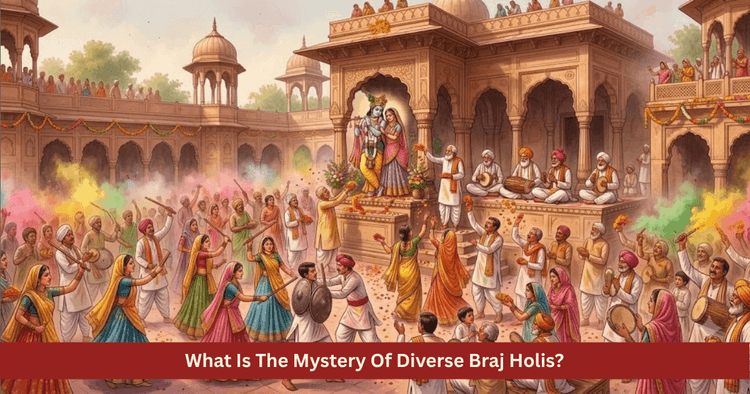
Table of Contents
Panchang Description And The Forty Day Braj Festival Schedule
The entire bright and dark fortnights of the month of Phalguna cause an ocean of joy, ecstatic devotion and divine love to flow across the sacred land of Braj, unmatched across all celestial realms. According to the classical Vedic calendar, the spring festival of colors in Braj is not merely a single day observance upon the full moon but a forty day spiritual festival extending from Vasant Panchami until the first lunar day of Chaitra. Throughout this period, the diverse sacred pastime sites of Sri Radha Krishna-Nandgaon, Barsana, Gokul, Vrindavan, Mathura, Baldeo and the Sri Banke Bihari temple-host distinct expressions of the spring festival. This sacred observance marks the highest communion between the individual soul and the Supreme, wherein each regional ceremony possesses its own strict scriptural and emotional protocols.
| Panchang Date | Sacred Form of Festival | Principal Pilgrimage Site | Primary Implements Utilized | Dominant Spiritual Sentiment |
|---|---|---|---|---|
| Magha Shukla Panchami | Installation of First Altar | Across the Braj Landscape | Consecrated red abir, songs | Transmutation of base desire |
| Phalguna Shukla Dwitiya | Phulera Dooj Floral Holi | Sri Banke Bihari Temple | Fragrant unblemished flower petals | Tender affection and sweetness |
| Phalguna Shukla Navami | World Famed Lathmar Holi | Sriji Temple, Barsana | Palash extract, staves, shields | Surrender of ego before Shakti |
| Phalguna Shukla Dashami | Nandgaon Lathmar Holi | Nanda Bhavan, Nandgaon | Herbal orange dyes, metal shields | Fraternal love and cowherd joy |
| Phalguna Shukla Ekadashi | Rangbhari Amalaki Ekadashi | Banke Bihari and Vishwanath | Pure solid silver syringe, abir | Matrimonial bliss of the Divine |
| Phalguna Shukla Dwadashi | Chhadi Mar Baton Holi | Gokul Abode, Mathura | Scented waters, slender staves | Maternal care for infant Gopala |
| Phalguna Shukla Chaturdashi | Holi of Renunciant Mothers | Gopinath Temple, Vrindavan | Herbal gulal, divine sankirtan | Social liberation and surrender |
| Chaitra Krishna Dwitiya | Dauji Huranga Grand Finale | Dauji Temple, Baldeo | Tearing of robes, stone wells, whips | Cosmic joy of Balarama and Revati |
To absorb the spiritual fruits of this continuous forty day circumambulation and festival circuit in Braj, an aspirant must maintain strict adherence to classical spiritual codes throughout the pilgrimage.
- Awakening before sunrise during Brahma Muhurta to bathe in the sanctified currents of the Yamuna river, wearing clean white or yellow unstitched cotton garments.
- Anointing one's forehead, throat and cardiac center with the sacred dust of Braj while praying for the eradication of sensory impurities.
- Refraining strictly from synthetic, industrial, toxic or artificial chemical pigments within temple precincts, offering only organic herbal powders.
- Viewing the native residents of Braj not as secular mortals but as the eternal companions and personal associates of Sri Radha and Sri Krishna.
- Maintaining an unbroken mental repetition of the sacred formula "Radhe Radhe" or the supreme Hare Krishna maha mantra throughout the journey.
- Listening with quiet concentration to the traditional spring ballads, philosophical songs and classical verses chanted by local elders.
- Cultivating a pure attitude of maternal reverence toward women, maintaining spotless decorum and moral conduct.
- Attending evening discourses on sacred pastimes and congregational singing before partaking of satvic temple food offerings.
Nandgaon Lathmar Holi And The Counterpart Celebration Of Cowherds
On the tenth lunar day of the bright fortnight of Phalguna, immediately following the celebration in Barsana, this sacred festival moves into the historic village of Nandgaon. When the male companions of Krishna absorb the descending strikes of wooden batons in Barsana on the ninth day, the cowherds of Barsana visit the home of Krishna in Nandgaon on the tenth day. This is celebrated across Braj as the reciprocal invitation festival.
Within the sanctified assembly of the Nanda Bhavan temple, elders and youths of both regions gather to chant classical verses. The married women of Nandgaon take up seasoned wooden staves to strike the raised metal and leather shields held by the kneeling men of Barsana. This reciprocal observance displays an extraordinary synthesis of fraternal friendship and selfless devotion, causing onlookers to transcend bodily identification. The swirling clouds of saffron and scarlet powders in the narrow lanes of Nandgaon proclaim that Radha and Krishna are nondual aspects of the same supreme reality: that which manifests as a disciplinary staff in Barsana transforms into a protective shield in Nandgaon to receive divine love.
The Sacred Presence At Banke Bihari Temple And The Solid Silver Syringe
The world renowned temple of Sri Banke Bihari in Vrindavan serves as the exalted center of spring festivities, where formal barriers dividing the seeker from the Divine dissolve completely. Commencing upon the auspicious eleventh lunar day of the bright fortnight of Phalguna, known as Rangbhari Ekadashi, an effulgent scene unfolds the moment the sanctum doors swing open.
The divine icon of Thakur Banke Bihari is adorned in pristine white silk robes embroidered with threads of pure gold and silver. Within his lotus hands rests an ancient syringe cast from solid refined silver. The consecrated temple priests fill this historical silver instrument with scented waters prepared by boiling palash blossoms, saffron, natural rose water and sandalwood extract, showering the cascading stream directly over the heads of the assembled pilgrims. When that consecrated nectar touches the brow and limbs of an aspirant, it feels as though the Lord is washing away the accumulated karmic transgressions of countless physical births.
Tons of fragrant, dry herbal powders are released into the temple atmosphere, enveloping the sanctum in a radiant crimson mist. As devotees dance to the rhythm of ancient spring hymns sung before the altar, distinctions of worldly wealth, social prestige and scholarly learning vanish, leaving only the transcendental sweetness of Radha Krishna consciousness.
| Temple and Holy Site | Principal Festive Date | Optimal Darshan Timing | Distinct Materials Employed |
|---|---|---|---|
| Sri Banke Bihari, Vrindavan | Phalguna Shukla Ekadashi to Purnima | 9:00 AM to 1:00 PM | Solid silver syringe, rose water, abir |
| Radha Vallabh Temple, Vrindavan | Phalguna Shukla Ashtami to Purnima | 10:00 AM to 12:00 PM | Scented rose extract, yellow sandalwood |
| Nanda Bhavan, Nandgaon | Phalguna Shukla Dashami | 2:00 PM to 6:00 PM | Hard leather shields, palash flower dyes |
| Gokul Nanda Qila, Gokul | Phalguna Shukla Dwadashi | 11:00 AM to 4:00 PM | Slender batons, yogurt, turmeric butter |
| Dauji Temple, Baldeo | Chaitra Krishna Dwitiya | 12:00 PM to 5:00 PM | Stone cisterns of color, cloth lashes |
The Slender Baton Play Of Gokul And Maternal Devotion To The Child
On the twelfth lunar day of the bright fortnight of Phalguna, an exceptionally tender observance known as Chhadi Mar Holi is solemnized across the Yamuna in the ancient settlement of Gokul. Gokul is the sacred sanctuary where Lord Sri Krishna spent his early infancy, performing endearing childhood pastimes.
Traditional sentiment in Gokul holds that infant Krishna is still of tender age; therefore neither he nor his cowherd companions can be subjected to heavy wooden staves, as it might cause physical discomfort to the child. Consequently, the women of Gokul take up slender, lightweight wooden batons adorned with fresh floral garlands. They strike the visiting cowherds with gentle, rhythmic taps that carry pure maternal affection.
On this day, offerings of fresh churned butter, rock sugar and warm milk blended with turmeric are presented before the child manifestation of Krishna. Following this, the participants celebrate by showering yogurt, churned butter and turmeric water upon one another. This celebration embodies the pinnacle of maternal devotion, revealing that the Supreme Lord is won not through dry awe and majesty but through affectionate, protective care.
The Holi Of Renunciant Mothers In Vrindavan And Social Deliverance
The spring festival celebrated by renunciant and widowed mothers within the ancient Gopinath and Radha Vallabh temples of Vrindavan represents a deeply moving, compassionate and liberating chapter in contemporary Sanatana culture. For centuries, rigid social orthodoxy across certain regions imposed an austere exclusion upon widowed women, barring them from colors, joyful celebrations and auspicious ceremonies.
However, upon the sacred soil of Vrindavan, this societal barrier was dismantled. Inspired by the egalitarian Vaishnava philosophy of Sri Chaitanya Mahaprabhu and Sanatana Goswami, thousands of destitute, abandoned and saintly mothers residing across the ashrams of Vrindavan gather annually to celebrate this festival of colors.
On the fourteenth lunar day of Phalguna, when these elderly mothers dressed in unstitched white cotton take up heaps of crimson, yellow and saffron powders to offer at the lotus feet of Sri Gopinath, applying colors gently to each other's faces, tears of pure devotion flow unhindered. This moving sight demonstrates that in the eyes of the Divine, no living entity is cast aside. Those who have none in the temporal world find an eternal refuge in Banke Bihari. This is more than an external festival; it is a living demonstration of liberation from worldly rejection through surrender to the Supreme.
Dauji Huranga And The Monumental Celebration Of Lord Balarama
After the sacred fires of Holika Dahan and the street festivities of Dhulendi have concluded across the subcontinent, the massive festival known as Dauji Ka Huranga ignites on the second lunar day of the dark fortnight of Chaitra in the town of Baldeo near Mathura. The classical term Huranga identifies a grander, more vigorous and heroic dimension of the spring color festival.
Baldeo is the primary seat of Lord Balarama, the elder brother of Krishna and the personal descent of the cosmic serpent Shesha. Tradition records that after the conclusion of the Vraja pastimes, Lord Balarama celebrated this festival alongside his divine consort, Queen Revati. Massive stone and brass cisterns sunk into the courtyard floor of the temple are filled with tens of thousands of liters of deep saffron and scarlet dyes extracted from palash blossoms.
During this celebration, an extraordinary custom unfolds. The women of Baldeo tear the upper cotton shirts from the male participants, twisting the fabric into thick, heavy ropes. Soaking these fabric ropes into the vats of herbal color, they strike the bare backs of the men with resounding force. The men endure these vigorous strikes joyfully, retaliating by directing torrents of herbal dye from massive metal pumps upon the women. This festival presents an extraordinary synthesis of martial valor and transcendental sweetness, drawing pilgrims from across the globe to witness its vigor.
Sacred Ballads, Poetic Verses And The Elevation Of Consciousness
No dimension of the Braj spring festival can be understood in isolation from the classical verses known as Rasiya and traditional Phag compositions. Ancient verses such as "Today there is joyful color in Braj, O beloved" and "The son of Nanda plays with colors within the groves of Braj" are not simple folk melodies; they are realized scriptural mantras composed in deep meditative trances by saintly seers including Surdas, Raskhan, Swami Haridas and Kumbhandas.
When these verses are sung with powerful resonance to the acoustic tempo of traditional clay drums, brass cymbals and metal gongs, the resulting sound vibrations stimulate the central nervous pathways of the human body. The physical contact of herbal dyes cleanses the skin, while the spiritual sound vibrations dissolve mental melancholy and inner grief. The spring festival of Braj reveals that this mortal universe is an expansive canvas painted by the Divine. As long as human beings cling to selfish pride, they experience suffering; but the instant a soul surrenders its entire being at the lotus feet of Sri Radha and Sri Krishna, every breath transforms into a sacred festival of eternal joy.
FAQ
How long does the spring color festival continue throughout the Braj region?
The spring festival in Braj extends across forty continuous days, commencing on Vasant Panchami and culminating with Dauji Ka Huranga on Chaitra Krishna Dwitiya.
Why is the celebration in Gokul designated as Chhadi Mar Holi?
Lord Krishna is venerated as an infant in Gokul; therefore to prevent discomfort to the child, women use slender wooden batons wrapped in flowers instead of heavy staves.
On which specific date does the primary celebration at Banke Bihari Temple begin?
The grand celebration at the Sri Banke Bihari Temple commences on the eleventh lunar day of the bright fortnight of Phalguna, known as Rangbhari Ekadashi.
When and where does the ancient festival of Dauji Ka Huranga take place?
Dauji Ka Huranga is celebrated on the second lunar day of the dark fortnight in the month of Chaitra at the Baldeo Temple near Mathura.
What is the spiritual significance of the color festival celebrated by widowed mothers in Vrindavan?
This celebration dissolves social prejudices, allowing saintly and abandoned women to experience the transcendental love of Lord Krishna as equal participants in divine joy.
Get your accurate Kundali
Generate KundaliDid you like it?
Author

Pt. Abhishek Sharma (63)
Experience: 20
Consults About: Family Planning, Career
Clients In: Punjab, Haryana, Delhi
Share this article with friends and family
WELCOME TO
ZODIAQ
Right Decisions at the right time with ZODIAQ
