What Is The Mystery Of Dhulendi?
By Pt. Nilesh Sharma
Supreme Color Festival, Social Unity And Ego Dissolution
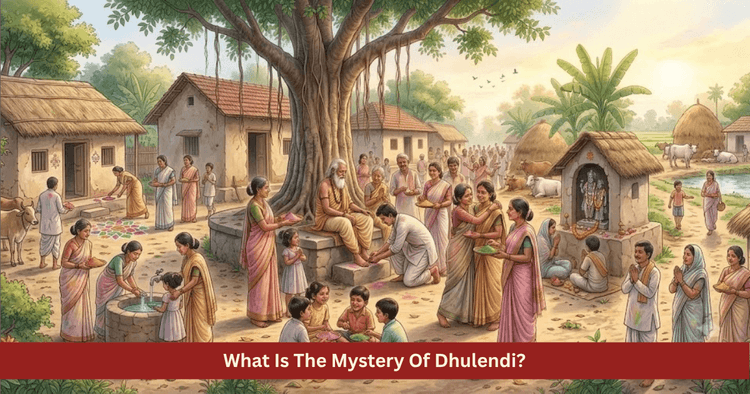
Table of Contents
Panchang Description And The Celestial Junction Of Chaitra Pratipada
Immediately following the sacred fire ritual of Holika Dahan on the full moon night of Phalguna, the first lunar day of the dark fortnight in the month of Chaitra dawns across the horizon. In the traditional Vedic calendar, this opening lunar day is celebrated throughout India with deep joy and profound enthusiasm as Dhulendi or the primary spring festival of colors. This sacred day represents the grand culmination of the forty day spring festival that commenced in early Phalguna, serving as the essential temporal bridge connecting the concluding annual cycle to the threshold of the approaching sacred New Year.
According to classical computational astronomy, this period signifies an exact geometric angle between the Sun and the Moon that dissolves the sluggishness of winter, infusing mortal consciousness with revitalized life energy.
| Panchang Component | Classical Description |
|---|---|
| Month and Fortnight | Chaitra Month, Dark Fortnight |
| Sacred Tithi | Krishna Paksha Pratipada Tithi |
| Presiding Divine Principles | Sri Radha Krishna, Agni Deva, Kamadeva, Vayu Deva |
| Asterism Conjunction | Auspicious alignment with Hasta or Chitra Nakshatra |
| Primary Observance | Supreme festival of colors, earth reverence, social unity |
| Sacred Ingredients | Palash blossom extract, red herbal gulal, sandalwood, abir |
| Bestowed Spiritual Fruit | Dissolution of ego, relief from anxiety, soul elevation |
To assimilate the comprehensive spiritual and physical benefits of Dhulendi, every seeker must maintain strict scriptural disciplines from the early morning hours onward.
- Awakening before sunrise during Brahma Muhurta, bathing in cool water consecrated with sacred river drops and aromatic sandalwood paste.
- Offering pure natural crimson herbal powders and cooling sandalwood paste at the feet of Sri Radha Krishna in the family shrine.
- Bowing before the extinguished sacred pyre of Holika and applying a mark of that sanctified ash upon the forehead.
- Submitting respectful herbal powders at the feet of parents and domestic elders to secure their sincere blessings.
- Refraining completely from synthetic, chemical based, toxic and harsh industrial dyes that damage delicate dermal tissues.
- Playing exclusively with organic herbal extracts derived from boiled palash petals and aromatic natural powders.
- Erasing all psychological divisions based on social status, material affluence, lineage and age to embrace fellow human beings warmly.
- Refraining from throwing colors upon any individual against personal consent while keeping animals and birds completely unharmed.
- Dressing in clean white cotton garments at twilight, exchanging wholesome satvic sweets and expanding universal fraternity.
Classical Etymology And The Ancient Earth Reverence Tradition
The linguistic and metaphysical origins of Dhulendi are rooted in deep Vedic antiquity. Ancient Sanskrit treatises and classical esoteric manuals designate this lunar phase as the sacred day of dust reverence and sacred ash ablution. In ancestral eras, once the consecrated flames of Holika subsided at dawn, seekers collected the cooling residual ash of the pyre and the virgin topsoil of the earth, applying it across the entire physical vessel. Because of this practice, regional vernacular languages transformed the classical phrase dust reverence into the popular title Dhulendi.
From the viewpoint of Vedic philosophy, the mortal frame is assembled from the harmonious union of the five primary cosmic elements: earth, water, fire, air and space. Anointing the skin with sanctified earth and cooling ash serves as an unmistakable reminder that this physical body must ultimately return to dust. When sovereigns and citizens, the affluent and the impoverished, covered their limbs with the identical virgin soil, artificial social barriers dissolved immediately.
With the passage of centuries, this austere practice absorbed therapeutic infusions of sandalwood, saffron, musk and boiled palash blossoms, evolving into a fragrant and medicinal spring celebration.
Eradication Of Personal Ego And The Principle Of Universal Fraternity
The deepest metaphysical truth delivered by Dhulendi is the complete surrender and dissolution of personal ego. While living in secular society, human beings accumulate deceptive masks of identity. An individual becomes proud of intellectual accomplishments, social status, ancestral lineage or material wealth. These temporal acquisitions construct rigid psychological walls of pride that divide one human soul from another.
On the sacred morning of Dhulendi, when colorful herbal powders are applied across the facial features of an individual, outward social identities and worldly masks vanish completely. Behind that vibrant veil of crimson and saffron remains only the pure human being. In that singular moment, there is no master and no servant, no scholar and no illiterate. Every individual merges into a unified stream of color and joy.
When a seeker applies colors to others and receives them in return, that soul surrenders personal pride at the feet of the Divine. This sacred day demonstrates that before the Supreme Lord all souls are identical and enduring joy awakens only when mortal vanity yields to collective love.
Collective Emotional Therapy And The Alleviation Of Mental Distress
Modern psychological science and psychiatry recognize the observance of Dhulendi as an exceptional and potent form of collective emotional therapy. Across the continuous demands of the annual cycle, fulfilling vocational duties, managing domestic crises and bearing societal expectations, the human subconscious gathers deep emotional knots, repressed desires and chronic tension. If these subterranean anxieties remain unaddressed, they manifest as chronic clinical depression, persistent irritability and psychosomatic disorders.
Dhulendi establishes a benevolent social sanctuary where human beings cast aside rigid formal inhibitions to laugh, sing and celebrate freely. When individuals scatter vibrant herbal powders, embrace friends and adversaries alike and sing ancient spring ballads, congested emotional energy leaves the system naturally.
| Psychological State | Routine Secular Condition | Impact of Dhulendi Color Play | Transformation of Consciousness |
|---|---|---|---|
| Repressed Subconscious Stress | Chronic anxiety and melancholy | Uninhibited laughter and lightness | Spontaneous release of mental knots |
| Social Isolation and Timidity | Feelings of emotional alienation | Collective embrace and dialogue | Sensation of belonging and warmth |
| Bitter Grudges and Animosity | Lingering hostility and revenge | Spirit of forgiveness and renewal | Purification of heart and harmony |
| Balance of Neural Hormones | Elevated destructive cortisol | Surge of endorphins and dopamine | Serene tranquility and contentment |
The playful interactions and spontaneous reconciliations that characterize this festival untie emotional blockages within the nervous system. According to Ayurveda, this process provides the ultimate emotional cleansing, replenishing the human mind with vitality, optimism and clarity for the upcoming year.
Therapeutic Chemistry Of Palash Blossoms And Botanical Science
The colors traditionally selected for Dhulendi were never intended as mere visual amusement; ancient Vedic seers linked them directly to the physiological science of spring wellness. The delicate junction between Phalguna and Chaitra marks a rapid ascent in ambient temperatures, causing dormant bodily kapha to liquefy and provoke internal pitta heat. During this seasonal window, the human system becomes vulnerable to dermal allergies, infectious fevers and cutaneous eruptions.
From ancient times, preparing warm baths utilizing boiled blossoms of the palash tree, commonly known as the flame of the forest, has been the standard practice for this festival. Palash blossoms contain concentrated natural antiseptic, blood purifying and cooling astringent properties. When water infused with palash petals touches human dermal layers, it purges obstructed pores of accumulated sweat and dead cellular debris.
This herbal infusion constructs a protective biological shield against increasing solar heat, while natural sandalwood and saffron soothe systemic inflammation, granting coolness to the nervous system.
Astrological Planetary Alignment Through Sacred Color Frequencies
In authentic Vedic astrology, every discrete color frequency corresponds directly to the cosmic radiations of the nine planetary forces. Employing specific organic herbal powders on Dhulendi to pacify challenging planetary combinations and enhance benevolent influences serves as an effective astrological remedy.
- To secure the radiant grace of Surya Deva and elevate soul authority, offer pure crimson and orange powders before Lord Vishnu prior to executing Surya Namaskar.
- To strengthen the Moon and dissolve chronic mental depression, apply pure white sandalwood paste or glittering white abir upon the sacred Shiva Lingam.
- To pacify martial afflictions and cleanse vascular impurities, present deep vermilion powders at the feet of Lord Hanuman.
- To please Mercury and sharpen intellectual eloquence, submit green herbal powders alongside fresh durva grass before Lord Ganesha.
- To attract the auspicious blessings of Jupiter, offer vibrant yellow powders and marigold blossoms before Lord Lakshmi Narayana.
- To enhance Venusian harmony and domestic affection, submit fragrant pink or white powders before Mother Mahalakshmi.
- To alleviate the challenging transits of Saturn, place deep blue or violet powders near the roots of a peepal tree.
- To dissolve irrational panic and psychic illusions linked with Rahu and Ketu, apply a mark of sanctified Holika ash upon the forehead.
Universal Spiritual Message And The Eternal Divine Color
Dhulendi imparts the eternal spiritual lesson that temporal worldly colors are transient. The pigments applied at dawn are washed away by water before nightfall. However, there exists a supreme transcendental color that never fades, the unalloyed color of divine love. When a spiritual seeker casts aside lust, anger, greed and arrogance to become saturated in the presence of the Supreme Lord, mundane existence transforms into an unbroken festival of bliss.
This holy day offers a sacred opportunity to discard ancient resentments, lingering bitterness and hostility. Just as nature sheds decayed foliage in spring to bring forth fresh emerald buds, so too must human consciousness discard pettiness to adorn itself with compassion, forgiveness and universal kindness.
As we apply colors upon others, we must resolve to illuminate their lives with peace and comfort. This remains the timeless metaphysical secret of Dhulendi.
FAQ
On which lunar day is the sacred festival of Dhulendi celebrated?
Dhulendi is celebrated on the first lunar day of the dark fortnight in the month of Chaitra, immediately following the night of Holika Dahan.
Why is this festival traditionally designated as Dhulendi?
It derives its name from the ancient practice of dust reverence, where seekers anointed their bodies with sacred pyre ash and clean earth.
Why is Dhulendi recognized as an emblem of social fraternity?
All artificial distinctions of material affluence, caste, lineage and social rank vanish as people embrace and celebrate together.
What physiological advantages arise from playing with palash flower extract?
Palash extract provides antiseptic and cooling properties that cleanse skin pores, purify the blood and prevent seasonal cutaneous disorders.
What is the metaphysical significance of ego surrender on Dhulendi?
The vibrant layer of color erases outward social personas, leaving the pure soul to rejoice in unconditional divine love.
Get your accurate Kundali
Generate KundaliDid you like it?
Author

Pt. Nilesh Sharma (63)
Experience: 20
Consults About: Family Planning, Career
Clients In: Punjab, Haryana, Delhi
Share this article with friends and family
WELCOME TO
ZODIAQ
Right Decisions at the right time with ZODIAQ
