What Is The Mystery Of Dwijapriya Sankashti?
By Pt. Suvrat Sharma
Worship Of Sixth Ganesha Form On Phalguna Chaturthi
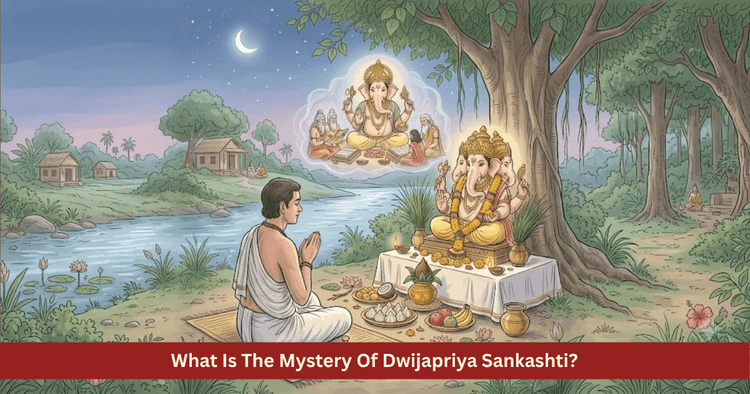
Table of Contents
Panchang Description And Sacred Protocols Of Dwijapriya Chaturthi
The fourth lunar day of the dark fortnight in the month of Phalguna is celebrated across the sacred Vedic calendar as Dwijapriya Sankashti Chaturthi. The term Sankashti literally denotes the divine power that burns away profound crises and adversities. Among the 32 classical manifestations of Lord Ganesha described in scriptural texts, the sixth manifestation is celebrated as Dwijapriya. The word dwija signifies the twice born individual, referring to a seeker whose consciousness has undergone spiritual rebirth through scriptural contemplation, mantra discipline, and inner truth. This holy observance transpires during the seasonal junction between late winter and emerging spring, when human consciousness requires intellectual awakening and purification.
| Panchang Component | Classical Description |
|---|---|
| Month and Fortnight | Phalguna Month, Dark Fortnight |
| Sacred Tithi | Krishna Paksha Chaturthi Tithi |
| Presiding Manifestation | Dwijapriya Ganapati, the Sixth Form of Ganesha |
| Iconographic Emblems | Four arms, mace, water vessel, prayer beads, sweet modaka |
| Primary Vow Protocols | Diurnal fast, Sankata Nashana recitation, lunar water oblation |
| Fast Conclusion Timing | Immediately following moonrise sighting and water offering |
| Bestowed Spiritual Fruit | Intellectual brilliance, removal of debt, liberation from crisis |
To assimilate the entire spiritual and material fruit of Dwijapriya Sankashti Chaturthi, every seeker must maintain strict scriptural conduct from dawn until the rising of the night moon.
- Rising before dawn during the auspicious Brahma Muhurta to bathe in cool water consecrated with holy river drops, wearing clean yellow or red garments.
- Purifying the altar area, installing a consecrated wooden seat draped in scarlet silk, and placing the holy image of Lord Dwijapriya Ganesha.
- Offering 21 blades of sacred durva grass, vermilion, unbroken rice grains, red sandalwood paste, and fresh marigold flowers before the deity.
- Lighting a clarified butter lamp using pure cow ghee and reciting the Sankata Nashana Ganesha Stotra at least 11 times with deep focus.
- Observing an unbroken fast throughout the day while mentally chanting the sacred seed formula Om Gam Ganapataye Namah or Om Dwijapriyaya Namah.
- Performing the classical sixteen step evening worship, presenting fresh modakas prepared from chickpea flour or roasted sesame sweets.
- Filling a copper vessel with raw milk, pure water, unbroken rice grains, and durva grass to offer oblation to the Moon at moonrise.
- Concluding the day long fast only after the completion of the lunar oblation, taking the consecrated food offered to Lord Ganesha.
Metaphysical Philosophy Of Dwijapriya As The Sixth Manifestation
The classical scriptures Mudgala Purana and Ganesha Purana provide an elaborate metaphysical description of the 32 divine manifestations of Lord Ganesha. Among these, the sixth form is revered as Dwijapriya Ganapati. The philosophical significance of Dwijapriya identifies him as the protector and beloved lord of scholars, self realized seers, and seekers who walk the path of inward contemplation. In authentic Vedic philosophy, the term dwija does not signify mere social status by birth, it represents an individual who has transcended base animal instincts through severe spiritual discipline to attain intellectual rebirth.
In this divine iconographic representation, Lord Ganesha manifests with four hands. His first hand wields a formidable mace, symbolizing spiritual strength, righteous protection, and the destruction of primal ignorance. His second hand holds a sacred water vessel, signifying interior purification, self control, and the perennial waters of divine wisdom. His third hand grasps a rosary of prayer beads, indicating continuous remembrance of the divine name, contemplative stillness, and mantra mastery. His fourth hand cradles a sweet modaka, the symbol of transcendental bliss, supreme fulfillment, and the fruit of spiritual liberation. This four armed form harmonizes the four states of human consciousness waking, dreaming, deep sleep, and nondual awareness leading the soul to absolute peace.
Seasonal Transition And The Science Of Intellectual Awakening
Both Ayurveda and classical astrology acknowledge that the dark fortnight of Phalguna represents a period of delicate physical and psychological adjustment. The excessive bodily kapha dosha accumulated during deep winter begins to melt rapidly under the warming rays of the spring sun. This biological liquefaction dampens the internal digestive fire, creating physical sluggishness, mental heaviness, forgetfulness, and melancholy within the nervous system. When congealed mucus stagnates the physiological channels, cognitive sharpness and decision making capacities decline.
Lord Dwijapriya Ganesha is the sovereign deity of intellect and discernment. In classical astrology, Ganesha rules over the planetary energies of Mercury and Ketu. Mercury governs logical reasoning, analytical aptitude, commerce, and refined speech, whereas Ketu governs asceticism, spiritual emancipation, and intuitive perception. When an aspirant fasts and meditates on Phalguna Sankashti Chaturthi, the subtle life currents ascend from the root center toward the third eye center. Fasting cleanses accumulated kapha from bodily tissues while Ganesha worship energizes the nervous system, replacing mental fog with radiant intellectual clarity.
| Ayurvedic And Astrological Factors | Winter Influence | Impact of Phalguna Sankashti | Physical And Mental Transformation |
|---|---|---|---|
| State of Kapha Dosha | Dense and stagnant in channels | Liquefied and eliminated through fasting | Lightness and mental freshness |
| Digestive Fire Capacity | Dampened by heavy winter diet | Rekindled through disciplined fasting | Dynamic cellular vitality |
| Influence of Planet Mercury | Wandering thoughts and vacillation | Focused and stabilized through mantra | Sharp logic and powerful expression |
| Influence of Planet Ketu | Disorientation and hidden fears | Channeled into profound intuition | Deep peace and unbroken meditation |
Scriptural Efficacy Of Sankata Nashana Stotra And Crisis Relief
Composed by the divine sage Narada within the sacred verses of the Narada Purana, the Sankata Nashana Ganesha Stotra is celebrated as an infallible shield against all worldly afflictions. This sacred hymn invokes the twelve secret names of Lord Ganesha: Vakratunda, Ekadanta, Krishnapingaksha, Gajavaktra, Lambodara, Vikata, Vighnaraja, Dhumravarna, Bhalachandra, Vinayaka, Ganapati, and Gajanan. Reciting these names during the three junctions of the day frees a person from every form of anxiety.
Observing Dwijapriya Sankashti Chaturthi and chanting this stotra provides swift relief from three major life crises:
- Financial Distress: If debts accumulate or business enterprises encounter chronic losses, offering 21 knots of sacred durva smeared with raw turmeric powder to Ganesha dissolves financial stagnation.
- Domestic Disharmony: To dissolve bitter domestic friction, offer four sweet modakas to Lord Dwijapriya while chanting the root mantra 108 times before the sacred flame.
- Academic and Professional Obstacles: Students struggling with lack of concentration or professionals confronting career barriers should apply red vermilion to Ganesha and mark their own forehead with the same sacred paste.
- Chronic Health Afflictions: To alleviate lingering physical ailments and pacify the malefic influences of Saturn and Rahu, offering sacred sami foliage alongside durva grass provides relief.
Astronomical And Spiritual Mystery Of The Lunar Water Oblation
The observance of Sankashti Chaturthi remains incomplete without the ceremonial water oblation offered to the Moon at moonrise. In astrological mechanics, Chaturthi is governed by Lord Ganesha, while the Moon presides over the human subconscious mind. Ancient lore recounts that the Moon once grew proud of his celestial beauty and laughed mockingly at the elephant faced form of Ganesha. To dismantle this vanity, Lord Ganesha cursed the Moon, declaring that whoever gazed upon the lunar orb on Chaturthi would suffer false accusations and public dishonor.
When the Moon repented and sought refuge, the compassionate Ganesha decreed that this affliction would be transformed into a blessing through the Sankashti vow. An aspirant who fasts during the day and reverently offers water to the Moon at night becomes entirely free from false accusations, public disgrace, mental turmoil, and planetary curses. The Moon represents the wandering mind, while Ganesha embodies supreme discernment. When the wandering mind surrenders to spiritual intellect, mortal life attains stability. Offering milk and water from a copper vessel to the Moon pacifies an afflicted lunar position in the horoscope, conferring mental serenity for the entire annual cycle.
FAQ
What is the meaning of Dwijapriya Sankashti Chaturthi?
Dwijapriya is the sixth manifestation of Lord Ganesha, revered by scholars and spiritual seekers for awakening supreme intellect and destroying life crises.
Why is an oblation offered to the Moon on this date?
The Moon rules the emotional mind, and offering this oblation pacifies lunar afflictions, removes public dishonor, and secures mental peace.
How many blades of durva grass should be offered to Ganesha?
Offering 21 knots of fresh durva grass before Lord Dwijapriya Ganesha on this sacred day brings immense spiritual and material merits.
How many times should the Sankata Nashana Stotra be recited?
The Sankata Nashana Ganesha Stotra should be recited at least 11 times with unbroken concentration on Dwijapriya Chaturthi.
Can the Sankashti fast be concluded without sighting the Moon?
Scriptural rules mandate that the Sankashti fast must be concluded only after the Moon rises and the sacred water oblation is offered.
Get your accurate Kundali
Generate KundaliDid you like it?
Author
Pt. Suvrat Sharma (63)
Experience: 20
Consults About: Family Planning, Career
Clients In: Punjab, Haryana, Delhi
Share this article with friends and family
WELCOME TO
ZODIAQ
Right Decisions at the right time with ZODIAQ
