What Is The Spiritual Mystery Of Holika Dahan?
By Pt. Amitabh Sharma
Navanneshti Yajna, Bhadra Elimination And Sacred Ash Rites
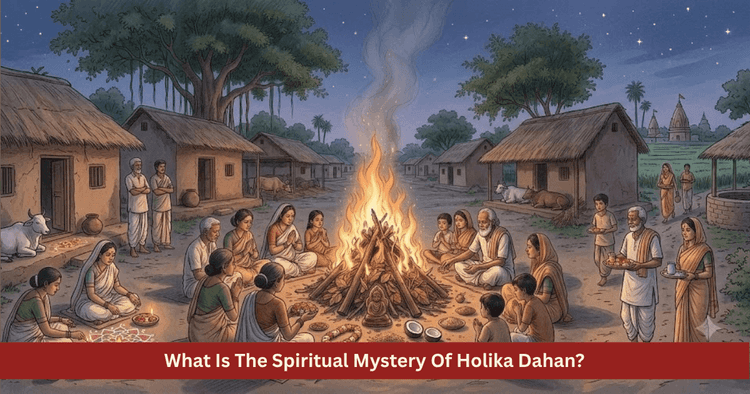
Table of Contents
Panchang Description And The Vedic Foundation Of Navanneshti Yajna
The full moon night of the month of Phalguna represents the concluding and most energetically charged full moon within the sacred Vedic calendar. Upon this holy night, the great festival of Holika Dahan is solemnized across India with heartfelt reverence and rigorous liturgical discipline. In ancient astronomical manuals, this temporal junction marks the formal departure of late winter and the complete blossoming of spring. Foundational Vedic scriptures including the Rigveda and the Shatapatha Brahmana describe the original form of this festival as the Navanneshti Yajna. The term Navanneshti identifies the sacred liturgical consecration of freshly harvested grains. When the primary winter crops such as wheat, chickpea, barley and mustard ripen within the fields, classical tradition dictates that a householder must dedicate the first fruits into the consecrated sacrificial fire before personal consumption.
| Panchang Component | Classical Description |
|---|---|
| Month and Fortnight | Phalguna Month, Shukla Paksha |
| Sacred Tithi | Shukla Paksha Purnima Tithi (Pradosha Prevailing) |
| Constellation Conjunction | Uttara Phalguni or Purva Phalguni Asterism |
| Auspicious Window | Pradosha or Nishita Kala free from Bhadra |
| Presiding Divine Principles | Agni Deva, Lord Narasimha, Devotee Prahlada |
| Primary Oblation Items | Green wheat ears, camphor, black sesame, mustard |
| Bestowed Spiritual Fruit | Annihilation of negativity, agricultural plenty, peace |
To secure the grace of Agni Deva and shield the household against subtle discordant frequencies on Holika Dahan, a seeker must observe disciplined scriptural conduct from dawn onward.
- Awakening before sunrise during Brahma Muhurta, bathing in cool water consecrated with sacred Ganga drops and dressing in pristine white or yellow garments.
- Observing the solemn Satyanarayana fast before the image of Lord Lakshmi Narayana or Lord Narasimha on the full moon day.
- Approaching the consecrated fire site, purifying the ground with sanctified water and clean cow dung and placing a central branch of a cluster fig or castor tree.
- Assembling dried palash wood, sacred herbs and sun dried cow dung discs around the central branch with reverence.
- Awaiting the absolute conclusion of the inauspicious Bhadra period, kindling the fire only during an approved planetary alignment at dusk.
- Pouring a continuous stream of pure water from a copper vessel while executing three or seven clockwise circumambulations.
- Consigning green unthreshed wheat ears, tender chickpeas, puffed rice, black sesame seeds and rock sugar into the blazing flames.
- Offering humble prostrations before Agni Deva, praying that internal tamasic tendencies be reduced to lifeless ash.
Computational Astronomy Of Bhadra And Precise Timing Protocols
In the computational architecture of Vedic astrology, the suspension of important activities during the phase of Bhadra is strictly mandated. Bhadra is the celestial daughter of Surya Deva and the sister of Saturn, possessing a fierce, volatile and consuming disposition. Classical treatises such as Muhurta Chintamani and Nirnaya Sindhu articulate that two specific celebrations must never be observed during the presence of Bhadra: Shravani, the festival of the sacred protective thread and Phalguni, the ignition of the Holika fire. Igniting the Holika pyre during the active presence of Bhadra invites immense adversity, collective distress, drought and severe civil instability upon the land.
The ideal scriptural window for executing Holika Dahan occurs during the Pradosha phase of Phalguna Purnima, which spans 2 hours and 24 minutes immediately following sunset. Should Bhadra prevail during the early evening, scriptural rules permit utilizing the tail phase of Bhadra while strictly avoiding the mouth phase. If Bhadra extends throughout the entire night, the pyre must be kindled only after its complete termination during midnight hours. Kindling the sacred flame within an unblemished, Bhadra free astrological window transforms the fire into an instrument of universal protection and healing.
Philosophical Meaning Of Hiranyakashipu, Holika And Prahlada
The sacred history preserved in the seventh canto of the Shrimad Bhagavata Mahapurana serves as an allegorical revelation of the spiritual evolution of human consciousness. The demonic king Hiranyakashipu embodies unchecked materialism, tyrannical political power and identification with the physical body. His sister Holika, who possessed an immunity to fire, personifies false security and the corrupt abuse of divine gifts for unrighteous ends. In contrast, the child devotee Prahlada represents unreserved love, selfless surrender and the communion of the soul with the Supreme.
On the full moon of Phalguna, when Holika held Prahlada in her lap upon the burning pyre under royal command, a remarkable metaphysical event occurred. Prahlada closed his eyes, chanting the holy name of Narayana with unbroken concentration. Guided by universal intelligence, a sudden gust of wind swept the protective fireproof veil away from Holika, draping it over Prahlada.
Anchored in deceit, Holika burned to ashes within the flames, whereas Prahlada emerged radiant, singing the glories of the Divine. This narrative reveals that unrighteous power inevitably engineers its own destruction. When an aspirant surrenders to divine will, the laws of the physical cosmos align to protect the righteous soul.
| Classical Allegory | Metaphysical Reality | Dimension of Human Psychology | Spiritual Transformation |
|---|---|---|---|
| Demonic King Hiranyakashipu | Coarse bodily egoism | Unrestrained desire to exploit nature | Renunciation of pride through dispassion |
| Demonic Sister Holika | Illusory invulnerability | Selfish manipulation of spiritual assets | Consumption of vice in the light of truth |
| Pure Devotee Prahlada | Untainted conscious awareness | Intimate surrender to transcendental truth | Attainment of fearlessness and grace |
| Consecrated Pyre Flame | The third eye of wisdom | Purification from tamas to pure sattva | Complete dissolution of past karmas |
Esoteric Science Of Sacred Ash And Dispelling Negative Influences
Within tantric wisdom and architectural science, the night of Holika Dahan is venerated alongside the great nights of cosmic dissolution and spiritual awakening. The flame of Holika is far more than a physical fire, it is a spiritual furnace awakened through thousands of Vedic mantras, therapeutic woods and the collective intention of the community. The ash resulting from this consecrated fire is recognized as a powerful, antiseptic and spiritually purifying substance.
On the following morning, once the flames have subsided, the practitioner should bathe, dress in clean garments and collect the sanctified ash in a clean copper or earthenware vessel. Classical manuals prescribe several protective applications for this holy substance.
- Applying a three line mark of this sacred ash upon the forehead and throat dispels the evil eye, psychic anxiety, irrational dread and negative influences.
- To clear lingering domestic discord or architectural defects, mix a small portion of this ash with sacred water and sprinkle it in the four corners of the dwelling.
- Wrapping a small quantity of this sanctified ash in red silk and placing it within the business cash box or home vault prevents erratic financial losses.
- Individuals suffering from lingering ailments of indeterminate origin should place a pinch of this ash in water, meditating upon Surya Deva before drinking.
- To neutralize planetary nodal afflictions, bathing the sacred Shiva Lingam with this holy ash yields deep peace and inner stability.
Liturgical Protocol And Sacred Materials For Oblation Offerings
Executing Holika Dahan requires precise offerings of therapeutic botanicals rather than merely burning common wood. These offerings purify atmospheric currents and revitalize the subtle energetic body of the seeker.
- Blend seven sacred grains comprising wheat, barley, chickpea, green gram, black gram, rice and sesame in a clean platter.
- Once the fire blazes, take an offering of these grains in both hands, submitting them into the flames while chanting Om Agnaye Svaha.
- Fill a dry whole coconut with cow clarified butter, black sesame seeds, barley grains and rock sugar, placing it into the heart of the blaze to burn away annual adversities.
- Consign sun dried cow dung cakes, pure guggulu, aromatic benzoin, natural camphor and yellow mustard seeds into the embers to eliminate environmental microbes.
- Roast green stalks of wheat and chickpea within the edges of the holy flame during circumambulation.
- Distribute these roasted grains as consecrated food among family members. This ancient dietary practice, known as partaking of the new harvest, strengthens digestive immunity for the approaching warmth of spring.
The Fire Of Inner Purification And Greeting The Sacred New Year
The outer celebration of Holika Dahan mirrors the internal spiritual struggle transpiring within human consciousness. Within every heart resides a Hiranyakashipu that clings to pride, a Holika that plots selfishness and a Prahlada that yearns for divine communion. The sacred blaze of Holika Dahan calls upon humanity to ignite the fire of discrimination within, consigning malice, envy, lust, wrath, greed and spiritual vanity into that transcendental light.
External color celebrations hold genuine spiritual significance only when internal consciousness has been cleansed of impurities. Vibrant color adheres only to a clean, unsoiled cloth. In the same way, the love of God takes root only within a heart purified of darkness. With the culmination of Holika Dahan, the annual cycle of the twelve lunar months completes its journey. This sacred night provides an open portal to release ancient burdens, allowing an individual to step into the upcoming Vedic New Year in Chaitra as an illuminated, serene and revitalized soul.
FAQ
What is the ideal time window for conducting Holika Dahan?
Holika Dahan must be conducted during the Pradosha phase of Phalguna Purnima, ensuring that the inauspicious planetary phase of Bhadra has completely elapsed.
Why is the presence of Bhadra strictly avoided during the fire rite?
Bhadra is an agitated and destructive cosmic force and igniting the fire during its presence is held to bring severe adversity to society and the nation.
What is the significance of roasting fresh green grains in the flame?
This practice continues the ancient Vedic Navanneshti ritual, where offering fresh agricultural produce to the Divine before consumption ensures bodily vitality.
What benefits arise from bringing the sacred ash into the home?
Sprinkling the holy ash removes architectural blemishes and negative energies, while applying it to the forehead dispels irrational fear and psychic anxiety.
What is the foundational spiritual lesson of Holika Dahan?
The observance demonstrates that no matter how formidable arrogance and unrighteousness appear, they are ultimately consumed by the power of selfless devotion and truth.
Get your accurate Kundali
Generate KundaliDid you like it?
Author

Pt. Amitabh Sharma (56 Years)
Experience: 20
Consults About: Family Planning, Career
Clients In: Punjab, Haryana, Delhi
Share this article with friends and family
WELCOME TO
ZODIAQ
Right Decisions at the right time with ZODIAQ
