What Is The Spiritual Mystery Of Janaki Jayanti?
By Pt. Sanjeev Sharma
Sita Manifestation On Phalguna Ashtami And Marital Grace
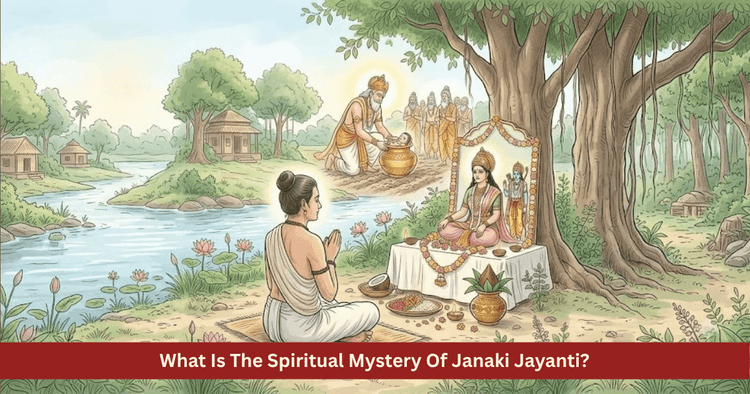
Table of Contents
Panchang Description And Sacred Rites Of Sita Ashtami
The eighth lunar day of the dark fortnight in the month of Phalguna is designated across the sacred calendar as Janaki Jayanti or Sita Ashtami. According to the foundational Valmiki Ramayana and diverse sacred puranic lore, it was upon this holy lunar day that the enlightened sovereign of Mithila, King Janaka, discovered Mother Sita resting inside an effulgent golden casket while tilling the sacrificial ground. Mother Janaki is revered as the personal descent of Supreme Mahalakshmi and the presiding divine consciousness of the cosmic earth element. Arriving exactly six days prior to the great festival of Mahashivratri, this observance infuses mortal life with marital fidelity, sublime forbearance, domestic harmony, and enduring auspiciousness.
| Panchang Component | Classical Description |
|---|---|
| Month and Fortnight | Phalguna Month, Dark Fortnight |
| Sacred Tithi | Krishna Paksha Ashtami Tithi |
| Presiding Divine Principle | Universal Mother Janaki and Lord Ramachandra |
| Elemental Resonance | Earth Element and Embodiment of Mahalakshmi |
| Primary Ritual Rites | Earth reverence, yellow vestments, Janaki Stotra |
| Prescribed Offerings | Sweet rice porridge, seasonal fruits, five nectars |
| Bestowed Fruit | Unbroken marital longevity, peace, early wedlock |
To assimilate the entire spiritual and material fruit of Janaki Jayanti, married women and unwed maidens must observe the disciplines established by the ancient scriptures.
- Rising before sunrise during the early morning hours, bathing in pure cool water consecrated with sacred river drops, and dressing in clean yellow or white cotton garments.
- Installing the unified holy icon of Mother Sita and Lord Rama upon a clean altar covered with pristine red or yellow silk cloth.
- Offering the 16 traditional emblems of bridal adornment including sacred vermilion, forehead marks, red foot lacquer, glass bangles, bridal veil, and natural perfumes.
- Placing an unblemished earthen bowl filled with pure water and sacred durva grass before the shrine to honor the maternal earth element.
- Observing an unbroken satvic fast throughout the day while repeatedly chanting the sacred formula Om Janakivallabhaya Namah or reciting the Janaki Stotra.
- Lighting a four wick clarified butter lamp at dusk to perform the evening adoration of Mother Janaki.
- Refraining from disrespectful conduct toward any woman, avoiding harsh speech, and preserving serene tranquility within the domestic atmosphere.
- Concluding the fast at night following the visual sighting of the moon and the polar star, partaking solely in pure satvic nourishment.
The Miraculous Emergence Of Mother Sita From The Womb Of The Earth
The Balakanda of the Valmiki Ramayana contains an inspiring metaphysical account detailing the sacred arrival of Mother Janaki. A prolonged, devastating drought once paralyzed the kingdom of Mithila, bringing immense suffering upon the populace. Enlightened seers and ascetics advised King Janaka that if the monarch personally tilled the sacrificial grounds utilizing a plough crafted from gold, the celestial lord Indra would shower the parched earth with life giving rains. Driven by selfless love for his subjects, King Janaka undertook this solemn duty.
As King Janaka ploughed the consecrated earth, the metallic blade of the plough, known as sita in classical Sanskrit, struck a firm subterranean object. When the king cleared the soil, he unearthed an effulgent casket radiating celestial light. Upon opening the lid, he beheld an exquisite newborn maiden smiling upon a bed of lotus blossoms. Because she manifested from the furrow created by the plough blade, she was named Sita. Being the daughter of King Janaka, she became revered as Janaki, and as the princess of Mithila, she was celebrated across worlds as Vaidehi. With her miraculous appearance, celestial blossoms descended from the skies and torrents of refreshing rain nourished the land, obliterating drought and poverty.
Metaphysical Embodiment Of Mahalakshmi And The Earth Element
In Vedic metaphysics, Mother Sita is never understood merely as a historical human personality, she represents the primordial creative matrix and the personal embodiment of Mahalakshmi. Just as Lord Narayana sustains the cosmic order, Mother Sita is his inseparable bliss bestowing potency. Her sacred emergence from the depths of the earth and her eventual return into the subterranean realm at the conclusion of her earthly mission demonstrates her identity as the presiding deity of the earth element.
The fundamental attributes of the earth element are unconditional forgiveness, unshakeable patience, enduring forbearance, and boundless sustaining power. Mother Sita exemplified these divine virtues throughout her manifest pastimes. Relinquishing imperial luxuries to endure 14 years of arduous forest exile, maintaining absolute moral purity despite the menacing intimidations of Ravana within the Ashoka grove, and raising noble sons like Lava and Kusha within the forest hermitage of Sage Valmiki reveals her transcendental soul fortitude. The worship performed on Janaki Jayanti is the veneration of that unyielding moral strength, an essential quality for modern domestic life.
Astrological Remedies For Early Wedlock And Marital Harmony
Within the computational framework of Vedic astrology, propitiating Mother Sita purifies the fourth house of domestic happiness, the seventh house of marriage, and the ninth house of fortune. When an individual birth chart suffers from planetary afflictions such as Manglik dosha, nodal disturbances, or a combust seventh ruler causing prolonged marital delays, observing Janaki Jayanti functions like an extraordinary celestial remedy.
| Nature of Marital or Family Crisis | Prescribed Scriptural Rite | Intended Astrological Fruit |
|---|---|---|
| Prolonged delay in matrimonial match | Offering yellow veil with 16 bridal items and chanting Janaki Stotra | Swift alliance with a righteous spouse |
| Chronic discord between married partners | Offering raw milk and floral essences upon Rama Sita icon | Eradication of bitterness and mutual affection |
| Fear of premature loss of husband | Submitting sacred vermilion to Sita and applying it to hair parting | Unbroken marital longevity and health |
| Domestic poverty and lingering strife | Reciting Janaki Chalisa 11 times and feeding sweet porridge to maidens | Influx of domestic grace and lasting stability |
Maidens desiring a virtuous life partner should offer a golden bordered yellow veil containing two unbroken pieces of raw turmeric, a silver ring, and a box of pure vermilion at the feet of Mother Sita. Chanting the sacred Janaki Stotra seven times consecutively on this holy day removes subtle karmic obstructions blocking matrimonial harmony.
Liturgical Procedure And Scriptural Merits Of Bridal Adornments
The ceremonial adoration of Janaki Jayanti requires strict adherence to the sixteen classical steps of worship. Upon a raised platform covered with crimson silk, a sanctified urn is established upon a bed of unbroken rice grains. The holy image of Lord Rama and Mother Sita is installed before this urn. Lord Ganesha is invoked first to remove all impediments. Following this, Mother Janaki is bathed with consecrated river water and adorned with vibrant yellow garments.
The submission of the 16 traditional bridal ornaments holds supreme significance in this ceremony. These articles comprise a scarlet veil, pure vermilion, red foot lacquer, collyrium, organic henna, glass bangles, toe rings, nose ring, wooden comb, mirror, perfumed oil, natural attar, forehead dots, hair ribbons, kumkum, and modest coins. While submitting each article, the sacred formula Om Janakyai Namah is recited with devotion. Following the conclusion of the ceremony, the worshiper takes a small portion of the consecrated vermilion to apply along her own hair parting, while donating the remaining bridal articles to a virtuous Brahmin lady. This ritual protects the family lineage from all misfortune, establishing enduring prosperity within the home.
Enduring Dignity Of Womanhood And The Message Of Sanatana Culture
The earthly journey of Mother Sita remains an eternal testament to female dignity, absolute chastity, and spiritual nobility. In an era marked by impatient relationships and clashing egos, Janaki Jayanti reminds humanity that genuine love thrives upon selfless sacrifice and mutual reverence. Mother Janaki never abandoned the path of righteousness even amid the darkest trials of existence.
She never became despondent in times of profound sorrow, nor did she succumb to arrogance in times of regal prosperity. The holy occasion of Janaki Jayanti does not merely invite human beings to execute external ceremonies, it calls upon humanity to assimilate the unblemished character, forgiving spirit, and unwavering devotion embodied by Mother Janaki. A home that honors womanhood and cherishes the timeless ideals of Mother Sita becomes the dwelling place of Lord Narayana, shielded forever from the shadow of despair.
FAQ
On which lunar day is Janaki Jayanti celebrated?
Janaki Jayanti is celebrated with deep devotion on the eighth lunar day of the dark fortnight in the month of Phalguna.
How did Mother Sita manifest in the world?
She appeared miraculously inside an effulgent casket within the earth while King Janaka was tilling the sacrificial ground with a golden plough.
What is the spiritual significance of offering 16 bridal items to Mother Sita?
Offering 16 bridal items secures unbroken marital longevity, mitigates domestic discord, and shields the family against negative influences.
Which sacred recitation is recommended for resolving delays in marriage?
Reciting the Janaki Stotra or the Sita Swayamvar narrative from the Balakanda of the Ramayana removes karmic obstacles hindering marriage.
Why is Mother Sita revered as the embodiment of the earth element?
Having manifested from the soil and returned into its depths, she personifies the foundational virtues of the earth including forbearance, patience, and forgiveness.
Get your accurate Kundali
Generate KundaliDid you like it?
Author

Pt. Sanjeev Sharma (63)
Experience: 20
Consults About: Family Planning, Career
Clients In: Punjab, Haryana, Delhi
Share this article with friends and family
WELCOME TO
ZODIAQ
Right Decisions at the right time with ZODIAQ
