What Is The Spiritual Mystery Of Mahashivratri?
By Pt. Amitabh Sharma
Lingodbhava Secrets, Shiva Parvati Marriage, Four Quarter Rites
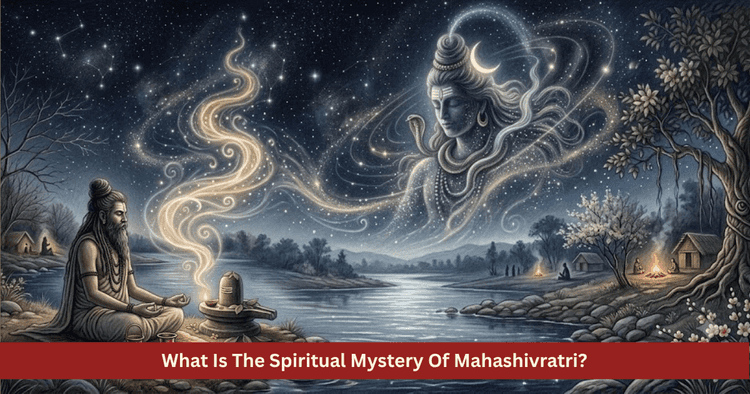
Table of Contents
Panchang Description And Four Quarter Worship Observance
The sacred festival of Mahashivratri is celebrated on the 14th lunar day of the dark fortnight in the month of Phalguna. According to the Vedic panchang, this date represents the single most potent spiritual night of the entire annual cycle. It was upon this blessed night that the unmanifest Supreme Shiva manifested as the primordial pillar of infinite light, an event scripturally designated as the Lingodbhava Kala. Simultaneously, this night commemorates the divine wedding ceremony between the Lord of dispassion, Shiva, and Mother Parvati, the personification of dynamic cosmic energy. In the standard solar calendar, this festival arrives during the final week of February or the initial days of March.
| Panchang Component | Classical Description |
|---|---|
| Month and Fortnight | Phalguna Month, Dark Fortnight |
| Sacred Tithi | Krishna Chaturdashi prevailing at midnight |
| Constellation Conjunction | Auspicious alignment with Shravana or Dhanishta |
| Supreme Focus Window | Nishita Kala during midnight hours |
| Principal Austerity | Making earthen Shiva Lingams, four quarter ablutions, all night vigil |
| Sacred Offerings | Five holy nectars, bilva leaves, cannabis, datura, crown flower, holy ash |
| Bestowed Fruit | Dissolution of past karma, Kundalini awakening, and spiritual liberation |
To ensure spiritual welfare and inner ascension on Mahashivratri, every seeker must strictly observe the disciplines established by the ancient scriptures.
- Waking before sunrise during the early morning hours, bathing in pure cool water consecrated with sacred river drops, and dressing in clean white or yellow garments.
- Observing an unbroken fast throughout the day and night with complete mental, verbal, and physical purity.
- Crafting a sacred earthen Shiva Lingam utilizing clean mud, cow dung, and sanctified ash with heartfelt reverence.
- Remaining awake across all four quarters of the night to execute sacred ablutions using distinct ritual substances.
- Offering unbroken three leaf bilva leaves, datura fruits, crown flowers, and consecrated ash upon the sacred emblem of Lord Shiva.
- Chanting the supreme Maha Mrityunjaya mantra or the sacred five syllable sound Om Namah Shivaya continuously at least 108 times.
- Renouncing malicious criticism, harsh words, anger, sensual agitation, and mental inertia.
- Concluding the fast properly following sunrise the subsequent morning only after performing sacred ablutions and charitable donations.
The entire span of the holy night is divided into four distinct nocturnal watches for ritual contemplation. Each watch features a unique ritual oblation fluid, specific Vedic mantra, and profound spiritual fruit.
| Worship Watch | Classical Time Frame | Primary Oblation Fluid | Associated Vedic Mantra | Bestowed Spiritual Fruit |
|---|---|---|---|---|
| First Watch | Dusk 6 PM to 9 PM | Pure unpasteurized indigenous cow milk | Om Sadyojataya Namah | Bodily vitality, inner peace, and virtue |
| Second Watch | Night 9 PM to Midnight | Fresh cultured yogurt from cow milk | Om Vamadevaya Namah | Purification of wealth and mental stillness |
| Third Watch | Midnight 12 AM to 3 AM | Pure clarified butter from cow milk | Om Aghoraya Namah | Subjugation of lust, aura, and spiritual vigor |
| Fourth Watch | Dawn 3 AM to 6 AM | Pure raw unprocessed forest honey | Om Tatpurushaya Namah | Attainment of liberation and freedom from karma |
Lingodbhava Kala And Manifestation From Unmanifest Radiance
The deepest metaphysical dimension of Mahashivratri resides within the eternal mystery of the Lingodbhava occurrence. The Vidyeshvara Samhita of the Shiva Purana records that at the dawn of universal creation, when Lord Brahma and Lord Vishnu became entangled in an argument regarding their relative superiority, a limitless pillar of blazing cosmic fire erupted within the cosmic void to dissolve their lingering egoism. That radiant column of pure light possessed neither an observable origin nor a perceptible termination.
Assuming the form of a celestial swan, Lord Brahma ascended into the celestial heights, while Lord Vishnu assumed the form of a boar to delve into the subterranean depths searching for the base of the pillar. Despite traversing cosmic distances across millennia, neither deity could locate the physical boundary of the infinite light. Ultimately, Lord Vishnu humbly acknowledged his inability, whereas Lord Brahma falsely claimed he had witnessed the summit, bringing forward the ketaki blossom as a fabricated witness. In that precise moment, Lord Sadashiva burst forth from the core of the blazing pillar. He prohibited the formal worship of Brahma due to the deception and praised the honest humility of Vishnu, granting him equal honor with Himself.
The sacred night upon which this infinite pillar of divine light manifested was the fourteenth day of the dark fortnight of Phalguna. Consequently, the worship of the Shiva Lingam on Mahashivratri is the adoration of that formless, unbegotten, and all pervading cosmic consciousness that sustains the entire matrix of creation. The Shiva Lingam is not an anthropomorphic idol, it is the living geometric symbol of the beginningless and endless energetic foundation of reality.
The Divine Wedding Of Shiva And Parvati As The Union Of Spirit And Nature
The second universally celebrated tradition associated with Mahashivratri is the celestial marriage between Lord Mahadeva and the cosmic Mother Parvati. In her prior incarnation, Mother Parvati was Sati, the daughter of King Daksha, who surrendered her physical frame in the sacrificial fire because she could not tolerate the public insult hurled against her husband Shiva. Following that event, she took birth as Parvati within the mountainous realm of King Himavan and Queen Mena.
Mother Parvati undertook arduous spiritual penances across thousands of years to attain Lord Shiva once again as her divine partner. Sustaining herself solely on atmospheric moisture and fallen leaves, she earned the sacred title of Aparna. Deeply moved by her selfless love, the ascetic Lord Shiva consented to enter the householder state. On the 14th night of the dark fortnight of Phalguna, Lord Shiva mounted his sacred bull Nandi and arrived at the palace gates of the Himalayas, accompanied by his host of spirits, woodland deities, celestial musicians, and radiant divinities.
From a philosophical perspective, this marriage is far more than a mythological account. It represents the transcendental synthesis of Purusha and Prakriti articulated within the classical schools of Samkhya and Vedanta. Lord Shiva is the motionless, unattached, and witness consciousness, while Mother Parvati is the dynamic, creative, and evolutionary cosmic energy. Creation cannot unfold unless consciousness unites with dynamic energy. On the sacred night of Mahashivratri, this profound communion transpires, releasing waves of regenerative potential throughout the universe.
Kundalini Awakening And Upward Movement Of Cosmic Energy
Both contemporary biological sciences and traditional yogic disciplines observe that an extraordinary astronomical alignment occurs in the northern hemisphere on the night of Mahashivratri. During this nocturnal window, planetary configurations and the geomagnetic inclination of the earth generate a powerful upward surging current of natural subtle energy. This vital force flows spontaneously from lower planes toward higher elevations.
The classical yogic tradition emphasizes that one must maintain an erect vertical spine throughout this holy night. When a seeker sits upright in contemplation, the dormant Kundalini energy resting at the base of the spine receives massive natural assistance from this universal upward surge. An individual who remains horizontal in sleep loses the opportunity to benefit from this cosmic upsurge.
| Human Energy Center | Anatomical Location | Impact of Shiva Contemplation | Ascension of Consciousness |
|---|---|---|---|
| Muladhara Center | Base of the spinal column | Eradication of dread and worldly clingings | Absolute stability and foundational purity |
| Swadhishthana Center | Sacral pelvic region | Subjugation of lust and sensory desires | Transmutation of creative vital power |
| Manipura Center | Navel solar plexus | Balancing metabolic fire and vital breaths | Unbending determination and soul fortitude |
| Anahata Center | Cardiac center | Dissolution of hatred, envy, and vanity | Selfless divine affection and compassion |
| Vishuddha Center | Cervical throat area | Neutralization of speech flaws and toxins | Pure truthfulness and mastery over self |
| Ajna Center | Point between eyebrows | Eradication of duality and opening of vision | Intuitive insight and transcendental sight |
| Sahasrara Center | Crown of the head | Absolute communion of Shiva and Shakti | Nondual samadhi and eternal liberation |
When the awakened Kundalini pierces through these seven primary energy centers to merge with the tranquil Shiva principle located within the crown center, the practitioner experiences direct spiritual liberation. On the night of Mahashivratri, this transcendental process unfolds with remarkable ease.
Earthen Shiva Lingam Construction And Tantric Sadhana Regimens
The Shiva Mahapurana explicitly declares that among all consecrated forms of the Shiva Lingam, the earthen emblem crafted from virgin soil yields immediate spiritual fruits. Adoration performed upon an earthen Lingam dissolves accumulated karmic residues gathered across millions of physical incarnations, removing the deep rooted dread of physical demise.
To fashion an earthen Lingam, clean soil should be gathered from the banks of a holy river, from beneath a sacred bilva tree, or from clean ground. The soil must be refined and mixed with a small portion of clean cow dung, sanctified ash, sacred river water, and fragrant sandalwood paste. Facing eastward while chanting the mantra Om Namah Shivaya, the practitioner forms a graceful Lingam and corresponding pedestal no larger than the span of the thumb.
Following the consecration of life force into the earthen Lingam, formal sixteen step worship is offered. The symbol is bathed with the five holy nectars comprising raw milk, cultured yogurt, clarified butter, raw honey, and cane sugar. Thereafter, pure water, unbroken rice grains, trifoliate bilva leaves, whole datura fruits, cannabis leaves, and wild flowers are offered with reverence. In tantric wisdom, the night of Mahashivratri ranks alongside the most potent nights of power. Astrological afflictions including severe planetary combinations, Saturn cycles, or adverse longevity periods lose their negative potency when propitiated through sincere Maha Mrityunjaya recitations before an earthen Lingam on this holy night.
Dissolution Of Accumulated Karma And Absorption In Supreme Consciousness
The observance of Mahashivratri is not confined to external ceremonial forms, its supreme objective is the liberation of the soul and the complete severance of karmic fetters. Across countless transmigrations, the living entity gathers three varieties of karma, known as accumulated past impressions, active destiny, and current actions. Accumulated past impressions dwell deep within the subconscious like dormant seeds, waiting for favorable conditions to sprout as pain and disease.
Lord Shiva is revered as the great dissolver, yet he does not merely dissolve the material cosmos, he incinerates the ignorance, sins, and karmic bonds of living souls. On the night of Mahashivratri, when a seeker surrenders the restless modifications of the mind at the lotus feet of Shiva, the opening of the third eye of spiritual knowledge consumes those dormant karmic seeds just as fire reduces dry grass to ash.
This night is an invitation to seek forgiveness and release ancient bitterness. Lord Shiva is addressed as Neelakantha because he retained the cosmic poison arising from the churning of the ocean within his throat to protect creation. Mahashivratri imparts the eternal lesson that the insults, negativity, and bitterness received from the world must never be projected outward onto others, rather they should be contained with wisdom and transmuted into peaceful grace. When an aspirant assimilates this supreme principle, the soul remains detached and liberated while living in the world.
FAQ
What is the difference between Mahashivratri and monthly Shivratri?
Monthly Shivratri occurs on the 14th day of the dark fortnight every month, whereas Mahashivratri arrives once a year in Phalguna, commemorating the primordial light manifestation and the divine wedding.
Why is remaining awake with an erect spine essential on Mahashivratri?
A natural upward surge of cosmic planetary energy occurs on this night, making an upright posture vital for facilitating the natural ascent of Kundalini energy.
What specific spiritual benefit comes from worshiping an earthen Shiva Lingam?
Worshiping an earthen Shiva Lingam removes the fear of untimely death, mitigates planetary afflictions, and burns away accumulated negative karmic impressions.
What are the primary rewards of observing the four quarter worship?
The four quarter worship systematically secures the four fundamental human pursuits of righteousness, lawful abundance, pure desire, and ultimate spiritual liberation.
Which ritual offerings must never be placed upon the Shiva Lingam?
One must never offer ketaki flowers, holy basil leaves, vermilion, turmeric powder, or water poured from a sea conch upon the sacred Shiva Lingam.
Get your accurate Kundali
Generate KundaliDid you like it?
Author
Pt. Amitabh Sharma (56 Years)
Experience: 20
Consults About: Family Planning, Career
Clients In: Punjab, Haryana, Delhi
Share this article with friends and family
WELCOME TO
ZODIAQ
Right Decisions at the right time with ZODIAQ
