What Is The Daily Worship Routine In Phalguna?
By Pt. Abhishek Sharma
Complete Daily Liturgy From Dawn Solar Oblations To Twilight Arati
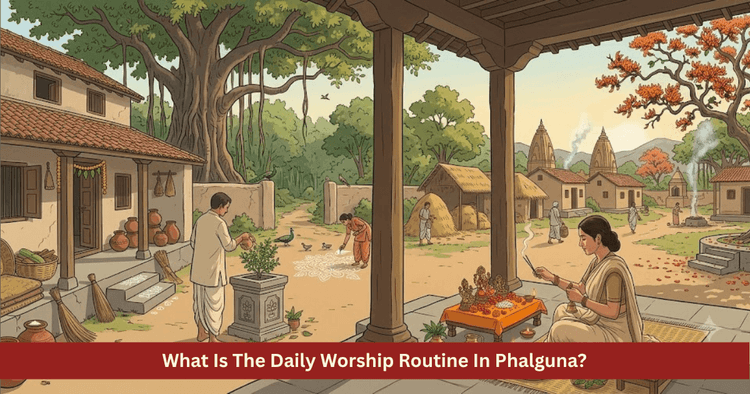
Table of Contents
Panchang Description And The Diurnal Spiritual Cycle In Phalguna
In the computational chronology of the classical Vedic calendar, the month of Phalguna represents the twelfth and culminating lunar month of the sacred annual cycle. This temporal window signifies the profound transition connecting the conclusion of late winter to the complete flowering of spring. Across this period, Lord Surya Deva completes his traversal through Capricorn, moving across the airy sign of Aquarius before entering the watery sign of Pisces during the solar ingress of Meena Sankranti. This astronomical shift produces noticeable changes within ambient atmospheric heat, environmental air currents and the bio-energetic vitality of all living entities.
Authentic scriptural digests declare that this seasonal junction represents the most receptive and sensitive interval of the year for rigorous contemplative disciplines and personal purification. Every single day of Phalguna provides an opportunity to refine the three primal qualities of nature: sattva, rajas and tamas. While the golden dawn rays of Surya Deva revitalize soul consciousness and systemic immunity, the afternoon and evening hours dedicated to Lord Mahadeva Shiva and Sri Radha Krishna saturate the heart with unconditional devotion.
| Astrological and Liturgical Factor | Classical Scriptural Description |
|---|---|
| Calendar and Fortnight Window | Phalguna Month, Dark and Bright Fortnights (Full 30 Days) |
| Central Focus of Daily Adoration | Tripartite Devotion: Surya Deva, Mahadeva, Sri Radha Krishna |
| Sacred Diurnal Windows | Dawn (Brahma Muhurta), Midday Noon and Sunset Pradosha |
| Essential Consecrated Substances | Copper Urn Water, White Sesame, Raw Milk, Bilva, Herbal Gulal |
| Elemental Nature of Rites | Harmonizing Solar Fire and Lunar Cooling Vitality |
| Recommended Liturgical Texts | Aditya Hridaya Stotra, Shiva Mahimna Stotra, Vishnu Sahasranama |
| Bestowed Spiritual Fruit | Purification of Past Karma, Vital Health, Soul Realization |
To secure the comprehensive spiritual fruits of daily adoration throughout the thirty days of Phalguna, a seeker must maintain disciplined conduct from before sunrise until nocturnal rest.
- Awakening before sunrise during the sacred window of Brahma Muhurta (approximately 48 to 96 minutes before dawn), gazing upon both open palms while chanting the classical Karagre Vasate Lakshmi verse.
- Touching the floor with reverence to ask forgiveness from Mother Earth prior to placing the feet upon the ground.
- Completing morning ablutions in cool or ambient fresh water consecrated with sacred river drops and unblemished white sesame seeds.
- Standing facing the eastern horizon following ablutions, pouring three continuous water oblations to the rising Sun from a pure copper vessel.
- Entering the domestic sanctuary to kindle an unbroken clarified butter lamp, meditating upon family lineage guardians, ancestors and personal deities.
- Pouring continuous streams of the five sacred nectars and cooling fragrant water over the consecrated Narmadeshwara or mercurial Shiva Lingam.
- Bathing the infant form of Lord Krishna (Laddu Gopala) in panchamrita, adorning the deity in fresh saffron yellow garments and submitting a touch of organic herbal abir.
- Offering the first prepared portions of the noon meal to sacred cattle, dogs and birds in fulfillment of the Five Daily Sacrifices.
- Kindling an unadulterated cow clarified butter lamp near the sacred Tulsi plant at sunset, performing the evening twilight light waving ceremony.
- Chanting 108 repetitions of the five syllable formula Om Namah Shivaya or the Hare Krishna Mahamantra before retiring, surrendering all daily actions to God.
Brahma Muhurta Awakening And The Science Of Solar Water Oblations
The Rigveda proclaims that the earliest dawn hours hold the highest concentration of life sustaining cosmic prana. During Phalguna, when environmental breezes are neither bitterly cold nor oppressively hot, awakening during Brahma Muhurta restores neuronal equilibrium and revitalizes cerebral tissues.
Offering water oblations to Surya Deva immediately following morning ablutions constitutes the foundational and non-negotiable first step of daily liturgy. The Sun is the cosmic signifier of the soul and the sole visible physical divinity. During this month, the ascending rays of the northern traversal carry therapeutic and spiritual properties.
Classical Protocol for Solar Water Oblations
- Procure an unblemished, dedicated copper urn. Never handle this sacred vessel with unclean hands.
- Fill the urn with pure spring water, adding red sandalwood paste, pure kumkum, unbroken rice grains, fresh scarlet blossoms (such as hibiscus or oleander) and a small morsel of raw jaggery.
- Raise the copper vessel with both hands above the level of the brow, gazing steadily at the solar orb through the falling stream of water.
- Stand erect facing eastward, raising the heels slightly off the earth to align spinal posture.
- Never allow the stream of consecrated water to splash upon unclean paving; position an open copper basin or a living botanical planter beneath the stream.
- Pour the libation in three distinct streams, intoning the classical solar formula with resonant vocal clarity:
Om Suryaya Namah, Om Ghrini Suryaya Namah, Om Hreem Hreem Suryaya Sahasrakiranaya Manovanchhitam Phalam Dehi Dehi Svaha.
Following the oblation, touch the consecrated water collected within the copper basin using the ring finger of the right hand, applying the moisture to both eyelids, the forehead and the throat. Complete three clockwise circumambulations on the spot, offering prostrations to Surya Deva. This practice sharpens optical vision, normalizes arterial blood pressure and infuses human awareness with unshakeable confidence.
| Oblation Ingredient | Elemental Potency | Somatic Action on the Vessel | Bestowed Astrological Merit |
|---|---|---|---|
| Pure Water | Varuna (Cooling Fluid) | Balances Internal Heat | Soothes the Moon, Clears Mental Fog |
| Red Sandalwood & Kumkum | Mangala (Fiery Vitality) | Purifies Vascular Pathways | Amplifies Courage, Banishes Timidity |
| Unbroken Rice Grains | Chandra (Pristine Purity) | Expands Mental Tranquility | Anchors Material Wealth and Concord |
| Raw Jaggery Morsel | Surya (Metabolic Heat) | Regulates Digestion and Pitta | Attracts Public Honor and State Favor |
| Scarlet Oleander Blossom | Tejas (Radiant Energy) | Activates the Ajna Center | Dissolves Solar Transit Afflictions |
Daily Rudrabhisheka To Lord Mahadeva And Offering Palash Water
Following the solar oblation, the seeker should enter the domestic sanctuary to perform daily adoration to Lord Shiva. Phalguna is universally crowned as the greatest month for Shaivite worship, housing the sovereign festival of Mahashivratri and the Phalguna Pradosha observances.
In daily liturgy, the Shiva Lingam should be bathed not merely with plain water but with seasonal botanical infusions. Offering water steeped with palash blossoms over the Shiva Lingam during Phalguna is scripturally celebrated as pouring immortal nectar.
- Sit facing eastward or northward upon a consecrated mat woven of kusha grass or natural wool.
- Place the Shiva Lingam within a broad collection vessel forged of copper, silver or brass.
- Bathe the sacred stone first with pure cool water.
- Pour raw unboiled cow milk in a continuous stream over the Lingam while chanting the five syllable formula Om Namah Shivaya with deep inward stillness.
- Bathe the Lingam utilizing the saffron extract of dried palash blossoms steeped in water overnight. This therapeutic botanical infusion soothes the burning heat held within the throat of Lord Shiva.
- Dry the polished surface of the Lingam gently with clean unbleached cotton, applying a horizontal three striped mark of pure white sandalwood paste across the stone.
- Place a dot of natural vermilion or ashtagandha paste within the center of the sandalwood mark.
- Offer three unblemished, intact bilva leaves, a single shami leaf and fresh datura blossoms over the Lingam.
- In honor of the festive spring atmosphere of Phalguna, apply a small pinch of natural aromatic white abir and herbal crimson gulal upon the deity.
- Kindle a clarified butter lamp, concluding the Shaivite rite by reciting the Shiva Chalisa or the Shiva Panchakshara Stotra.
Spring Adornment And The Loving Care Of Laddu Gopala
Following Shaivite adorations, the seeker should tend to Lord Sri Radha Krishna and their infant manifestation, Laddu Gopala. The spring of Phalguna marks the supreme pastimes of the divine couple in the groves of Braj. Adoration of the deity during this season is characterized by parental affection and transcendental sweetness.
- Seat Laddu Gopala within an unblemished silver or brass bathing basin.
- Bathe the deity with gentle care utilizing lukewarm water and the five sacred nectars (milk, yogurt, ghee, honey and rock sugar water).
- Dry the deity with a soft cotton cloth, anointing the limbs with pure sandalwood paste.
- Adorn the deity in fresh spring garments of pale yellow, bright saffron or soft pink silk.
- Crown the brow with a delicate peacock feather crown, resting a golden flute within the hands and placing a garland around the neck.
- Apply a small dot of natural herbal crimson gulal or cooling sandalwood paste upon the cheeks and the lotus feet of the deity.
- Arrange a miniature silver syringe and an earthen bowl filled with fragrant abir before the altar.
- Present offerings comprising fresh churned butter, rock sugar, roasted nuts, alongside seasonal harvest fruits such as sweet jujube berries and ripe gooseberries.
- Since Lord Krishna never partakes of food devoid of holy basil, ensure fresh tulsi leaves rest upon every consecrated food preparation.
- Wave an unadulterated natural camphor flame before the deity, chanting the twelve syllable formula Om Namo Bhagavate Vasudevaya mentally.
| Diurnal Liturgical Phase | Presiding Divine Power | Core Scriptural Observance | Consecrated Substances Employed |
|---|---|---|---|
| First Watch (Dawn 6:00 to 8:00 AM) | Lord Surya Deva | Solar Oblations and Solar Mantras | Copper Urn, Rice, Sandalwood, Jaggery |
| Second Watch (Morning 8:00 to 10:00 AM) | Lord Mahadeva Shiva | Abhisheka and Lingam Anointing | Raw Milk, Palash Water, Bilva, Ash |
| Third Watch (Forenoon 10:00 to 11:00 AM) | Laddu Gopala & Krishna | Bathing, Spring Attire, Food Offering | Saffron Silk butter, Mishri, Gulal, Tulsi |
| Fourth Watch (Noon 12:00 to 1:00 PM) | Ancestors and Creatures | Five Daily Offerings, Feeding Cattle | First Bread, Jaggery, Grain to Birds |
| Fifth Watch (Twilight 6:00 to 7:00 PM) | Mother Tulsi & Deities | Dusk Lamp Lighting, Camphor Arati | Cow Clarified Butter, Natural Resins |
| Sixth Watch (Night 8:00 to 9:00 PM) | Personal Deity & Rest | Mental Mantra Japa, Self Surrender | Consecrated Rosaries, Silent Prayer |
Midday Observance Of The Five Daily Sacrifices
Sanatana Dharma is not confined to ringing bells within an altar; it represents a comprehensive way of life that honors unity with all creation. Classical treatises mandate that every family householder must fulfill the Pancha Maha Yajna daily prior to partaking in the midday meal. Observing this practice during the sensitive transition of Phalguna cleanses subtle karmic debts.
Following culinary preparation, offer three small portions of food seasoned with ghee and jaggery into the kitchen fire to satisfy Agni Deva. Subsequently, separate five specific food offerings before serving the family:
- Go-Grasa (Offering to the Sacred Cow): The foremost portion of fresh bread anointed with clarified butter and raw jaggery belongs to an indigenous cow, in whose physical frame thirty three categories of cosmic divinities reside.
- Shvana-Grasa (Offering to the Dog): The second portion belongs to a dog, recognized scripturally as the terrestrial representative of Lord Bhairava and Yama, deflecting sudden accidents.
- Kaka-Grasa (Offering to the Raven): Place the third portion upon the roof for wild ravens. Ravens serve as couriers to departed ancestors; satisfying them placates ancestral afflictions.
- Kita-Grasa (Offering to the Insects): Place the fourth portion, composed of flour mixed with sugar, near tree roots for ants and subterranean insects.
- Atithi-Grasa (Offering to the Guest): Reserve the fifth portion for any unexpected mendicant, ascetic or hungry visitor who approaches the threshold.
Only after presenting food to these five categories of life should domestic family members sit to eat. This daily discipline eliminates structural defects and food blemishes from the home, establishing permanent abundance.
Twilight Liturgy, Tulsi Reverence And Nocturnal Contemplation
The exact temporal junction where daylight yields to approaching night is celebrated as the Pradosha Kala or the sacred twilight hour. During Phalguna, this window is vital for balancing ambient nervous energy.
- Domestic Threshold Cleansing: Sweep the front entrance of the home fifteen minutes prior to sunset, sprinkling fresh water lightly across the pavement. Sweeping during sunset hours is forbidden; complete this task before dusk descends.
- Kindling the Lamp at the Sacred Tulsi Altar: Light an unblemished lamp fueled by pure cow clarified butter near the base of the Tulsi plant in the courtyard or balcony. Bow before Mother Tulsi, completing three clockwise circumambulations while chanting Om Tulsyai Namah. Remember that touching the plant or harvesting leaves after sunset is strictly forbidden.
- Illuminating the Main Threshold: Ensure both doorposts of the primary entrance are well illuminated. Classical tradition affirms that Mother Mahalakshmi visits the terrestrial plane during the twilight hour; she bypasses households shrouded in darkness and neglect.
- Evening Twilight Arati and Natural Fumigation: Sound the sacred conch within the altar, waving natural camphor before the deities. Circulate the purifying smoke of natural guggulu, pure loban resin and camphor through every room to dissolve negative thoughtforms accumulated during the day.
- Nocturnal Introspection Before Sleep: Sit quietly upon the bed for five minutes prior to sleep, closing both eyes. Sincerely ask divine forgiveness for any harsh words spoken or emotional pain inflicted upon others throughout the day. Chant eleven repetitions of Om Namah Shivaya or your personal initiation formula, surrendering your soul to rest.
This structured daily worship regimen in Phalguna regenerates the physical vessel, subtle prana and mental consciousness of the seeker. An individual who maintains this disciplined liturgical protocol across the thirty days of Phalguna protects the home against seasonal infirmities, domestic friction and financial scarcity, establishing a sanctuary of lasting peace.
FAQ
Which divine manifestations should be primarily worshiped in the daily routine of Phalguna?
Daily worship during Phalguna is dedicated to Lord Surya Deva at dawn, Lord Mahadeva Shiva and Sri Radha Krishna in the morning and Mother Tulsi at dusk.
What specific substances must be included when offering water to Surya Deva?
Blending pure water with red kumkum, unbroken rice grains, scarlet blossoms and a small morsel of raw jaggery within a copper vessel is scripturally mandated.
What unique botanical water is poured over the Shiva Lingam during Phalguna?
Abluting the Shiva Lingam utilizing water infused with boiled or steeped petals of the sacred palash tree soothes bodily heat and removes physical ailments.
What specific attire should be offered to Laddu Gopala during this spring month?
Due to the blossoming spring season, Laddu Gopala should be adorned in soft cotton or silk vestments of pale yellow, saffron or light pink, accompanied by herbal gulal.
What essential precaution must be observed regarding the Tulsi plant at sunset?
Kindle a clarified butter lamp near the base of the Tulsi plant with reverence at dusk but never harvest leaves or touch the foliage after sunset.
Get your accurate Kundali
Generate KundaliDid you like it?
Author

Pt. Abhishek Sharma (63)
Experience: 20
Consults About: Family Planning, Career
Clients In: Punjab, Haryana, Delhi
Share this article with friends and family
WELCOME TO
ZODIAQ
Right Decisions at the right time with ZODIAQ
